L u w a k, the Best Coffee Maker in The World.


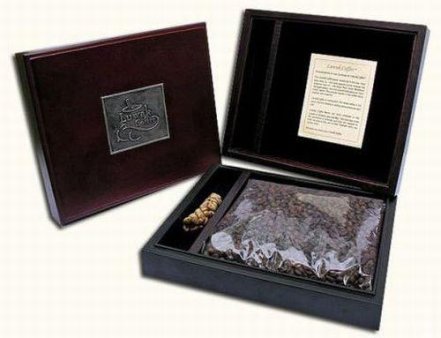
There is a story among coffee lovers about special coffee in term of its very expensive price. It's so expensive that the Guinness Book of World's Records acknowledged this as the most expensive coffee in the world.
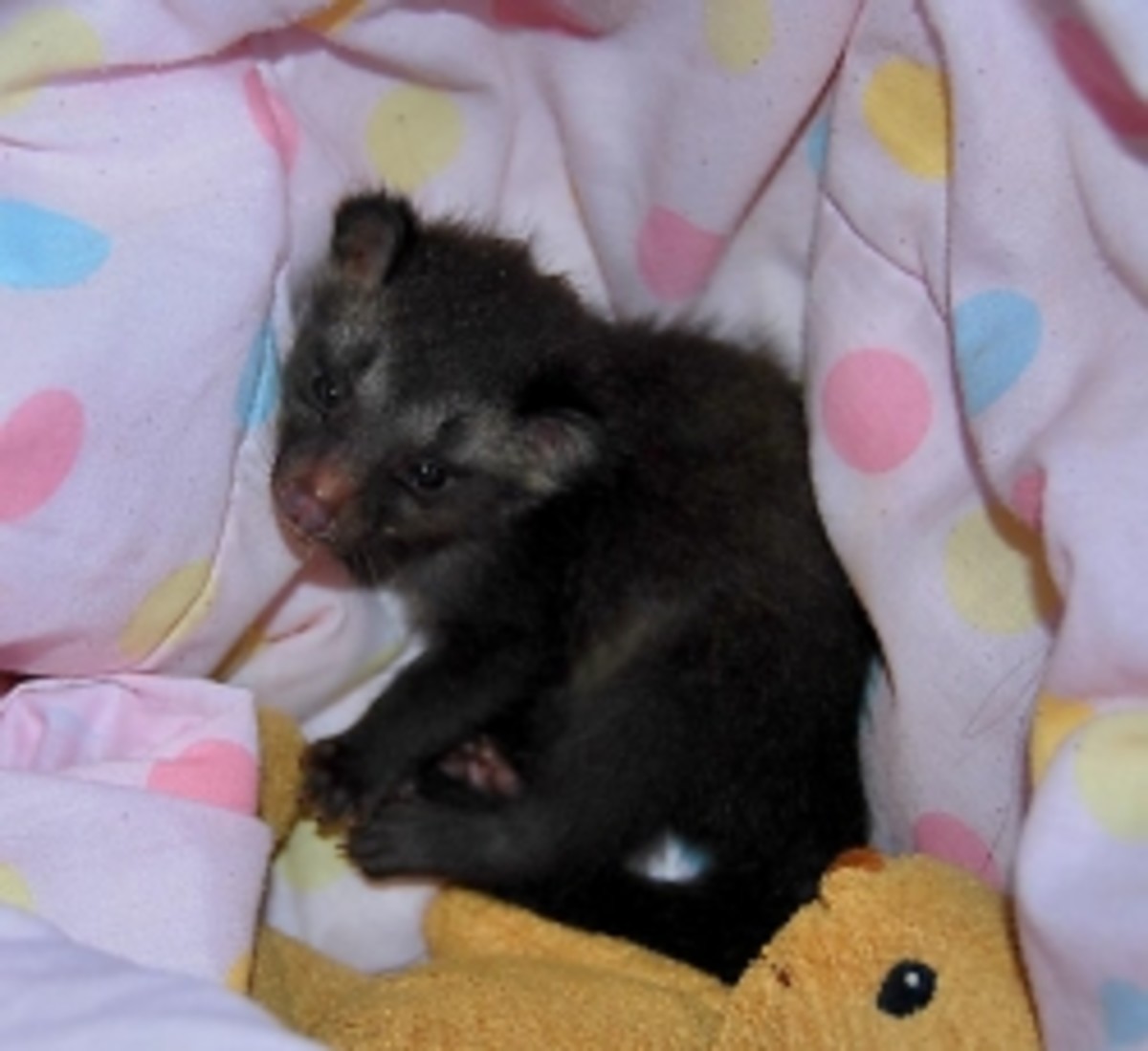
Would you spend US$ 50 for a cup of coffee ?, that's probably the price you have to pay if you want to sip this coffee but I guess some people will think twice before they order it. Do you know what makes it so highly priced ?. We, especially those lucky coffee farmers, have to thank our fellow creature which make all this possible : The Asia Palm Civet or Luwak (Paradoxurus hermaphroditus)
What Has the Civet Done ?
Asian Palm Civet has some local names in my country. It's generally known as Musang, but people in West Java name it Careuh, and in Central and East Java known as Luwak. In this hub I call it Luwak to refer to those provinces (Central and East Java) where civet coffee comes from.
As a predator, besides prying other creatures like chicken, mice, insects and moluscs, Luwak also eats coffee since coffee is one of its favorite foods. To make it special, Luwak has natural ability in selecting ripe, quality coffee cherries for its consumption.
Coffee cherries eaten by a Luwak besides being digested so that lose their flesh, the beans will get fermentation process in its digestion for around 12 hours before they're excreted during defecattion. Coffee farmers in Indonesia will give additional processes before those coffee beans are ready to be brewed. Those processes include cleaning and washing, drying, frying, etc.
Here we can see two important roles which are contributed by civet :
1. The selection of ripe, civet-quality coffee beans, and eat them.
2. Fermentation process which take place inside civet digestive system. This process is indispensable and entirely belongs to Luwak's specialty.
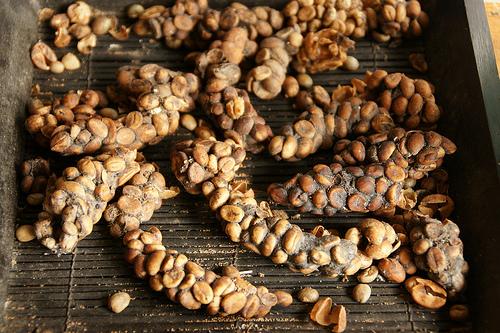
Look at the picture of luwak droppings. You can see those coffee beans aren't crumbled like what happens when food is digested but still take their original shapes of coffee instead.
What makes it different ?
As it has been mentioned before that the role of Java Civet or Luwak in producing this high grade coffee is indispensable.
The fermentation process in Luwak's gastrointestinal tract for around 12 hours has changed the coffee cherries into harder, darker and more brittle coffee beans. Some experts also believe the process in Luwak digestions also gives another advantage in lowering the coffee's caffeine. Thanks to the enzymes produced in civet's digestive system which make civet coffee is very profitable . The enzymes have given characteristic taste preferable to coffee lovers as well as controlling the bitterness in the coffee.
Responding to increasing demand of civet coffee, there are researches conducted in some countries in their efforts to discover substances similar to civet enzymes.
Regardless the difference in taste that may be resulted due to the use of engineered enzymes in 'civet coffee' making, we should appreciate those efforts for some important reasons. First, this man-made civet enzymes will enable them to produce 'civet coffee' in industrial scale which can possibly meet the big demand of civet coffee in the world. Second, the ability in creating man-made civet enzymes in the labs have reduced civet hunting in nature which definitely endanger Java Civets existence.
Well done civets ! We love your precious droppings !