Polar Warming - Polar Bears and Global Warming
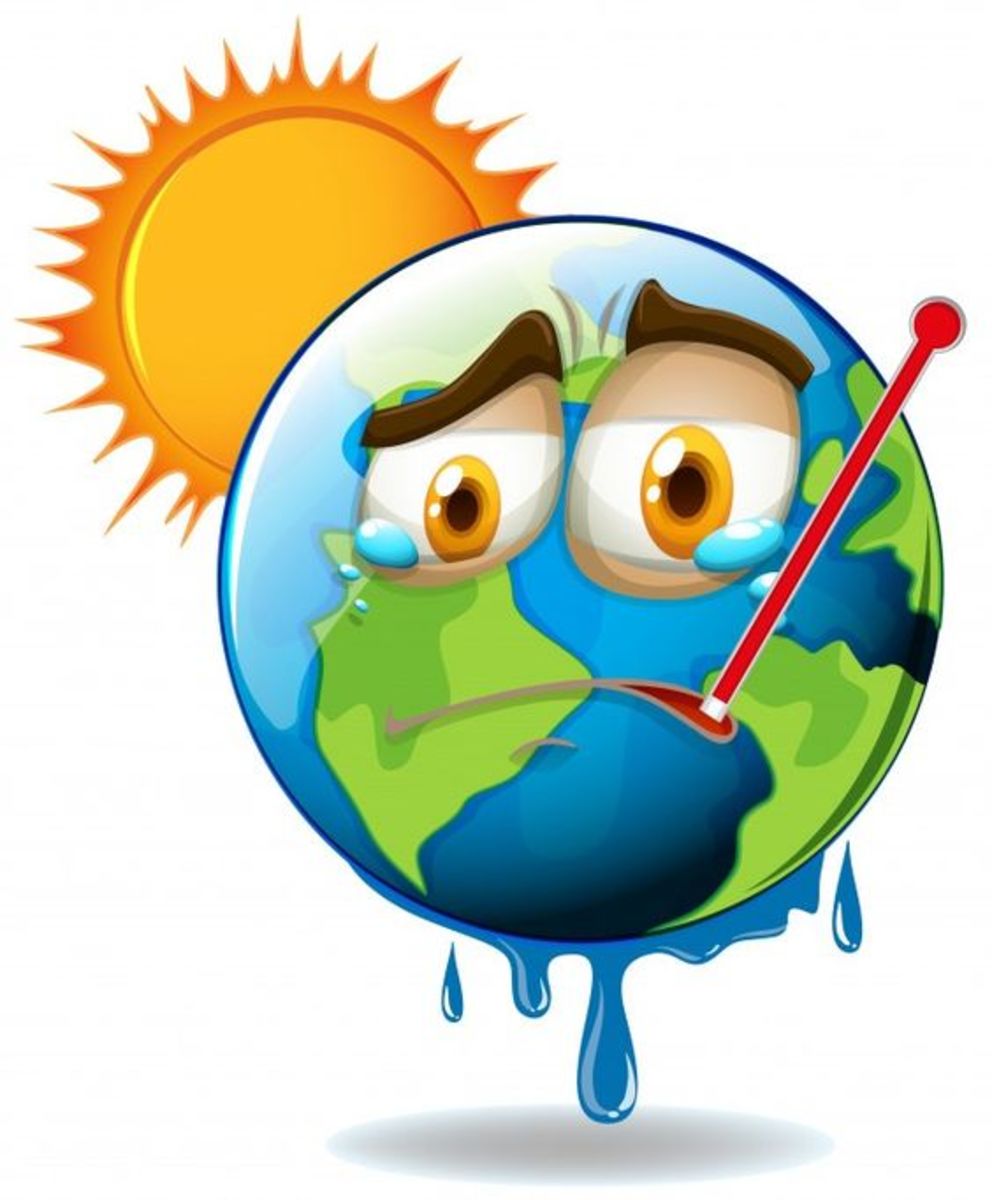
The near-surface temperature of the earth has increased by 0.6 degree Celsius over the last century. The largest environmental changes have taken place at high latitudes and or Polar Regions. One of the most pronounced warm periods had its peak around 1940 in Iceland. Over the next century, near surface air temperature will rise more in the polar regions than in any other parts of the Earth as a result of the increasing levels of greenhouse gases.
The Global impacts of this is a rise in sea-level due to loss of ice from the Greenland ice sheet and disintegration of a number of floating ice shelves around the Antarctic Peninsula. This will increase the risk of flooding and low-lying areas and islands will be wiped out. Global impacts will include a threat to biodiversity which is the survival of plant and animal species. The traditional way of life of indigenous people of Arctic, who depend on those animals and plants for their food, settlements, clothing, fishing and hunting, will be affected.
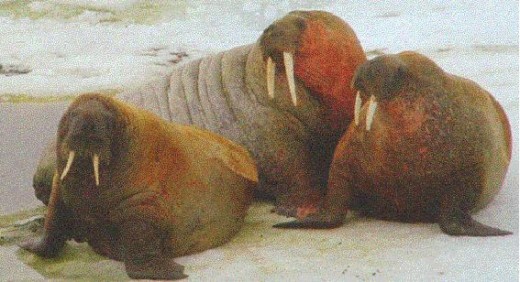
Sea ice is important for walruses during feeding as it provides a resting place between dives and enable them to fish over a wider area.
The Antarctic Ozone Hole
Ozone is an extremely important gas in the atmosphere (stratosphere) as it absorbs solar ultraviolet rays, protecting us from skin cancer. The total amount of ozone through a depth of the atmosphere in Antarctic was 3 mm thick at the surface in 1958. From 1970s, an increasingly different pattern of behaviour has been observed- the Antarctic ozone hole where the amount of ozone is 10 per cent less than they were in the 1970s at the end of winter.
The Antarctic ozone hole has developed because of emissions, mainly in the northern hemisphere, of chlorofluorocarbons (CFCs) and halons. These gases are used in refrigeration, fire control and in industrial solvents.
Whilst the Antarctic Ozone Hole persist, there are increased level of ultraviolet radiation at the surface of the planet earth which is hazardous to man. These reduced levels of ozone can have an impact on lower latitude of South America and Australia since the Polar vortex can frequently become elongated and extend. The communities and travelers in those areas should be alert and use sun block.
If you have liked this article, and you would want this page to keep up and improved, you can help in any way you can. A free way to help would be to link back to this webpage from your web page, blog, or discussion forums.
The Author’s page is designed to help beginners and average readers make some money as an extra income to supplement what they may be earning elsewhere - details of which you can find in My Page, if you will.