There is a Hippo in our house!

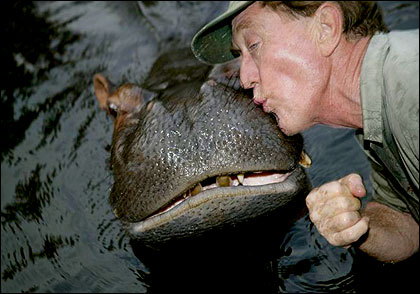
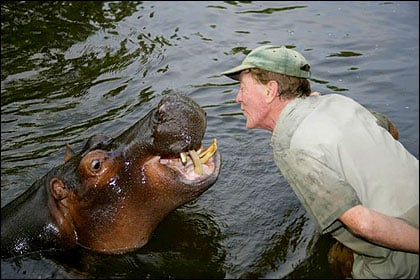
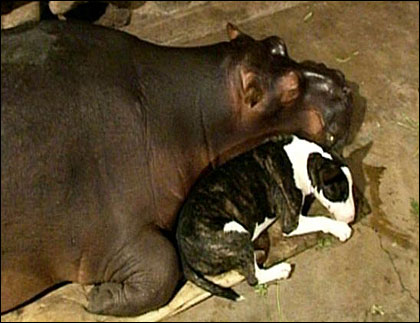
Meet Jessica, our 7 year old teenager.
When a newborn baby hippo was washed up by a flood onto the lawn of Tonie and Shirley Joubert's riverside home, Hoedspruit in South Africa, they lovingly nursed the dying animal back to health.
What started out as a cute bundle of joy, weighing 35lbs / 15kg is now a humongous 7 year old weighing 1 653lbs / 750kg!
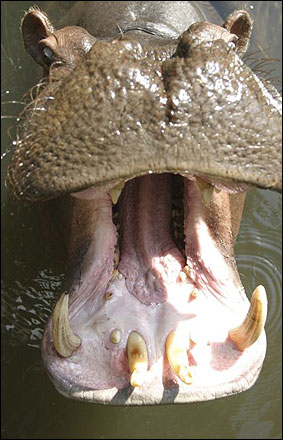
My daily routine
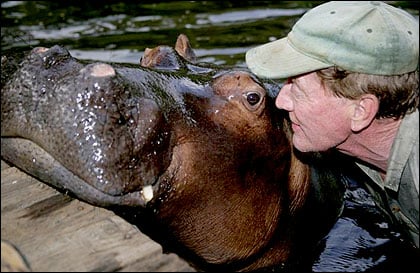
Meet my Family
Click thumbnail to view full-size


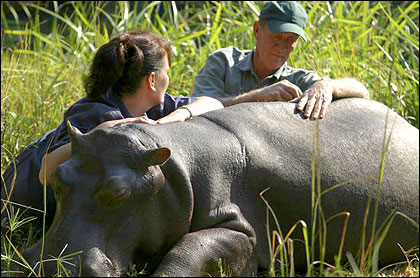
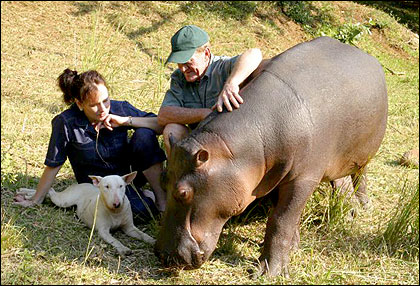
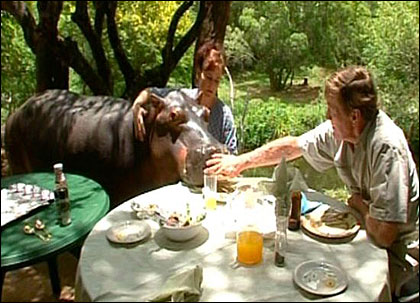
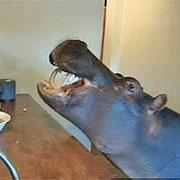
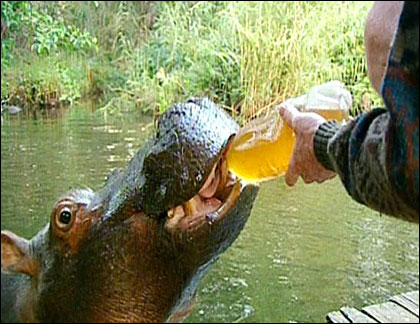
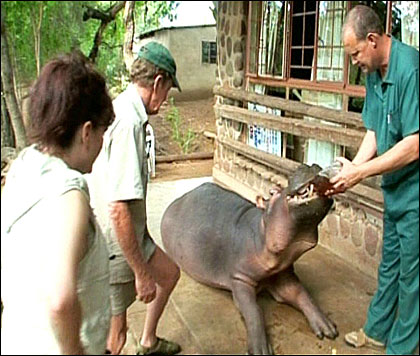
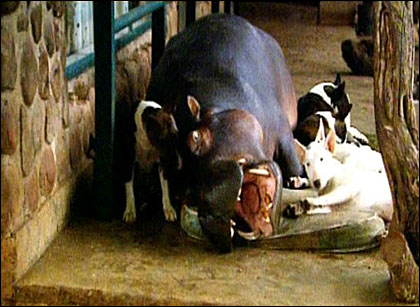
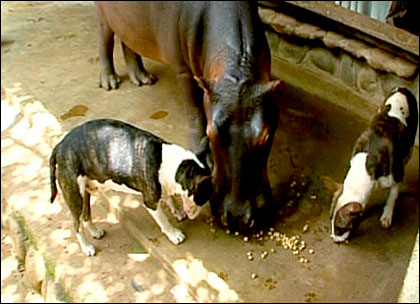
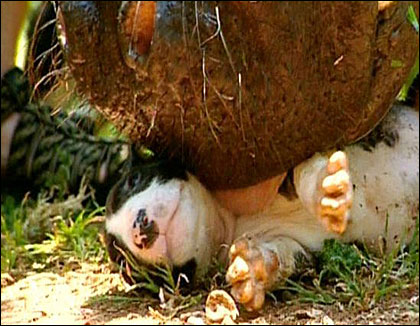
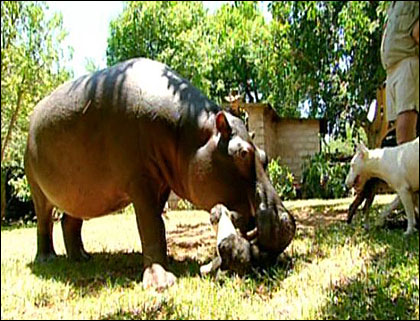
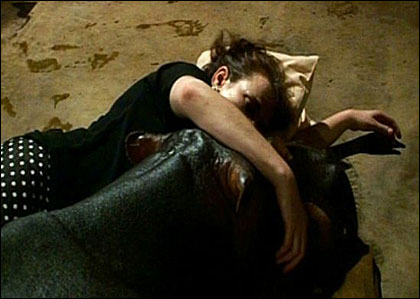
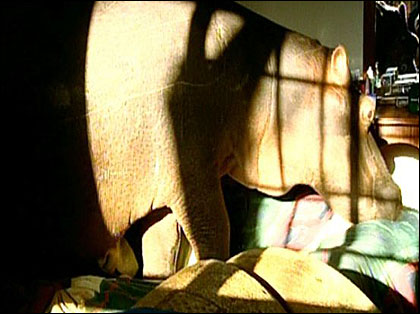
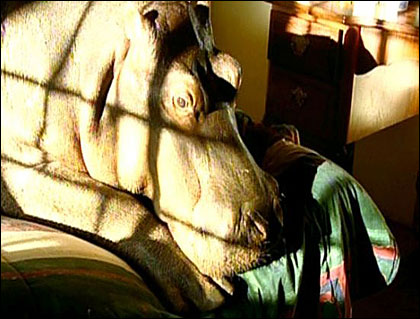
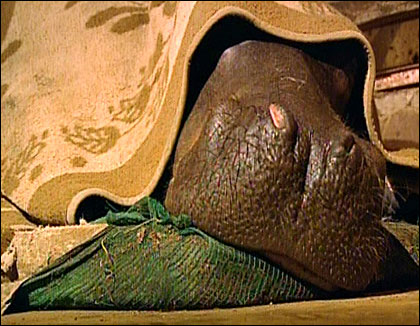
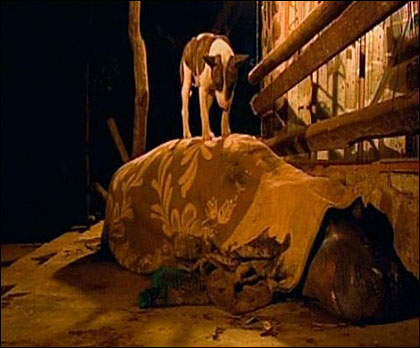
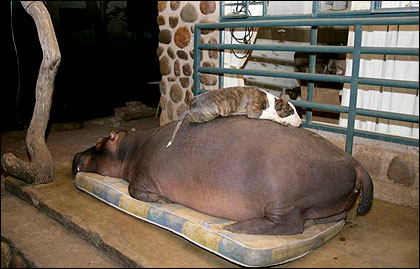
After breaking the Joubert's double bed three times, she got restricted to the kitchen. Where a closed door doesn't bother her at all she just opens it, and totters through the living room, on her way to the kitchen, where mother Shirley gives her dog pellets, which is but one of her treats.
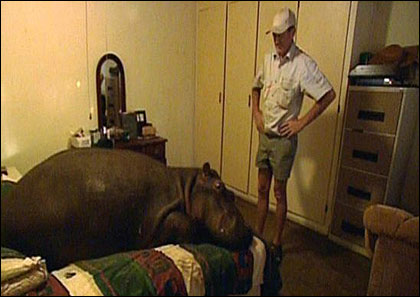
I got restricted after breaking the bed 3 Times!
Hippopotamus amphibius
Geographic Range
Historically, hippos have been found throughout all of subsaharan Africa, but most populations have been reduced or exterminated. Currently, the only large populations of hippos occur in the Nile river valley of East Africa.
Habitat
The preferred habitat of this species is deep water with adjacent reed beds and grasslands.
Physical Description
Mass
3000 to 4500 kg
(6600 to 9900 lbs)
The hippopotamus is typically a slate brown color to muddy brown, with purplish hues often visible. A massive animal, it measures 1500mm in height at the shoulder and has a length of 4310-5160 mm, of which about 560mm is tail. The eyes and nostrils protrude, allowing the animal to see and breathe while otherwise submerged in the water.
Reproduction
The hippopotamus is capable of breeding year round, but it experiences seasonal breeding peaks during February and August. The birth of young coinsides with months of peak rainfall, October and April. The female hippo experiences a three day estrus, during which she is mated by the resident bull. After a gestation of 227-240 days, the cow gives birth to a single calf, weighing 27-50 kg. Calves nurse underwater and are frequently seen riding upon their mothers' backs while the mother is in the water. Males reach sexual maturity in the wild between 6 and 14 years of age, whereas females are capable of breeding at 7-15 years of age.
Behavior
They are also highly aggressive creatures and have little fear of humans. They are considered among the most dangerous African animals.
Most human deaths occur when the unlucky victim finds himself between a startled hippo and the deep water. Females with young are especially dangerous.
The hippopotamus typically sleeps during the day and maintains activity at night. It is not, however, strictly nocturnal. Hippos may cover up to 33 km of water each night in search of food. They eat mainly the grasses along the shores of the rivers they inhabit, but they have been seen grazing up to 3.2 km from the shoreline.
Hippos are extremely graceful in the water, despite their clumsy appearance on land. Their specific gravity allows them to sink to the bottom of rivers and literally walk or run along the bottom.
Hippos may occur singly or in groups of up to 30 animals. The central core of social groups appears to be females with their dependent offspring. Adult males vie for control of these herds. Aggression between males is intense. The hippos use their long canine teeth as weapons, and death often results from fighting between males. Most adult male hides are covered with scars from injuries incurred during such fights. Losing males are often relagated to a solitary existence.
Food Habits
Hippopotamuses are primarily folivorous, grazing on grasses growing along the banks of their river habitats.
Conservation Status
The hippopotamus has been heavily hunted. In 1995 it was listed on CITES appendix II. One subspecies, Hippopotamus amphibius tschadensis, is listed as vulnerable by the IUCN 1996 Redlist.
Vulnerable.
CITES: http://www.cites.org/
Other Comments
For years, it was reported that the Hippopotamus would sweat blood. We know now that this is not true. The hippo's sweat contains a red pigment, which makes it resemble blood.