Traditional Balsamic Vinegar

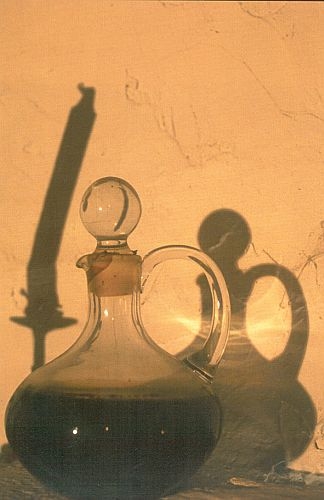
More than just vinegar: a veritable condiment.
And it’s not just balsamic: it’s traditional too.
Traditional Balsamic Vinegar: its very name hints at the secret of its exclusivity: “Balsamic” because it was once the medication of Kings and Emperors. Today it is the condiment par excellence. “Traditional” because its history goes back through the centuries
The true traditional balsamic vinegar is produced in the ancient dominions of Este. It is made from cooked grape must, matured by slow acidification resulting from natural fermentation and progressive concentration through lengthy aging in a series of barrels of different woods, without the addition of aromatic substances. Dark brown in color, full and bright, expresses its density in a proper, smooth syrupy. It has a distinctive aroma and complex, penetrating, self-evident, but pleasant and harmonious. By traditional and unique sweet and sour taste well balanced, generously full, full-bodied with velvety according to the characters olfactory of his own.
Every drop is precious: it’s true that a single drop may cost just a few cents but each one is capable of offering the taste buds priceless pleasure. A truly exceptional treasure.
You sense the difference in Traditional Balsamic Vinegar from the very beginning: a mere glance at the wording of the product regulations (normally cold and inexpressive) already gives us a magnificent foresight of its taste.
Colour: deep dark brown, limpid and glossy.
Density: substantial with a slippery, syrup-like consistency.
Perfume: penetrating, persistent and fragrant with a pleasant acidity and distinctive "bouquet" depending on the wood used.
Flavour: well-amalgamated sweetness and sourness, considerable acidity and aroma in harmony with its olfactory character.
You don’t get like this by chance: you have to start out life at the lowland of Emilia, the heir to centuries of traditional practices, and remain there for at least 12 years while you mature in barrels made of different types of wood, absorbing their timeless, incomparable perfume and aroma. This is the only way to become truly precious. This is the only way to ensure every droplet will become a veritable delight.
Just how does something come to be so delicious? Through the combination of the pureness of nature and the skills of man: this is the recipe for Traditional Balsamic Vinegar
Any prestigious, traditional product is unavoidably linked to its origins and a method of production perfected over the generations. This is particularly true for Traditional Balsamic Vinegar, whose very name is a proud endorsement of its origins. Vinegar like this could only originate here: the hot dry summers in the "Pianura Emiliana" provide the perfect conditions for the browning of the vinegar, for its evaporation and consequently its concentration. The cold winters, on the other hand, help sedimentation and decantation, leading to the vinegar’s pureness and clarity.
In 1976 it was used the term "natural" (natural balsamic vinegar). But in 1983, for the sake of a legislative nature, devoted to the commercialization of the product, it was changed to "traditional". For the producer family the two words have value, however, synonyms, fully consistent with the legacy of the past and in perfect harmony with the definition itself, which also eschews any form of standardization. In fact, as in the past would not have been possible to find two products equal, even today, every sample of "balsamic" bears the mark of one who produces it and is different from all the others.
The only common thread that weaves the saga is the cooked grape must and reduced direct fire coming from the grapes of our land, with special attention to the Trebbiano, the one from the lowland has the one from the hills. There are so many "balsamic" how many their producers: very personal and unique is in fact the way to cook the juice, to reduce it to direct heat to operate the topping and racking to take samples and to meet the needs of barrels, as entirely different environmental conditions are the vinegar and the selection of microorganisms which it is produced within over time. Therefore, any "balsamic" has its own footprint and is recognizable or identifiable through the properties common to all the others. Does it matter that must come from white grapes (Trebbiano) or Lambrusco or Ancellotta.
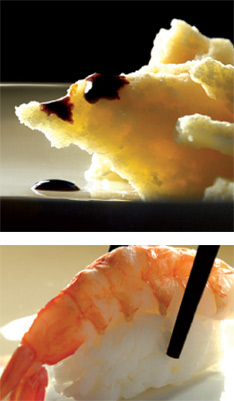
Traditional Balsamic Vinegar is precious and should be reserved for those who appreciate its rich flavour. But it is also an extremely pure essence delighting the senses, as just a few droplets add character and a distinctive personality to any dish.