Growing Watermelon 911

Near daybreak, waking to a loud and screeching halt that resulted in my nearly being thrown out of the big rig cab bunk -- I was grateful we’d avoided the accident ahead of us. A few minutes later, when Bill returned to the truck after surveying the situation, I heard him calling dispatch:
“Hmmmm. . . . . Watermelon 911! The @#$% road’s blocked by a head-on collision between an over-loaded produce farm truck and a deer. No one's hurt, but it’s going to make this hot delivery to Wally World late. Both sides of the road, are blocked and there’s no one out here on this country road, but me and the driver. Cell phone's not working here in the mountains, can you call the local authorities? Watermelon 911!"
We were just outside of Van Buren, Arkansas when this incident happened, making the next to last delivery to a Wal-mart distribution center. After nearly thirty days of "too much marital togetherness" in my husband's big rig, this was an unexpected and unwelcome delay in getting home.
Truck drivers know that Wal-mart's picky about their delivery times, loads can't be too early, and definitely can't be even fifteen minutes late. The load's delivery date and time would have to be rescheduled, translating into trucker aggravation -- as now no doubt, we would be sitting in a truck stop for a day or two -- waiting for that new appointment, or a place to drop that load and get new load in the direction of home.
We sat for over four hours while the mess was cleaned up. My husband, who can't resist an offer of anything free, had the back of that cab, filled with "free watermelons," twenty-two melons to be exact. Since at the time, there was just the two of us in the house, needless to say the neighbors, deer, and other wildlife on our farm enjoyed quite a treat for a number of days.
Since that time, I've teased him whenever we pass the kinds of pickup trucks you see on the highways -- the ones piled with watermelons to be sold on the roadside, at about half what the grocery store sells them for. Whenever I spot such a watermelon seller -- I simply call out, "Watermelon 911! Watermelon 911!" and he always stops to buy a couple.
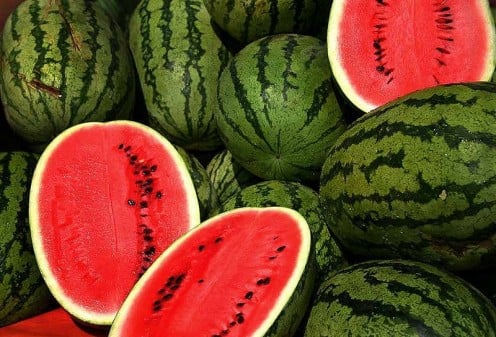
Van Buren, Arkansas
Van Buren, Arkansas has a reputation of being known as the Ozark Mountains playground. Lots of waterfalls, wildlife, white-water canoeing and rafting, fishing, gold, mountain biking.
Most of all, it is home to Devils Den State Park, a popular destination for inexpensive cabin vacations on the lake, spelunkers, and backpackers.
The 411 of Watermelon Planting and Growing Tips
Don't Over-water Your Melons:
There is a myth or misunderstanding that watermelons, because they are primarily made up of water -- need to be watered constantly. You can over-water watermelons.
Here in the South, where watermelons grow best, the watermelon will put out a massive root system in search of water on it’s own. If you are not careful, you’ll know when you are watering your watermelons far too much -- when the hot sun bursts your watermelons.
Protect Your Watermelon Crop:
If you live in a hot summer climate, or this summer is unseasonably hot, try an old-fashioned method of using hydrated lime (aka pickling lime, calcium hydroxide, or slacked lime) to protect your watermelons. Make it into a thin white-wash like paint (paste) and cover the tops of your melons with it.
Not only does it help the melons from getting overheated, should you get too much rain or over water -- but it also deters armadillos, crows, coyotes, foxes, rabbits, and voles from damaging your melon fruits. Remember: Re-paint after each rain.
Choose Your Watermelon Home Site Well:
As with all fruits and vegetables, watermelons for optimum growing, have their preferences. They want well-drained soil, fertile, and at least six hours of direct sunlight, and lots and lots of space.
Hilltop Watermelon Condos:
Watermelons are best grown in small man-made hills or mounds. Make sure that these are loose soil rich (gets oxygen to plants and allows roots to take hold). This method also keeps excess moisture away from the plant but into the roots were it needs to be. This is critical in dry hot weather.
Make No Mistake:
The biggest mistake gardeners make in growing watermelons is to plant them in the ground (either by seed or started plants) too soon. The soil temperature is absolutely a key to watermelon growing success. The weather needs to be a consistent sixty to seventy degrees for watermelons to take.
Other Watermelon Tips:
- After the watermelon flowers start appearing, it is vital to water at least every three days.
- Old-timers swear watermelons grow best, if they are planted on the outer row of corn.
- Rabbits, voles, field mice, and armadillos are often the cause of watermelon damage.
- Watermelons prefer a soil of pH of 6.0 to 6.8
- Horse manure makes the best fertilizer for watermelon plants
- One well-known and proven watermelon growing tip -- is to plant broccoli, calendula, catnip, goldenrod, Mexican marigolds nasturtiums, radish, rue and tansy as watermelon companions. They will discourage cucumber beetles and other insects from attacking your melons.
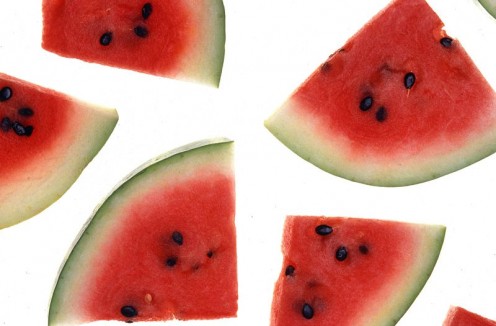
Are My Watermelons Ripe?
Watermelon and Prostate cancer
It’s now thought that watermelon combined with green teacan help to prevent prostate cancer in men. Watermelons are great lycopene laden fruits.
They are among apricots, pink grapefruit, papaya, and guavas in terms of health benefits.
Some studies suggest that men are over 80% less likely to get prostate cancer from consuming fruits rich in lycopene than those who don’t partake.
Secrets to Harvesting Watermelons
Out in your watermelon patch or field, it’s often difficult (even for long time gardeners) to know if a watermelon has reached it’s peak, and if it is ready for harvesting. So, just how do you know if a watermelon is ripe enough to cull from the vine?
- Keep a good garden calendar for your seed variety, counting off the number of days until expected harvest (usually 60-90 days)
- Watermelons will generally be ripe if the spot where the melon rests on the soil becomes lighter colored
- Watermelons should be ripe, when the place where the fruit attaches itself to the stem has turned from green to brown
- Old-timers thump the watermelon to determine if there is a distinct change in sound. Note: Personally, I find this hard to do, and have been surprised by unripe melons in my attempts to do this.
-
If you are growing a mini-melon variety, determining ripeness may be even harder.
-
Some watermelon varieties’ patch or spot on the underbelly touching the ground, will turn color from an off-white to more of a yellow, if ripe.
-
Another old-timer method for harvesting watermelons is just to watch carefully for a cessation of grown in the fruit.
What to Look for in a Store or Produce Stand Watermelon:
- Look for watermelons that seem heavy for their size
- Look for watermelons with smooth rinds
- Look for watermelons outsides that are not shiny
- Look for watermelons outsides who are also not dull
- Look for creamy or yellow colored under-bellies
-
Don’t buy watermelons that are soft, have soft spots, or leaking a milky white fluid.
-
Also don’t buy watermelons that have dents, bruises, or cuts.
-
However, insect bites on the surface are not of a concern.
Watermelon Art

Watermelon Basket
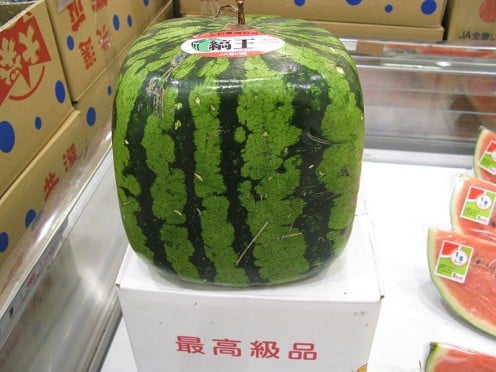
The Color Of Your Melon
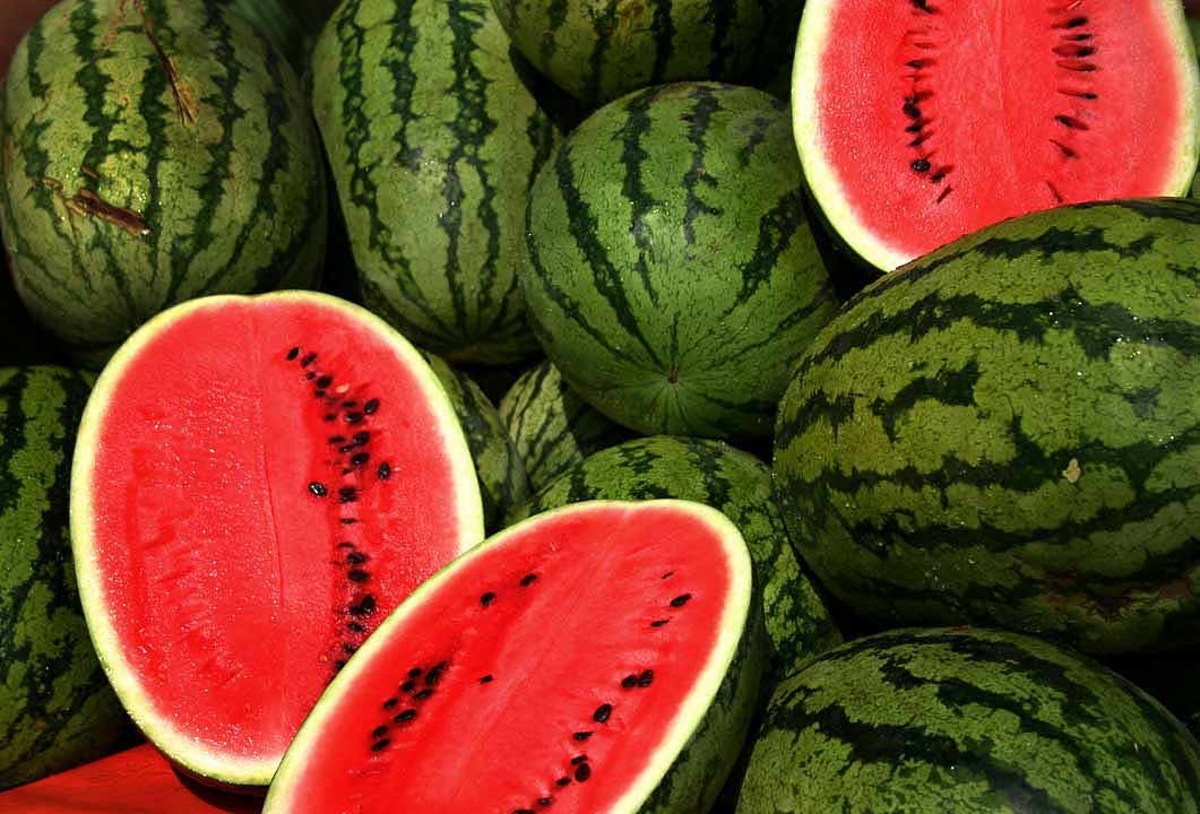
Many Americans are not aware that watermelon's fruit, internally come in many colors. There is an estimated twelve hundred plus varieties of watermelons to choose from. They can be:
- Canary Yellow -- Try the varieties named Yellow Crimson Watermelon, Desert King, Gold Baby, or Clay County Yellowmeat
- Coral red -- Try the variety named Congo
- Orange -- Try the variety named Orangeglo or Orange Fleshed Tendersweet
- Salmon yellow -- Try the variety Golden Midget
- Scarlet Red-- Try the variety named Blacktail Mountain
- White -- Try the varieties named Cream of Saskatchewan, White Wonder, or Black Seeded Ice Cream
One of my favorite heirloom seed sellers of watermelons is Baker Creek Heirloom Seeds.
Junior Landcare Watermelon Challenge - Australia
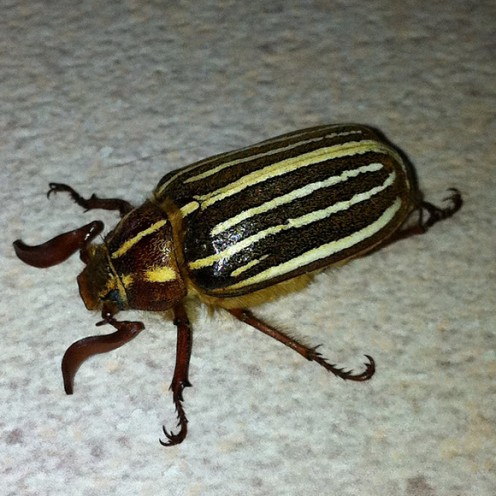
Watermelon Bugs
Watermelons might be crying silently for you to call Watermelon 911! if the following three most common watermelon pests are present in their lives:
Aphids -- Evidence: Curly or deformed leaves that have soft bodied aphids on the underside. Aphids can be green, brown, or black. Sometimes you’ll find a honeydew or black sooty mold along with them. Cure: Insecticidal soap sprays on the underside where the aphids are.
Squash Bugs -- Evidence: Grayish or yellow/brown flat backed (sometimes speckled) bugs about ¾” long. Leaves develop small specks that turn yellow at first, and progress to brown. Afterwards, the vines will wilt from where it starts and follow to the end of the vine. Cure: Handpick egg masses, juveniles, and adults on plants. One old-fashioned solution is to lay small planks of wood on top the plants in the spring, and turn them over in the sun each morning.
Cucumber Beetles -- Evidence: They live through the winter and feed on the seedlings, so they are hard to detect. Usually, you won't see them until it's too late. Look for irregular shaped holes in leaves, chewed areas on watermelon flowers, girdled stems, and holes gnawed in melons. Sometimes wide-spread wilting of leaves and stems are an indicator of this beetle. These insects also spread plant diseases and will eat the pollen, thus preventing fruit and make the watermelon plant generally ill. holes in leaves, chewed areas on flowers, girdled stems, and holes gnawed in fruit. Cure: Use insecticidal soap.
Watermelons are also susceptible to a number of diseases, such as:
- Wilt diseases
- Powdery Mildew
- Mosaic Leaf and Fruit Disease
Watermelon Business
Watermelons are big business, even for the home or hobby farmer. In today's uncertain economy, if you have the land and want to grow an easy cash crop -- watermelons are a good choice.
As I discussed recently in, Growing Money, crops that are the most expensive in the local grocery stores or nurseries are the plants you want to plant if you are "growing money."
Last summer, watermelons here in Florida, were being sold for $6.99 each at the local grocery stores. The average short vined watermelon vine produces three to four fruits per watermelon plant. A field of 150 long vined watermelon plants, produces on average five watermelon fruits, per plant. Sold at $3.50 each, it's an easy $2500 in your cash pocket after seed costs.
Remember: Generally, long vined watermelon plants have better taste.
Giant Watermelon

Mam'maw's Watermelon Rind Pickles
Watermelon rind pickles were once a common recipe found in many women’s kitchens.
This recipe is from one of Fay Todd’s cookbook of 1922, written by hand on an empty page, apparently gotten from her sister Laura Bell. Fay Todd was from Louisiana, Missouri. She was the paternal great-grandmother of my children, born in 1895.
Ingredients:
- Left over watermelon rind, scraped free of any watermelon fruit
- 4 quarts of water
- ¾ cup of Kosher salt or pickling salt
- 4 cups white vinegar
- 7 cups of white sugar
- 2 ½ tablespoons whole cloves
- Dozen cinnamon sticks (about 3 to 4 inches long)
- ½ teaspoon mustard seeds
- 1 lemon thinly sliced
- 1 small piece of ginger root (very thinly sliced)
Ingredients:
- Peel the skin off the rind
- Cut into one inch cubes until you have 16 cups of rind
- Place in glass bowl
- Add water and salt (adding more if this amount doesn’t cover the rinds)
- Cover with cloth and soak overnight inside the refrigerator
- Drain off water next day and re-cover with clear water
- Place in large pan and bring to a boil for a half hour
- Drain again
- Pour white vinegar into another large pot and add sugar
- Place cinnamon, ginger root, and cloves in a tied up cheesecloth and add to mixture
- Bring vinegar and spice mixture to a boil
- Add drained watermelon rinds
- Boil again until the rinds are transparent and the syrup is somewhat thick (somewhere between 45 minutes to an hour usually)
- Remove spice bag
- Add lemon slices
- Spoon into sterilized and hot one pint jars
- Allow ½ inch head space before sealing
- Bath sealed jars in boiling water for another ten to fifteen minutes
Note: Makes 4 pints
Watermelon Pollination
Key to having a good watermelon crop is having lots of bees and wasps visiting your garden. The insects pollinate by putting in pollen, that the flower directs to what will be the stem end of the melon, and back up the blossom as more pollen grains are added.
Without enough pollination, a watermelon bloom will close, and the result will be misshapen and non-existent watermelon fruit. Bees and wasps are hugely important to watermelon crops.
If You'd Like to Know More About Watermelons!
- Calcium hydroxide - Wikipedia, the free encyclopedia
Learn all about pickling lime - Grow The Juciest Melons Ever
Growing and harvesting awesome watermelons and cantaloupe has never been easier, learn how. - How to Grow Watermelon | eHow.com
How to Grow Watermelon. Mark Twain ranked watermelon as "chief of this world's luxuries." You can grow this yummy, heat-loving annual fruit in USDA zone 4 and warmer, but in cooler areas choose short-season varieti... - Watermelon Resistance
Watermelon Crop Information
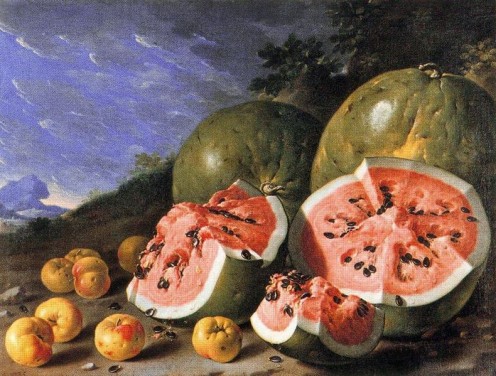
The Big Watermelon Myth
Even today, you’ll find popular “experts” claiming that you should not plant watermelons near cucumbers, cantaloupes, or squash because they will cross pollinate, and the flavor and quality of your fruits will be compromised.
There is a more complicated scientific explanation for why they don't, but I don't think it's necessary to spell out. Just remember that there is a lot of misinformation on the Internet regarding this.
Watermelons will cross-pollinate with “other watermelons” but not other members of the plant family. It is simply a long held myth that doesn’t affect your watermelons.
Watermelon Fun Facts!
- America ranks 4th in watermelon production. The states producing the most watermelons are: Arizona, California, Florida, and Georgia.
- Egyptian’s recorded watermelons in their hieroglyphics walls more than five thousand years ago.
- Egyptian kings had watermelon seeds placed in their tombs.
- No one produces more watermelons than China.
- Watermelons are believed to first showed up in the Kalahari Desert region of Africa.
- Watermelons had spread to Europe beginning in the Mediterranean countries.
- Watermelons were known to be in the U.S. by 1615 as both food and drinks. Some believe they came via seeds by African slaves.
-
Watermelons are an astonishing 92% water.
-
Early pioneers and explorers used watermelons as canteens.
-
August 18th is National Watermelon Day in America.