What Are The Benefits of Ezine Articles?

85
In some circles, the mere mention of the word "article" is rich with meaning. Listeners automatically know that the speaker is referring to electronic text, used on the internet, via web pages or email, to provide good quality content for websites and ezines. The benefits of having good quality content are obvious, and the benefits of providing it are, after about a half a second's thought, equally obvious.
In other circles, the word "ezine" draws a blank stare, and an "article" is something you might read in a printed newspaper or magazine. Articles have always been there in newspapers and magazines, and nobody ever stops to ask "why?" or "who benefits?", unless they work in marketing or print advertising sales.
Editorial, Advertising, and Advertorial
Traditional print publishing has always had the concept of "quality content" as distinct from "advertising".
"Editorial" is quality content, written by professional journalists, and they are supposedly unbiased and objective. Because of their perceived objectivity, journalists are trusted more than marketers. The Holy Grail of marketers is to get editorial coverage of their product or service.
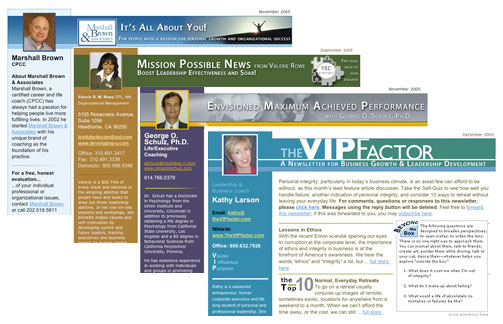
Here is an example of an editorial article.
Advertising is paid-for space in the publication. Everybody knows the space has been paid for, and everyone knows that the content of the advertising is written by the advertiser to serve their own interests. It is much less credible than editorial.
If you look at the top and bottom of this Hub, you will see paid advertising.
In this case, the advertiser only pays when someone clicks on their ad. That model developed because people were suspicious about the value of an ad that just sits there on a web page, and were no longer willing to pay for that.
Advertorial is paid-for space which is laid out and typeset to look the same as the editorial content of a print publication. The advertiser writes the words to go in the space. Over the years, there has been much controversy over advertorial, and many publications now mark those pages with the word "advertisement", to ensure that their readers don't mistake it for genuine editorial.
The Expert Columnist
More respectable than advertorial is the guest columnist.
An expert may be invited to contribute a regular column to a publication, sharing their expertise. The publication benefits by getting good quality content for free, and the guest columnist benefits by getting free publicity and the chance to build their reputation as an expert in their field.
What Is An Ezine?
An ezine is a magazine or newsletter which is distributed in electronic form, via email or on a web page.
Ezines tend to rely heavily on the expert columnist model, primarily because they are usually circulated free of charge and can't afford to pay for a staff of journalists. They are a good way to provide quality information to a subscriber list, which makes the subscribers more likely to stick around. The bigger the list, the bigger the response when you email out a sales offer.
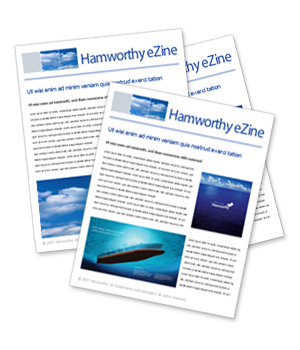
This is an example of an ezine - this one uses my articles quite regularly.
Some Article Directories Provide RSS Feeds
No articles found in the RSS feed.How It Works
Where Do Ezine Publishers Get Their Expert Columnists?
There are thousands of ezines being published. In fact, there are probably hundreds of thousands, or even millions by now.
All those ezine publishers are desperate for words to put in their ezines, and they usually don't have the time or the skills to write all their own content.
Enter the article directory.
An article directory is a website where people who are experts in something can put their articles, and ezine publishers can download them for use in their publication. The article is free, and can be reproduced forever, as long as it is not changed in any way, and the author's bio box (or resource box, as it is sometimes called) is included with the article.
This is a win for the ezine publisher, who now has a supply of good quality content, and a win for the authors, who get their name and links to their web site circulated far and wide with their articles. It's also a win for the article directories, because they put pay-per-click advertising on their sites.
The Benefits For Ezine Publishers
- Free content
- Expert commentary in their niche
- Speeds the process of compiling the ezine
The Benefits For Ezine Article Authors
- Free publicity in the ezines
- Traffic from the links in the bio/resource box
- Search engine boost from the backlinks in all the web page ezines
- Articles in directories are indexed by search engines
Which Article Directory Should I Use?
There are hundreds of article directories.
The word from the people who write a LOT of articles is that only a few of them really matter. I have submitted articles to several dozen directories, and I have seen visitors coming to my site from maybe four or five of those directories.
The ones which are unanimously recommended are:
ezinearticles.com (sorry, this can't be a live link because the RSS feed is from this URL).
And if you want to add a third:
I have recently joined Buzzle.com as an author, and my prediction is that they will become quite significant. You have to apply to be an author, and provide samples of your writing that have already been published. Their editorial guidelines are quite tough, so the articles there will be much better quality than those on some of the bigger article directories.

Comments
Thanks, Jill!
Loved your marketing one for small business - that's a must-read, I reckon.
Jenny
How do you think ezinearticles.com compares to HubPages in terms of getting traffic thru to your own sites? I am thinking of taking some of my shorter hubs off HP and submitting them to Ezinearticles.com
It's pretty similar - if I were you, I'd rewrite them enough to make them non-duplicate, and have them in both places.
Ideamarketers.com also delivers nice traffic.
I find Ezinearticles often do better than Hubpages in the search rankings, but of course traffic to an Ezine article is of no value to you directly. You have to convert that traffic into click through traffic to your site. But they do offer some statistics to authors, and you can track your click through rate. The key is to tell most of the story, but leave enough on the table that the reader will click through to your web page (or Hub). If you craft it well, you can get click throughs of 40% or more.
But make sure you don't have duplicate content. Some of my early articles were just article blasts, and the copies I have on Ezines are not even in the Google index anymore. But the good news is that you can go back and edit them later.
That's good advice, John - original content is always better.
What percentage unique content do you have to have to be safe? Is 50% OK? I've been pleasently surprised by the traffic I get from ezinearticles
I have seen experts quoting anything from 20% to 50%, so I would say that if you aim for 50% you're pretty safe.
That said, if the first half is identical and the second half is totally different, that would be 50% but would likely still trip the duplicate content filter. Exercise common sense, as always ...
Thank you, Jenny! Do you mind providing an example of one of your eZine articles and how it then will link back to one of your Hub pages. I am having a bit of difficulty understanding how an eZine article, written for eZine, would link back to a Hub and drive traffic to that particular Hub. Thanks for your patience with me!
Ann, I use eZine articles to link back to my "real" sites, like my blog, rather than to my Hubs, but the principle is the same.
If you look at the articles under "Some Article Directories Provide RSS Feeds", you will see that at the bottom of each article there is a little blurb about me, anf the blurb has a link or two in it. Those links point at my blog or my membership site - when you write your article, you would point those links at your Hub.
Those links are in the "Resource Box", not the body of the article itself.
I have several articles published by ezinearticles.com, but I don't have a blog yet, only HubPages. Buzzle.com looks interesting. I'll have to check it out.
VERY interesting and informative Hub - Thanks. The resource box is very important to direct readers to a lead capture page - works well with a special offer to a newsletter, e-book, etc.
I just published a Squidoo lens on article marketing >
http://www.squidoo.com/Secret-Article-Marketing
David
Thanks for your tips for article marketing. I run an article directory site but i always submit my articles to Ezinearticles. The reason is that my artyicles published by Ezinearticles show up the top 10 ranking on search resutls. I recommend to submit articles to Ezinearticles and some high pagerank article directory sites.
I'm confused. I just read this hub, and the Rss feed one, and it sounds as if you're suggesting we distribute our articles widely. But, if we do, we get flagged for duplicate content, unless we RADICALLY repurpose each article.
Am I missing something?
Hi! I'm confused. In this and the hub on RSS feeds, you seem to be suggesting what I've always been taught about article marketing and distribution. Lisa in the video describes a single article published over 300 times.
But, now, if that article had first been published on HubPages, and then submitted to ezine articles or another directory, it would be flagged for duplicate content. I read hubs in which people say if someone takes one of your hubpages and republishes it, track 'em down and make 'em stop.
So, I think I'm hearing two distinct things:
1. Use directories, get an article out to multiple sites, get lots of links back to your website.
2. Use hubpages and count on getting traffic only from your hub, or from an rss feed (so long as no one republishes your hub.
THe two contradict each other, don't they? Please help me sort this out. Thanks!
Bruce,
I always have a special version just for HubPages of anything that I write - for a start, my Hubs are usually much longer than the 400-700 word length of an article in an article directory!
HubPages will penalise a Hub which is duplicate content - has been previously published elsewhere on the internet - but it is perfectly OK to use material from your own Hubs elsewhere AFTER they are published.
In general, you should try not to publish the exact same article everywhere, because Google will filter out the copies and only show one in the search results. If you rewrite your articles to be at least 50% different, you have a better chance of showing up multiple times in the top 10 search results.
There is no reason why you can't do 1 and 2 both - I certainly do.
I use HubPages and Squidoo for longer articles with interactive components and multimedia, and then article directories and blogs to generate "buzz" about my websites, Hubs and lenses.
And even if someone republished your Hub, you should still get the benefits of being on an authority site, being the original version, and having lots of backlinks (assuming you do that).
Remember, everywhere you put your RSS feed on another site, it creates a bunch of backlinks to your Hubs ...
We use Ezine all the time at work. Thanks for the article.
Great information...RSS feed is still a puzzel to me. Is that automatically set up by HubPages when you include it in your article? You can tell I'm a newbie!!
There is a capsules called "RSS", Nancy - you paste in the URL of the RSS feed you want, and HubPages does the rest automatically.
"In general, you should try not to publish the exact same article everywhere, because Google will filter out the copies and only show one in the search results."
This is just a myth and is completely untrue. Here it's just an example: search on Google for "does ezine advertising work?" and you'll see my article posted on my blog, EzineArticles, Amazines, ArticlesBase and so on. The same article without any modification.
Best wishes, Adrian Jock
Thanks for that, Adrian, but don't leave us in the dark - how do you actually accomplish this feat?
I have dozens of keywords for which I have published articles, some the same, some similar, and some over 50% different. I have never been able to get two identical ones in the top 10 search results, but I have had up to six or seven in the top 10 when they were different from one another.
What's your secret?
Jenny
Some of my articles on Ezinearticles.com get some hefty traffic, but then I try and place the backlinks to my articles on blogs and other directories.
I think any site that actively has new articles published and categorized is a hit with the search engines that matter.
I suppose if I did more articles for ezine articles the views of them would eventually surpass here at Hubpages!!
Great hubpage here and useful too!!
Thanks, waynet, and good to hear that you are having success with Ezinearticles. Ezinearticles monitor content to make sure that each article is unique (well, at least 50% different, as far as I can tell), which means that Google looks fondly on that domain because it is not jammed with multiple copies of PLR articles.
sometimes ezine articles does not work for us
What do you think about associated content for links, there article guidelines are pretty tough especially if you are trying to get paid a little for each submission.
Do you think it's worth the hassle for backlinks from them?
Great blog! I wonder how ezine rates to hubpages?
Hi Inspirepub,
this is a very interesting article, I will look forward to reading some more of your hubs.
thank you :)


Jill Morgyn says:
2 years ago
Great article.