What Exactly Is A Memory Foam Mattress?


Memory Foam Mattresses - A Bit of History
Memory foam mattresses, over the last 20 years or so, have become increasingly popular in the bedding retail market, and for good reason. Memory foam was initially developed for use in the NASA space program years ago, to protect astronauts during G-force re-entry into the earth's atmosphere, because of its pressure relieving properties. It was never used in space flight, due to potential off-gassing in an enclosed capsule. Several years later, a company called Tempur-Pedic® began developing a mattress for hospital and post-surgical patients, in order to relieve bed sores and reduce pressure points for those patients who had long term stints in a hospital bed. As the years went on, the reputation from positive results for these patients, due to the pressure point reduction and comfort value properties of the memory foam mattresses, led Tempur-Pedic® to consider a retail avenue for these mattresses. This is how memory foam mattresses evolved into the retail bedding industry.
Is a Memory Foam Mattress Made Entirely of Memory Foam?
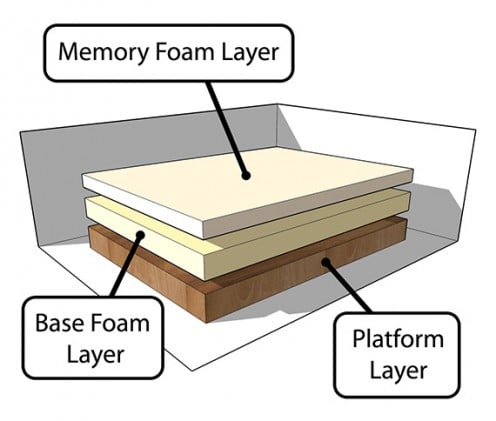
Memory foam mattresses are NOT made entirely of memory foam. Memory foam is situated as a layer of foam (typically several inches thick) on top of a thicker layer of polyurethane core or base foam (the base or superstructure of the mattress. These layers are laminated together with varying types of adhesives to keep them from coming apart. Look for a memory foam mattress using at least 3.2 lbs. density memory foam in its memory foam layers. You need this minimum density to assure that the memory foam will last and reduce pressure points. Underneath the memory foam layer/s again is the polyurethane core portion of the mattress. This core should be 6" or more of high density foam, and the density of this core foam should preferably be 2.0 lb density or higher.
Foam Education - Great Video!
What is Memory Foam Exactly?
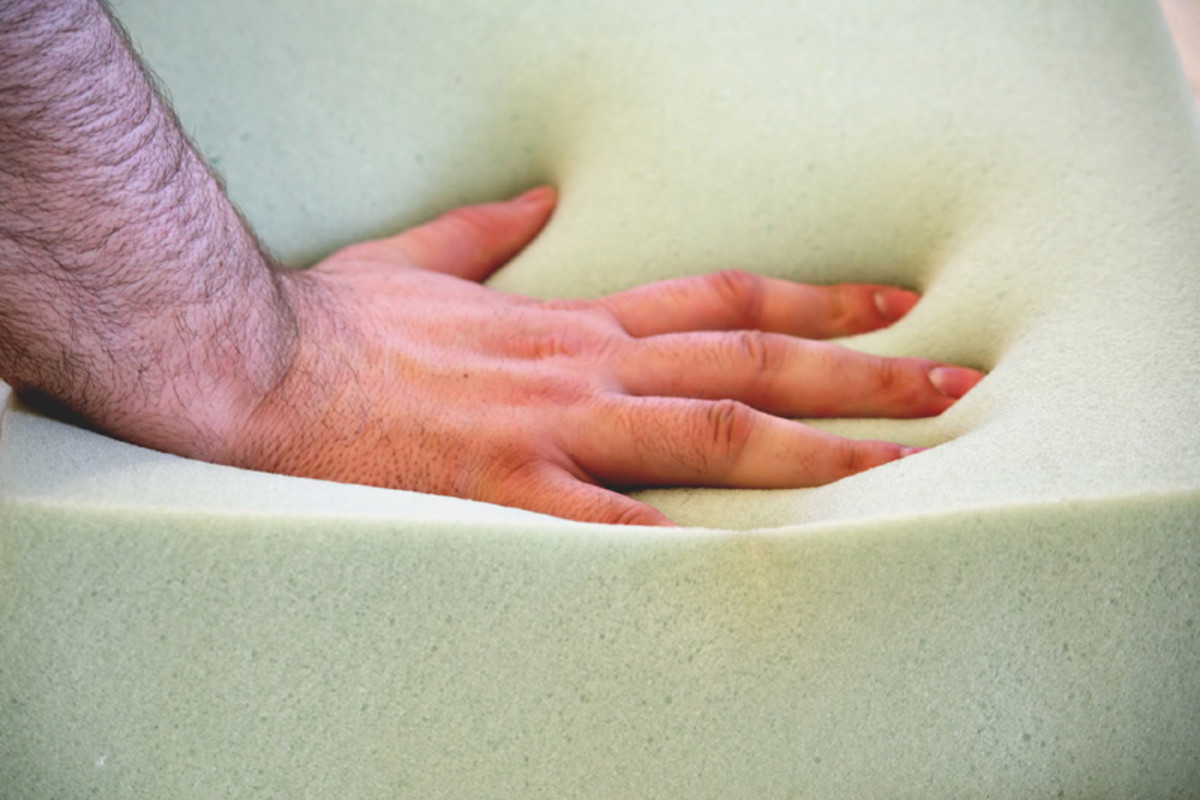
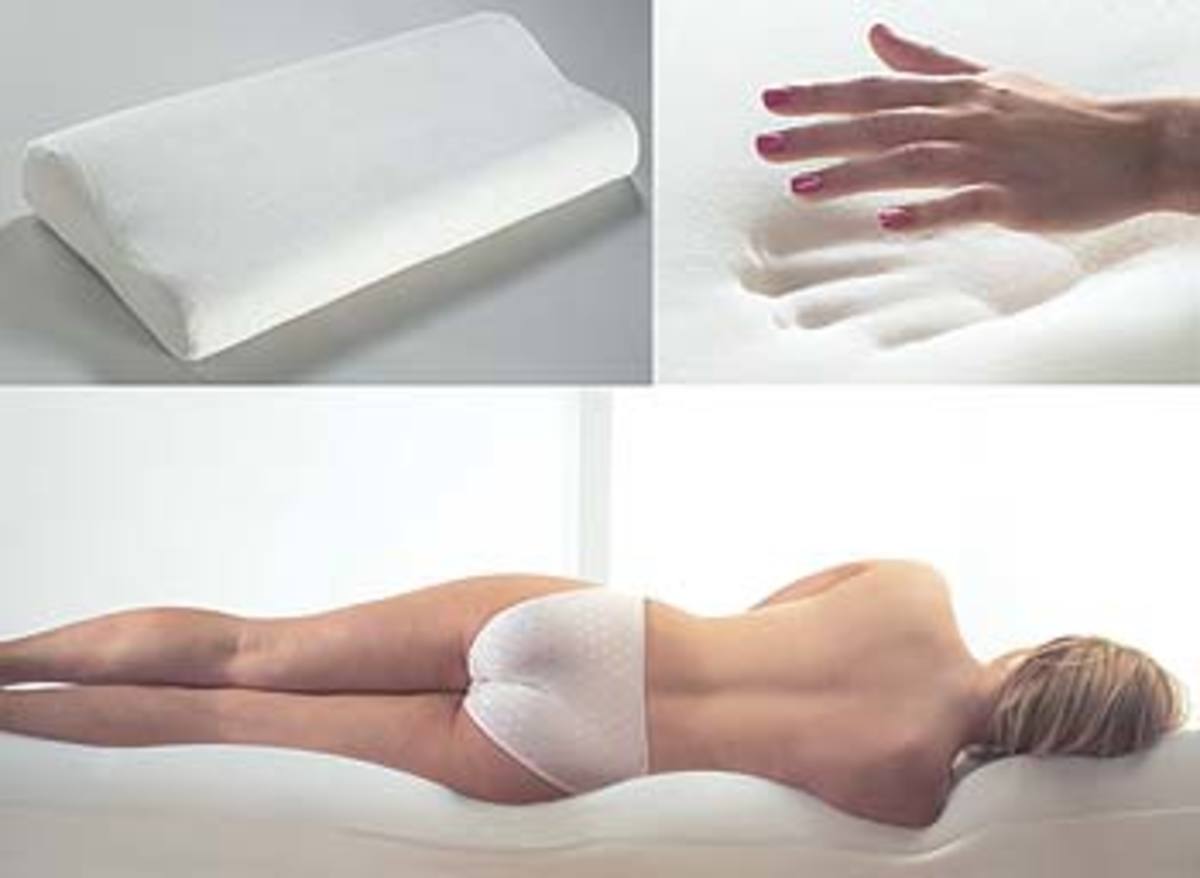
Memory foam is derived from petroleum. The petroleum is converted into a polyurethane foam. Additional chemicals are added to the polyurethane, that increase its viscosity level, which increases its density. Memory foam is typically referred to as visco-elastic (or heat sensitive) polyurethane foam. Depending on the chemicals used and its overall density, Memory foam is typically firmer in cooler temperatures and softer when warm. Higher density Memory foam reacts to body heat which allows it to soften and contour to a person's body within a few minutes. Lower density foams typically mold more quickly to the shape of the body as it heats up. I'm sure you've seen by now the often used image or video of the handprint left in the memory foam after pressure is applied, which is an example of this molding and conforming nature of Memory foam.
Done With Your Current Mattress, And Need a New One? Read On...
I've received hundreds of emails regarding questions about memory foam mattresses over the past several years since my hubs have been written, and most of the questions I received were basically "what should I look for in a new mattress?".. So, in response to this, I've decided to put together my top 3 memory foam mattress picks sold on Amazon.Com. I've zeroed in on memory foam mattresses because of their conforming nature on the body, their history of reducing back issues and back pain, and their benefit of keeping the sleeper in one position for longer periods, improving sleep patterns.. I've been in the mattress industry for about 10 years now, and have a very good understanding of how the business works. Some mattress retailers will actually create their own reviews to establish customer feedback on their mattresses, which is, in my book, a crime.. Amazon.Com doesn't work that way.. Their reviews and feedback are real. Actual consumers, with their own experiences, that took the time to review a product, so that other consumers know what they're getting.. I've studied these 3 top picks, the mattress' construction (the quality of both the core foam and memory foam layers, fabric and its stitching), the reviews, the pricing, and I'm telling you, the quality you get for the price CANNOT be beaten anywhere.. You will definitely get a quality mattress, at an unbeatable price, with Amazon's great return policy backing.. Read the reviews, research pricing, and see for yourself..
Here's the link: My Top 3 Memory Foam Mattress Picks. If you want to know what my top pick is, it's the 
- How to Choose A Good Memory Foam Mattress
This is a link to another HubPage I've written on helping consumers choose the right memory foam mattress for them.
- Don't Just Throw Out Your Old Mattress, Donate It!
This is a link to another HubPage I've written with pointers on how to donate your old mattress.
Related
Serta Gel Memory Foam Mattress Topper Review

What Type of Foundation Is Best for Memory Foam and Latex Mattresses?
Buy a Tempur or Memory Foam Mattress for the Perfect Night's Sleep.

Postprandial Hypotension (The Symptoms, Causes and Treatments)
Warnings & Wisdom on Buying a Latex Mattress - by an Ex-Mattress Salesperson