What is a Brain Haemorrhage?

what is a brain haemorrhage...
Understanding a brain haemorrhage...
If you are wondering what is a brain haemorrhage because it has either affected someone you love or fear that it may happen to you, then this article will help you better understand the many complications by explaining what a brain haemorrhage is and the current treatments being used on patients.
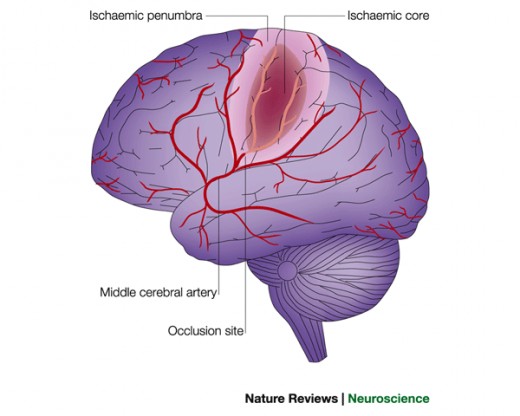
Unfortunately, a brain haemorrhage is a serious and potentially life-threatening condition. It occurs when blood leaks out of blood vessels over the surface of the brain. It is known as a subarachnoid haemorrhage because the bleeding occurs in the arteries that run underneath a membrane in our brain called the arachnoid, which is just below the surface of the skull.
Can a Brain Haemorrhage be Inherited?
It is rare for a brain haemorrhage to inherited. However, if relatives of the first degree have been affected (such as mother, father, sibling, child) by a spontaneous brain haemorrhage it may be worthwhile discussing the significance of your family history with your own doctor.
A spontaneous brain haemorrhage (i.e. not caused by injury) is often due to weakened or damaged blood vessels rupturing and bleeding within or around the brain. There is no room for a large amount of blood within the confines of the skull, so any bleeding causes serious damage to brain tissue by increasing pressure within the skull and disrupting the normal blood supply to the brain.
When bleeding occurs deep within the brain (intracerebral haemorrhage), it causes sudden loss of neurological function in a part of the body (haemorrhagic stroke or 'cerebrovascular accident') and collapse.
Sometimes bleeding occurs on the surface of the brain (subarachnoid haemorrhage) and this causes a severe headache of dramatically sudden onset, associated with vomiting, sensitivity to bright light and, not infrequently, collapse and coma too. As with all things in medical, the symptoms can vary, be mixed up, or may not always present itself with typical features.
Occasionally, dilated blood vessels with weak walls (berry aneurysms) are in-born, but often the underlying problem is damage caused by smoking, high blood pressure and clogging of the arteries.
In this video Dr. Carlo Oller, emergency physician, discusses the case of a patient with a brain hemorrhage
Symptoms for a Brain Haemorrhage?
There's often little or no warning that a subarachnoid haemorrhage is about to occur. Typically, the person collapses with a sudden headache, unlike any they've experienced before. They may vomit, develop signs of meningitis, such as neck stiffness and a dislike of light, while becoming rapidly drowsy, confused and unconscious.
In milder cases, the illness may appear like migraine or meningitis due to an infection, but in severe cases it's quickly apparent that something is seriously wrong.
How is a Brain Haemorrhage Diagnosed?
Once a person reaches hospital, a diagnosis is usually quickly confirmed with a CT scan of the brain.
what is a brain haemorrhage...
- Cerebral hemorrhage - Wikipedia, the free encyclopedia
For a fuller definition of a brain haemorrhage, you can check out Wikipedia...
What's the Treatment for a Brain Haemorrhage?
Those who survive the initial episode are at greater risk of another bleed unless action is taken. The standard treatment used to be surgery, which involves opening the skull and clipping off the faulty blood vessel. This operation, known as clipping, is usually done within days, but in severe cases and the elderly it may be delayed for a few weeks. However, although the operation puts an end to the risk, it carries a risk of damage, although this risk is far less than that of a second bleed.
In recent years, a new technique has been developed as an alternative to clipping, known as endovascular detachable-coil treatment or coiling, a detachable plantinum coil device is inserted into the blood vessels via a small cut in the skin (usually in the groin) and passed up into the brain under x-ray guidance to block off the faulty vessel.
In 2005, a long-term follow-up study of patients treated with coiling showed that it's as effective as surgery, has a lower risk of complications and offers a greater chance of survival without disability. It's now the standard treatment for most aneurysms in most areas of the UK.
Recovery from any type of stroke tends to be slow. Intensive rehabilitation therapy, including physiotherapy, speech therapy and occupational therapy are usually needed.
Depression is a common problem after a stroke and good psychological and drug treatments are often essential to help with recovery.
After decades of being viewed as a fairly hopeless condition where only little treatment could be done, new approaches are at last starting to make some impact on recovery rates from strokes. For example, researchers have shown for the first time in humans that rehabilitation therapy may help a stroke survivor's brain rewire itself, leading to regained use of a previously unused limb.
All these developments have helped many who have suffered from this unfortunate condition. If someone close to you has been affected, let them know that there are options available. It is still possible for someone who has suffered from a brain haemorrhage to have a chance at a full and long life if they are treated properly.