What is Your Sexuality?

Note
This article is the second in a series about gender and sexuality issues.
For an explanation of the difference between biological sex and gender identity (an important distinction made repeatedly in this article), please visit What is Your Gender Identity?
Human sexuality is a complex and still poorly understood subject. It seems to be dependent on a variety of genetic, biological, environmental, and other factors.
The most commonly accepted sexualities include the following:
Heterosexual: Sexual attraction to the opposite sex
The majority of heterosexual couples consist of one biological male and one biological female. However, some transsexual people also consider themselves heterosexual, i.e. a transwoman who is biologically male but considers herself female would probably consider herself heterosexual if she is attracted to men.
Homosexual: sexual attraction to the same sex
The best known of the sexualities considered "alternative" in most Western cultures, but probably not the most common.
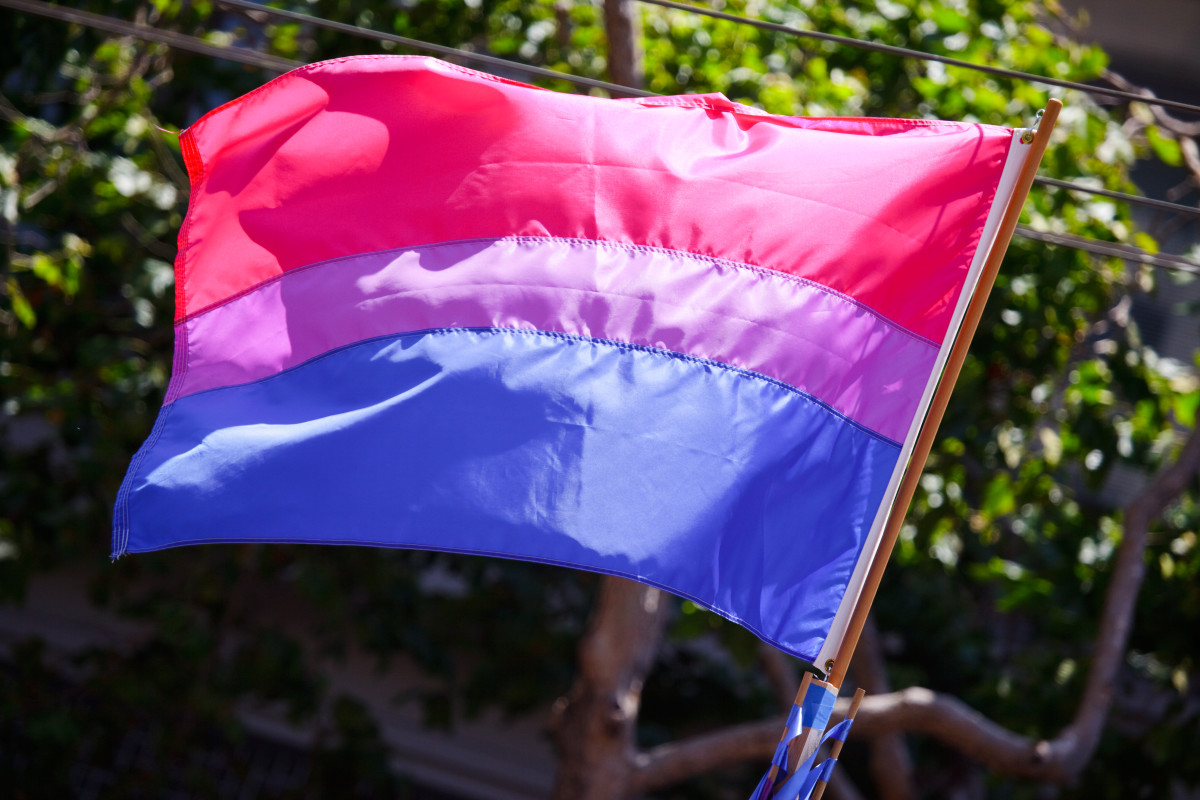
Bisexual: sexual attraction to both sexes
Many bisexual people lean more towards one sex or the other in their sexual feelings and relationships, but some are more or less evenly split. A subcategory of bisexuality is bicurious, which applies to people who identify as hetero or homosexual but who are nevertheless interested in exploring sexual relations with people of the opposite sex they usually prefer.
Asexual: lack or near-lack of sexual feelings
Asexuality is sometimes caused by physical or psychological conditions such as hormone imbalances, but in some individuals it is apparently congenital.
Demisexual: a person who experiences sexual attraction only through emotional intimacy
Demisexual is a term coined by the asexual community to describe a sort of halfway point between sexuality and asexuality. Demisexual people are not typically sexually attracted to people based on gender or physical appearance, but experience it more as a side effect of emotional intimacy.
Pansexual: sexual attraction to people regardless of biological sex or gender
Pansexuality, also sometimes known as omnisexuality, is closely related to bisexuality, and there is considerable overlap between the two terms. People who choose to identify as pansexual instead of bisexual often do so because they object to the binary male-female gender system. In practice, their behavior is likely to be very similar or identical to that of people who identify as bisexual, but pansexuals choose the term because it is more inclusive of all biological sexes and gender identities.
Paraphilia: sexual attraction related to objects or situations, often called a fetish or kink
Paraphilia can exist in addition to another sexuality or by itself. Paraphiliacs have a reputation for sexual deviancy - pedophilia, or sexual attraction to underage children, is a form of paraphilia, as is bestiality and sexual sadism, a common component in the crimes of serial killers and rapists - but the majority of paraphiliac fetishes are harmless. In fact, most people are mildly paraphiliac. The lesbian theme common in pornography intended for heterosexual men is a common example of a paraphiliac fetish, as are titles such as Barely Legal and Busty Asian Beauties. In some individuals, however, the paraphilia is developed to the point that they can ONLY achieve sexual release if their particular fetish is involved.
Sexuality in Nature
In many Western cultures throughout history, heterosexuality has been considered the only "normal" sexuality, and other sexualities were seen as "deviant," "unnatural," or even "sinful."
However, as the fields of biology, zoology, and ethology have become better studied, it has become increasingly clear that the animal kingdom is full of "deviant" and "unnatural" behavior. To date, homosexual and bisexual behavior has been documented in over 1500 animal species, and thoroughly documented in over 500, including the closest living genetic relative of modern human beings, the bonobo, or pygmy chimpanzee. These findings call into question the characterization of homosexual and bisexual behavior as "unnatural."
The biological causes of homosexual and bisexual behavior are not well understood. Because homosexual behavior among wild animals is not reproductive, its existence seems counter-intuitive. How does it benefit the survival of the animal and its genes? One theory suggests that homosexual individuals, especially among social species, may serve an evolutionary purpose by assisting in the care of their relatives' offspring, improving their survival rate.
Another theory is that homosexual behavior serves as a form of population control within communities and species. Homosexual activity allows animals to achieve sexual release and social bonding without reproduction. Just as environmental stressors on a population may cause some species to murder their own offspring, other species may respond by increasing the percentage of homosexual behavior and/or individuals relative to heterosexual behavior. When the stressor disappears, heterosexual activity may rise again.
For example, among many social animals "extra" males commonly live in small "bachelor" groups where homosexual activity is rampant. Some of these males will later become the lead male of a family group of females and their offspring. Others will stay in the bachelor group forever. Homosexual activity has also been observed in exclusively or predominantly female groups. Bonobos are one of a number of species where some females have been observed choosing homosexual sexual activity over heterosexual activity when the opportunity for both is presented at the same time. In fact, nearly all bonobos seem to be actively bisexual.
What is your sexuality?
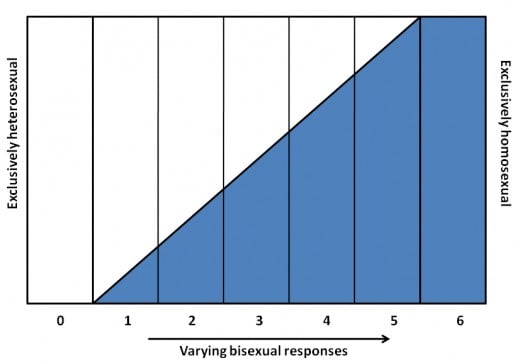
This suggests that animal sexuality may exist on a spectrum, much as
Alfred Kinsey suggested in the 1950s about human sexuality. Some
animals are exclusively heterosexual or homosexual, but many (probably
the majority) are effectively bisexual, able to engage in either type of
activity depending on opportunity and circumstances
Many human
bisexuals are very open about the circumstantial nature of their sexual
feelings and activity. "It's not the plumbing [male or female
genitalia], it's the person" is a phrase heard over and over again.
Likewise, most people who are exclusively hetero/homosexual would agree
that they are not attracted to every single person of the opposite/same
sex.
Kinsey argued that human sexuality was more accurately
described as a spectrum (known as the Kinsey
Scale) than a series of distinct categories. A small number of
people belong at either end of the spectrum - exclusively hetero or
homosexual - and another small group in the exact center, while the vast
majority lie somewhere along the continuum in between - leaning one way
or the other but capable of feeling attraction to either sex depending
on opportunity and circumstance.