What is the role of occupational therapy in orthopedics?

What is occupational therapy?
Occupational Therapy helps disabled persons achieving a good quality of life and earn a good living with activity modification and workplace management. Now before knowing the role of occupational therapy or OT in orthopedics, you must know what is occupational therapy. From what I have read and understood in the past years, occupational therapy means enabling people having physical/mental disabilities or abnormalities to achieve a good functioning life and helping those disabled individuals live their life independently and helping them earn a good living by assessing the injury sustained and treating it with the help of splints, orthotics, ergonomic evaluation, modifications at workplace and managing it.
Do you want to become an occupational therapist
Role of occupational therapists in orthopedics:
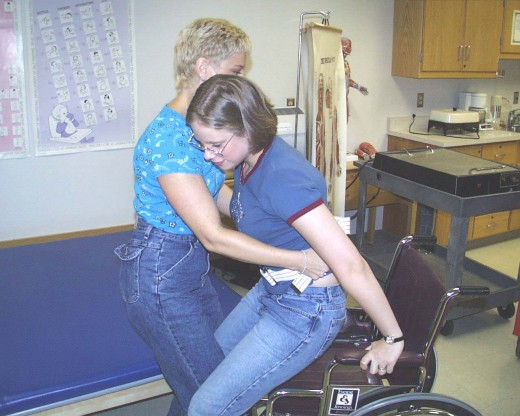
Occupational therapists role consists of Assessment, Planning, Implementation, and evaluation of management. In management, primary role is improving the skills in activities of daily living, work, play, and leisure.
Further role includes but not limited to:
- Designing and Fabrication of Hand Splints. Occupational therapists are considered as specialists worldwide, with added practical knowledge in hand rehabilitation and training. They have advantage over orthotist who also makes an orthosis.
- Designing and fabrication of adaptive devices which helps the disabled people to be independent in their function.
- Occupational therapists are specialists in Hand Function Training, since work requires more of good hand function, occupational therapists are trained well in hand function management. In US, both occupational therapist and physiotherapist along with orthopedicians are eligible to become Certified Hand Therapists.
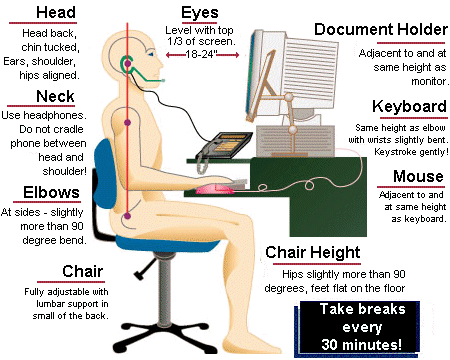
- Occupational therapists are also ergonomic consultants who make modifications at workplace, make modifications of working method, make adaptive devices to make sure that work is done without much difficulty.
- Occupational therapists are generally trained in functional capacity evaluations, job analysis, work hardening, work conditioning, and vocational training programs.
- Most commonly used approaches by Occupational Therapists are humanistic, psychosocial, compensatory, and biomechanical.
What is work hardening?
Work Hardening is a work-oriented treatment program and the outcome is measured in terms of the improvement in the client's productivity. It is a comprehensive interdisciplinary approach that uses graded work stimulation to address the biomedical and psychosocial problems of the injured worker. Improvement in productivity is achieved through graded activity designed to increase work tolerances, improve work rate, master pain, improve work habits, and increase confidence and proficiency with work adaptations or assistive devices. It involves the client in highly structured, simulated work tasks in an environment in which expectations for basic worker behaviors (timeliness, attendance, and dress) are in keeping with workplace standards. Program duration varies from 2 to 12 weeks with daily participation ranging from 2 to 8 hours.
Work hardening programs use a variety of tools, equipment's, work samples, and work capacity evaluation devices (WCEDs). WCEDs allow presentation of tasks that simulate job tasks and that can be graded in difficulty or length of time involved. There are more than 500 work hardening programs identified in US and the large majority of these programs were established by occupational therapists.
One of the classic work hardening program is at the Liberty Mutual Services Centre in Boston, Massachusetts. Occupational therapy at this center offers clients with chronic low back injuries a favorable environment where they can practice and improve the execution of work-related activities needed to perform their jobs while learning to live with or control symptoms. Monitors and workstations have been especially designed and developed to evaluate and develop work tolerances.
Treatment includes client education through discussion, demonstration, active participation, and visual aids. Topics include anatomy of the spine, body mechanics, energy conservation, relaxation techniques, and weight reduction, if appropriate. relaxation techniques include progressive relaxation techniques, meditation, increased body awareness, and control of breathing and muscle tension.
Modalities used include a balanced monitor that provides feedback on weightbearing and symmetry of posture. A multi-workstation simulates construction jobs. The truck simulator uses a truck cab along with a computerized video road screen to simulate and measure the driving process. A computerized pneumatic lift has been designed to simulate lifting process. An upper extremity work simulator similar to the BTE (Baltimore Therapeutic Equipment) is used to simulate various upper extremity work tasks.
Research on the effectiveness of work hardening programs has been systematically gathered since the mid 1980s. Return to work statistics obtained from these programs ranges from 50 to 60% to 85 to 88%.
What is work conditioning
When a client has got an uncomplicated injury and his/her physical limitations are precluding return to work, work conditioning may be an appropriate intervention. Work conditioning is typically provided as a uni-disciplinary or bi-disciplinary occupational and/or physical therapy half-day program that uses exercise, aerobic conditioning, education, and limited work tasks to restore an individual's systemic and neuromusculoskeletal function like endurance, strength, flexibility, movement, and motor control, so that the clients can return to their work or become physically re-conditioned, so that vocational services can be commenced.
Related

Nursing Home Rehab: A Basic Guide

The Amazing Benefits of Music Therapy for Treatment and Healing
Diabetic Foot Ulcers And The Use Of low Level Laser Therapy(LLLT) or Photobiomodulation

5 Strategies That Relieved My Neck, Shoulder and Upper Back Pain

Twelve Things That Alcoholics Anonymous Doesn't Want You to Know