World War 2 The Homefront WW2

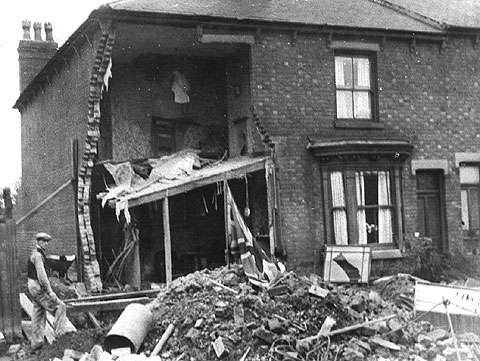
Bombed House in Wolverhampton
1940 British Home Front
Difficult Times
In the Present day many of us think that living through the Credit crunch has been one of the most difficult times in our entire lives, worrying where our next meal may come from, if we can afford the next payment on our mortgage, wondering how we will cope if fuel prices rise again, could we afford to run our cars?, heat and light our homes? can we afford to eat today?.
Although times are tough today we will pull through it soon and our lives will eventually get back to normal.
To the people who lived through World War 2 the credit crunch that we are going through today would be just a little blip in their everyday way of life, the worries and fears that we in the present day have are paled in comparison with how families used to live during the worst time in the history of the world.
Rationing made it difficult for everyone even if they had enough money to buy the best rationing ensured that no matter of status everyone had the same amount of food, clothing and fuel.
The constant threat of losing your home or even your life in an air attack by German bombers ensured a country living in constant fear.
Fearing for the lives of sons brothers and fathers fighting in foreign lands added to their worries.
People carried Gas masks fearing a gas attack at any moment in time, they even had special suits made for babies.
There was also the constant threat of imminent invasion by the German armed forces.
The people of Britain had it tough but by pulling together and making do with what they had the morale of the common people was at an all time high. Many people who survived World War 2 at home remember it as a time of hope and a time of pride in their country and may people still refer to World War 2 as the best time in their lives.
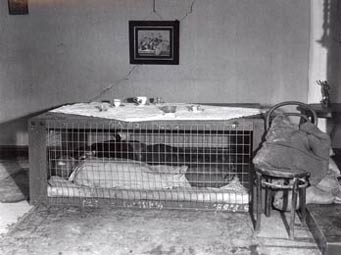
Morrison shelter
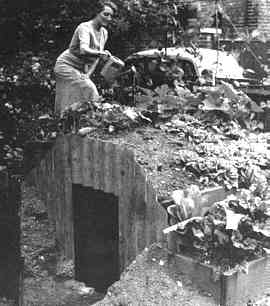
Anderson Shelter
Newsreel from the Battle of Britain
Preparing The Home for War
Shortly before the outbreak of WW2 leaflets were sent out to every household and business around Britain, informing the population to prepare their homes for enemy bombing raids, the leaflets information on blackout protection, covering windows and doors with either thick black curtains or even painting windows black to prevent light from housing being seen from the air.
As well as blackout for windows people were advised to tape up windows to prevent flying shards of glass should a bomb explode in the vicinity
Gas Masks were issued to every member of the population in preparation for Gas attacks from the air and decontamination stations were set up in the event of a gas attack.
Morrison shelters were also issued "where available" for inside the home a Morrison shelter was a cage fitted around a bed which offered protection from rubble and debris if your home suffered a direct hit. The Morrison shelter was provided free to households who's total income was less than £350.00 a year.
Anderson Shelters which were mainly used in the suburbs rather than in the city, because city homes rarely had gardens, were sectional corrugated iron shelters intended for use in the back garden of the home, the shelters were built into holes in the ground at least one meter deep and the earth from the hole was then spread on top of the shelter for extra protection.
Because the Anderson shelters were partially underground they were cold, damp and draughty and if there was a heavy rainfall they would often flood, but lessons were learned and people started putting drainage systems in place to help prevent the flooding.
Although the Anderson shelter would not survive a direct hit they were good protection against near misses and flying fragments.
People were resourceful and came up with ingenious ways of heating their Anderson shelters, drinks could be kept warm in thermos flasks, or Hay bottles which were bags wrapped around bottles of hot liquid which were stuffed with Hay or wrapped up newspapers, a brick sat in front of the coal fire for an hour or 2 then wrapped in a woolen jumper would make a great bed warmer and a heater was made from a candle and two clay flowerpots place the candle in one of the flowerpots lighting it and putting the other flowerpot upside down on top of the other provided a great source of heat.
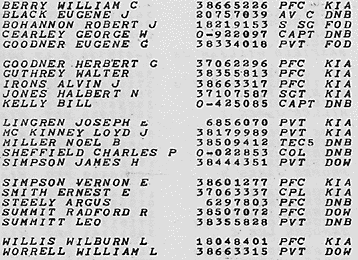
Casualty Listing
News from The Front
Because Television was blacked out during World War Two, families would sit around their wireless (radio) for entertainment and to hear news from the front line, and a trip to the local cinema was in order if you wanted to see moving pictures from the war, and the latest information from the famous Pathe News.
The morning newspapers were a must read for those who had family fighting in one of the many battles of World War 2 because there was a list of casualties from the previous day.
some people found out about the wounding or even death of a family member from the newspapers before they received the dreaded telegraph message edged in black.
Letters were sent home from the front line every day but they were censored and sections were blacked out for secrecy although some soldiers wrote in code so that their families knew where they were fighting their war some beat the censors but most didn't.