What is Psoriasis and can it be cured?
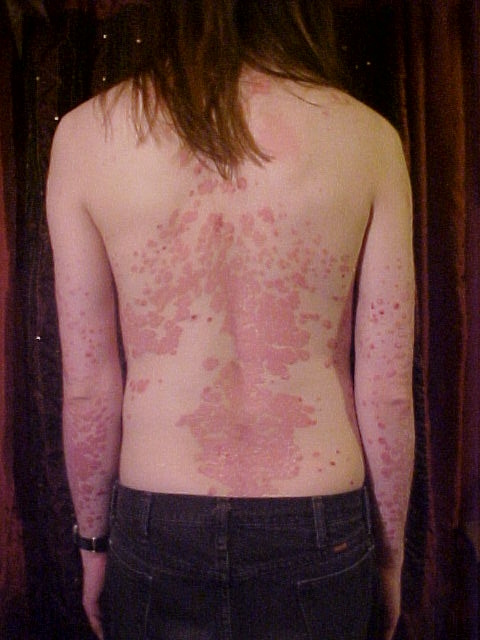
What is Psoriasis?
Psoriasis is a disease which affects the skin and joints and commonly causes red scaly patches to appear on the skin. The scaly patches are areas of inflammation and excessive skin production. Psoriasis can cause pain, itching, burning and emotional distress. It affects both sexes equally and can occur at any age, although it most commonly appears for the first time between the ages of 15 and 25.
Today more than seven million Americans suffer with psoriasis. Recent studies show that there may be an ethnic link. It seems that psoriasis is most common in Caucasians, slightly less in African Americans and far less common among Asians and Native Americans.
Psoriasis is not contagious. You can't catch psoriasis from another person or give it to someone by touching them, and you can't spread it to other parts of your body.
Psoriasis is probably one of the longest known illnesses of humans and simultaneously one of the most misunderstood.
Types of Psoriasis
Several types of psoriasis exist, each with unique signs and symptoms. These include:
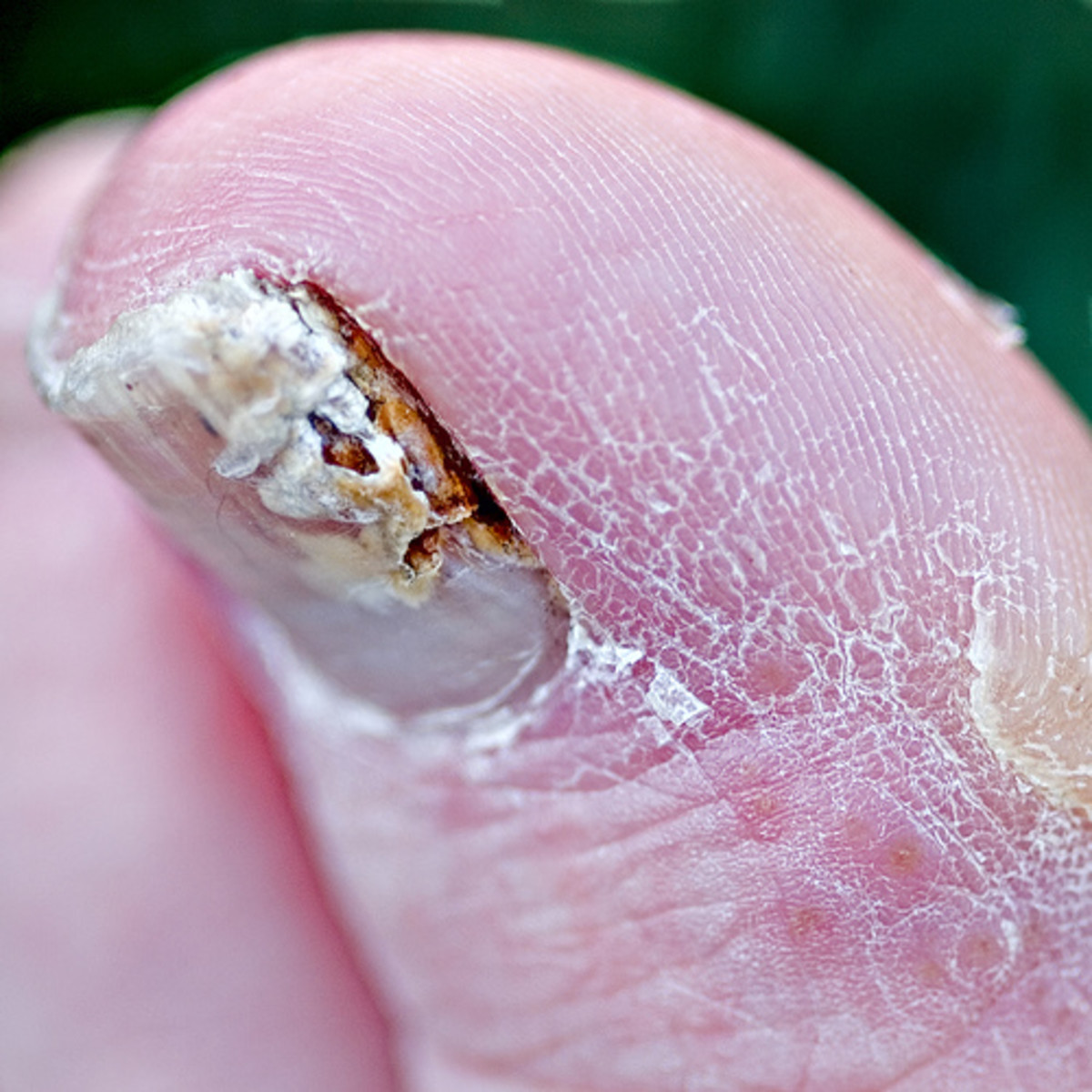
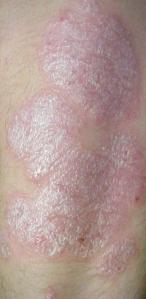
- Plaque psoriasis (psoriasis vulgaris) is the most common form of psoriasis. It causes dry, red skin lesions (plaques) covered with silvery scales. The plaques itch or feel sore and may occur anywhere on your body. About 80% of people who develop psoriasis have plaque psoriasis. Nail psoriasis produces a variety of changes in the appearance of finger and toe nails (pitting, abnormal nail growth, discoloration). Psoriatic nails may become loose and separate from the nail bed (onycholysis). Severe cases may cause the nail to crumble.
- Scalp psoriasis occurs in at least half of all people with psoriasis. It can range from very mild with fine scaling to very severe with thick, crusted plaques.
- Guttate psoriasis primarily affects people younger than 30 and is usually triggered by a bacterial infection such as strep throat. It is characterized by numerous small oval spots that appear over large areas of the body, such as the trunk, limbs, and scalp.
- Inverse or Flexural psoriasis mainly affecting the skin in the armpits, groin, under the breasts and around the genitals. It appears as smooth inflamed patches of skin and is aggravated by friction and sweat.
- Pustular psoriasis appears as raised bumps that are filled with non-infectious pustules. Yellow round pustules appear on the palms of the hands and the soles of the feet, or generalised with widespread patches occurring randomly on any part of the body. They gradually turn brown and are shed as scales reach the surface. Generalized pustular psoriasis can also cause fever, chills, severe itching, weight loss and fatigue.
- Erythrodermic psoriasis is the least common type of psoriasis but very serious and may require admission to hospital. Erythrodermic psoriasis can cover entire body with a red, peeling rash that can itch or burn intensely. This form of psoriasis can be fatal, as the extreme inflammation and exfoliation disrupt the body's ability to regulate temperature and for the skin to perform barrier functions.
- Psoriatic arthritis is condition that causes deterioration, pain, and stiffness in the joints. Symptoms range from mild to severe. Psoriatic arthritis most commonly involves the fingers and toes. Joints in the neck, back, knees, ankles, and other areas also may be affected. In addition to being painful and stiff, the involved areas usually feel hot. Although the disease usually isn't as crippling as other forms of arthritis, it can cause stiffness and progressive joint damage that in the most serious cases may lead to permanent deformity. About 10-15% of people who have psoriasis also have psoriatic arthritis.
Treatment
Many different treatments are available to help control psoriasis, but there is no single solution that will work for everyone. The main goal is to find a treatment that works the best and has the fewest side effects. The basic idea of any treatment is to not worsen the situation. Currently, there is no cure for psoriasis, but many different therapies can help reduce, or in some cases even stop its symptoms.
Besides traditional psoriasis treatments such as topical treatment, phototherapy, and systemic treatment there are also many alternative treatments that are becoming quite common. People have become tired of finding a traditional therapy that works, or may be concerned about the side effects many of those therapies produce. Alternative psoriasis treatments are in most cases perfectly safe and include:
Acupuncture, Ayurveda, Osteopathy, Climatotherapy, Diet, Dietary Supplements, Homeopathy, Water Therapies (Balneotherapy, Heliotherapy, Phytotherapy, Thalassotherapy), Traditional Chinese Medicine Treatments, Meditation and Relaxation, Herbology, Hypnosis, Natural Skin Moisturizers, Magnets, Epsom salt, Neem oil, Fasting...