Hydroponic Systems Produce Huge Harvests


BaddAss Grow Ventilation Tactics--Erik Biksa
http://www.advancednutrients.com presents Hydroponics Secrets giving hydroponics growing BaddAss ventilation tactics for grow room cooling, de-humidification and air movement with host Erik Biksa. Please check out Erik's other videos at http://www.youtube.com/user/hydroponicssecrets

Austin Aquaponics - Huge basil at HannaLeigh Farm
Let's take a tour in the HannaLeigh Farm where they grow huge Basil through Aquaponic.
Hydroponic Lettuce Experiment-Vertical Growing
This is the video showing how to grow Lettuce plant hydroponically and how fast they grow without the use of dirt or soil.
Watch it and hope you find it interesting and informative..
Spannabis 2012 Big Mike Interview part 1
We interview Big Mike during Spannabis 2012...http://www.urbangroweronline.com/
AgriHouse Air Foods - aeroponic organic food production
iscovery Channel interview (aired January 15th &16th 2009) with Rick Stoner, Founder and President of AgriHouse Inc. Includes tour of the Air-Foods facility in Denver, Colorado. Rick discusses wheat and the impact that aeroponics can have world food production.
UW Grad Student's Hydroponic Tower System Grows Lots of Veggies
UW Ph.D. candidate Nate Storey describes his hydroponic tower system that uses fish to provide nutrients for his main product -- vegetables. He tied for first in the 2011 Wyoming $10K Entrepreneurship Competition through the UW College of Business this past spring
Does Medical Marijuana Cause Paranoia?
Some medical marijuana users report intense, sudden, unjustified fear, verging on paranoia, after smoking strong marijuana, especially Sativa strains. I call this “maranoia,” and I’ve experienced it myself.
In a later article, we'll explore how to recognize and banish maranoia. In today's article I am also detailing another type of marijuana-related paranoia. This type of paranoia occurs in the hydroponics industry itself. Here’s the interesting situation…
We've all heard of Maximum Yield—an influential powerhouse in the hydroponics industry. For many years, Maximum Yield was the only glossy, non-marijuana hydroponics magazine.
Further, Maximum Yield organizes and hosts the only annual series of hydroponics “indoor gardening expo” events in North America. Maximum Yield expos provide unique opportunities for hydroponics companies and growers to network and view hydroponics merchandise.
Maximum Yield expos are as professionally run as any high-end trade show. It's a perfect time for hydroponics businesspeople to catch up on international hydroponics industry news, and for thousands of growers to see a massive hall filled with wicked hydroponics gear and people who love hydroponics. The expos are fun...and good for business!
Continue reading...
http://bigbudsmag.com/grow/article/does-medical-marijuana-cause-paranoia-february-2012
My first venture & success in Hydroponic farming. Here is my hydro Wheatgrass!
I have been curious about growing plants hydroponically so I decided to try it on a small scale with some wheat grass. With my own system I was able to sprout and grow Wheatgrass with only water.
Hydroponic Wheatgrass @ PuraVegan
Hydroponic Wheatgrass @ PuraVegan

Discover The Marijuana Sex Secret Viagra Makers Don't Want You to Know
Everybody's wondering when pharmaceutical companies will create Viagra for women. But Viagra for women already exists: it's called marijuana. Now I'm going to give you an insider marijuana sex secret so explosive that Viagra pharmaceutical companies absolutely hope you don't know about it.
Before I let you in on this marijuana sex magic, we need to pop the bubble of the oft-repeated claim that smoked marijuana is an automatic aphrodisiac. As much as I'd like it to be true, there’s no way you can be sure that smoking marijuana will make you hornier or more orgasmic. Depending on the strain of marijuana and the person, in some cases the opposite could be true.
On the other hand, marijuana can be a potent aphrodisiac, especially for women, but only if you use this dynamite marijuana sex secret that I discovered one memorable day in a massive marijuana plantation in Northern California, surrounded by towering plants ripe with phat, gooey marijuana flowers glistening in the sun, their resin glands filled with THC.
I saw containers of professional "Heavy Harvest" marijuana fertilizers and supplemental THC boosters, so I knew this sweet-smelling outdoor ganja was gonna be ultra-potent!
Happy hippie girls were on the marijuana gardening crew. They’d just returned from Eugene, Oregon, where they'd performed onstage at a “hemp festival," and they were frisky and frolicking.

Hydroponic How To: lettuce production
This video shows you how to do hydroponic lettuce production using rockwool. We actually grow lettuce on a commercial scale but the idea is the same scaled down. You can use this method to germinate and sprout other plants and vegetables as well.

2012 Feed your family by Aquaponics 1
Attended a 4 days training course between 4th to 8th October, 2010 in setting up an Aquaponics system in Hilo Island, Hawaii. It is organic certified process and very low cost to set up, scalable and use less than 1% of water and 40% energy compare to traditional commercial farming. The course is run by Tim Mann and Susan Friend, Friendly Aquaponics. Inc,

How High? Super-Stoner Tips for Medical Marijuana Maximization
In my previous article, I talked about a time when I needed more and more marijuana to feel what I used to feel with less marijuana. Everybody has their own relationship with the healing herb, but me personally- I got to the point that I only felt a mild buzz smoking nearly-pure THC concentrate and could not even feel the strongest regular whole bud.
So I started researching ways to keep on getting high and enjoying it, without causing myself problems. I now offer you some tips to help you make the most of marijuana in your life:
• Take a break. Unless your medical needs require that you dose yourself all the time just to keep pain or other symptoms at bay, try not using marijuana every day. Take a few days break until your brain feels unstoned again. This has the added benefit of clearing your cannabinoid receptors so you feel more of your high, and can better judge how strong your weed is if you’re a buyer or grower. If you want to judge the potency and quality of marijuana, you need a clean brain. Three to five days without getting high is a minimum for that. When you smoke again after a period of cessation, your brain is more neutral and fresh, so you can better evaluate the potency and qualities of your marijuana.
• Use different types of marijuana, different forms of it, and different methods of use. Many marijuana lovers sense that the brain habituates to a particular cannabinoid profile when you use the same strain of marijuana over and over. This might mean that your brain loves that strain and is adapted to it beneficially, or it might mean that your brain after a while no longer gives you anything fun when you use that strain. So try using strains that are radically different from the ones you’re used to. If you’re regularly using Kush, try using a pure Sativa, or vice versa. Mix up the types of hydroponics marijuana you grow or use, and see if it improves your ability to feel and enjoy the high.
• If all you ever do is smoke bong hits, try using vaporizers, extracts, tinctures, or marijuana edibles (otherwise known as medibles). Vary how, when and with what you dose yourself.
• Take care of your brain. This is super-important. Preliminary scientific studies show that function and number of cannabinoid receptors may be affected by dietary intake of substances called "Omega-3 fatty acids." Some medical scientist researchers recommend fish oil to rejuvenate or assist people with brain function. My feeling is that hemp seed oil or hulled hemp seeds are a better choice because they have an ideal ratio of Omega fatty acids, including Omega-3. Hulled hemp seeds are delicious, and give you lots of protein and other essential nutrients, along with the Omegas. Some doctors recommend taking DHA, which is a concentrated Omega-3 source.
Continue reading...
http://bigbudsmag.com/lifestyle/medicine/article/how-high-super-stoner-tips-marijuana-maximization-october-2011
NFT / DWC Hydroponic Vegetable Garden 30 day timelapse
NFT / DWC Hydroponic vegetable garden over the course of 30 days, timelapse footage. I had to move a few of the plants around so the continuity is a bit funny but its really amazing watching these things grow over the course of 30 days
American Hydroponics Greenhouse (2012 NFT system)
The process of producing basil.
Indoor Hydroponic Marijuana Grow "Harvest"
Hi folks this season is coming to an end,
Strains= Critical+, Taskanti
light:400w hps
System= ebb & flood 45 L
Nuts= 50% of light feeding program of advance nutrients 3 product, Micro, Grow, Bloom
Flowering time= 7 weeks
as your see some top are purple, that's the first time i get that on my indoor grow.
I Grow to Smoke!
Advanced Nutrients pH Perfect System-How-To-VOL. Two
http://www.advancednutrients.com presents Hydroponics Secrets telling you how-to get the most out of your Advanced Nutrients pH Perfect Bigger Yields Flowering System Grower Bundles for your hydroponics crops with host Erik Biksa
DIY 39 pepper Aeroponic System- EP. 1 (Rails)
EPISODE 1- The first in a series of videos detailing my homemeade aeroponic rail system that houses 39 pepper plants. This video details the rail construction and design and reasoning behind the build. Thanks for watching and please subscribe!!!
Want Big, Sugary, Tasty, Sweet-Smelling Medical Marijuana Buds?
Probably you’ve heard of carbo-loading and amino acid supplementation for endurance athletes. Now, plant scientists studying marijuana have discovered that your hydroponics plants have more energy, vigor and yield when you feed them carbohydrates, vitamins and amino acids through their roots.
In the good ol' days of Colombian Gold that sold in the USA for $20 an ounce, Colombian farmers poured sugar, vanilla, cinnamon or molasses into their marijuana root zone, hoping to sweeten their crops. Nowadays, your hydroponics stores offers several formulas that contain sugars. Some are said to boost plant energy. Others are said to boost bud taste and aroma. Only one of those formulas was designed for and tested on medical marijuana.
One product to avoid is Brix Plus. Its maker recommends spraying it on your crops a few days before harvest. Some people use it after harvest. It's supposed to add weight and make crappy weed taste better. What it really does is clog leaf openings (stomata) that your marijuana plants breathe through. Dealers use it to pad their weed weight.
Because marijuana growers are always looking for miracle methods that increase bud size and potency, people try to market various bizarre ideas that often lack scientific accuracy. Such is the case with an article about spraying carbohydrates on plants. The article is in the December, 2010 issue ofMaximum Yieldhydroponics magazine, and is authored by Craig Gribble.
Gribble's article, titled Plant Potential: Maximum Growth Through Foliar Feeding, claims that foliar feeding carbohydrates is far better than root feeding. Which is a puzzling claim, given that we all know plants evolved to take water and nutrition in through their roots, and that the only inputs our plants evolved to take in through their leaves are light and C02. So why would Craig Gribble say otherwise? Here's the deal...
Continue reading...
http://bigbudsmag.com/grow/article/want-big-sugary-tasty-sweet-smelling-marijuana-buds-september-2011
Michigan Institute of Cannabis - Medical Marijuana School - 2 Day Seminar March 6th & 7th
Are you hearing all about the new exciting field of Medical Marijuana and wondering how to get started?
The Michigan Institute of Cannabis is hosting a two day seminar to inspire, educate, and equip you to get started in Michigan's New Medical Marijuana industry. First you will learn the legal aspects from a prestigious Attorney of law, practicing for over 25 years. Everyone attending will leave knowing their rights and privileges of Michigan's new law. Then, we will show you every new growing method including: cloning, organic soil growing, hydroponics, deep water culture, nutrient film technique, aeroponics, low stress training, harvesting, everything to drying and curing. You'll also receive a greater understanding of the plant, knowing its genetics to best serve your patients needs. Then we empower you with a business plan so you can become the successful entrepreneur you wish to be. All this is happening March 6th and 7th and the Marriott in Ypsilanti, Michigan.
You must register to attend. For more information and registration go to Michigan Institute of Cannabis dot com now.
Hydroponic herbs in your kitchen Homemade system
My new, homemade hydroponic systems. I'm growing herbs, cucumbers and peppers in my kitchen. Feel free to comment or ask any questions. Thanks for watching.
Urban Grower Hydroponics Medical Marijuana Grow Guide
Ever since the Canadian government started its Medical Marijuana Access Program in 2001, sick and dying Canadians have been able to apply for federal licenses allowing them to grow and possess hydroponics medical marijuana. The program is rightfully slagged by activists, doctors and patients as being too restrictive and bureaucratic, but hundreds of Canadians are now legally licensed to produce cannabis medicine. And when it comes learning how to grow the best medical marijuana, growers worldwide turn to licensed Canadian medical marijuana grower Remo and his video series, The Urban Grower.
Remo became The Urban Grower nearly ten years ago when Advanced Nutrients set up a medical marijuana grower assistance program that provides technical expertise and material support to medical growers who cannot maintain gardens on their own because of financial or medical difficulties.
When the hydroponics manufacturer wanted a professional grower willing to help other medical marijuana growers, it found Remo. His earliest Urban Grower videos featured Remo visiting licensed medical marijuana gardens to help hydroponics growers max the THC and weight of their crops.
Nowadays, Remo still shows you the latest medical marijuana hydroponics tips and tactics, but he also takes his cameras to the Cannabis Cup and other international marijuana events.
Continue reading...
http://bigbudsmag.com/grow/how/article/urban-grower-hydroponics-medical-marijuana-grow-guide-may-2011
Home Hydro - Homemade Hydroponics 5 gal bucket
How to make an affordable hydroponics system using a 5 gal bucket.
Washingtonville, PA (Montour County) hydroponics growing facility. Producing several types of lettuce in a managed environment.
Washingtonville, PA (Montour County) hydroponics growing facility. Producing several types of lettuce in a managed environment.

Hydroponic system (home made ebb and flood) week 1
35 l waterbase, advance nutrients, 12 l pots, 3 sativa 2 indica, 5 weeks of vegging, week 1 flowering
Melonhead Reflector From Advanced Nutrients
http://www.advancednutrients.com/melonhead A high quality, powder-coated lightweight (10 lbs) reflector for both HPS and MH bulbs. It is equipped with a glass tube around the bulb for better air flow and cooling, requiring a less powerful fan to do the cooling, and much quieter than other reflectors that have a glass covering and air turbulence within, which causes vibration of the reflector. The Melonhead does not vibrate like that. Covered by Advanced Nutrients 100% money-back guarantee!

My simple hydroponics at home
Hydroponics set-up

Advanced Nutrients pH Perfect EXTREME Demonstration
Advanced Nutrients presents "The pH Perfect EXTREME Demonstration" See how it works on three very different water pH levels. Perfect hydroponics nutrients every time, without adding pH adjusters or buying expensive pH hydroponics monitoring equipment?
Advanced Nutrients & How Weed Won the West: Bigger Buds, Bigger Yields
http://SacredCow.com / http://www.AdvancedNutrients.com / Kevin Booth, director of How Weed Won the West and American Drug War, takes you inside an urban growroom to show you the benefits of Advanced Nutrients plants supplements and Grow Goddess LED lighting systems. Don't miss the 4/20 World Premiere screening events of How Weed Won the West!!
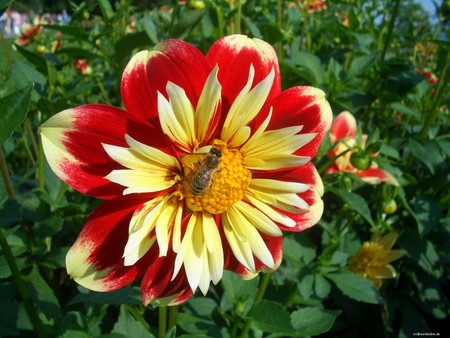
Cannabis Hydroponics Vertical Grow Room
Cannabis hydroponics vertical grow room.
Archived from HG420 feb 2007 Heath Robinsons hydroponics cannabis, marijuana Vertical Grow Racks.
The following are my own notes on the thread, details all together for ease of understanding, etc. Maybe it will be helpful to others. * floor plan 4 ft by 6 ft * 4ft growing height * 2 600Watt lights hung vertically side by side * 7.5 litre (2 gallon) square pots, filled with hydroton * each site is fed by an individual tube, no drippers that clog * 3 rows vertically (2 rows after changes) * 84 sites with 3 row config(56 with 2 rows by my math) * fed from a 45 gallon reservoir with a 7000 litre per hour pump * gutters catch runoff and drain to a secondary reservoir * smaller pump on float switch empties secondary reservoir into main when full * feeding : 3 times a day for 15 minutes each * achieved 1.5 grams per watt running from rooted clones (damn)
Cannabis Hydroponic Vertical Grow Room
Best Seed Bank Reviews, Ratings. If you are thinking of buying Marijuana Cannabis seeds you really need to check out Best Seed Bank first! all the latest Seed Bank Reviews left by real people.
Archived from HG420 feb 2007 Heath Robinsons hydroponics cannabis, marijuana Vertical Grow Racks.
The following are my own notes on the thread, details all together for ease of understanding, etc. Maybe it will be helpful to others. * floor plan 4 ft by 6 ft * 4ft growing height * 2 600Watt lights hung vertically side by side * 7.5 litre (2 gallon) square pots, filled with hydroton * each site is fed by an individual tube, no drippers that clog * 3 rows vertically (2 rows after changes) * 84 sites with 3 row config(56 with 2 rows by my math) * fed from a 45 gallon reservoir with a 7000 litre per hour pump * gutters catch runoff and drain to a secondary reservoir * smaller pump on float switch empties secondary reservoir into main when full * feeding : 3 times a day for 15 minutes each * achieved 1.5 grams per watt running from rooted clones (damn)
Home Made Hydroponics Marijuana Weed Indoor Grow Kit 600 watt HPS Autoflower Purple Jems
Its safe and discreet and very fast delivery!
Home Made Hydroponics Kit 600 watt HPS Autoflower Purple Jems
Vegetative Stage Nutrients: Super Foliage Spray you can purchase on the web-site.
Drip Top Feed Hydroponic System Home-made Update
Here is an update showing the system I built after some plant growth.
Go Organics! with Jorge Cervantes
High everybody!! Spring is right around the corner and the northern hemisphere will be planting their gardens soon. Whether you're an indoor or outdoor grower, organics can be a great way to grow top quality cannabis without any harmful effects on the land. Just look at these plants, they speak for themselves! Go organics!!
Don't forget to subscribe for the latest Jorge Cervantes videos uploaded in 1080p HD!
Follow Jorge's adventures through the world of cannabis!
Home garden greenhouse Hydroponic Tomatoes - 9 Advantages
http://www.home-garden-greenhouse.co.uk
If you're thinking of growing your own hydroponic tomatoes then you should as they are delicious and you will make some serious money from them.
Farms of the Future
To make room for nature, farms of the future may have to move off the land and into skyscrapers. Dickson Despommier explains his idea. http://www.youtube.com/hydroponicssecrets
Easy Hydroponic Seed Starting Factory
Patti Moreno the Garden Girl shows you how her Hydroponic Seed Starter works. This system produces 700 seedlings every three weeks with little to no maintenance.
Treating Yourself Expo 2011- Advanced Nutrients
http://www.urbangrower.com Check out cannabis superstar Remo as he jets around the world to all the medical marijuana hotspots--Kingston, Amsterdam, Barcelona, Toronto--in search of the ultimate bud! In this video, he talks with Jeff and Jo about the distribution of Advanced Nutrients products in the eastern half of Canada. Jo's rapid-fire delivery of a sales pitch for the Hobbyist Bundle in joual (colloquial French spoken in Quebec) has to be seen, heard, and savored! :-) Cannabis is good medicine!
http://www.advancednutrients.com/juicyrootspresents Hydroponics Secrets, how to get better harvests by initiating more feeder roots in cuttings and clones.
Growing Strawberries Vertically and Hydroponically
John fromhttp://www.growingyourgreens.comvisits Harvest Time Market and Farm. He shares with you the vertical hydroponicc system growing strawberries, also growing strawberries, tomatoes, cucumbers, peas, and cabbage in the field. http://www.bigbudsmag.com/
Hydroponics, Getting Bigger Yields in Hydroponics
http://www.advancednutrients.com/nutrientcalculatorgetting bigger yields in hydroponics, secrets to getting bigger yields in hydroponics and organics with Advanced Nutrients
Hydroponics Gardening
What is the mysterious power hidden in Advanced Nutrients Connoisseur? Go tohttp://www.advancednutrients.com/freereport/or watch this video to find out! Hint: it guarantees humongous hydroponic harvests!
Hydroponics
http://www.advancednutrients.com/hydroponics/index.php We produce tomato under hydroponic greenhouse condition. This greenhouse install on a geotermic area for heating. Growing Gutter, automation, fans, screen, fog, CO2 system, heating and dosing unit available on this production. We are a consulting to our growers as Tarda Co.
New York Hydroponic Tomato Farm
http://www.advancednutrients.com/hydroponics/index.php Sometimes a great idea comes from a chance encounter. Carole Crimivaroli and her husband George were looking to buy a larger home with some acreage. The house they found in New York's Hudson Valley came with a greenhouse, and the family decided to begin raising hydroponically grown tomatoes.
Thicker Stems, Shorter Internodes
http://www.advancednutrients.com/sweetleaf thicker stems and shorter internodes, how to get thicker stems and shorter internodes in hydroponics and organics crops
Nutrients For Coco Coir
http://www.advancednutrients.com/monkeyjuice presents Erik Biksa discussing which nutrients are the best to use for the special properties of coco coir & slabs for hydroponics crops
Hydroponics Secrets - Organic Plant Nutrients
http://www.advancednutrients.com/iguanajuice presents Hydroponics Secrets with Erik Biksa. What are the best organic plant nutrients with hydroponics growlights?
Hydroponics Nutrients Concentrations
http://www.advancednutrients.com/nutrientcalculator hydroponics nutrients concentrations, Erik Biksa discusses the importance of hydroponics nutrient concentrations and rates for bigger yields
Hydroponic System | Vertical Farming
Catherine Mortimer is a vertical farmer at Paignton Zoo. The robotic system uses hydroponics to grow plants for the zoo's animals. It allows the huge number and variety of plants that the animals need to eat to be grown in a compact space.
For more information visit: http://sciencesowhat.direct.gov.uk/future-jobs
Paignton Zoo's Vertical Farm
Revolution For Bigger Yields!
http://www.GrowersUnderground.com join the revolution for bigger yields! Hosts Sarah Diesel and Ngaio Bealum introduce a segment that shows the multiple uses of marijuana's cousin crop--hemp! Henry Ford used to make car parts out of this very versatile plant, until Dupont and the big boys decided to have it declared illegal. Why? So they could get filthy rich launching a new oil-based product, called plastics. We hope that it has come full circle and that Californians vote to abolish prohibition soon! They have allowed the medicinal use of marijuana since 1996, as this show expertly documents!
Cannabis Planet Show 7, Part 1
Spannabis 2011 Hydroponic Grow Equipment
Spannabis 2011 Hydroponic Grow Equipment
Curt and I check out a hydro system and a stealth grow cabinet...
Check out Urban Grower and Advanced Nutrients for more information about how to have huge harvests.
plant cloning
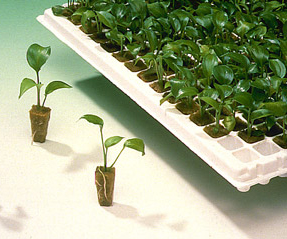
Techniques For Cloning Plants
To the average consumer, plant propagation might simply mean growing a new plant from a seed. Experienced gardeners and farmers, however, know that they are numerous ways to propagate, both sexual and asexual.
To learn more about hydroponics, check out the biggest buds on the web!
The asexual methods usually create an exact genetic duplicate, or clone of the parent plant. This is usually highly desirable when a gardener finds a plant with superior genetic traits. Plant cloning is almost as old as agriculture itself, and some species of trees originated as plants that were cloned on a mass scale. For example, all Bartlett pear trees have their ancestors in a tree that was first cloned in 1770. Here are the most common methods gardeners use for cloning plants.
Layering - Layering is a method of cloning plants where roots are encouraged to actually form on the stem before it is removed from the parent plant. Some plants actually use this technique to propagate themselves in nature. In simple layering, the gardener simply bends a low growing stem into the medium, keeping it in place with a stake if necessary. The stem should form roots and start growing as a new plant. In serpentine layering, a very long stem is buried into the medium at intervals. The buried sections will form roots and create several new plants.
Grafting - Grafting is a method of plant cloning where one plant fuses with another plant. In agriculture, it is usually done with trees. In this technique, the bottom section with the plant roots is referred to as the stock, and the plant that is used for the stems and leaves is called the scion. Many farmers do this when they want to increase the odds of a plant's survival by grafting its top section to another plant with stronger roots. It is also sometimes done to save a tree that may have suffered a damaged trunk or roots.
Cutting - Cutting is the most commonly used technique for cloning plants in hydroponics. The gardener simply cuts off a part of the plant, usually a stem or leaf, and plants it into the growing medium. Since this technique requires one to actually detach a part of the plant from the root, and therefore cut off its primary source of moisture, it is imperative to keep a well humidified grow room while cloning plants through cutting. Many gardeners even choose to operate "mist sprays" on their planted cut stems during the one or two weeks that it takes for them to form roots.
Micropropagation - Micropropigation is a very new, very advanced, and very expensive form of plant cloning. In this technique, lab technicians actually make clones of plants using the actual plant tissue. Since this has to be performed in a sterile laboratory environment, and is therefore very costly, it is only performed on plants that are very difficult to propagate asexually. Many believe that Micropropagation may be a way to the future of propagation, as it may have ability to create disease-free plants, as well as plants with other desirable traits, such as those that bigger yields or tastier vegetables.
Article Source: http://EzineArticles.com/1147841
Quick Vlog Plus Garden & Hydroponic Update - 27 Mar 2011
Quick Vlog Plus Garden & Hydroponic Update - 27 Mar 2011
A quick Vlog, plus a look at the Garden & Hydroponics as we get ready for another growing season...
Video Duration: 0:05:51
To learn more about hydroponics, visit one of the loveliest gardens on the web!
homemade hydroponics system
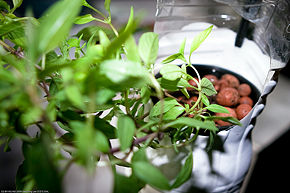
The Value of a Homemade Hydroponics System
If you are interested in having your own hydroponics system, you may feel inhibited by the cost of a pre-fabricated unit. On the other hand, you can build a homemade hydroponics system for a fraction of the cost. At the same time, you can enjoy a number of other advantages.
When you buy a pre-fabricated hydroponics system, you will find that the designs and shapes are fairly limited. On the other hand, when you build your own, you can create all kinds of interesting shapes. This includes terraced designs, as well as ones that will fit perfectly into a corner. You may even want to build a tiered homemade hydroponics system that will fit on your windowsill. Regardless of whether you decide to grow herbs, roses, or strawberries, they are sure to add a touch of vibrancy to any room.
Chances are, you do not want something in your living room that will not be attractive. On the other hand, this room may be the only area that you have available for a hydroponics garden. When you make your own system, you can include all kinds of decorative elements. Aside from creating terraced circles, you may also want to put stenciled images on any visible surfaces. On the other hand, you can also create natural wood veneers, and perhaps even a fountain.
While The Hydroponics Garden Collection and other kits are designed to teach you how to build a basic hydroponics system, you can always expand on the plans. In particular, you will want to build something that will suit your lifestyle, as well as provide you with the fruits and vegetables you are most interested in. You may even find that you will enjoy building your system every bit as much as you will eating the food provided by it.
Article Source: http://EzineArticles.com/2025133
Spannabis 2011 Big Mike Advanced Nutrients
Spannabis 2011 Big Mike Advanced Nutrients
It's the Urban Grower Remo interviewing Big Mike about Advanced Nutrients pH Perfect and the New Jungle Juice line.
Video Duration: 0:03:41
hydroponics
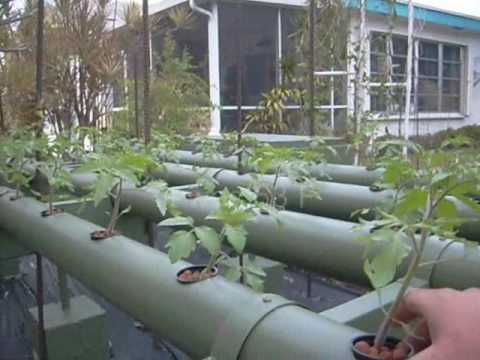
Hydroponics and Aeroponics - Revolutions in Plant Cultivation
The agricultural revolution that has evolved over the past year has rendered planting to be considered easier than before. Two breakthroughs are hydroponics and aeroponics, both of which have progressed considerably in cultivating agricultural and food products, and have thereby contributed substantially to both individual as well as economic growth.
Hydroponics is the method of cultivating plants using nutrients dissolved in water. No soil is used in this process. The word hydroponic is derived from Greek words hydro, meaning water, and ponos, meaning labor. In using the hydroponic system, the nutrients dissolved in water are provided to the plants directly through their roots.
Aeroponics is the method of growing plants in air, is a moist environment. Like Hydroponics, there is no use of soil in the aeroponics system. Plants are cultivated through being suspended in the air, and nutrients are sprayed at the plant roots with a nutrient rich water solution. The term aeroponic is derived from Greek words aero, meaning air, and ponos, meaning labor. This is done is such a way, that mist is created in the air, and since there is no wind to move the mist away, the plants grow faster.
The major difference between hydroponics and aeroponics is the method of soil-less plant cultivation. Neither of these method requires soil for plant growth - nutrients are supplied through a nutrient solution or film at which the formulation is sufficiently adjusted to meet the requirements for adequate plant growth.
Many people are confused about agriculture and the difference between hydroponics and aeroponics. Aeroponics in reality, a kind of the hydroponics method of plant cultivation. It is the water that is the nutrient carrier, when the nutrient solution is sprayed into the roots of the plants.
Another major difference between Hydroponics and Aeroponics is the environment in which the plants are grown. When using the hydroponics method, the plants are cultivated in an enclosed environment like a green house. Plants grown through the aeroponics method, however, are set in a closed or semi-closed area. Since the environment in which the aeroponics is used is not too restricted, and the plants grown may become vulnerable to risks posed by pests and diseases.
In considering the difference between hydroponics and aeroponics, it should be noted that plants grow faster with air, given that there is an abundance of oxygen in combination with the nutrient solution and water.
Farmers prefer using aeroponics rather than hydroponics for plant cultivation, mainly for the reason that aeroponics provide a consistent supply of oxygen. This naturally results in a much higher yield of production then would be the case with hydroponics.
Hydroponics and Aeroponics are also different in the way they are set up for plant growth. With aeroponics, the method makes it possible for the roots of the plants to be suspended in a hydro-atomized nutrient solution. This results in some parts of the plant roots to extend on the top. Additionally, the aeroponics method uses different technologies that can range from a static to a continuous flow solution. Some caution is also adopted to prevent disease contamination in the irrigation system.
In spite of the many differences between hydroponics and aeroponics, both these methods have, without a doubt, proven to have had an improved impact on plant and food production.
Article Source: http://ezinearticles.com/?Hydroponics-and-Aeroponics---Revolutions-in-Plant-Cultivation&id=5956845
Hydroponic Gardening
Hydroponic Gardening
http:www.hydroponicgarden.net is a website dedicated to hydroponics information and supplies. Here you will find everything you need for successful hydroponic gardening. Get started right away and be eating fresh produce in no time!
Video Duration: 0:03:58
hydroponics
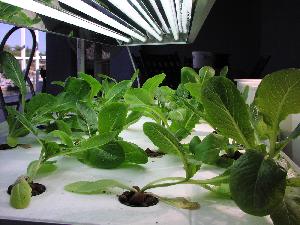
Installing the Sun System into Your Hydroponics Garden
As the source of life and energy, the sun has played a vital role in the development of civilization, namely agriculture. In conventional farming, while various factors can be managed -- pest and disease, fertilizers, even genetics -- the amount of sunlight is outside the realm of human control.
The number of sunny days is known to greatly
influence the quantity and quality of the year’s harvest. For
centuries, especially in ancient civilizations, people have respected
and worshipped the sun, as the arbiter of the Earth’s organisms. During
the past few decades, however, companies as Sun System and Hortilux have
developed to mimic the photosynthetic power of the sun through
synthetic illumination.
Hydroponics, a method of growing vegetation without the presence of
soil, is typically adopted inside a building. The gardener or farmer
can carefully monitor and control the growing environment of the plants
to achieve the greatest results. If traditional farming has
uncontrollable outside influences as rain and sunshine, hydroponics all
depends on the caretaker. Because most, if not all, hydroponics is
performed inside a building, providing appropriate lighting to the
plants is indispensible. It is important to purchase illumination
products from reputable companies as Sun System and Hortilux to maximize
results. Cheaper simple fluorescent lighting that is used in biology
lab classes will not suffice for vigorous growth, especially for
commercial purposes.
Choosing an appropriate lighting system depends on the garden’s size,
the type of plant, and any additional lighting that plants may receive
(if there are windows or if the growing area is inside a transparent
greenhouse). Typically, metal halides (MH) are used for the early
growth stage in vegetation, and High Pressure Sodium (HPS) lamps are
best for fruit bearing and flowering stages. Typically, MH lights emit
more blue and violet light which is optimal for photosynthesis, and HPS
lights primarily emit orange and red light which is conducive to fruit
growing. Hortilux specifically specializes in developing plant growth
lights, to imitate sunlight at its best. The Hortilux HPS lamps are
designed to emit more total light energy and the blue, violet spectrum
compared to standard HPS lamps, and its Metal Halide lamps are known for
their effectiveness in the plant physiological research, and in
pharmacology industries.
Sun System also manufactures lighting equipment related to indoor
gardening and farming. While Hortilux specializes primarily in the HPS
and MH lamps, Sun System provides a comprehensive system package,
including large reflectors for commercial use and air cooling devices to
reduce heat in lights. According to the size and type of plants,
illumination packages can be customized with Sun System. By utilizing
reflectors and cooling devices, the lighting system greatly increases
the efficiency and effectiveness within the hydroponics garden.
The grow lights developed by companies such as Hortilux and Sun System
provide favorable growing conditions for the plants. Although sun light
will always be indispensible to life on Earth for various reasons, the
commercial use of grow lights along with other methods of hydroponics
will change (and has been changing) the framework of agriculture in the
near future.
Article Source: http://www.articlealley.com/article_1777012_15.html
Hydroponics How To: How To Build an Aeroponic Growing System
Hydroponics How To: How To Build an Aeroponic Growing System
This video covers how to make a aeroponic system.
Video Duration: 0:09:43
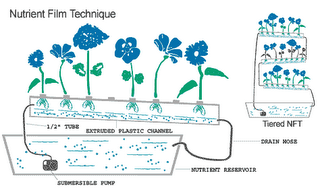
Nutrient Film Technique – Why NFT is Great For Hydroponics Beginners
So you’ve decided that you want to start working on a hydroponics garden of your very own, but you’re not sure where to start. If you are like most beginners, you are not sure that you want to spend a lot of money until you really have a handle on the basics. At the same time, you don’t want to deal with too complicated of a system that will give you a lot of chances to mess up. This is why you should really consider the nutrient film technique, or NFT, method of hydroponic growing. Purchasing a NFT system and NFT nutrients is a great way to start out for a number of reasons. Listed below are just a few of the many reasons why the NFT technique is so easy and popular.
Inexpensive – One of the primary benefits of the nutrient film technique is that you don’t need an extremely large array of equipment to get started. You essentially just need a growing tray, a reservoir, a water pump, and some good NFT nutrients. You don’t even need to purchase a medium, besides the medium that was used for propagation. This allows you cut your teeth on hydroponics without breaking the bank. By seeing how to properly use your system and your NFT nutrients, you can gain enough experience to later purchase more advanced equipment and try out different systems.
Easy to Use – Another prime benefit of NFT is that this system isn’t very complicated at all. The limited amount of equipment means that there is a lot less that can go wrong. While there are still obviously some things that you need to pay close attention to, such as making sure that your nutrient solution is properly aerated, NFT is generally much easier to use. The constant stream of NFT nutrient solution means that your plants are unlikely to become underfed or under watered.
Range of Options – But just because you are growing something with NFT nutrients, that doesn’t mean that you are going to have to be limited to a very small selection of plants. Really, there are tons of fruits, herbs, and eve flowers that you can grow using NFT nutrients. So whether you are planning on growing hydroponically to add some fresh produce to your meals, add in some flavor with fresh herbs, or decorate your house with a few choice flowers, the nutrient film technique can suit your needs.
Allows You to Start Small – One of the biggest advantages of the NFT system is that you can really start small and work your way up to bigger gardens. There are tons of NFT systems that the hobby grower can purchase to get their feet wet in hydroponics. In addition, there are also a lot of pre mixed NFT nutrients that allow you to give your plants just the right amount of nutrients without a great deal of special expertise. This allows you to hit the ground running while starting up your own hydroponics garden. And if you decide that this is a hobby you are going to pursue further, you could either purchase a larger NFT system or purchase a different hydroponics system to advance your garden.
NFT systems of gardening are simple, relatively inexpensive and easy to use to grow your favorite fruits, vegetables or herbs year round while saving money for your other passions in life!
Michael Straumietis is co-founder of Advanced Nutrients, an international marketer and manufacturer of agricultural, home & garden, hydroponics and soil less fertilizers and Plant nutrients. If you would like to know more about the nutrient film technique, discover the Advanced Epedia at http://www.advancednutrients.com
Article Source: http://EzineArticles.com/?expert=Michael_Straumietis
Make a Hydroponic Garden with Buckets and Hydroton
Black vinyl buckets become high quality components for hydroponic
gardens. The conversion only requires a hole saw and PVC fittings.
Black vinyl resists sun UV damage. The flexible vinyl also resists breaking.
Usually,
the buckets will contain inner units. A plant or plants will root in
the inner unit, the roots then hang down below the inner unit. The
bucket contains and protects the roots.
Depending on the plant
and the demands of the roots, these inner units can be small or large.
Hydrosuppliers.com offers several different inner units. And these inner
units will be filled with medium. I use Easy Green Hydroton rocks.
Or the entire bucket may be filled with Hydroton rocks.
Also,
consider the height of the plants. Massive vines may pull the units off
a balcony. Tomatoes or corn or flowers more than a meter high may blow
over in the wind.
PVC pipe or hoses connect the buckets to a reservoir. This will be a feature of a future video.
Go to http://www.learninghydro.org for other hydroponic techniques.
Go to the website http://hydrosuppliers.com for an on-line catalog of hydroponic components and supplies.
Video Duration: 0:01:59
hydroponics
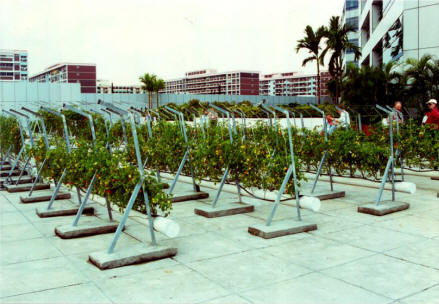
Easiest Homemade Hydroponics System
Not every type of hydroponics system lends itself well to homemade design. For systems that use drip or spray heads, you have many costly items to purchase before you can produce a properly working system. Usually, you end up learning a lot from your first failed attemp if you choose to build your own drip system or aeroponics system. There is one easy and relatively inexpensive homemade hydroponics system I have found. It is the homemade ebb and flow.
For a homemade hydroponics ebb and flow system, you will need two cheap plastic storage totes, an aquarium air pump, an aquarium water pump, a timer, a set of flood and drain fittings, and a short length of plastic tubing. If you are not sure what flood and drain fittings are, go to Google, click on “images”, and do a quick search for “flood and drain fittings”.
First, one tote will be your nutrient reservoir. Pick a dark color tote to keep light out of the nutrient solution…this will help prevent the growth of algae. The air pump should go to a couple of air stones, which will be kept bubbling in the nutrient reservoir. The water pump goes here as well. Your water pump should be able to move at least 100 gallons/hour at a height of 3 feet. The pump should cost you about 30 dollars.
The other tote will go on top of the nutrient reservoir and hold the plant containers. Plant containers should be filled with expanded clay pellets or something equal, like lecca stone or lava chips. Somewhere in the bottom of this container (out of the way of the plants) you will drill two 3/4 inch holes and install the flood and drain fitting in one, and the overflow fitting in the other. Finish it off by running a short piece of tubing from the water pump to the flood and drain fitting (which is the shorter of the two).
All you have left to do is plug the water pump into the timer, set your timer for your flood and drain cycle, and fill the nutrient reservoir with ten gallons of solution. Flood your plant container for a 1/2 hour 4 times a day while the lights are on.
When the pump kicks on, the top container will fill with water (but never higher than the overflow). It takes a while for the clay pellets to really absorb the nutrient solution. When the pump kicks off, the nutrient solution will drain back down the shorter fitting, leaving the plant roots and the clay pellets wet with nutrient solution.
The flood and drain system is the homemade hydroponics system I use most often. The function of the system is simple. The results are consistently very good. The system is so easy to put together.
Before you get started…your systme is only one piece of the indoor gardening puzzle. You must have control over the environment you place your garden into, and this environment must be to the plants liking. In addition, you will have a much better chance at success once you learn the exact nutrient requirements (and therefore the exact feeding) of your plants at every stage of their development. In order to meet these feeding requirements, you must learn how to properly maintain nutrient sollution in a reservoir. Learn these things and you are sure to have a hydro-greenthumb.
Article Source: [http://EzineArticles.com/?Easiest-Homemade-Hydroponics-System&id=109225] Easiest Homemade Hydroponics System
Plant Nutrients: Proper Nutrition makes Healthy Rice Plants
Rice farmer Mang Lando gets the surprise of his life when a talking rice plant pops out of his rice field and tells him what rice plants need. Ryza, the talking rice plant, gives Mang Lando first-hand information on rice and nutrients. Going through the various growth stages, Mang Lando finds out how to manage nutrients to get high yields. Ryza also convinces Mang Lando to try out the Nutrient Manager for Rice, an easy-to-use computer program .
Video Duration: 0:10:00
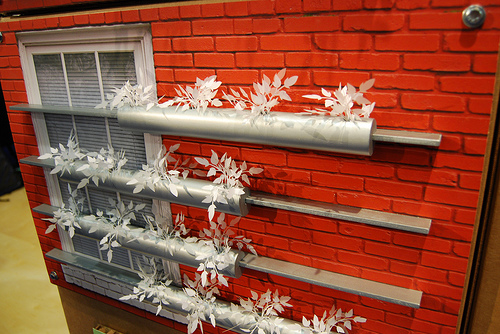
Hydroponic Gardens are Great for Apartments
Perhaps you love to garden but are frustrated because you live in one of the upper floors of a high-rise apartment building. The biggest hurdle to overcome is the fact that you have no soil in which to grow plants, and lugging bagged soil up to your apartment would be no easy task. There is, however, an easy way to garden in an apartment successfully, and that is through the use of hydroponic gardening. Hydroponics is a method of growing plants without soil. You can start with a small homemade automated hydroponic growing system that can fit on a windowsill, and move up to a larger system if space permits.
One of the best reasons to consider growing plants in your apartment hydroponically is that this type of system is much easier to get set up than hauling heavy containers and soil up several flights, and the end result is fresh food for your family. To get started with a hydroponic garden in an apartment, you will need to know that there are two basic systems you can choose from: water based and media based. Medium is not soil, but instead could include composted bark, gravel, peat moss, perlite or vermiculite. Also, if you select an active system it will need electronic timers and pumps to make it function well, whereas a passive system doesn’t rely on pumps and instead uses a wicking agent for the roots of the plants to access the nutrients.
Because the plants are grown in water, they receive no nutrients from the soil as they ordinarily would. Instead, in hydroponic plant gardening the gardener supplies the plants with nutrients by applying a nutrient solution to the roots via distilled water. The big three nutrients that plants need are nitrogen, phosphorus and potassium. There are other nutrients, called macronutrients and micronutrients, that the plants will need as well and will need to be added to the nutrient solution. Macronutrients are needed in greater amounts, and micronutrients in smaller amounts, but all are needed for plants to thrive.
One of the benefits to growing plants in a hydroponic manner is that they are less bothered from pests and diseases. Many plant pests live in the soil, so when you eliminate the soil you often get rid of the pest’s habitat. Hydroponic plant propagation can also be accomplished without using a great deal of pesticides Another reason why this style of gardening is popular is it will produce more food than you could grow in the same amount of soil. You can grow the food in a spot where there is no soil at all, namely, your apartment. So have fun gardening and produce some great-tasting food with hydroponic plant gardening.
Erik Biksa discussing the nature and use of humic acids to give you bigger yields.
Video Duration: 0:06:40
hydroponics crop
Some Great Gardening Tips
A garden is the reflection of ones choice for the outdoors and landscaping. Building a garden is a labor of joy but it is not easy to maintain a garden in its perfect state. Most people prefer smaller gardens for their home as it need less maintenance as well as less time, energy and money. Whatever the size, every garden needs special care to make it bloom and blossom round the year. Gardening tips from experts or professionals guide us through this onerous process. Gardening tips are meant to give the gardener all the guidance he needs to make the garden perfect. The tips differ from garden to garden.
Easy gardening tips
Tip #1 – Gardens not only give a pictorial value to the property but also have other benefits like organic food growth if one loves a kitchen garden idea. For such multi-purpose gardens make sure that you do not have plants that attract too many pests and need pesticides which might have adverse effect on the kitchen garden.
Tip #2 -In a small garden or for house plants make sure they get regular attention to curb overgrowth and have regular pest and weed control.
Tip #3 -The water flow and air circulation in the garden should be adequate so that garden remains fresh.
Tip #4 -The garden grasses should be regularly mowed.
Tip #5 -The plants should be selected according to the climate of the place where the garden is situated.
Tip #6 -If the garden gives priority to the wildlife, attention should be given to their food and shelter.
Tip #7 -The vegetable garden needs proper fertilizers whereas the water garden needs proper water planning while a butterfly garden should have proper plants and climate.
Tip #8 -For the patios and the flooring one should also give proper attention to the quality of the bricks.
Tip #9 -The garden furniture for the garden should also be given a proper notice. Appropriate garden furniture gives an aesthetic value to the landscape.
Tip #10 -A garden is that part of a house full of children need to be safe and free from accident zones. Grasses hide uneven ground, and also give a cushion so that the children dont get hurt while playing. Paths and paved areas should also be smooth, level, and firm.
Even an experienced gardener needs to know the updated gardening tips and techniques in order to expand his knowledge. This knowledge combined with his experiences and observations on indoor or outdoor gardening strengthens the garden idea and maintenance plan. Plants are versatile creatures. They want to grow and will grow in simple soil, with very little sunlight, and little cultivation. All one really needs to do it is regularly water them and provide them with occasional shade and sun as required by their genetic design.
Cloning medicinal plants (CA prop215)
Cloning medicinal plants (CA prop215)
Get roots in 2 weeks tops with this quick and simple cloner! Transplant into whatever you want to use as your media.
(ps-in the vid I say “get at me for PLANS for this drip system” not “PLANTS”.. sorry, maybe when the laws become more reasonable in all states.)
Duration : 0:01:48
hydroponics system
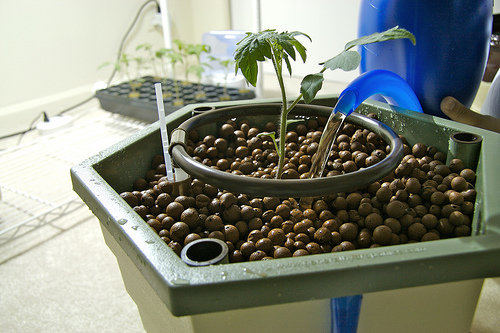
Building Hydroponic Systems At Home
Ambitious as it may sound, building hydroponic systems at home is quite a popular, though somehow peculiar hobby. Horticulturists know very well the amount of effort plants growth requires, not to mention that soilless conditions like those in hydroponic systems bring a supplementary challenge. Let’s first take a look at the best ways of building hydroponic systems at home. First and foremost you will need some system plans even if your not completely new to this activity. Then, mention should be made that the system needs to be adapted to the specific kind of plants you want to grow.
Hydroponic system plans
Any project of building hydroponic systems needs careful planning in advance. This is why it is best to turn to a professionally designed one you can find on the Internet for a very reasonable price. First and foremost, it should not only include step by step instructions about how to make a successful hydroponic system, but very detailed photos and illustrations to show you the correct process of building a structure that can support itself in the absence of soil. There are so many factors that need to be taken into consideration that you may feel almost unable to fulfill all those conditions.
When building hydroponics systems, special care should be taken of oxygen pumping and lamp lighting, since both are vital to natural and great plant development. For instance if the reservoir where you grow your plants is too large and the air line is too low, you risk that not enough oxygen bubbles reach the plants roots. The same would happen if the air line is placed too high in the tank. Air oxygenation is a key element in making sure that your plants grow well. The other factor I mentioned, lighting, is the another vital element for plant growth. Too little light will result in total failure of your project. Building hydroponics systems with such details in mind is the way to passing from hobby to serious business.
Nutrient solutions and hydroponic systems
When building hydroponics systems, never ignore the quality of the nutrient solution you use. Inquire on the composition of the solution and find out what its main ingredients are. You ought to know that urea or ammonia nitrate are chemicals that should not be used in the solution used for plant growth. They are harmful not just for the plants but for your body too in case you grow fruits and vegetables. Keep a constant watch over the solution level in the reservoir as it shouldn’t drop below the admitted nutrient level.
Emily’s Garden
Emily’s Garden
Hydrofarm’s Emily’s Garden as shown in the FYI Hydroponics Video.
Video Duration : 0:00:42
hydroponics
Ebook On Gardening- 7 Benefits Of An Ebook On Gardening!
Seeing that so many articles were floating around the World Web, some innovative person came up with the idea of putting them all together in a more compact form! And that is how the concept of the ebook was born! Ebooks became popular because of the instant access to every kind of information possible. So there is an ebook on gardening too!
To list out the advantages of an ebook on gardening, here are some of them–
(1) Let us say, you are keen to take up gardening as an activity–it could be a small or big garden, maybe indoors or outdoors. Searching for an ebook, ordering it and downloading it to your computer hardly takes any time! You can start your garden very quickly.
Or supposing you wish to just get some knowledge regarding–gardening in general, how to grow vegetables, fruits, herbs and flowers, water requirements, and so on–there is an ebook waiting for you!
(2) Plenty of web sites are available where people with a passion for gardening like you can get free downloads of any ebook on gardening. There are different books for novices, and different for experts. General topics presented relate to gardening, plants, water features and other accessories. The ebook could have one long chapter or several smaller chapters. A great web site for free downloads is www.gardening-guide.com.
(3) Other well-known sites are ebookjungle.com, simplegiftsfarm.com and diesel-ebooks.com. These sites may require you to purchase ebooks. But there is really nothing to worry about. Ebooks are generally inexpensive, and an ebook on gardening is no exception.
(4) It is not enough to just download an ebook. In case something happens to your computer, all that knowledge would be lost. So the book has to be saved on different media for safekeeping. Taking a print-out of the whole book or just the particular sections that you need will prove to be very useful backup in case of an emergency. After all, if you lost a book, would you not purchase it again?
(5) An ebook on gardening can prove to be a great boon for you, if you are a gardening water enthusiast. You are obviously extremely keen to have “water” be a part of your garden in some form or the other! A gardening design represents the owner’s personality and creativity. Therefore, you could create water gardens or waterfalls, along with various animals designed in the form of topiaries (trees or shrubs cut into animal shapes). Or you could display water motifs and water ponds in your garden.
(6) Don’t you think, water garden enthusiast, it would be so easy to just print a particular page and carry it to your spot of work, if you have an ebook on gardening handy? Yes, definitely so! You literally have advice on hand! You cannot do that with a book bought from a shop–all the pages would get grimy.
(7) An ebook on gardening is not restricted to conventional gardens alone. Different ebooks cover unconventional ways of gardening too–indoor gardening, water gardening and hydroponics. There are “how to” ebooks to give step-by-step instructions. Some describe the different forms of gardening in detail, while others talk about houseplants and caring for them. In short, there are ebooks for everything concerning gardening!
Nutrient Challenge Advanced Nutrients
What millions have been waiting for: Advanced Nutrients challenge, invites the industrys nutrient big boys to test in head to head grow off, once and for all ending the question of whos the best.
Video Duration : 0:05:05
Hydroponics Gardening
A Brief Introduction to Methods of Hydroponic Production
Hydroponics literally means “water working” however, in practical use, it means growing plants in a nutrient solution without soil. The hydroponic science had proved that soil isn’t required for plant growth but the elements, minerals and nutrients that soil contains are. Soil is a place where the plant roots traditionally live and a base of support for the plant structure. Soil is simply the holder of the nutrients. By eliminating the soil, you eliminate soil borne disease and weeds and gain precise control over the plant’s nutritional diet. In a hydroponic solution, you provide the exact nutrients your plants need in precisely the correct ratios so they can develop stress-free mature faster and, at harvest, are the highest quality possible.
In commercial production, the two primary growing methods are NFT (Nutrient Film Technique) and drip (also known as substrate). There are a number of variations of these methods and also several others including the float system, ebb and flow system, Aeroponics and passive. The biggest difference between the NFT systems and drip systems is the use of a growing medium. In an NFT system, the plant roots are in a channel where a thin film of nutrient solution passes, keeping them moist but not water-logged. In a drip system, the plant roots are in a growing medium such as Perlite or Rockwool and the nutrient solution is dripped onto the medium to keep it moist.
NFT (Nutrient Film Technique)
With the NFT (also known Nutrient Film Technique) technique, the plants are grown in channels (also called gullies) in which the nutrient solution is pumped through. The plant roots are kept moist by the thin film of nutrient solution as it passes by. Ideally, the bottom of the roots is exposed to the nutrient solution while the top are kept moist but not water-logged.
With the development of on-demand dosing equipment, a nutrient reservoir can automatically be adjusted and, with proper aeration and pH adjustment, the system can effortlessly be kept fresh for weeks at a time. Most NFT channels are fed continuously at a rate of approximately 1 liter per minute. Since the plant roots are not in a growing medium, it is crucial that they are kept moist at all times. In most NFT systems, the nutrient solution is mixed in a primary reservoir, cycled through the channels and back to the reservoir.
NFT is ideal for short term crops like lettuce, leafy crops and herbs. In many locations around the world, Larger NFTchannels are used for long term crops such as tomatoes and cucumbers. One great benefit of NFT, especially for leafy crops, is that no washing is necessary since there no growing medium and no soil, and hence the crop is clean. Growers, chefs, grocers and consumers all appreciate this.
Most growers have found flat bottomed channels or gullies provide greater surface area for root development and oxygen uptake, resulting in better, faster plant development. NFT channels are usually set up on waist-high stands that slope slightly to allow the nutrient solution to drain to one end.
Aeroponics
Though Aeroponics is a unique way of growing; it is not a common means of commercial production. Aeroponics is the method of growing where the plant roots are constantly misted with a nutrient solution. Designs include an A-frame with boards on each side, plant plugs set in each side and a mister between the boards spraying the roots. A round, large diameter PVC pipe set vertically with plant plugs all they way around and a mister mounted inside is another way to set up an Aeroponic system.
Ebb and Flow
The Ebb and Flow method of hydroponics simply floods a growing area for 5 or 10 minutes and then the nutrient solution drains away. The nutrient solution is stored in a reservoir that can be located under the grow table. In an Ebb and Flow, the plant roots are usually grown in a medium of Perlite, Rockwool or expanded clay pebbles. Ebb and Flow is common in hobby systems but not often found in commercial production. This is also know as flood and drain.
Float
The float system can be an economical means of hydroponic crop production in areas where raw materials are limited and manufactured hydroponic systems and components are not availableFloat systems take advantage the surface of the nutrient solution. Most float systems are long, rectangular reservoirs built out of cement or wood and lined with a durable, poly liner. Holes are cut in a foam board which floats on the surface of the water and plants in net pots are set in the holes. The plant roots dangle in heavily aerated nutrient solution.
Passive
A passive system does not use timers or pumps to flood the root zone. The roots usually draw what they need by dangling into the nutrient solution. Being a slow growing system, passive system is not as productive as the other methods discussed. Passive hydroponic systems are sometimes used by hobbyists.
Drip (Substrate)
Long term crops like tomatoes, cucumbers and peppers are grown using the Drip system. In this system, the nutrient solution is delivered to the plants through drip emitters on a timed system. Depending on the stage of development of the plant and the amount of available light, the emitters are usually scheduled to run for approximately 10 minutes/hour. The drip cycle provides the plants with fresh nutrients, water and oxygen, thus flushes the growing medium.
Commercially, in a drip system, Perlite or Rockwool are the most common mediums for the plant growth. The biggest variables in a drip system are in the growing medium and the container that holds that medium. Perlite is often bagged in thin, plastic sleeves. Holes are cut in the bag and plants, usually 3-4, are set in with the roots growing down into the Perlite. Recently, a bucket system has been developed to contain Perlite for drip systems. Each bucket holds loose Perliteand one or two plants. In either of these methods, a slot or hole is cut in the container to allow excess nutrient solution to run out. A drain line below the bag or bucket collects the excess.
The Perlitetray is the another method of a drip system that is becoming popular for lettuce and herb production. Usually it is about 24 inches wide by 10—14 feet long. An aluminum tray, coated with a non-toxic material, is filled with Perlite and set on a gentle slope of 1-inch to 10-feet. The nutrientsolution is continuously dripped in at the higher end of the tray and allows trickling through the Perlite to the other end. Basically, this system is a combination of drip and NFT techniques.
In this case, there is no need for a large nutrientreservoir tank or the periodic dumping of used nutrient. Injectors are used, in most drip systems, to add nutrient concentrates to water when the feed cycle starts.
Hydroponics Growing: How to Grow Hydroponics Grass Fodder
Growing grass hydroponically means growing any kind of plant with their roots in a water solution that is mixed with nutrients. Discover why oxygen is needed to grow hydroponic grass with help from a farm adviser in this free video on growing grass and lawn care.
Video Duration : 0:01:38
Advanced Nutrients Big Mike Recommends Competitor's Product
Advanced Nutrients Big Mike Recommends Competitor's Product
http://www.growersunderground.com Hey-I realize this probably sounds crazy. But I want you to use a competitor's product instead of one of my own products.
This is not some publicity stunt, nor is Advanced Nutrients going to be distributing this product. It's just straight up the right thing to do.
In the video I explain in great detail why I'm doing this. In fact when our research showed that one of our competitors had a better product and it was going to take us awhile to play "catch-up" so to speak. There was only one thing to do, and this is it.
No I haven't lost my mind I really do want you to go out and purchase my competitor's product. Because in life I've come to realize, that doing the right thing isn't always the easiest thing.
Enjoy:-)
BigMike
Sunlight Supply--The Truth
Hey Sunlight Supply is using some really un-cool and unbelievably illegal STRONG ARM tactics by threatening to put a group of hydroponics storeowners out of business unless they start a boycott of Advanced Nutrients products.
Sunlight Supply CEO Craig Hargreaves will easily put these storeowners out of business because he controls the supplies of grow lights, bulbs and ballasts. Plus, the other things those storeowners needs to stay in business.
Sunlight Supply and the good ol' boys club have been playing these shenanigans for the last seven years on our community. Now they've taken their scheming to a whole new and illegal level.
This video exposes the dirty underbelly of hydroponics good ol' boys club and their leader Craig Hargreaves of Sunlight Supply - it's pretty graphic - they're actually doing this right now.
The video contains a lot of industry insider, store owner and personal stuff in it, so don't watch it if that's not your thing.
If you care about our hydroponics community and your hydroponics storeowner then you'll definitely want to watch this now.
Sunlight Supply--The Truth Video on YouTube
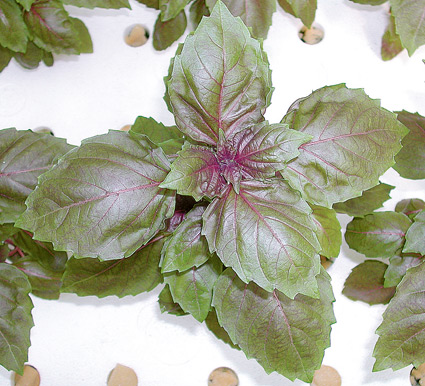
Hydroponic Systems Produce Huge Harvests: Proper Nutrient Intake
In order for hydroponic gardeners to produce huge harvests in their hydroponic garden, they must know how to carefully choose the right nutrients that their plants need. The precise amount of nutrient solution must also be one of their main concerns. Most plant problems actually originate from the inaccurate amount of fertilizer supplied to the plants. If you give inadequate amount of nutrients to your plants this may result to weak and underfed plants, same way if you put too much, you may burn or kill your plants. It is important that you practice constant monitoring and adjusting as your plant matures.
Hydroponic nutrient solutions are sold in concentrated form and added to your indoor garden’s water supply at a certain ratio. The amount of solids in the solution are referred to as parts per million, or ppm. These nutrient solutions are usually sold in two or three parts because some of the nutrients cannot be combined in storage. Remember to always mix each part of your nutrient solution into the water first, never into another nutrient type.
You must also keep in mind that plants require different proportions of nutrients during their vegetation and flowering stage. Most hydroponic nutrient solutions are sold in a "growth" or "grow" formula for the vegetative growth phase and a "bloom" or "flower" formula for the flowering phase of the growth cycle. You should switch to the bloom formula when you change your lighting regimen, from 16-8 to 12-12 (hours of light vs. hours of darkness), because your yields will increase exceptionally if you can maximize your plants’ capacity during the flowering stage.
Hydroponics Grow Enhancers: The Answer to Getting Bigger Yields
Using an effective grow enhancer can definitely give you bigger yields and better crops. These products are also popular because they can be used through any stage of plant development such as germination, vegetation, and flowering. Grow enhancers are considered very effective because they contain a powerful combination of vitamins and other substances designed to help stimulate plant growth.
One of main reasons why these enhancers can give you bigger yields is because they provide your plants with essential B Vitamins. Using certain concentrations of B vitamins is a very potent way of stimulating plant growth. For example, vitamin B1or Thiamine helps promote the synthesis of sugars that your plants need to thrive. By adding this vitamin into your reservoir, you increase your plants’ ability to absorb these sugars, thus, giving you large, hearty fruits and vegetables. This B vitamin complex also contains vitamin B2 or Riboflavin that activates an enzyme to catalyze the ability of plant cells to turn oxygen and sugars into the energy that they need to grow.
Grow enhancers are also often packed with seaweed or kelp extract which contain powerful plant hormones designed specifically to encourage plant growth. These hormones send a signal to your plant cells to grow and divide very rapidly, which leads to faster growth, faster harvest time, and bigger yields. And to make these nutrients and vitamins as effective as possible, high quality grow enhancers come with a humic acid base. Humic acid has the ability to chelate, or bind positively charged ions that can allow your plants to absorb more nutrients than usual.
Hydroponic Gardening Leads to Bigger Yields: More Benefits to Humankind
Hydroponic gardening has greatly improved the economic well-being of many communities throughout the world. Hydroponic systems are able to grow fresh vegetables, fruits and herbs in any season compared to traditional gardening that considers climate as a factor to grow plants.
More and more growers have adopted hydroponic gardening, but like any other new technology, the future of hydroponics must be continually refined. This is to make the system become more productive that will result in feeding people around the world in a more efficient manner.
Hydroponics can be used to grow seedlings for reforestation; it can also be used to establish orchards, grow ornamental crops, and even flowers and shrubs. Furthermore, it can be integrated with aqua-culture where wastes provide nutrients to plants and the plants help to purify the water for the fish.
Hydroponic gardening can greatly produce food crops from almost anywhere including places in the arctic or even in dry desert sand. In areas where high land prices have driven out traditional gardening, hydroponics also promises to generate locally grown crops such as herbs and greens. The method of hydroponics shows the perfect solution for crop production problems that the world is encountering nowadays.
This method is very beneficial to humankind since it is highly productive and suitable for automation. However, the development of systems of production that are cost-competitive with field agriculture must be of utmost concern. Continuous improvements in other associated technologies such as artificial lighting and new cultivars with better disease resistance will increase crop yields as well as reduce the cost of production.
Advanced Greenhouses Focuses on Raising Nutritious Hydroponic Produce
Hydroponically grown plants are raised in a controlled atmosphere with proper care and guidance. These hydroponic plants are often nurtured in a greenhouse that provides an inorganic method of cultivating plants. In a large commercial greenhouse, there is an automated way to refine and propagate seeds. The seeds are given automated care and maintenance to enable them to grow to their full potential.
Many nutritionists have agreed that the vegetables, fruits and plants that were grown in hydroponic greenhouses are safe and nutritious because the plants absorb the fertilizer in an organic stage. Raising plants with the use of hydroponics is also considered to be environmentally friendly and an easy method to learn for beginners. In a hydroponic gardening set-up, you actually save water, reduce the amount of pesticides and herbicides released into the environment, plus you get a constant supply of fresh nutritious fruits, vegetables, and herbs.
An ideal greenhouse package must include heating, cooling and ventilation equipment. It must also have dehumidification and a computerized environmental controller with an automated nutrient injection system. This way you can never be wrong in raising nutritious and delicious hydroponic produce that can even be distributed on a larger scale.
Of course the careful selection of the proper nutrients that you will use must be on top of your list. The best hydroponic nutrients and fertilizers are manufactured by Advanced Nutrients, a Canadian company. They carry a wide selection of high quality nutrient solutions that can add up to producing better quality crops for you all the time.
Hydroponic Supplies
Hydroponic gardening is the answer to better and bigger crop production. It is proven to grow plants 20-30% faster than those grown in soil. And the secret to successful hydroponic gardening is to find the best hydroponic supplies available in the market today.
Hydroponic gardening system allows total environment control, which translates into larger and healthier plants; that is, allowing a year round harvesting as well. Naturally, your crops would depend on the hydroponics gardening equipment that you use. This means that it is very important for you to use the right gear and apparatus when starting or maintaining your hydroponics garden. There are a number of hydroponic supplies that can help you achieve maximum results.
From grow lamps and grow lights to electronic and digital ballasts; organic fertilizers, organic pesticides, duct fans, ozone generators, plant nutrients, fertilizer supplements, can filters, timers, atmosphere controllers, growing medium, rockwool, CO2 equipment, indoor gardening equipment and much more. Those are some examples of the types of hydroponic supplies that you need to start off with hydroponic gardening.
But you must remember that getting great results doesn’t happen overnight. Proper care must be taken into consideration in selecting the right hydroponic equipment or supplies to ensure your hydroponic system produces great plants, fruits or vegetables.
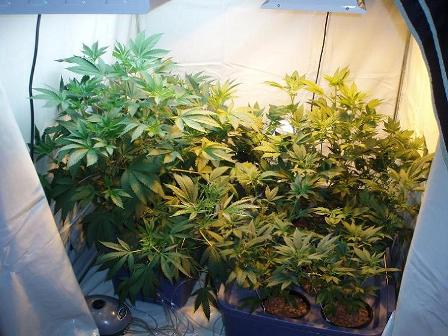
Deep Water Culture Nutrients
In order for deep water culture to work effectively, one of the important components is to match the proper nutrients to the plants. Because the plant is receiving every nutrient it needs from the nutrient solution that you are using, the plants easily take up all of the nutrition that they need for maximum plant growth. The quicker the process of plant growth and maturity occurs, the sooner you can arrive at your desired harvest. The ease by which the plants can take in nutrients and oxygen resulting in quick plant growth is the primary benefit from the deep water culture method.
If you are looking for a deep water culture nutrients mix that can take your plants to the next level, find a solution that is high in phosphorus (P). This is because it can deliver the enormous, long-lasting blooms you are looking for. Moreover, to maximize the final phase of your plants production, find a product that has a perfect combination of plant nutrients and compounds, including calcium, molybdenum, magnesium, manganese, iron, boron, copper, sulfur and zinc, to support solid fruits and flowers so they ooze with flavor and fragrance.
Finally, if you want your plants to bloom on-demand you should get a soluble, high phosphorus early-flowering fertilizer. If you use this formula in the fifth or sixth week of growing plants in your hydroponic system or traditional garden, it will deliver the right amount of targeted nutrients to produce sturdy, high yield plants and buds.
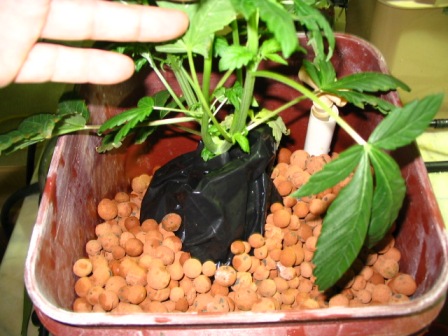
Hydroton
Hydroton is the world famous expanded clay. It is considered an ecologically sustainable growing medium. The clay is formed into pellets and fired in rotary kilns at 1200°C. This way the clay expands like popcorn and becomes porous.
Hydroton pellets are lightweight and can be cleaned and sterilized after use. They are also inert, pH neutral and do not contain any nutrients. The pellets drain freely and do not hold any excessive water, thus providing good oxygen levels around the root and are particularly suitable for flood and drain systems. They are also used extensively for rose growing.
Hydroton is also a good substitute for normal plant-soil and is mainly used in Hydroculture / Hydroponic systems as well as for decoration. These tiny little clay balls work great for plant growth because of their high water storage properties and balanced capillary action. Hydroton has excellent water retention and due to their shape water drains quickly away. Hydroton is also reusable. Just wash it in a white vinegar solution or Hydrogen Peroxide, rinse a couple of times and you are set.
Compared to normal soil, Hydroton offers many advantages. The material is not only completely clean and odorless, it also has an ideal round shape. It ensures good root aeration, prevents rotting, prevents excess acidity and prevents soil pests.
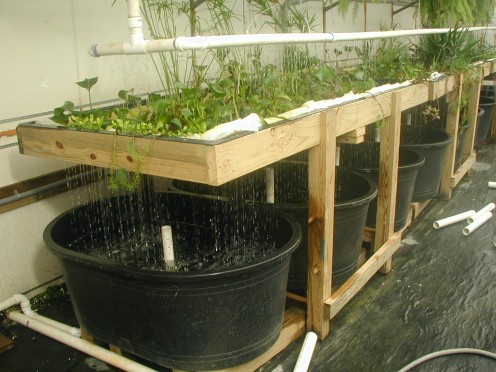
There are Many Hydroponic Systems to Choose From!
There are many Hydroponic Systems that a grower can choose from and they are as follows:
1. Water Culture or Aquaculture. This is the method of hydroponics that is the simplest to set up on a small scale. In this system the plant roots are totally immersed in a nutrient solution. The major disadvantages of this system are the large amount of water required per plant and the need to aerate the solution continuously. The system must provide means to support the plant above the solution, aerate the solution, and prevent light from reaching the solution (to prevent the growth of algae).
2. Aggregate Culture. Growing plants using aggregates like sand or gravel is often preferred to the water culture method since the aggregate helps support the roots. The aggregate is held in the same type of tank used for a water culture system. The nutrient solution is held in a separate tank and pumped into the aggregate tank to moisten the roots as needed. After the aggregate has been flooded, it is drained to provide aeration. Enough water and nutrients cling to the aggregate and roots to supply the plant until the next flooding.
3. Aeroponics. In an aeroponic system, the roots of the plant grow in a closed container. A misting system bathes the roots in a film of nutrient solution and keeps them near 100% relative humidity to prevent drying. The container may be of almost any design as long as it is moisture proof and dark.
4. Continuous Flow Systems. The nutrient solution is held in a large tank and pumped or allowed to flow by gravity to the growing pipes. The continuously flowing nutrient solution bathes the roots and then returns to the holding tank. The solution aerates itself as it flows back into the tank.
5. The Ebb and Flow (or Flood and Drain) System. Many growers consider this the Rolls Royce of hydroponic systems. It usually involves the use of multiple modules or double buckets—the inside bucket or basket contains the grow medium, such as baked clay pebbles, while the outside bucket is flooded periodically by a pump on a timer for a set period of time, let’s say 15 minutes, then the solution is drained back into the reservoir. Aeration takes place automatically each time the solution is drained, since the resulting vacuum sucks air into the buckets.
Take your pick!
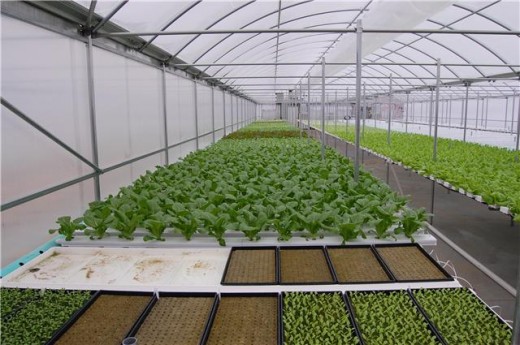
Essentials of Hydroponic Gardening
Hydroponic gardening gives an exceptional way to eliminate the need for a basic component for plant growth and that is soil. This unique method of gardening has already been used in outer space and Antarctica -- places where growing plants on the ground is out of the question. Apparently, modern hydroponics is a revival and developments of methods used over 300 years ago. Most of the materials being used today were systematized by scientists 100 years ago. But the basic concept goes back thousands of years, some say to the Hanging Gardens of Babylon.
You may wonder, why the sudden interest on hydroponics now? It is because of the increasing damage of air and soil pollution not only to humans but also to vegetation as well. Just imagine the great ecological cost by using the highly toxic conventional methods to control the generation of diseases, insects and pests on plants.
So to start off with your own hydroponic garden, you will need the following materials:
- · Hydroculture pot
- · Baked Clay Pebbles
- · Vermiculite
- · Rock wool
- · Plastic
- · Bubbler
- · Hydroponic Solution
- · pH test kit
- · Styrofoam
- · Cork
After carefully focusing on the things you need to prepare, the next step is to consider the outside climate and the polluted groundwater and atmosphere that carry pests and diseases. You should be able to control the environment by enclosing the growing trays and nutrient circulating system in a small greenhouse. There are a number of excellent greenhouses on the market today. You can have the option to buy one or to create your own; however, creating your own may even cost you more.
If you want to move your hydroponic garden indoors (for instance in a colder climate), you’ll need intense lighting to simulate sunlight. This lighting usually consists of a powerful bulb, a fixture, a shade, and a ballast. Electronic ballasts are far superior to the old magnetic ones, and make much less noise.
Modern hydroponics is booming today because it promises elimination of environmental hazards on food and crops. It also emphasizes the natural factors in superior plant growth and provides a more convenient and economical way of producing one’s own supply of super-fresh and super-quality fruits and vegetables.

Hydroponic Gardening is the Answer to our Future
With the rapid rate of developing lands into buildings
and commercial establishments, have you ever wondered what if we run out of
land to grow plants? What if we don’t have anymore fields to plant fruits and
vegetables? Would it mean shortages in our food supply? The truth is that if we
use our farmland to put up more condominiums or buildings, we will have no more
room for our crops to grow. This has been a potential issue for years. That’s why
scientists have developed another way to grow food and plants without utilizing
land and that is with the method of hydroponics.
Hydroponics is the best possible method that we can use to grow crops to sustain the earth without having to worry about losing farmlands. These days we are losing land rapidly; there is no telling how soon we will run out of land to plant crops on.
The great thing about hydroponics growing is that anyone can do it. If you have
the knowledge and the right equipment you can do it yourself. That means those
individuals who live in downtown areas and those that have no yard space for a garden
can grow healthy vegetables and fruits easily. The method of growing plants using
a hydroponics system is not hard to learn. You just need to understand the
basic information like the equipment to use, what fertilizers to buy, etc.
With our farmlands as one of our primary resource for our food supply rapidly depleting, we should be able to find alternative ways to combat this potential problem, thanks to hydroponics. Now, we have a better chance of surviving the future without sacrificing progress and development.
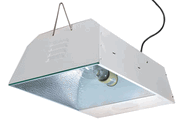
Light Reflectors in the Home Hydroponics Garden
An often overlooked, but very important, part of the home hydroponics garden is the use of light reflectors. Light is one of the most crucial factors in the health of your plants; both too much and too little will result in sickly plants. Reflectors can help to solve both problems. The correct use of light reflectors can increase the amount of growing area you have for your home hydroponic garden, giving you a greater yield or room for more of a variety. If your home hydroponic garden is also your business, this can translate into greater income in the end.
You can buy some of the most expensive lights on today’s market and find they are nearly useless without proper light reflectors. When set up correctly, using a light reflector in your home hydroponic garden can double and sometimes even triple the available growing area. You want to look for reflectors you can set up horizontally. Reflectors take the available light from your lamps and spread it out to brighten dim areas that can’t be reached by bulbs alone. By placing the light reflector horizontally, you allow for more surface area to reflect light outward rather than upward.
Another factor to consider when buying light reflectors for your home hydroponic garden is whether the plants you are growing grow best in bright or dim light. Smaller reflectors concentrate the light more, providing a brighter light in their coverage area. If your particular needs are for plants that do not need a great deal of light, then larger reflectors can be used. At first, you may need to buy a couple different sizes to see exactly how each performs in your particular growing area.
We all know that light produces heat. The more light there is the greater the heat and many home hydroponic gardens are in smaller areas with little in the way to ventilate. Too much heat can be just as dangerous, if not more so, for your plants. Light reflector manufacturers have taken that into consideration and manufactured some light reflectors to be air-cooling. Many light sources are combined with air-cooling reflector hoods to make it even more convenient for the home hydroponic gardener. These units tend to cost slightly more than other units, but are often well worth the extra cost. They eliminate the need for expensive ventilation systems and make it possible to keep your growing area at a temperature that is both comfortable and healthy for your plants.
Home hydroponic gardening is increasing in popularity, especially with the rising costs of gas and food. Making sure your plants are as healthy as possible will help save you money in the long run. For more information on creating the best possible home hydroponic garden you can, visit http://www.advancednutrients.com and take a look around
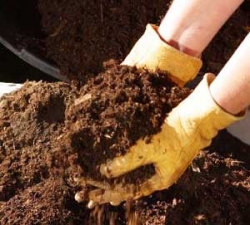
Home Hydroponics—Organic Fertilizers
In any type of garden, it is essential to make sure your plants have all the nutrients they need to grow and resist disease. This is especially important in your hydroponics garden. Many nutrients are found in soil, which is not present in a hydroponics setting. You will need to add these missing nutrients to realize the best crop possible. With so many fertilizers on the market, however, it is often difficult to decide which one is the best for your home hydroponics garden. It is my hope that this will clear up some of your confusion.
Fertilizers, both organic and inorganic, are labeled with a sequence of three numbers. These numbers indicate the percentage of the three main compounds found in all fertilizers, Nitrogen, Phosphorus and Potassium (or Potash). The letters N-P-K represents these. Basically, Nitrogen helps plant foliage to grow strong. Phosphorus helps roots and flowers grow and develop. Potassium (Potash) is important for overall plant health. . Fertilizers then contain a variety of other vitamins and minerals that vary greatly from one brand to another.
Inorganic fertilizers are made of chemicals that can harm your plants and the environment. More and more gardeners, especially those with home hydroponic gardens, are switching to organic fertilizers. Organic fertilizers are derived from what was once a living plant or animal. Microorganisms break these down to release their benefits to your plants. This process is a natural occurrence that enables your plants to benefit as nature intended.
Organic fertilizers are often ignored for many reasons. One of the biggest reasons is the smell that is often produced by the organic material. Fortunately, hydroponic supply producers are finding ways to combat this odor problem and more organic fertilizers sold in hydroponic supply shops have a less offensive odor. Yet another argument is that organic fertilizers work slower than inorganic ones. While this is often the case, the way these organic fertilizers work makes it easier to grow healthier, larger plants. In addition, the plants, especially those grown for human consumption, are less likely to create health problems.
Originally, organic fertilizers were also known to attract fungus gnats. This was annoying at best for the home hydroponics gardener. At its worst, these annoying insects could harm plants. This annoyance has been virtually eliminated in some cases with the proper organic fertilizer. Some organic fertilizers, such as the Iguana Juice listed below, have also taken care of the problem caused by sludge plugging the drip emitters in your home hydroponics garden, a problem that for many years plagued users of organic fertilizers. Today, virtually every argument against the use of an organic fertilizer has been eliminated.
Home hydroponics gardening is increasing in popularity, especially with the rising costs of gas and food. Making sure your plants are as healthy as possible will help save you money in the long run. For more information on creating the best possible home hydroponics garden, visit the Advanced Nutrients website (http://www.advancednutrients.com/) and take a look around. They have one of the finest organic fertilizers available, Iguana Juice Grow and Bloom (http://www.advancednutrients.com/iguanajuice). Grow will astound you with its boosting of vegetative growth, while Bloom will not only multiply the number of your buds, flowers, and fruits, but will serve to increase their size, as well.
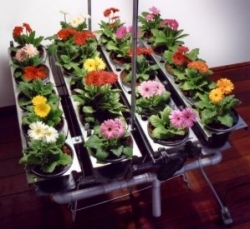
Home Hydroponics--Newsletters
Subscribing to home hydroponic newsletters has many advantages. The greatest advantage is having access to breaking news and new trends in the hydroponic gardening world. Some newsletters arrive in either your computer Inbox or postal mailbox weekly, others on a monthly schedule. Either way, the news is fresh.
Unlike forums, the information stays put until you have the time to read and digest it. You don’t have to scroll through a hundred or more posts to find the piece of information you are looking for. You are also able to have a hard copy of newsletters for future reference. You can print each e-mail newsletter and place it in a file so you can find it exactly when you need it.
There are a few things you need to take into consideration when subscribing to any home hydroponic newsletter. First and foremost, make sure the company or organization distributing the newsletter is one you can trust. Research reputation; ask to see the newsletter archive or a sample issue to get a feel for what kind of material is included.
Try to find newsletters that are focused on the same type of crops that you are producing in your home hydroponic garden. A newsletter focused on hydroponic growing for the mass market isn’t going to be very helpful to you if are growing a small rose garden for personal pleasure and a newsletter focused on marijuana production isn’t going to help you with the vegetables you hope to can in the fall. Make sure the newsletter will be helpful and not just a waste of your time.
Finally, until you know the information contained within a newsletter is accurate, don’t put your entire garden at risk. If some method does not seem logical, don’t use it until you have researched. Even then, use it cautiously on one or two test plants to make sure the method works for you and your crops. Each home hydroponic garden is as varied as each hydroponic gardener. With this in mind, know that every method and every newsletter is not intended for each and every situation. Look for the home hydroponics newsletter that works best with you and your garden.
Home hydroponics gardening is increasing in popularity, especially with the rising costs of gas and food. Making sure your plants are as healthy as possible will help save you money in the long run. For more information on creating the best possible home hydroponic garden you can, visit http://www.advancednutrients.com/ and take a look around. Their free newsletter is one of the best out there. It is full of tips and advice that are accurate and easy to follow.
Plant Stress in the Home Hydroponics Garden
When you think about stress, what comes to mind? Do you think about things that attack your body, causing you discomfort and often bringing about illness? I know I do. Stress is not just a human concern; pets can experience stress as well. What most people don't realize is that plants also fall victim to stress. They react much in the same way as humans do, with shutting down and falling ill.
Some of the things that can cause stress in your home hydroponic garden are drastic changes in temperature. Excessive heat or cold can cause your crops extreme stress. Plant stress can come about if proper nutrition isn't given. Your plants need to work harder to gain as many nutrients as possible from what they are given. Lack of water, not enough light and pruning can all be sources of plant stress. Even something good like blooming can increase the stress level in your home hydroponic garden. How the different stressors affect your plants depends on how healthy they are, where in their growing cycle they happen to be and what the stress is.
While there is nothing you can do to avoid plant stress entirely, you can help reduce the damage caused by it. By providing adequate light, water and temperature, you can reduce environmental stress. By seeing that your plants are given adequate nutrition, you can help them combat the stressors that can't be avoided. Like humans, the B vitamins are excellent for this.
Adding B vitamins to your home hydroponic garden will help your plants combat the effects of stress. These vitamins will allow your plants to withstand more, repair themselves if they are damaged slightly and give them added energy to flourish in spite of less than ideal conditions.
To help combat the inevitable stresses that befall your home hydroponic garden, try Organic B. Organic B provides more than B vitamins. It also contains plant-strengthening B vitamins, amino acids and other enhancers. Your clones, transplants and seedlings will better resist stress and disease to turn into healthy adults. You can find out more about Organic B at http://www.advancednutrients.com/landing_pages/organic-b_landing.html.
Home hydroponic gardening is increasing in popularity, especially with the rising costs of gas and food. Making sure your plants are as healthy as possible will help save you money in the long run. For more information on creating the best possible home hydroponic garden you can, visit http://www.advancednutrients.com/ and take a look around.

Bloom Boosters in the Home Hydroponics Garden
What is a bloom booster and why should you use it in your home hydroponic garden? A bloom booster is a combination of essential amino acids; plant hormones and other nutrients that can help your plants produce larger, stronger flowers. This results in more beautiful flora and larger fruits and vegetables. For those who depend on their home hydroponic garden to help provide income, this can result in greater profit.
That takes care of the "what and why"; now let's explore the "how" where it comes to using bloom boosters in your home hydroponic garden. It isn't enough just to spray a bloom booster on your plants and leave it at that. You need to first find the best product and then use it in combination with other hydroponic products. It is by knowing when and how to use bloom boosters that is essential in gaining the best results possible.
Bloom boosters are most effective if you increase such nutrients as phosphorus and potassium in your home hydroponic garden. This can backfire, however, if you are not careful. Too much phosphorus can cause a deficiency in the amount of iron your plants can utilize, resulting in unhealthy plants with yellowed leaves and stunted growth. It is important to make sure you add a greater amount of potassium than of phosphorus to prevent this phosphorus toxicity.
In nature, plants bloom best when the amount of light and dark are equal. By changing your lighting schedule to twelve hours on and twelve hours off, you simulate nature. This helps your plants bloom naturally, ensuring their blooms are stronger and healthier. Adding a bloom booster at this time will aid in optimal growth.
You need to keep in mind that a bloom booster is not meant to heal unhealthy plants. Even the best product will not work unless you have taken the time to provide your home hydroponic plants with all they need in the way of nutrition and a healthy environment
Home hydroponic gardening is increasing in popularity, especially with the rising costs of gas and food. Making sure your plants are as healthy as possible will help save you money in the long run. For more information on creating the best possible home hydroponic garden you can, visit http://www.advancednutrients.com/ and take a look around.
While you are there, take a look at Big Bud, http://www.advancednutrients.com/landing_pages/big_bud_liquid_landing.html. Big Bud is infused with twenty amino acids; among those are L-trytophan and L-cysteine, the two most recommended for optimal blooms.
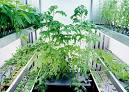
Home Hydroponics—Beneficial Microbes Can Make a Difference
All kinds of bacteria are harmful to growing plants, correct? Actually, the answer is no. There are many types of tiny bacteria, called microbes that can actually benefit your plants. The idea is to encourage these microbes. Some plants actually depend on certain microbes to help keep them healthy. We will explore how microbes can benefit your plants as well as several ways in which you can encourage the growth of beneficial microbes in your home hydroponics garden. These microbes are found naturally in soil, but the home hydroponics gardener needs to purchase specially formulated products to provide them.
The first and foremost benefit of providing your plants with beneficial nutrients is that it will help increase the healthiness of your crops. A healthy plant is hardier and can withstand unforeseen events that may cause hardship in other plants, such as broken pumps, burned out lights and other such problems. While unhealthy plants can wither and die quickly if everything isn't perfect in their growing environment, a healthy plant can withstand hardship and continue to flourish for a short time.
Beneficial microbes can help keep infectious diseases away and prevent nutrition deficiencies. The microbes "feed" off harmful bacteria and thus keep them from attacking the plants. This allows the harmful bacteria less time to take hold and create problems. The beneficial microbes also enable the plants in your home hydroponic garden to absorb the needed nutritional elements better, thus making your plants bigger, stronger and less likely to experience deficiencies. Beneficial microbes help your plants develop greater root mass, than untreated plants, resulting in accelerated growth and bigger yields.
Now that you see how beneficial microbes help, it helps to know ways to increase them in your home hydroponic system. The more natural, or organic, products you use, the greater chance the beneficial microbes have of growing. Nature has automatically created these beneficial microbes for us; and by using fewer chemicals on your plants and more natural products you allow nature to help.
Keeping your growing area warm (but not too warm) will also help increase the presence of beneficial microbes. Cooler temperatures slow down, and often halt, bacterial growth. This may be beneficial where harmful bacteria are a concern, but the cold does not differentiate between harmful and beneficial. Keep your growing area as warm as possible for the kind of crop you are growing. (Unfortunately, too much heat will also kill off beneficial microbes-so don't be tempted to mix them into your nutrient solution, using hot water!)
Another thing that can prevent the growth of beneficial microbes is the use of pesticides. This works on the same principle as the temperature. Pesticides are not able to tell the difference between good and harmful parasites. When you utilize such a product, you kill off the beneficial microbes in your home hydroponic garden as well as harmful ones. This leaves your plants at risk of future attacks from harmful bacteria and at risk if all does not go well in your growing area.
Yet another word of warning concerns hydrogen peroxide. Some hydroponics growers use this product to oxygenate their roots that are dangling in the nutrient solution. If you use hydrogen peroxide, you might as well say goodbye to your beneficial microbes. It will kill most of them on contact.
Home hydroponic gardening is increasing in popularity, especially with the rising costs of gas and food. Making sure your plants are as healthy as possible will help save you money in the long run. For more information on creating the best possible home hydroponic garden, you can, visit http://www.advancednutrients.com/piranha or http://www.advancednutrients.com/tarantula, and discover the difference these beneficial microbes make.

Home Hydroponic Gardening – Pests and Pathogens
The home hydroponic gardener may not spend much time thinking about pests and diseases. After all, most of these come from soil. Correct? Eliminate the soil and you rid yourself of having to deal with such nuisances. That seems to be the thinking of those new to hydroponic gardening. The truth of the matter is that pests and diseases will always be something gardeners have to deal with, even in the home hydroponic garden.
The indoor home hydroponic garden often finds itself a victim of such pests as the spider mite or white fly, among others. In addition, diseases in the form of fungi or mold can be a problem. In order to have healthy plants, the home hydroponic gardener has a few choices available to control these infestations. The most common treatments are using a commercial pesticide, biological control (which involves introducing predator insects and such to your growing area) or use of a specially formulated pest control product found at the local hydroponic shop.
Most hydroponic gardeners do not want to add chemicals to their growing environment. These chemicals can harm both human and plant. In addition, plant pests have often developed immunities to these products. You end up harming the plants and the pests continue multiplying. Specially formulated hydroponic products are safer, but there is still the risk of damage to plants if used incorrectly or too often. Adding live predators to the growing area is often not practical. You don't want to bring more insects into play, especially in home hydroponic gardens growing within the living environment. There is a solution that can be better than all these-prevention.
Just as the preferred method of disease control in humans is to prevent the disease in the first place, this is also practical for plants. Take, for example, Barricade . This product works from inside your plants, making them stronger and more resistant to bugs, fungi, molds, and even stress. By not allowing the pests and pathogens to get a foothold in your home hydroponic garden, you have greater control.
Another advantage of using preventive products is that a stronger plant will grow better and produce more. You are not adding harmful chemicals to either your home hydroponic garden or the environment in general. Your plants are healthier; pests and disease are stopped in their tracks and your time and investment are protected. Just as with humans, it is often a lot less expensive to prevent a problem than it is to cure one.
Home hydroponic gardening is increasing in popularity, especially with the rising costs of gas and food. Making sure your plants are as healthy as possible will help save you money in the long run. For more information on creating the best possible home hydroponic garden you can, visit http://www.advancednutrients.com/ and take a look around

Home Hydroponics—The Role of Carbohydrate Supplements
Carbohydrates play an important part in the growth of the plants in your home hydroponics garden. They help provide necessary energy for optimum growth and carbohydrates are stored for times when the plant may need either energy, such as during blooming, or extra help, such as cases where there is less than perfect growing conditions. Simply put, the plant uses carbon dioxide molecules from the air and water molecules and the energy from the sun to produce a simple sugar such as glucose and oxygen molecules as a by product. The simple sugars are then converted into other molecules such as starch, fats, proteins, enzymes and. all of the other stuff that helps a plant grow.
Carbohydrates are sugars, correct? So, it makes sense you can just toss a handful of sugar into your plant's water and leave it at that. Wrong! Simple sugars, or corn syrup, isn't any better for your home hydroponics garden than they are for you. Plants have to work to gain nutrition from the simple sugars they ingest and certain combinations of carbohydrates work better than others because of their ease of absorption.
Unfortunately, many carbohydrate supplements are little more than sugar and corn syrup. You need to seek out a product that will enable your plant to make full use of the nutrition. A product containing fulvic acid will help increase the rate and speed of absorption. This will help you see a visible increase in your plant's growth in the way of larger blooms and stronger, healthier plants.
Simply adding nutrients to your plant, without a carbohydrate supplement, may actually do more damage to the plants in your home hydroponics garden. The nutrients make your plants work harder to realize the benefits, yet they don't have the necessary energy required to do so. This makes them weaker. By adding the carbohydrates, you give your plants the extra energy necessary to utilize their nutrition more effectively and with less work. This gives them a chance to grow larger and stronger.
Home hydroponics gardening is increasing in popularity, especially with the rising costs of gas and food. Making sure your plants are as healthy as possible will help save you money in the long run. For more information on creating the best possible home hydroponic garden you can, visit http://www.advancednutrients.com/ and take a look around. Take a moment to check out CarboLoad. This is one of the best products for helping your plants gain their needed carbohydrates.

Home Hydroponics—Vitamin Supplements
Plants, like all living things, need certain vitamins and minerals to grow and bloom. They have special needs depending on which part of the growing cycle they are going through. You want to provide more of one supplement during the initial growing stages and another during the blooming phase. This is the same as the human body needing more of one vitamin when in childhood and another in old age.
In traditional gardening, plants are apt to get most, if not all, of their nutrients from the soil. This is not the case in the home hydroponics garden. For this reason, you will find it necessary to provide these necessary vitamins and minerals with the addition of a vitamin supplement. The trouble is, how do you know what your plants need? For example, vitamin B1, or Thiamine, helps encourage the synthesis of sugars
Some of the most necessary vitamins and minerals needed by plants in your home hydroponics garden are the B vitamins. These give your plant the energy they need to grow, ability to handle any stresses caused by less than idea circumstances. The B vitamins also help your home hydroponics plants repair any harm that may be done. Other than oxygen, the B vitamins may well be some of the most important.
When searching through the myriad of vitamin supplements available, it helps to know what to look for in the way of a healthier supplement. The first thing is the ability to be absorbed by your hydroponics plants. Let's face it; if the plants can absorb the supplement, it does no good. For this, you want to look for a product with a humic acid base. Humic acid has the ability to chelate, or bind positively to charged ions. To your plants, this means it allows many more nutrients to be absorbed than would be possible without the humic acid. This in turn translates into larger, healthier plants.
One of the best Vitamin B supplements I have found is Organic B, sold by Advanced Nutrients. Organic B is made from the best sources and provides an excellent source of B vitamins to the plants in your home hydroponics garden.
Home hydroponics gardening is increasing in popularity, especially with the rising costs of gas and food. Making sure your plants are as healthy as possible will help save you money in the long run. For more information on creating the best possible home hydroponics garden you can, visit http://www.advancednutrients.com/ and take a look around
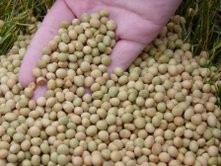
Hydroponic Gardening - Soybeans
Soybeans are one of the most versatile of crops. While they have been grown for some time as a possible alternative fuel source, they are finally being recognized for their nutritional value. As meat prices continue to rise, alternative sources of protein-rich food are being turned to—and soybeans fit the bill. Let’s explore some of the special growing conditions needed for soybeans in your hydroponic garden.
One of the first things necessary when growing soybeans is to inoculate them with special nitrogen-fixing bacteria. This is used to allow the beans to absorb nitrogen more readily. You dust the seeds with this special solution before planting. These inoculates come in both powder and liquid form. Fungicide treatments applied to seed before planting are designed to protect the plants from root rot diseases. Many fungicide treatments can be mixed with inoculation materials and applied at the same time.
Soybeans grow like many other beans, vining and needing some sort of structure to support them. Construct a support system in your hydroponic growing area by running a line from one end of the area to another. When this is done, provide lines from each plant upward to the main line. This will enable your soybeans to grow upward, providing more space for plants and allowing bottom growth to obtain enough light. Soybeans need a great deal of light to produce flowers, which will then become your soybeans. Without enough light, your plants will not flower.
While soybeans need a great deal of light, they do not like either high temperatures or great humidity. The growing environment would be ideal if it stays around sixty-five degrees Fahrenheit during the day. Humidity in the hydroponic growing area also needs to be kept low to prevent causing your soybeans to rot.
A growing medium such as a peat/vermiculite blend is best for your soybean crop. You may also want to consider placing pebbles at the bottom of your growing container, as they prefer a well-drained medium that allows the roots plenty of room to breath.
Soybeans are an excellent choice for the hydroponic gardener. Provide them with a growing medium that drains well, plenty of light and a pre-treatment with a special nitrogen-fixing inoculate and you will soon have one of the most versatile crops available.
Finally, to help ensure your soybeans get the best nutrition possible, you should check out the seven best-kept secrets of hydroponics and subscribe to the Advanced Nutrients newsletter at http://www.advancednutrients.com/newsletter/. Advanced Nutrients is the world’s foremost supplier of hydroponic nutrients to discriminating growers everywhere.

Hydroponic Gardening - Leeks
Leeks are part of the onion family. They have a milder flavor, however, and are often preferred to their stronger tasting cousin. This vegetable is very versatile and can be eaten raw or cooked and both leaves and stems are edible. In addition, this cold-weather crop is so easy to grow, it is almost a must in any hydroponic garden.
Leeks do best in a perlite growing material. This allows the roots plenty of air by providing adequate drainage. The roots of the leeks are the most wanted part and you do not want to keep them too moist or you can cause root rot. An ebb and flow system will work perfectly while growing hydroponic leeks as it will enable the gardener to control how moist the growing medium remains between feedings. Leeks prefer a pH of between 6.5 and 7.0 for optimal growth and will benefit tremendously from added nitrogen.
One of the most preferred methods of feeding leeks is the drip irrigation method. This method allows for adjustments to be made easily should it be necessary. You want to keep the roots slightly moist, but allowing them to remain wet for too long can cause rot. The adjustment valves on the drip irrigation system are easier to maintain than some other hydroponic methods.
Leeks have very few problems with insects. Having your hydroponic garden inside either your home or a greenhouse should eliminate this pest problem completely. It is important to remember that commercial pest solutions are highly discouraged in the hydroponic garden. If absolutely necessary, visit your local hydroponic supply store and obtain a pest product specially formulated for hydroponics. These are developed to cause the least amount of damage possible to your leeks and other plants.
Being cold weather crops, your growing area temperature can be as low as twenty-four degrees Fahrenheit, but you really don’t want to allow this low of temperature for too long. During germination, set temperature at seventy-five degrees Fahrenheit and provide as much light as possible. Once your plants have become as big around as an average pencil, they will be ready to plant in their final growing area. At this point, the temperature in the growing area needs to remain between fifty-five and seventy-five degrees Fahrenheit, preferably at the lower end of this spectrum. Temperatures above seventy-five degrees Fahrenheit will jeopardize the growth of your leeks.
Finally, if you want to give your leeks the best nutrition possible, you should check out the seven best-kept secrets of hydroponics and subscribe to the Advanced Nutrients newsletter at http://www.advancednutrients.com/newsletter/. Advanced Nutrients is the world’s foremost supplier of hydroponic nutrients to discriminating growers everywhere.
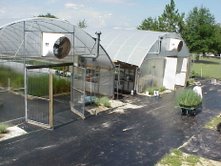
Hydroponic Greenhouses — Glass versus polyethylene
Once you have had a taste of hydroponic gardening, you may find yourself wanting to expand your efforts to a scale that is bigger than what can fit in the corner of your living room. It is time to start looking into a greenhouse. There are so many kinds of greenhouses on the market today, that it can often be confusing deciding which is best for your particular needs. Let’s explore two of the most common types of greenhouse coverings, glass and polyethylene film. Hopefully, this will make your choice a little bit easier.
When deciding between glass panels and polyethylene film covering, there are several factors you need to take into consideration. These factors include how much you can afford to or are willing to spend; environmental factors required for the hydroponic plants you are growing; and how permanent, or temporary, you want your greenhouse to be.
Glass is the most expensive covering for a greenhouse, costing on average six times more than polyethylene film. The framework of your greenhouse will also be more expensive, as glass is heavy and needs a stronger framework. Glass, however, can withstand extremes in temperature better and will not need to be replaced as often as polyethylene film. This being the case, within twenty-five years, you are looking at the same general cost for covering and the difference comes in the amount spent on the framework. If you are unsure about how long you plan on maintaining a hydroponic garden, you may wish to go with the less initial outlay.
Glass covering is the best choice for allowing sunlight to reach your plants. It allows more of the rays to reach your garden; however, you may need to look into some type of coating on the glass to help diffuse the sunlight and allow it to reach more of the leaves. For insulation against extreme temperatures, polyethylene film works better than glass. Polyethylene film, however, can “sweat”, dripping onto the plants inside and increasing the overall humidity level of the interior. Some of these films are now being made with a coating that helps alleviate this problem.
Glass greenhouses last longer than those covered with polyethylene film. Glass can weather well for over twenty-five years. If you are planning a long-term venture, this may be your best choice. Keep in mind, however, that glass can’t stand impacts as well as polyethylene film and you may find yourself replacing panels more often. If you are merely leasing your property or are not sure how long you may continue with hydroponic gardening, you may consider polyethylene film coverings. Many inflatable structures are made of this and are easy to assemble or disassemble, making it easy to re-locate or eliminate the greenhouse.
Finally, the greenhouse is only a starting point for a productive hydroponic garden. To help ensure your plants get the best nutrition possible, you should check out the seven best-kept secrets of hydroponics and subscribe to the Advanced Nutrients newsletter at http://www.advancednutrients.com/newsletter/. Advanced Nutrients is the world’s foremost supplier of hydroponic nutrients to discriminating growers everywhere.
Easy Hydroponics--Piranha, Tarantula, Voodoo Juice
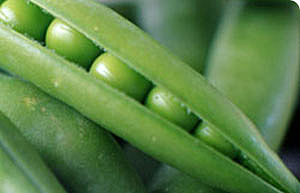
Hydroponic Gardening - Peas
When I was young, I was like most kids and would not eat peas—until my mother came up with calling them “nice, green peas”. I ate them like there was no tomorrow. With hydroponics, you can turn all your peas into “nice, green peas” that are full of nutrition and taste unlike traditionally grown peas.
Before setting up to grow your peas, you will need to select the variety you prefer, bush or vining. This will help determine how much space you will need, as well as whether or not some type of support will be necessary. Peas grow best in cooler temperatures and require growing material, such as perlite, that does not hold moisture too long. One of the most important things to monitor when you grow your peas is the pH balance, as pea plants are very sensitive to acidity levels. Finally, you will need some type of lighting to keep your peas healthy.
Bush peas can be trimmed back when between six and eight inches high. By trimming the tip and first set of leaves, two branches will sprout. This encourages the plant to grow outward instead of just upward. For vining varieties of peas, you will need to have some type of support in place. An ideal solution to this is to have a rope hanging from one end of the growing area to the other. Each plant then has a string leading upward from the plant. This enables the pea plant to be wrapped around the rising line as it grows. This not only allows for less space being needed per plant, but also enables the available light to evenly fall on the upper and lower leaves.
Temperatures in your hydroponic growing environment need to be on the rather cool side for growing peas. While peas can withstand temperatures as low as twenty-eight degrees Fahrenheit, the ideal growing temperature is between fifty-five and sixty-five degrees Fahrenheit. If the temperature falls too low, the flowers will become sterile. Acidity needs to be constantly monitored. Peas grow best when the pH level is between 6.0 and 7.0. If it falls below this level, calcium uptake by your peas will be jeopardized.
Either high-pressure sodium light or low-pressure sodium light can be used as supplementary lighting in your hydroponic growing area. Make sure the lamps are positioned so that the lower parts of your pea plants receive an adequate amount of light. When there is insufficient light, the plants grow taller and spindlier, reducing their strength.
Finally, to help ensure your peas get the best nutrition possible and become “nice, green peas” instead of plain old peas, you should check out the seven best-kept secrets of hydroponics and subscribe to the Advanced Nutrients newsletter at http://www.advancednutrients.com/newsletter/. Advanced Nutrients is the world’s foremost supplier of hydroponic nutrients to discriminating growers everywhere.
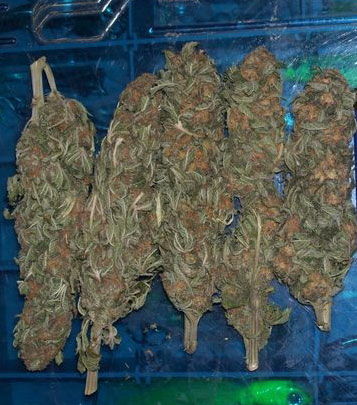
The Little Secrets behind Bigger Buds
A quality plant enhancer is an essential investment if you want to achieve bigger buds in your hydroponic garden. There are many ways in which a potent plant enhancer can boost your indoor gardening. One of the biggest factors that influence growth and yield depend on how many nutrients your plant is receiving. This means that you need to increase the amount of nutrients that your plants receive provided that the condition of your root zone is optimized. A quality plant enhancer usually has several elements that help improve uptake and therefore increase your yield and their size as well.
Some plant enhancers may contain specially designed enzymes that can stimulate root growth, thus enabling your plant to soak up more moisture and nutrients. Others may have beneficial fungi that can break down the nutrients in your solution so they are more useful to your plants. This added growth will definitely affect every part of your plant including in areas where you want it the most. Thus, it would mean bigger buds, larger, tastier and juicer vegetables when harvest time comes.
It’s not that difficult to achieve bigger buds in your hydroponics garden, you only need to choose the best plant enhancer from a reputable company and great results won’t be far behind. This is because many plant enhancers are engineered to give you exactly the kind of result you would like to see in your hydroponic garden. Moreover, because your plants will be healthier and will be receiving nutrients much more efficiently, they will progress much through each stage of plant development. Thus, allowing you to enjoy your vegetables and flowers more quickly.
Hydroponics is easy to set up when you're a hobbyist, but if you have aspirations of becoming a master grower, you owe it to yourself to read the best hydroponics newsletter on the web from www.advancednutrients.com/newsletter.
Many Hydroponic Systems to Choose From
My favorite hydroponic system is called Ebb and Flow (or Flood and Drain). Your plants are placed in individual modules or buckets, usually filled with baked clay pebbles, rock wool, or a coco peat mixture. There is a reservoir underneath the buckets, equipped with a pump or pumps that are attached to pipes leading into each module. Periodically, a timer activates the pumps, and the system is flooded with nutrient solution from the reservoir, for a certain set time, let’s say ten minutes. After that time, the liquid is allowed to drain back into the reservoir through the automatic opening of a valve on the bottom of the module.
During the ten minutes when the roots of the plant are immersed in the nutrient solution, enough moisture and nourishment is absorbed to keep the plant going until the next set time interval, let’s say every three hours. The system can be fine tuned to allow the grow medium to almost completely dry out between waterings. Also, each time the liquid drains back into the reservoir, air rushes in from above, providing the roots with much needed oxygen.
Hydroponic gardening employs many other methods, as well. There is Deep Water Culture (DWC), Nutrient Film Technique (NFT), Drip Irrigation, various Grow Box methods, and Grow Cabinet variations. There is also aeroponics, a branch of hydroponics, that lets your roots dangle mid air and only sprays or mists the nutrient solution onto them periodically. But whichever of these hydroponic methods you choose, the basic nutritional needs of the plants do not change. Just like your children deserve the best nutrition you can provide, the best food for your plants is made by a Canadian company, called Advanced Nutrients. Check out their website, you’ll be glad you did!
Hydroponic Gardening - TIPS
When it comes to hydroponic gardening, you can find a great deal of information available for reading. Often, however, there are tips that don’t warrant an entire article, yet they are of importance if you want to grow the best fruits, vegetables and flowers possible. Read on to learn of five important tips that can help make a difference in your hydroponic adventure.
Tip #1 In the trickle irrigation system, you need to take special care in making sure your gravel is the correct size. Lateral movement of the solution along the roots is necessary. For this reason, any gravel that is larger than a quarter of an inch in diameter is not recommended, as it will inhibit this flow. The idea size of gravel is anywhere between one-eighth and one-fourth inch in diameter.
Tip #2 If you are fairly new to hydroponic gardening you may still be searching for the growing method that suits your needs best. One method that does not get mentioned often is called “sack culture”. With this method, you poke holes in a thin bag made of polyethylene. This bag is approximately six inches. You fill this sack with a mixture of vermiculite and peat. Once the ends are sealed, the bag is hung up. Plants are placed in the evenly spaced holes you made previously. A hydroponic solution is introduced into the top of the bag and allowed to make its way down through the planting medium within the sack. Excess solution drains from the bottom.
Tip #3 You may find it desirable to add calcium, nitrogen or sulfur to your hydroponic garden to help it produce better. Calcium nitrate will provide both calcium and nitrate nitrogen in the best forms for your fruits and vegetables. Products such as Sensi Cal Grow are specially formulated to provide added calcium without damaging your plants. If you still need extra nitrogen, provide it through the use of potassium nitrate or potassium sulfate, which will also add any needed sulfur. Magnesium sulfate can also be used if necessary.
Tip #4 Germination of seeds can be a tricky time in your hydroponic gardening experience. To help your seeds shed their shells during germination, you need to keep them moist. Using coarse vermiculite to cover the cubes you germinate your seeds in can do this. Use plain water until germination and then a diluted hydroponic nutrient solution until the leaves develop. It is then important to make sure your water is at the proper pH balance. This can be accomplished by using pH Up or pH Down depending on whether you need more or less pH. Pre-treating your water with hydrogen peroxide will help if Reverse Osmosis water is not readily available.
Tip #5 Running your hydroponic solution through an ultraviolet sterilizer will help rid it of bacteria, fungi and some viruses that can damage your plants. Unfortunately, this can also harm chelates in your nutrient solution. What this means is that elements such as iron may end up being reduced. This will cause harm to your fruits, vegetables and flowers because they won’t be getting the complete nutrition they need. By adding specially formulated products that include the chelated nutrients, you will be able to combat this problem.
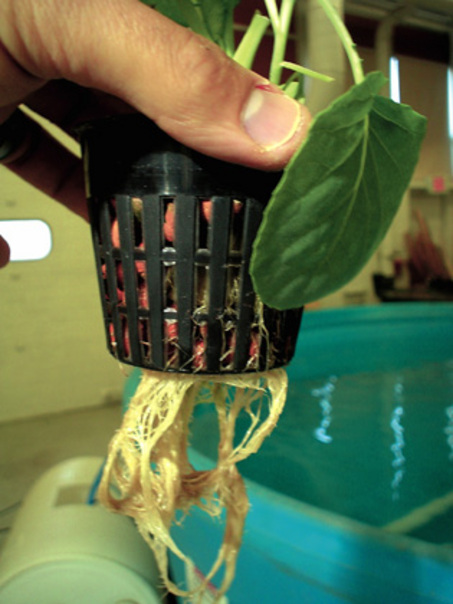
How 2 Part Nutrients Work on your Hydroponic Plants
Always keep in mind that the successful growth of your plants depends on what you feed them. The nutrient solution that you supply them plays a very important role in giving you a bigger and healthy crop. It is also very important to know that 2 part nutrients always work better compared to one part formulations. This is because a two part formulation is carefully designed to be more readily available to your plants at the right times, unlike a one part formula that has the tendency to cause build ups in your hydroponics systems because of the many elements present in it.
Plants require different ratios of nutrients during their vegetation and flowering phases. Therefore, it is more appropriate to use a formulation that contains 2 part nutrients. This is to maximize the potential of your plants in specific stages of their growth. These types of formulations are very competent in giving your plants the precise nutrients that they should absorb in a particular growth phase.
The 2 part nutrients focus mainly on what your plants need as they flourish in either their vegetative or flowering stage. For example, in the flowering stage, potassium (K) and phosphorus (P) should be more highly available because these macronutrients can contribute to budding, flowering and fruiting in plants. In addition to getting better and more nutritious crops, you can also use potent plant additives or supplements that can work well with your existing nutrient feeding program.
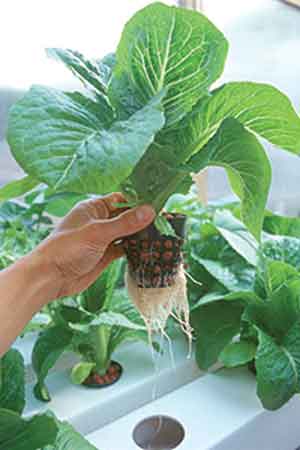
How 3 Part Hydroponic Nutrients Work
The growth rate of hydroponic plants is based on the nutrients that you supply them. These nutrients are the reason why plants grow and thrive. Hydroponic systems activate nutrients by providing water and oxygen to stimulate growth.
The 3 part hydroponic nutrients solution is one of the options that you have to help your plants achieve optimum results. The 3 part hydroponic nutrients contain the Grow formulation, the Bloom formulation and the Micro formulation. The Grow formulation has nitrogen (N) and potassium (K) to promote healthier shoot and leaf growth; the Bloom formulation has high phosphorus (P) content that is responsible for root development and for budding, flowering and fruiting of plants; and lastly, the Micro formulation contains all the trace elements essential to the overall health and vitality of plants in all stages.
Growers use the 3 part hydroponic nutrients by diluting them according to the growth requirements of their crops. By using these nutrients in their basic feeding, growers can have a better way of customizing their plants’ diet. Macronutrients like nitrogen (N), phosphorus (P) and potassium (K) are fundamental to the biochemical processes that a plant undergoes when it is making its own food. It is also advisable to add other nutrients like magnesium (Mg) and calcium (Ca) to ensure maximum health to your plants. Maintaining steady water temperature is also very crucial because it affects the way in which your plants obtain their nutrients. You should also remember that hydroponic plants should be placed in water at room temperature to get the best results.
Hydroponics is easy to set up when you're a hobbyist, but if you have aspirations of becoming a master grower, you owe it to yourself to read the best hydroponics newsletter on the web from http://www.advancednutrients.com/newsletter.
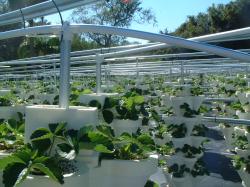
Hydroponic Gardening - Cilantro
Cilantro is a parsley-type herb. When grown for leaves only, it is called cilantro but if allowed to continue growing to seed, it becomes what is called coriander. In this article, we will discuss cilantro. Cilantro grown hydroponically does well with the drip irrigation method, somewhat less light than some other crops and a wide variety of pH conditions. This plant is easy to grow, takes up fairly little space and is often ready for harvest in six weeks time.
Cilantro does not relocate well, so it is often best to plant seeds directly into the growing medium you will be using. This plant grows equally well in perlite, vermiculite, coco peat, rock wool or Oasis foam. The main consideration is that the medium allow for proper drainage so your plant does not become over-watered. Using a drip irrigation method will allow better control over the amount of hydroponic nutrient solution your cilantro receives.
Cilantro prefers a pH range of 6.5 to 7.5, but is tolerant of some variation in regards to this. Plants need to be started nine to twelve inches apart, but this distance can be reduced to a mere six inches once leaves start maturing. It takes an average of a week to ten days for seeds to germinate and the leaves are ready to harvest in as little as six weeks. Cilantro grows quickly and is ideal for herb sellers because of this quick turn-around. Each plant can grow to anywhere between eighteen and twenty-four inches in height.
Lighting requirements for cilantro are versatile and the plants can grow under standard fluorescent, high output fluorescent or HID grow lights. As with any use of grow lights, you will need to make sure they are placed at the proper distance to provide enough light, yet not burn the leaves. Standard fluorescents can be as close as two to four inches, but you will need to place other fluorescent bulbs at least a foot above the plants. HID (high intensity discharge) grow lights need to be placed even further away. Ideally, they will be two to four feet above the tops of the plants. With HID grow lights, you will also want to have a fan circulate air and cause the plant leaves to move to prevent over-heating.
Cilantro is a hardy plant that can withstand low temperatures. It needs light but cooler temperatures to remain as cilantro longer. The higher the heat, the quicker this herb flowers. Once this happens, the plant becomes bitter and the flowers need to be left to go to seed, becoming coriander. This plant self-pollinates very well so does not need help. Any pest problems can be virtually eliminated by growing your cilantro hydroponically inside a greenhouse.
Finally, to help ensure your cilantro gets the best nutrition possible, you should check out the seven best-kept secrets of hydroponics and subscribe to the Advanced Nutrients newsletter. Advanced Nutrients is the world’s foremost supplier of hydroponic nutrients to discriminating growers everywhere.
Hydroponic Gardening - pak choi
With oriental cuisine becoming more and more popular, pak choi makes a wonderful addition to your hydroponic garden. This leafy plant, a type of Chinese cabbage, grows quickly, is fairly simple to keep happy and is not prone to insect infestations when grown in a greenhouse. Two of the most important components in pak choi production are light and ventilation. Read on to find out how you can successfully grow pak choi in your hydroponic garden.
Growing pak choi takes approximately thirty-five days from planting to harvest. This allows growers to produce several crops per year. The growing cycle is divided into two parts, with the germination period being ten days in length and then re-locating the seedlings to grow to full size. During the germination period, light is provided to the plants for twenty-four hours a day. It is not recommended that a gardener use incandescent lamps during this stage, but instead use fluorescent lighting. This does serve a major purpose. Incandescent lights emit red waves, which can cause the plants to grow tall and spindly. Fluorescent lights, which emit blue light, will help stalks develop shorter and thicker, providing a strong base.The nutrient film technique (NFT) is the most popular used for growing pak choi once it has been moved to its final growing area. The proper amount of overall, even light is necessary for the growth of plants. High-pressure sodium lamps are the recommended grow lights for this final growing stage. These bulbs not only put forth the correct color of light, they enable an even distribution of light.The proper rate of plant transpiration is necessary to prevent tipburn. This is when the tips of the leaves turn brown because they are not getting the proper amount of calcium to the leaves from the roots. This is easily prevented. The best way to help pak choi achieve the proper transpiration rate is to outfit your greenhouse with some type of turbulator fan. This will work with the lighting to allow the hydroponic nutrient solution to move upwards from the roots and through the leaves at a rate that will keep your pak choi healthy.Hydroponic gardening eliminates nearly all pests in a hydroponic garden. The quick rate at which pak choi matures and is ready for harvest, on average thirty-five days, is not long enough for any pests that may get into the greenhouse to set up colonies of any significance. If you are growing other crops in the same environment and find pest control necessary, using traditional pesticides may end up damaging all your plants. If absolutely necessary, hydroponic supply stores offer specially-formulated pest control products that are much safer.Finally, to help ensure your pak choi gets the best nutrition possible, you should check out the seven best-kept secrets of hydroponics and subscribe to the Advanced Nutrients newsletter at http://www.advancednutrients.com/newsletter/. Advanced Nutrients is the world’s foremost supplier of hydroponic nutrients to discriminating growers everywhere.Hydroponic Gardening—Lettuce
Lettuce is one of the easiest crops to grow in a hydroponic vegetable garden. Once seeds are germinated, lettuce does extremely well having a constant flow of nutrients on its roots. Temperature and humidity do not play as large a role in lettuce production as it does in many other hydroponic crops and lettuce grown inside a greenhouse will see very little to no infestations of insects. Lettuce also can be grown in a smaller area than many greenhouse crops such as tomatoes and sweet peppers. All these factors come together to translate into a high yielding crop in little space for minimal work.
Germination of lettuce takes place in a media such as perlite or vermiculite. Once the lettuce has four leaves, it can be transplanted into it’s permanent growing spot. The typical hydroponic set up for lettuce consists of PVC piping with holes drilled into it. A hydroponic nutrient solution is pumped continuously around the roots, providing food around the clock. As long as there is enough air circulating, this solution can be constantly recycled, allowing for less maintenance time. Lettuce is a cool weather crop, so the temperature in the greenhouse needs to stay close to sixty degrees. Anything higher may result in stunted growth and the development of algae in the hydroponic nutrient solution. Not needing as much light as most other indoor crops, gro lights may not be necessary. What will determine this is the location of your greenhouse. If the location allows for at least six hours of sunlight daily, the lights will not be necessary except for periods of excessive cloudiness for several consecutive days. Outdoor lettuce is subject to only a few pests, and using hydroponics eliminates most of these, as they live mainly in soil. The indoor environment eliminates most of the rest.It is possible to grow your hydroponic lettuce crop in very tight spaces. Anywhere between fifteen and twenty plants can fit in one square yard of space because lettuce does not need a great deal of room to grow. Ten to twelve inches between plants is sufficient for the heads to develop nicely. Placing the plants any closer than ten inches apart could result in stunted growth, resulting in smaller heads; more than twelve inches apart, however is a waste of space.Hydroponic gardening is not difficult and results in healthier produce. Choosing lettuce as part of your indoor garden will free up time and energy to spend on other fruits and vegetables because lettuce is so low-maintenance. Providing your crop with proper nutrients and cooler temperatures is the biggest preparation. The lettuce literally “grows itself” when provided with the elements above. Finally, if you want to harvest robust, abundant fruits and vegetables you should check out the seven best-kept secrets of hydroponics at http://www.advancednutrients.com/freereport/ Advanced Nutrients is the world's foremost supplier of hydroponic nutrients to discriminating growers everywhere.Hydroponic Gardening - Herbs
One of the most common crops found grown in hydroponic gardens are herbs. This is often the first choice of beginner hydroponic gardeners because, with the exception of lavender and rosemary, herbs are easy to grow if they are germinated and spaced in the proper manner, given proper nutrition at an acceptable rate and kept at an ideal temperature. Growing the plants in a greenhouse will make it easier to control the important conditions of temperature and humidity. Let’s explore these three essential areas further.
Herbs need a large root ball in order to grow well so it is necessary to start seeds in a roomy container to prevent them from becoming root bound. Herbs prefer a drier environment for roots. Perlite is an excellent medium for this reason and can be found at nearly any place that sells hydroponic supplies. Misting the roots on a regular schedule is the recommended procedure to keep enough moisture without over-watering. Once moved to permanent containers, misting is still the preferred method of delivering hydroponic nutrients, as herbs need a chance to dry during the day to prevent root rot. Herbs don’t need an excessive amount of light so regular grow lights on a twelve-hour on/twelve-hour off schedule will work sufficiently.
As with all crops, the hydroponic nutrients you us is one of the most important factors. Too rich of a formula is just as dangerous to your hydroponic herb garden as a formula that is not rich enough. For this reason, it is best to rely on one of the available synthetic nutrient solutions at hydroponic supply places. These formulas have been developed after careful research and will help provide the exact nutritional needs required by your herbs.
Temperature and humidity need to be carefully monitored in the hydroponic garden. This is where having a greenhouse is most beneficial. Daytime temperatures should never be above 85 degrees Fahrenheit and the ideal temperature is between 65 and 70. Night temperatures should be ten degrees lower than day temperatures, putting them between 55 and 60 degrees Fahrenheit. Herbs grow best in cooler environments. This helps keep them from drying out too much, which can happen in your quest to avoid over-watering. Keeping the humidity around forty-five percent is ideal, although it can range between forty and fifty percent without damaging the air circulation the herbs require.
Once you have these three crucial elements adjusted, your herbs will grow quickly and be ready for harvest in as little as three weeks. There should be little to worry about in the way of pests, but if an infestation does occur, there are organic pest control products such as Scorpion Juice and Barricade that will be better for your hydroponic garden than commercial insecticides. Indoor hydroponics is ideal for herbs, fruits, vegetables and flowers. Once you’ve mastered your herb garden, you’ll more than likely want to try your hand at other types of plants. Finally, if you want to harvest robust, abundant fruits and vegetables you should check out the seven best-kept secrets of hydroponics at http://www.advancednutrients.com/freereport/ Advanced Nutrients is the world's foremost supplier of hydroponic nutrients to discriminating growers everywhere.
Hydroponic Gardening - Lisianthus
One of the most beautiful flowers grown in hydroponic flower gardens is the Lisianthus. This flower is found wild in many of the southwestern states of the US and hydroponics has enabled it to be grown in many other environments all over the world. This hardy plant can handle a wide range of temperatures. The need for partial shade makes a greenhouse the perfect place to set up your hydroponic garden. The greenhouse also makes it possible to provide the well-drained growing medium required for optimum growth. Reducing the common diseases Lisianthus are prone too can be done fairly easily, allowing for healthier flowers that survive longer when cut.
Lisianthus can grow well in temperatures ranging between 59 and 77 degrees Fahrenheit. Higher temperatures are possible, but the quality of flower is often reduced. Humidity needs to be kept rather low or there is the chance you will find mold in your hydroponic garden. Feeding is done by drip irrigation twice a day with a hydroponic nutrient The roots of Lisianthus can develop root rot quickly if they become too wet. For this reason, you need to use a well-draining medium such as pebbles. Placing pebbles beneath other growing medium can also do this. Lisianthus are often grown in rock wool slabs. Because there is little room for the roots to breathe, it is essential to oxygenate the hydroponic nutrient solution. If this is not done, the plant roots will not get enough oxygen and will wither and die. Providing the added oxygenation enables the flowers to withstand a greater amount of heat within the greenhouse. Needing partial shade, it is often necessary to cover the roof of the greenhouse and use gro-lights. You can find these through most hydroponic suppliers.While hydroponics eliminates many plant diseases that are carried in soil, the Lisianthus is still susceptible to diseases such as mildew and mold. These can be kept to a bare minimum by slightly increasing the temperature in the greenhouse. The increased heat often eliminates all the leaf diseases that may plague your hydroponic garden. The caution involved is to make sure the humidity remains low, as high humidity will encourage the growth of such leaf diseases. The added temperature does have its disadvantages, however. Often the stems of your plants will be shorter and the life of the cut flower may be shortened.Growing Lisianthus in your hydroponic garden can be a touchy endeavor. By following the advice here, however, you will find it much easier to realize a wonderful harvest of healthy flowers. The most essential things to keep in mind are the need for proper drainage and the added oxygenation that is necessary. Hydroponics has allowed one of nature’s finest plants to come indoors and develop a wider color variety, healthier blooms and a long-lasting post-harvest life. Finally, if you want to harvest robust, abundant fruits and vegetables you should check out the seven best-kept secrets of hydroponics at http://www.advancednutrients.com/freereport/ Advanced Nutrients is the world's foremost supplier of hydroponic nutrients to discriminating growers everywhere.Hydroponic Gardening - LED lighting
As much as we’d like to depend completely on the sun to provide all the necessary light for our hydroponic gardens, that is not possible. The majority of hydroponic gardens are inside, whether inside a greenhouse or our homes. Greenhouses offer more light than having your hydroponic garden in your home, but this is often still not enough to produce adequate light for growing fruits, vegetables and flowers. This lack of natural sunlight makes it necessary to supplement with grow lights. There are many types of grow lights available to hydroponic gardeners, but let’s focus on LED lights for now.
LED stands for Light-Emitting Diode. This is one of the most popular types of grow lights. The heat given off by these is not as intense as with other types of grow lights. There is also the ability to provide different color of lights with LED lighting, which is helpful for increasing growth at various stages of a plant’s life. Younger seedlings do better with blue light. More mature plants prefer red or orange. With LED lighting, it is easy to change the light color to accommodate whichever growing stage your garden plants are currently in. Additional benefits of LED grow lights are the decrease in power consumption, less heat is produced and bulbs often last longer than other types of grow lights. In addition, light can be focused on a smaller area because of the reduced heat. This allows gardeners to provide extra light where it may be needed without producing too much light for other plants in the area. LED lights require an increased initial investment, but they are less expensive in the long run. LED lights are energy efficient, using less power to run than standard bulbs. These bulbs also tend to last for a longer period of time, making it unnecessary to replace the bulbs as frequently as other types of grow lights. The added length of time can amount to seven to ten years under the right circumstances. If you are switching to LED grow lights from another method, you may need to make some adjustments in other factors of your growing environment. The lower heat output of these lights makes it unnecessary to use air-cooling equipment as much as other lights. In addition, the cooler environment will cause less evaporation and will lower the amount of water and hydroponic nutrient you require. This in itself will help lower production costs. Finally, to help insure your plants get the best chance to grow to their maximum potential, you should check out the seven best-kept secrets of hydroponics and subscribe to the Advanced Nutrients newsletter at http://www.advancednutrients.com/newsletter/. Advanced Nutrients is the world’s foremost supplier of hydroponic nutrients to discriminating growers everywhere.Hydroponic Gardening - HID lighting
Hydroponic gardeners often find it necessary to supplement the available light in their growing area. This is especially true when the growing area is inside the home. Greenhouses offer more light, but this is not always enough to produce healthy fruits, vegetables or flowers. Grow lights take care of this need for added light. It can be difficult for hydroponic gardeners to decide between the many options available in the way of grow lights. Let’s explore HID lights here and see what they have to offer.
The letters HID stands for “high intensity discharge”. These lights operate with a properly matched transformer, capacitor and lamp, which consist of an inner arc tube possessing a chemical mixture. Working together, these elements help provide a very long-lasting grow light for any hydroponic garden. There are two kinds of HID lights that I’d like to talk about today. These are sodium and metal halide. These two offer different benefits to the hydroponic gardener.Metal halide HID lights emit a wider spectrum of light and include more of the blue and violet rays needed by plants that do not get enough sunlight. These lights are most useful during the vegetative stage of growth. Plants grown under metal halide HID lights tend to grow shorter and stockier, this makes for a stronger plant. Metal halide lights are also used more frequently in foliage-only growing. An added advantage of the wider light spectrum is that gardeners growing crops such as flowers are more likely to use metal halide lights because the resulting colors of the flowers appear more natural in the less harsh light.Sodium HID lights emit more red, orange and yellow rays, which, when used alone can cause plants to grow tall and spindly. These lights are used mainly when there is enough natural sunlight present to produce the necessary blue and violet rays needed by plants. Many hydroponic gardeners do prefer sodium lamps to metal halide because sodium lights are more energy efficient and often last longer.Many growers use Metal Halide (MH) for vegetative growth, and High Pressure Sodium (HPS) for budding and flowering. Only rich growers can afford to run the two systems with their own shades and ballasts, independently. Most growers use conversion bulbs, which very conveniently use the corresponding system’s fixtures. So if you have a Metal Halide system, use it for vegging, then put in HPS conversion bulbs into the same system, for flowering.What often works best in regards to healthier fruits, vegetables and flowers is to use some combination of metal halide and sodium HID lights. The combination provides adequate amounts of both red and blue spectrum colors, both of which are needed for healthy plant growth. Using a combination of the two will provide your hydroponic garden with the best that both have to over. This will translate into healthier plants and a more productive growing season. Lights alone won’t guarantee bumper crops, but work in conjunction with factors such as temperature and nutrition. With this in mind, you should check out the seven best-kept secrets of hydroponics and subscribe to the Advanced Nutrients newsletter at http://www.advancednutrients.com/newsletter/. Advanced Nutrients is the world’s foremost supplier of hydroponic nutrients to discriminating growers everywhere.Hydroponic Gardening - Systems -CO2 generation
Carbon dioxide (CO2) is necessary for plants to enable photosynthesis. Without CO2, or without enough, plants will not be able to thrive. Many hydroponic gardeners find it helps plant growth to provide an extra amount of CO2. This can be done in a variety of different ways. The two most common ways to increase the amount of CO2 in your hydroponic garden is by utilizing bottled CO2 or by purchasing a CO2 generator.
The most popular method of introducing added CO2 is the bottled CO2 method. This involves a system that includes a CO2 tank, a flow meter, a pressure gauge and a valve. The tank itself holds the CO2 gas. This gas is released through the valve, which must have some type of timer attached to it to help regulate the use of the CO2. Both the flow meter and pressure gauges help the hydroponic gardener judge whether the level of CO2 is appropriate for his or her needs. It is important to note here that, while increasing CO2 levels can help plants grow, allowing too much CO2 into the growing environment will have the opposite effect and your plants will perish. Hydroponic gardeners need to research in advance to see what level of CO2 is recommended for the crop being grown.Using a CO2 generator is more cost effective and somewhat easier. However, this method also has the added element of increased heat that will need to be taken into account and compensated for by including an air-cooling system of some type in your growing environment. CO2 generators work to produce CO2 by burning either propane or natural gas. Most systems are placed on a timer that releases the burned fuel at a regulated time. The biggest hazard possible with a CO2 generator is that it is essential you keep it in perfect working order. Defective units will produce carbon monoxide instead of CO2 if they are not working properly. This will not only kill your plants, but may very well kill any humans who enter the growing environment.One more expensive way of producing additional carbon dioxide in your greenhouse is by the use of dry ice. Dry ice is actually a solid form of CO2. When allowed to “melt” it returns to its gaseous state. This method should really only be used in a pinch. There is almost no control over the amount of gas released into the air or at what rate the dry ice will become gas. There is a lot of room for potential danger to plants using this method.Adding extra CO2 will not, however, help increase plant growth unless light and temperature are also at optimum levels. Proper nutrition and water are also essential factors in optimal growth. All these factors must be strong and be working together for best results. To help ensure your plants get the best nutrition possible, you should check out the seven best-kept secrets of hydroponics and subscribe to the Advanced Nutrients newsletter at http://www.advancednutrients.com/newsletter/. Advanced Nutrients is the world’s foremost supplier of hydroponic nutrients to discriminating growers everywhere.Hydroponic Gardening - Systems - Air Cooling
While many plants thrive in high temperatures, there is a limit to the amount of heat any particular plant can tolerate before it begins to wilt and die. The very nature of hydroponic gardening, from grow lights to enclosed greenhouses, makes it necessary to provide a system of air-cooling for your fruits, vegetables or flowers. Let’s explore what can raise the temperatures in your growing area and how to effectively initiate air-cooling.
The very structure of a greenhouse allows for heat to build up. The sun coming through glass or plastic can heat an enclosed area quickly. By providing vents throughout the greenhouse, and fans that blow the heat toward the vents, you can help cool the air inside. Warm air rises, so having vents placed near the roof on either end of the greenhouse will Help alleviate excessive heat. The use of CO2 can increase both the heat and the humidity within the greenhouse. The best way to help combat this is to set up vent fans. Placing these on a timer will enable the hydroponic gardener to periodically blow out hot, humid air, allowing fresh, cooler air to take its place. Adding a dehumidifier to the growing area will additionally help with the high humidity that often accompanies the use of CO2.The biggest heat creators, by far, are grow lights. The heat given off by the grow lights can cause damage to plants if it is not decreased considerably. Many lights used in hydroponic gardening come with a fan system meant for air-cooling already incorporated in their design. If you are using a lighting system that does not come with such fans, it is advisable to set up some fans to help keep the air around the plants circulating and cooler. One powerful enough to cause the plants to move slightly is preferable, as this will also help prevent light landing only on one spot of the plant leaves, causing them to burn.There are many systems available solely for the purpose of air-cooling in your hydroponic growing area. Some of these consist of fans and vents; others include a cooling pad and baffles. Baffles are installed to help keep cooler air at plant level. These are not essential, but are nice to have to help keep your fruits, vegetables and flowers cool and happy.Once you have taken care that your plants are cool enough to grow well, you will want to do all you can to keep your hydroponic garden healthy. With this goal in mind, you should check out the seven best-kept secrets of hydroponics and subscribe to the Advanced Nutrients newsletter at http://www.advancednutrients.com/newsletter/. Advanced Nutrients is the world’s foremost supplier of hydroponic nutrients to discriminating growers everywhere.