The whirling Dervishes, an introduction to Sufi music
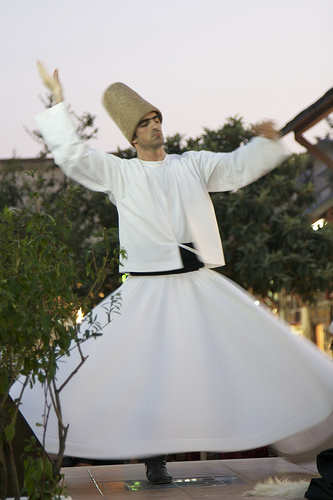
Sufi music has so many variations and differ according to the country, culture and path. The whirling dervish are an example, the Egyptian Sufi music is another example, Qawali, Dhikr, etc all are different forms of sufi music and ritual and devotional acts..
The whirling dervishes (also known as the Mevlevi order) are a group of Sufi Muslims who use dancing (whirling, spinning) as a way to meditate and to reach some sort of a spiritual mood. This ritual is very common and famous among Sufi's around the world, being very common in Turkey as the origin of the Mevlevi order, they are the followers of a man called Mevlana Jalal Al-Din Al Rumi, a famous Sufi scholar and a "friar" and a Dervish himself.
A dervish is some one following the Sufi path (an ascetic Muslim order) known for their ausetirity and spirituality, they are similar to the christian friars.
The Whirling dance:
Dervishes think of this dance as a way of meditation and remembering God. They think it helps to reach perfection and get rid of "ego" with surrender and love to God. The dancer is reborn as he takes his black cloack off.
Whirling/spinning is how they challenge "matter" represented by gravity and focus on spirituality as their long hat represents the tombstone of their ego and through spinning and listining to God and music, the Dervish reaches to this state of mind.
Modern Sufi music by Mercan Dede
Sufi music, the ney
The traditional old Sufi music band consists of 3-4 players only. They use drums (daf, tombak, etc) and the Ney (simply, the ney is a wood/reed flute but with a very deep and emotional sound) and may be Oud (lute) and a violin.
Now, the modern Sufi music is played with almost any musical instrument, but the Ney remains the cornerstone in all Sufi music as well as other wind instruments. Some has tried to mix it with flamenco or even made "trance Sufi music" and so. If you have never seen a ney, it looks like a native American flute but the sound is different, if you have never heard the ney music before, use youtube.com !.
Sufi music helps you to meditate and feel quit and peaceful. In some Sufi songs, the rhythm gets faster and faster, as well as the dancing, and the singer reaches high musical tones helping the audience and the dancers to feel a "climax" or a great feeling of ecstasy.
Note that turkish, syrian and Egytpian music each has it's own taste and mode in playing. They all share the use of the ney, dancers, a singer alone or with a chorus.
The Singer : Poems, "madih" and improvisation!
In Turkish Sufi music, the music can be played without singing. But Egyptian Sufi music depends on the singer in the first place. The singer "monshisd" is considered the most important person in the band as his singing influences the audience in many ways.
The singer should be someone with powerful vocal abilities and someone who is able to sing the different arabian music scales and tones. Some traditional sufi singers don't prepare so many poems or songs and mainly depend on improvisation on stage in singing invocations and chants, saying the names of God, praising God according his own taste in words and tones. The band have to keep up with him and follow him! Dancing completes the picture.
The lyrics are manily poems about the love of God, praising God, praising prophet Muhammed and other chants.
The video below is just a nice video by someone who used Sufi music, this is not the typical Sufi dance, the real dance is in the video at the end of this hub.
Remember that Sufism is not Islam. Not all Muslims are Sufis. God didn't tell Muslims to dance/whirl or use music to meditate or get closer to God. The Sufi muslims has created these rituals and practices by themselves as a way to worship God. Some Muslims dislike the Sufi path and others just don't.
The use of music and dancing isn't considered a devotional act or "worshipping/praying" by many Muslims specially the Sunni Muslims. Some Muslims, however listen to Sufi music just as another music genre without any religious importance.
The use of beautiful and powerful voices is important in Islam in many other things such as Quran recitation, Athan (call for prayer) and the art of "Nasheed" and chants which is purely vocal songs without music at all, mostly religious.