Backyard Birding - An Enjoyable Hobby
Watching Backyard Birds - My Favorite Pastime
Watching the birds in our backyard is one of my favorite hobbies. I consider myself to be an amateur birder, or birdwatcher, but over the years I've learned more and more about the different species of birds that come to our backyard.
I've learned what kinds of birds appear in our yard during different seasons, and what their songs and calls sound like. I've learned a little about their behaviors by watching them. I've also figured out how to attract more birds to our yard with the judicious placement of bird feeders filled with a variety of bird seed and food, and by keeping the bird bath full.
Another hobby I'm developing alongside my backyard birdwatching is nature photography (I'm even more of an amateur photographer than a birder). The two go well together! Most of the images on this page are photographs I took of our visiting backyard birds, and they're marked as such.
Photos on this page are my own unless otherwise noted.
Backyard Birding All Year - Many birds visit our yard during the year
We have many different kinds of birds that visit our backyard. It's a bird-friendly place throughout the year, and I enjoy observing and photographing them in all seasons.
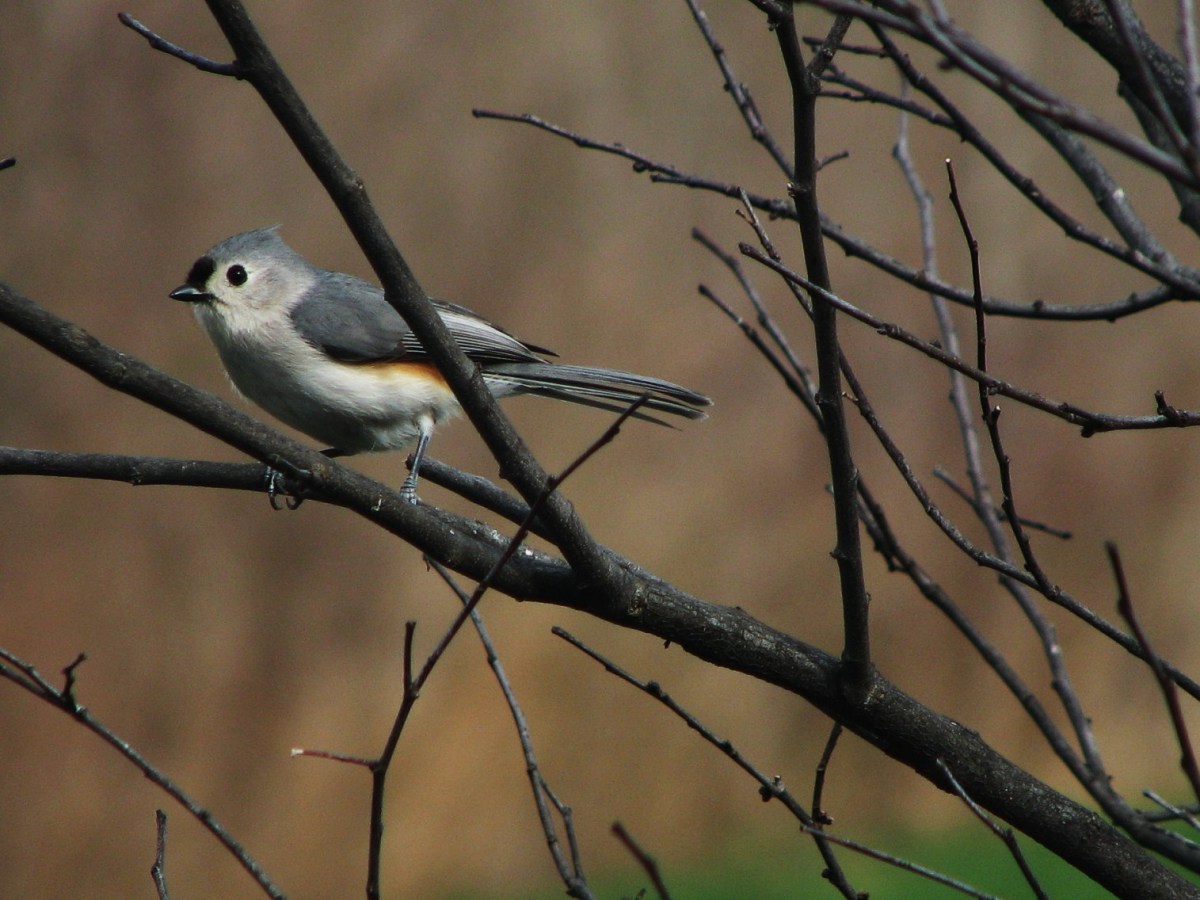
Most of the birds that I observe and photograph are those that come to our birdfeeders. If they find something good to eat, they stay put long enough for me to grab my camera and take a few shots, or to page through my bird identification guide book if I don't know what kind of bird I'm looking at. Now I recognize most of the birds that come to our feeders, including the males, females, and juveniles of different bird species.
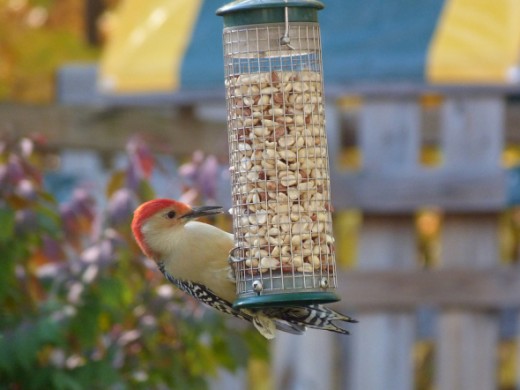
The gorgeous male red-bellied woodpecker, shown above, and his mate were exciting additions to our backyard visitors a couple years ago after I put out a peanut feeder. They've been visiting us regularly since then.
Nesting Robin in Late Spring - Sharing our house
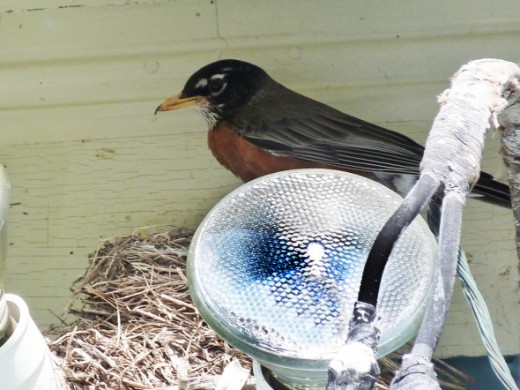
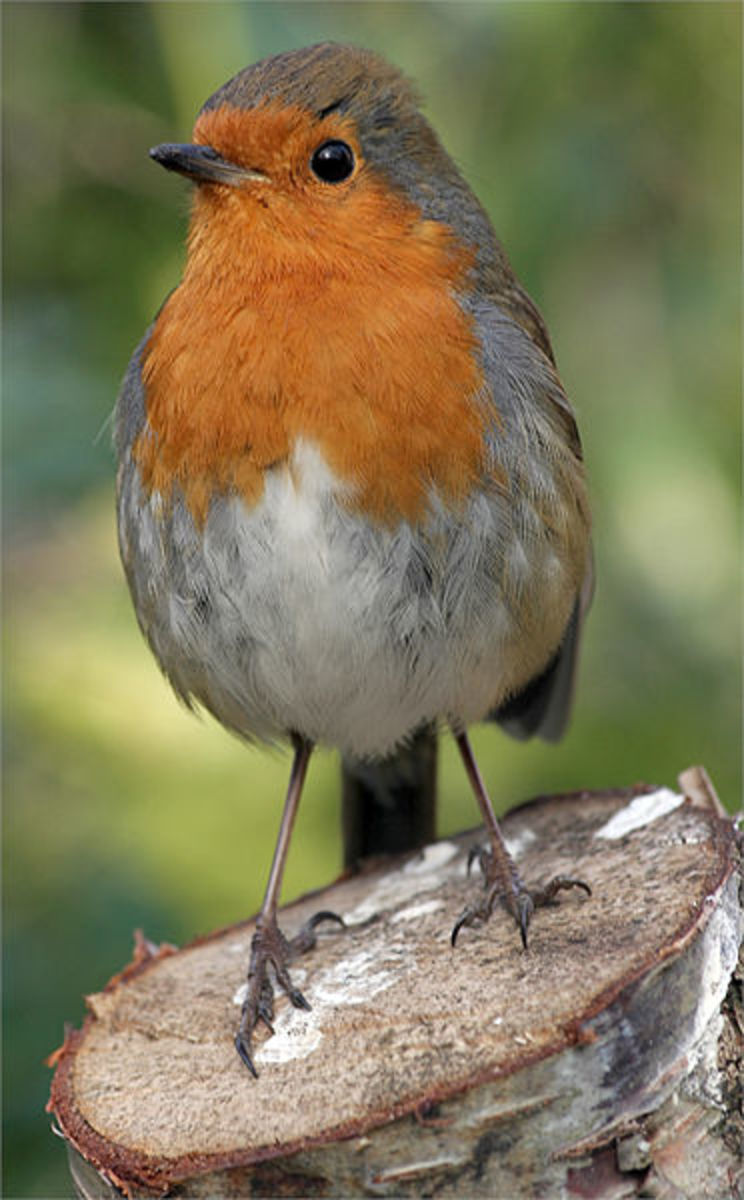
Some of the birds we see make their nests nearby, such as this robin. She and her mate have nested under the eaves of our house for at least three years now. Once the chicks are hatched, we see the parents flying back and forth with insects, grubs, and worms for their young. One year they had three clutches of eggs (two is more typical).
Spring Migrating Bird - Rose Breasted Grosbeak
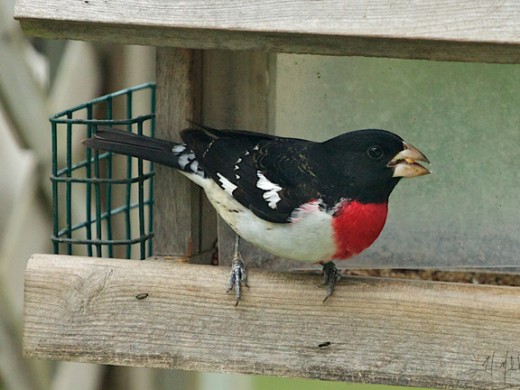
Photo Credit of Rose-breasted Grosbeak, above: Mike Miley via Compfight cc
In the spring and fall, we see a few migratory bird species coming through our area, and they grace us with their presence for a few hours, a few days, or a couple weeks. One favorite spring visitor is the White Throated Sparrow, with it's clear, quiet whistle that sounds like, "Old Sam Peabody Peabody Peabody" (go to White Throated Sparrow Sounds and scroll down for a few examples of this beautiful song).
Another of my favorite migratory spring birds is the Rose-breasted Grosbeak (photo above), which we see for a few days, and then not again until the next year (although the range maps I've looked at show that their summer breeding grounds include our area). I've never been able to get my camera out in time to photograph these striking birds when they come to our feeder, so I'm using the Creative Commons photo above.
Bird Identification and Field Guides - Books to help you identify the birds in your area
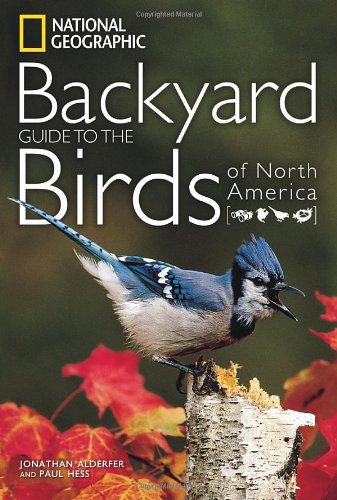
It helps to have a good identification guide or field guide to help you learn what kinds of birds you're seeing.
One book that I recommend is the 
This excellent guide features 150 of the most common or most interesting birds that are likely to be seen at bird feeders in North America.
It also gives tips for attracting and feeding birds in your yard.
Summer Backyard Birds
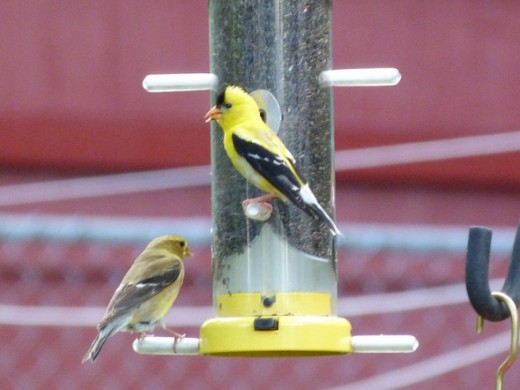
On warm summer afternoons and evenings, from spring through fall, I enjoy sitting outside on our deck and watching as cardinals, goldfinches, blue jays, chickadees, downy woodpeckers, and other familiar birds come to our different feeders and our bird bath. It's during these times that I've been able to take most of my favorite backyard bird photos, such as this pair of American Goldfinches at the nyjer feeder, against the backdrop of our neighbors' reddish garage.
Robins Flocking in the Fall - Preparing to Migrate
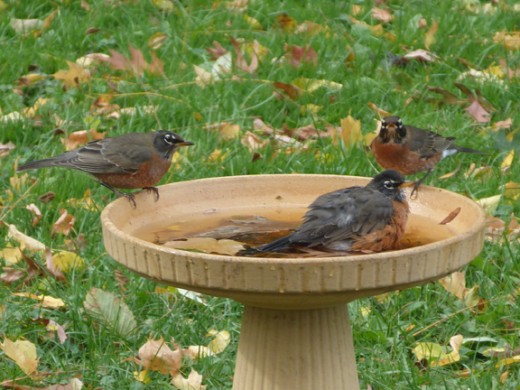
These robins took a birdbath break as they were starting to flock together before the onset of winter. Some stay in our area for the winter if they can find enough food, while others migrate south.
If you're interested in learning more about American Robin migration, read Robin in Summer, Robin in Winter.
Winter Cheer - Cardinal in winter
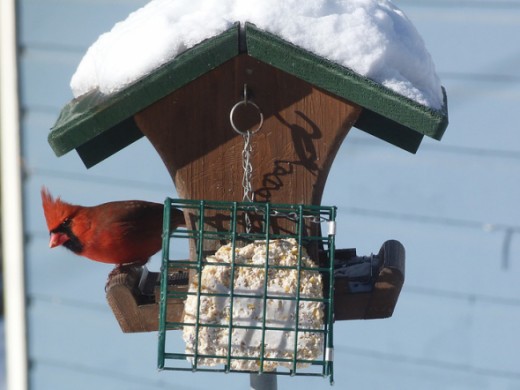
During the winter, the bright red Northern Cardinals add a much-appreciated dash of color to our otherwise often cloudy and gray Michigan days. We get a few birds during the winter that we don't at other times of the year, such as Dark-eyed Juncos and Red-breasted Nuthatches.
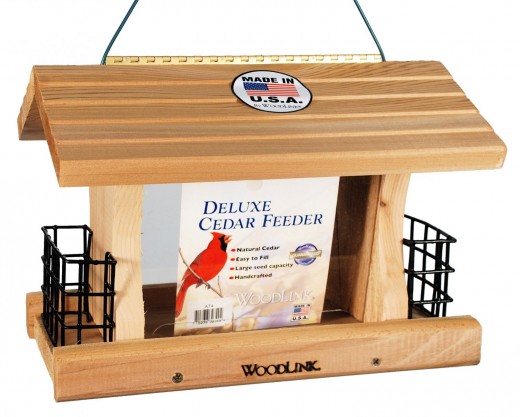
Putting Out Birdfeeders Attracts Birds to Our Yard
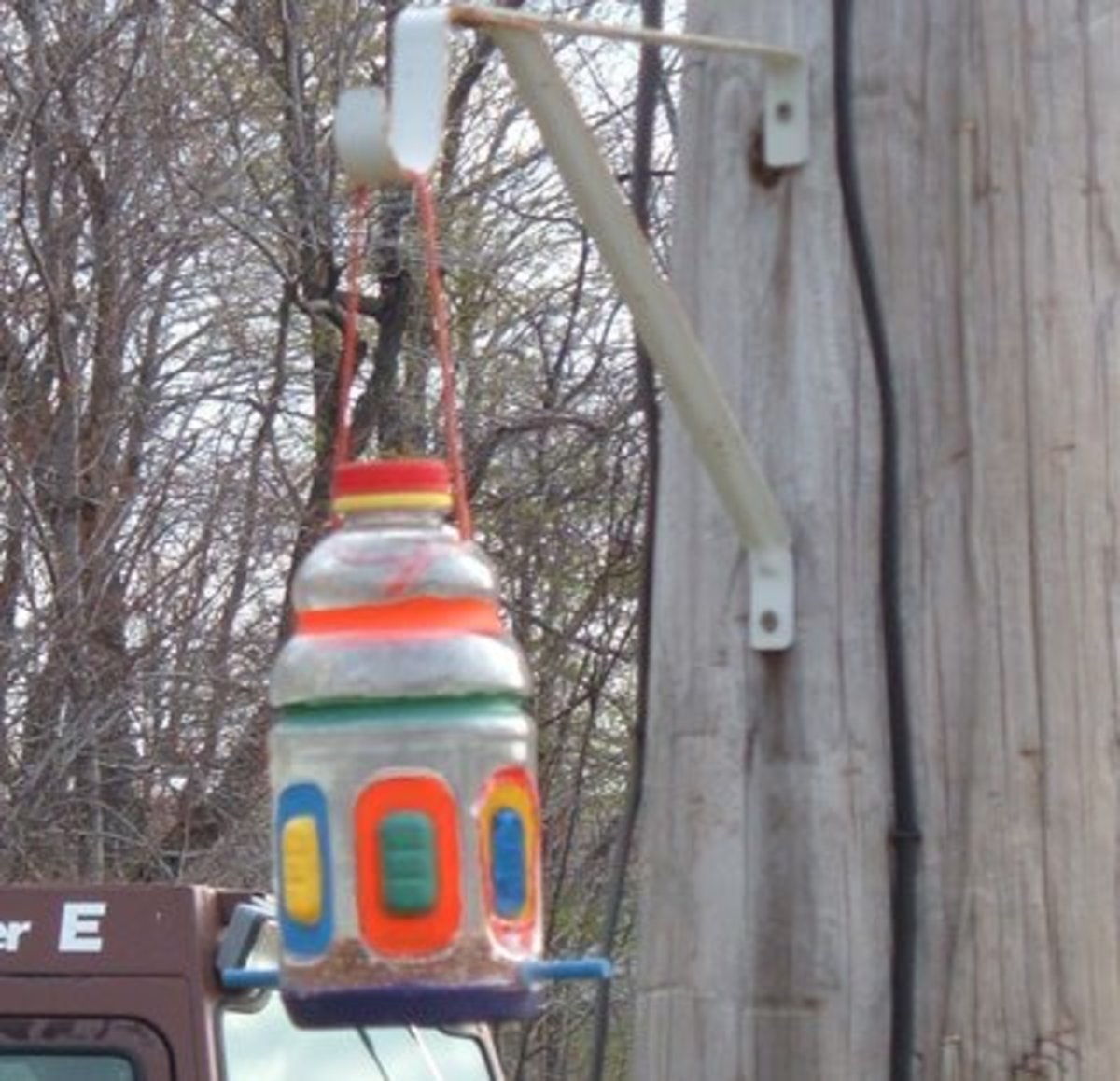
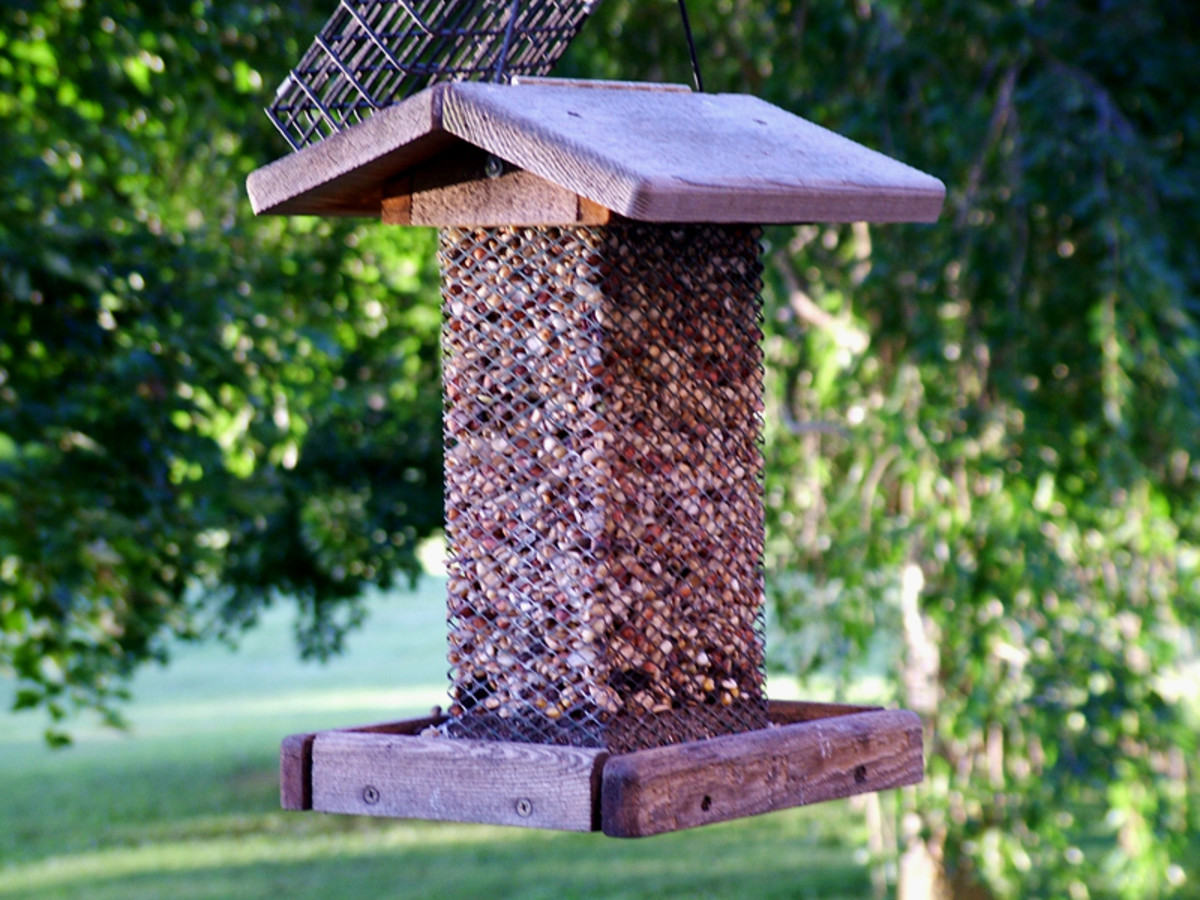
To attract more birds to our yard, we've put out a few different kinds of bird feeders.
The most versatile feeder for us is similar to this cedar feeder, shown to the right. We fill it with black oil sunflower seeds, and it attracts a variety of birds. This 
If you want more than one bird feeder, consider a peanut feeder or a nyjer feeder (we have both). Woodpeckers, chickadees, nuthatches, titmice, and blue jays regularly frequent our peanut feeder. We get mostly goldfinches and house finches, and a few sparrows to our nyjer feeder.
A suet cage hanging from a poll or a cedar feeder is also an easy feeder, and will draw woodpeckers, chickadees, and nuthatches to your hard.
Read Feeding Backyard Birds for more information on the types of feeders and food that attract different kinds of birds.
Female Ruby Throated Hummingbird
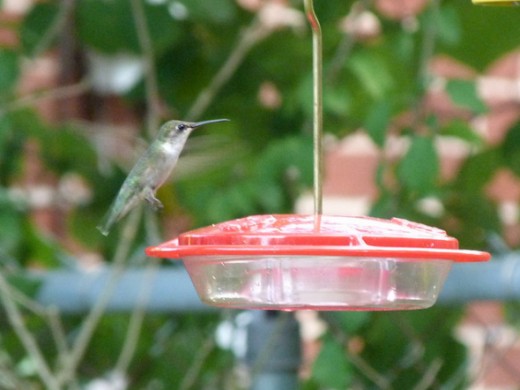
Most of the time when I try to photograph the Ruby Throated Hummingbirds in our yard, all I get is a blur, or half of the bird out of the picture. I felt lucky to get this image! You can tell that this is a female Ruby Throated Hummingbird, because she has no ruby throat, and they're the only species of hummingbirds in our area.
Sometimes Females Look Very Different From Males
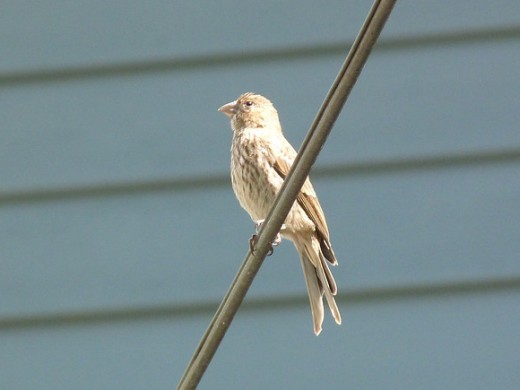
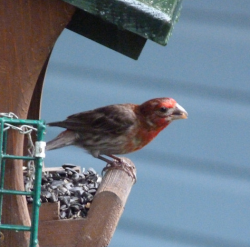
Sometimes I think I'm seeing an unusual bird in our yard, but it turns out to be the female of a species that I'm already familiar with. The photo to the right is a male house finch, while the photo above is the female house finch.
They have the same body shape and same kind of beak, but the coloring is very different between the male and the female.
Did you know that the red coloring of the male house finch is determined by the food he eats? The redder he is, the more alluring he is to female house finches, because it's an indication that he knows where to get good quality food.
To learn more about bird coloration and the food they eat, you may be interested in reading Why Cardinals Are Red (it also applies to other birds that are red, orange, or yellow).
I Use the Panasonic Lumix DMC-FZ40 Camera - Easy to use for clear bird photos
A couple years ago I graduated from a simple point-and-shoot digital camera to the Panazonic Lumix DMC-FZ40, a hybrid camera that combines some of the ease of a compact point-and-shoot with some of the features and flexibility of a DSLR camera.
I've been very happy with my nature photography results using this camera, including my bird photos. The 24x zoom with optical image stabilization makes it possible for me to get a clearer and closer view of my bird subjects than I could with my old compact digital camera.
Do You Like Watching Your Backyard Birds?
Tell me about the birds you enjoy watching in your backyard!