Peterson Field Guide to Birds: Still My Favorite Birding Guide
Are You a Birder?
What's your favorite bird guide?
Replacing the Old with the New
Recently I replaced my old dog-eared copy of the 
I've enjoying bird-watching since I was a little girl, when my mother started teaching me the names of the common birds we'd see around our house and out in the woods behind my grandparents' lake cottage. The first ones I remember learning were robins, cardinals, blue jays, and chickadees. They're birds that most people in the Eastern United States will be familiar with if they pay attention to the outside world.
I learned to identify more birds as I got older - red-wing blackbirds, Baltimore orioles, house wrens, house sparrows, grackles, and starlings, to name just a few. All of these were easy to identify because they were either visually striking or very common around our area. I remember paging through my mother's old hard-cover copy of Roger Tory Peterson's Field Guide to the Birds to confirm that the birds I saw looked like the paintings in the book.
Then while I was in college, I took an ornithology class ("ornithology" is the study of birds -- not just their identification, but also their physiology, behavior, and ecology) during the spring. The last half of this four-month class included two four-hour segments each week in which we'd go out and learn to identify birds. I was in heaven!
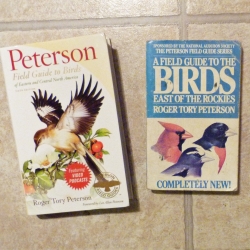
Our textbook for this portion of the class was the third edition of A Field Guide to the Birds by Roger Tory Peterson, a blue-covered paperback with the pictures of a cardinal, a goldfinch (I think), and the head of a puffin on the cover.
I wore out that book years ago, and replaced it a couple times with the fourth edition, but recently my current copy was water-damaged, and it was time to get a new one. There are other good bird field guides available, but I chose to replace mine with the newest edition (sixth) of the Peterson Field Guide to the Birds (of Eastern and Central North America).

Why Did I Choose the Newer Peterson Field Guide?
Familiarity and Ease-of-Use
I have other birding books besides this one, but the Peterson guides that I've owned, including the latest edition, are the ones I'm most familiar with, and the ones that I've used most often in the field. I know the layout, and I know how to use the book, from years of practice with earlier editions.
The current edition includes most of the original paintings by Roger Tory Peterson, with a few updated ones to show distinguishing marks more clearly, and additional paintings of rarer species that have been seen more recently in North America. These paintings show the "ideal" bird, positioned so that we can easily and clearly see it's most distinguishing characteristics, with arrows pointing to important field marks. As my new book says, a photograph can only show a brief moment in time and position, while a well-constructed, detailed painting or drawing can include the relevant field marks that will make identification easier.
It is an easy-to-use guide, especially after we take the time to study how it's set up. There's a good section at the front of the book that tells what to look for when identifying birds. Drawings show different shapes of body, wings, and beaks, and illustrate field mark terms that help with identification, such as wing bars, eye stripes, and patterns.
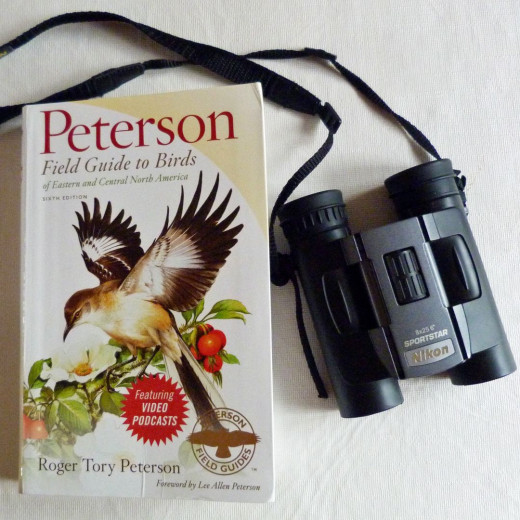
Updates in this newer edition include recent changes in taxonomy (principles of scientific classification). The order of birds presented in the book has been changed from earlier editions, and there have been some name changes.
Some species have been combined. An example is that the eastern Magnolia Warbler and the western Audubon's Warbler are now known to be the same species (with some pattern variations), and have been renamed Yellow-rumped Warbler.
Other species have been split, such as the Cackling Goose, which used to be called a variation of the larger and more common Canada Goose, but now is considered to be its own species.
Also, all of the range maps have been updated. Some species are more common over a wider range now, and some are less common than they used to be. A very nice feature is that small versions of the range maps are included with each bird species, as well as the larger maps in a section at the back of the book.
Visit to Point Pelee for the Spring Bird Migration
Inaugural Use for My New Peterson Field Guide to Birds
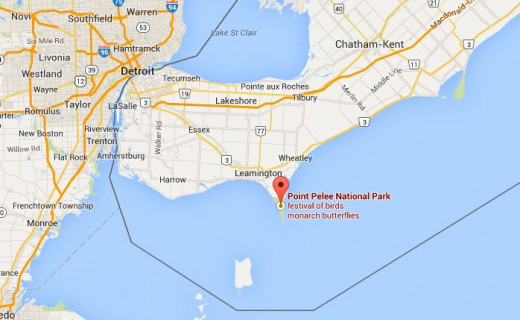
I bought my new Peterson Field Guide to Birds when I did so I could bring it along when my husband and I visited Point Pelee National Park during the spring bird migration in early May, 2014 (just a week ago, from when I wrote this). This was to replace my old, water-damaged field guide.
Point Pelee National Park is at the southernmost tip of Canada, jutting down into Lake Erie, and it's about a two hour drive from our house in southeastern Michigan, U.S.
We happened to go on the first weekend of the Point Pelee Festival of Birds. The place was packed with avid birders with binoculars, telescopes, cameras with telescope lenses, and many bird field guides.
Point Pelee is a world-class birding site, and it is known as the "Warbler Capital of the World" because of the many species of warblers that fly through the area during their northward spring migration. But it also attracts many other species of birds that migrate through or stay there year round.
We saw some warblers when we were there, but we heard that the peak migration was still to come in a week or two (we may go back next week to see). A few of the species we saw were the yellow-rumped, blue winged, pine, yellow, black-and-white warblers.
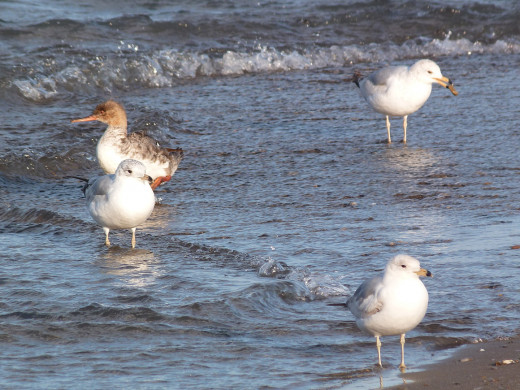
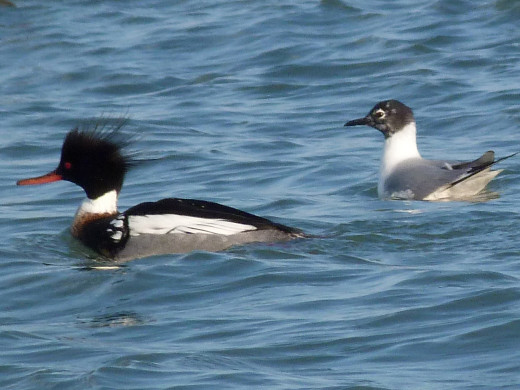
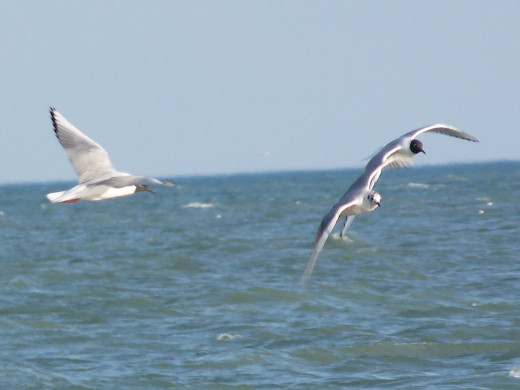
At the very southernmost tip of the park we saw many different water birds, including Red-breasted Mergansers, various gulls (Herring, Ring-billed, and Bonaparte's gulls), Common Terns, and Horned Grebes.
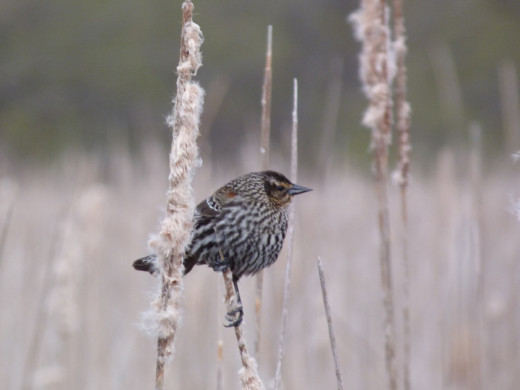
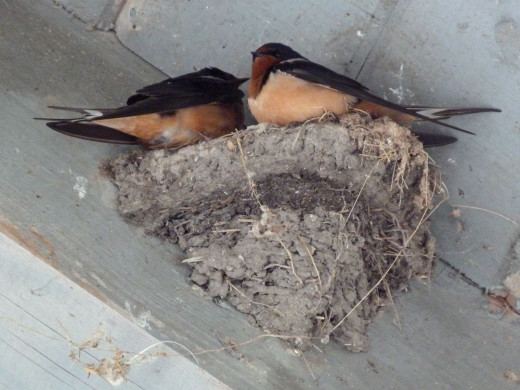
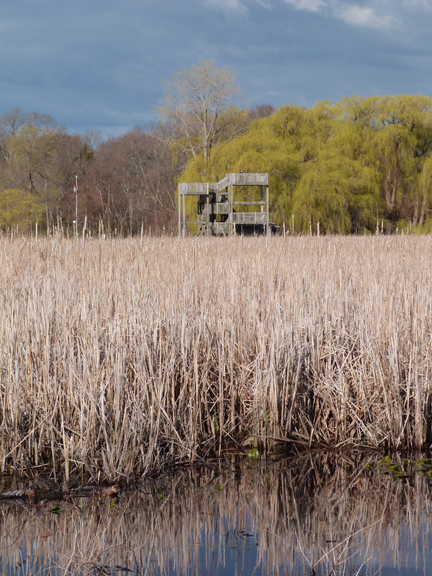
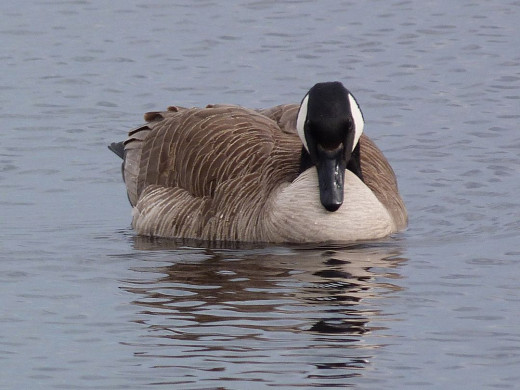
Among the birds we saw at the Marsh Boardwalk were 3 or 4 different swallow species, many red-wing blackbirds, Canada Geese, and a bonus for us -- two beavers.
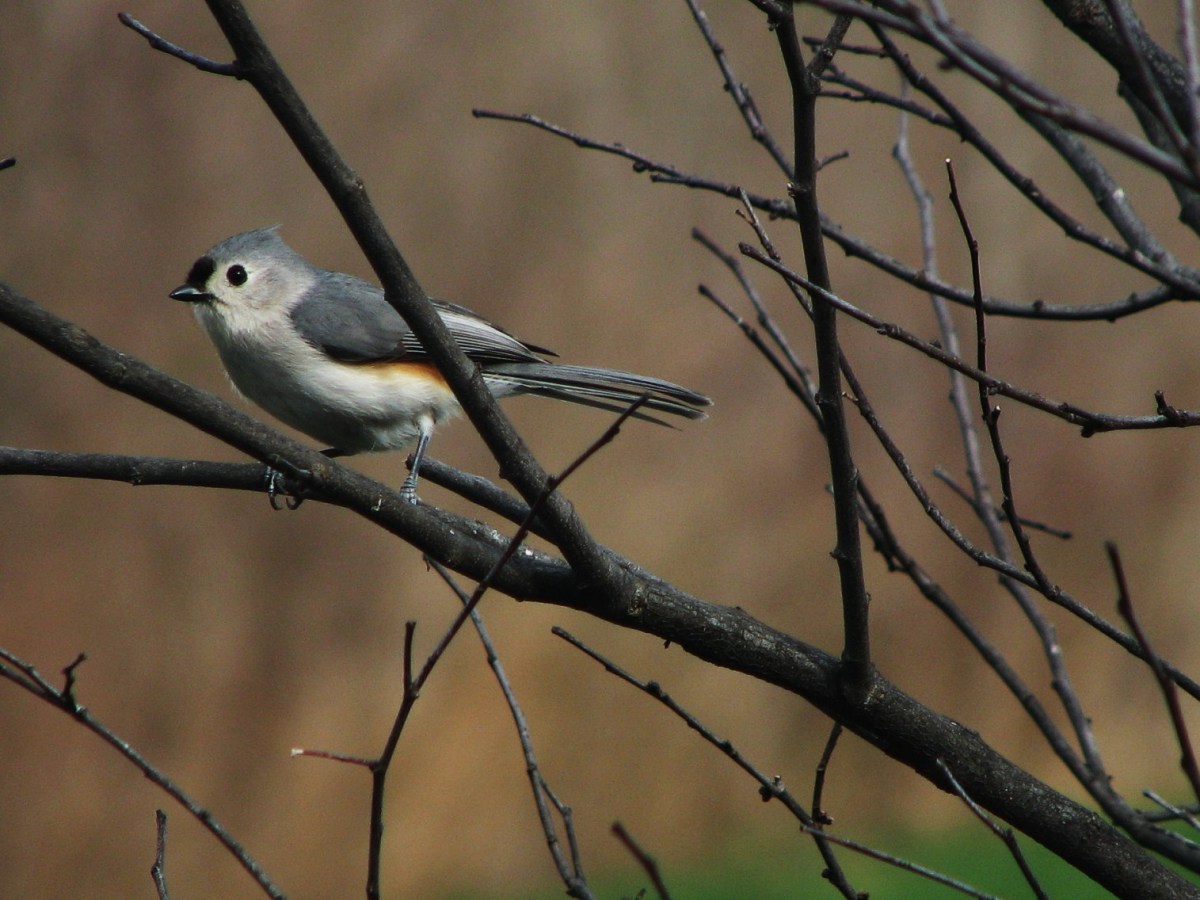
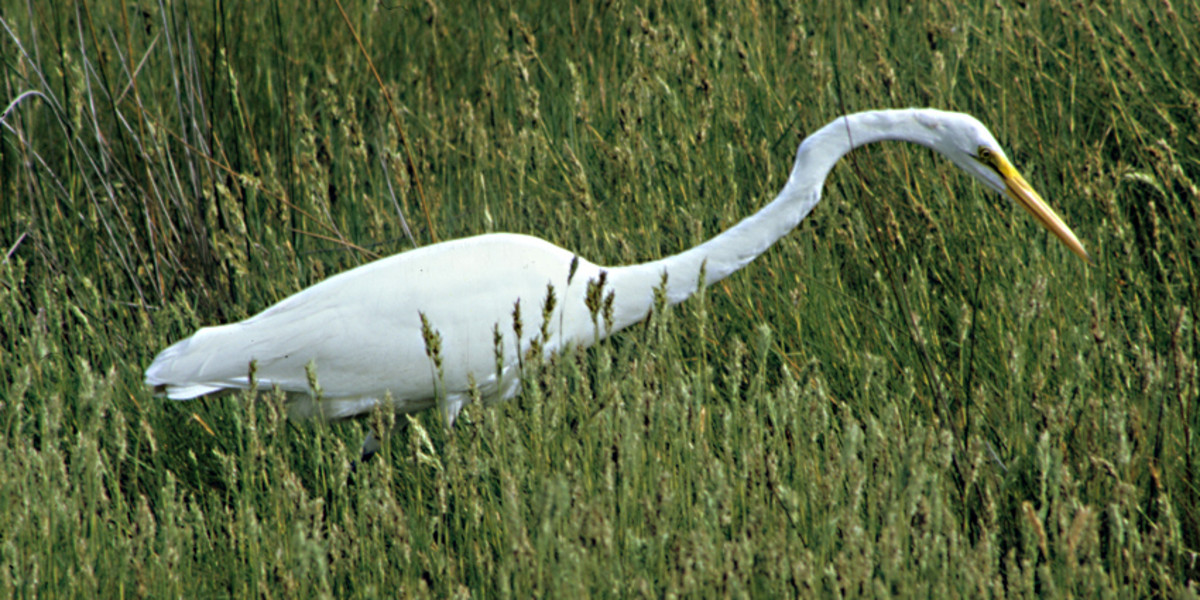
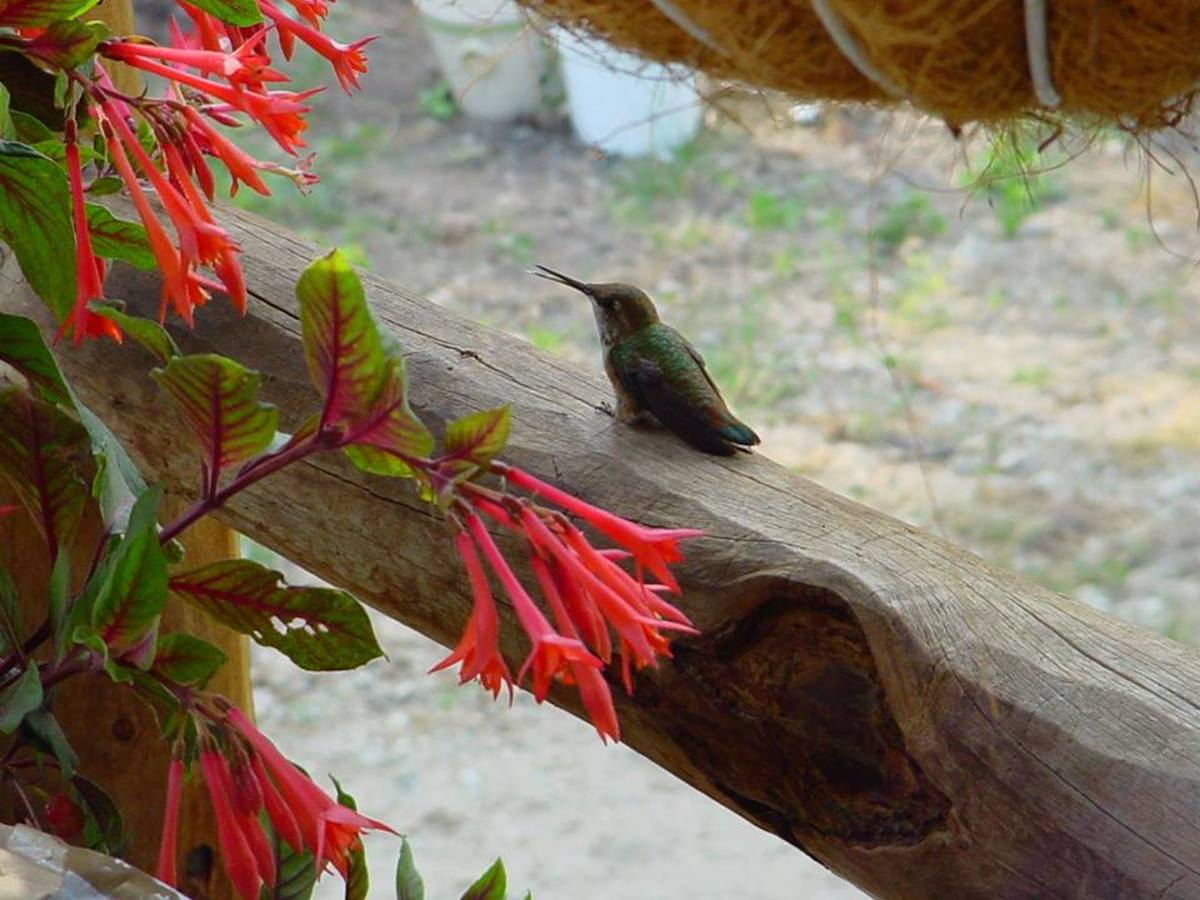
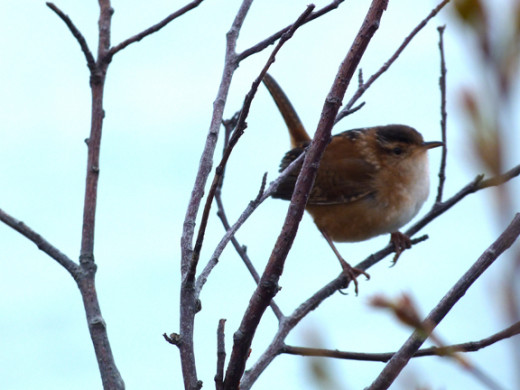
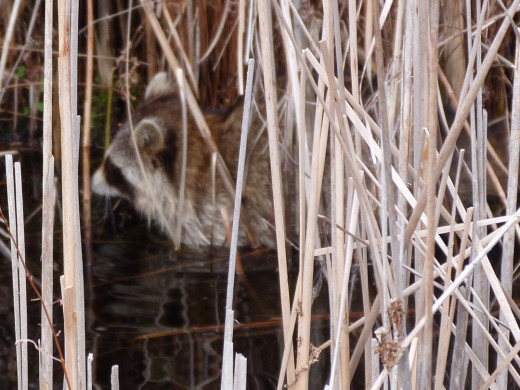
A Few of My Photos From Point Pelee - (Apologies for the blurry ones!)
Click thumbnail to view full-size





Another Excellent Guide Book
We have the first edition of 
The second edition was just released in March of 2014. We found out that the author and illustrator, David Allen Sibley, was at Point Pelee the same weekend we were, to give talks, lead birding hikes, and to autograph his new book. Unfortunately we didn't see him.