Learning in the Work Environment Part Two

Scenario
This article explores adult education and its impact on the workforce. Adult learning is about added value for those in the learning position. Typical Co. represents the company set up generically for demonstration purposes. Putting help tools in real work situations is a key component of educating adults.
Typical Co. will initiate a new system for the company and requires all of its employees to have training within that system so that the transition in six months will go seamlessly.
Andragogy - The Art of Adult Learning
A keen physiological factor that affects learning, age, follows a typical pattern of rapid learning in childhood that levels off in adulthood. Evidence that as age increases physical limitations may occur that add difficulty to the mechanism involved with education does not prove that age changes the mental capacity of adults who continue to learn.
Age-related learning does arise when considering genetic dispositions for dementia and other psychological factors that may affect learning potential. Age will not constitute a barrier to learning with tools such as eyeglasses, hearing aids, wheelchairs, etc. to assist those with disabilities due to aging.
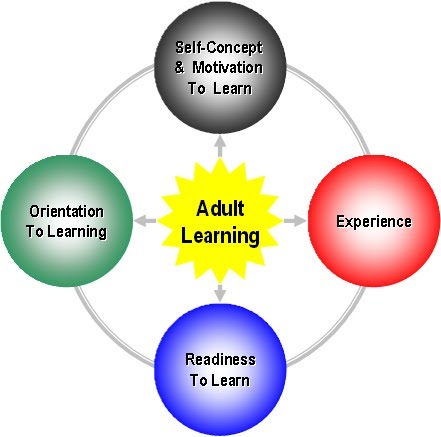
Micro-teaching or learner teaching will help to promote ownership of the action-learning problem and create trust within the group to share ideas.
Training Plan of Typical Co.
It is important for trainers to familiarize themselves with all the tools available within the Typical Co. cache of learning aids. Accommodations for employees who have physical limitations will not affect the training of Typical Co. employees primarily because of microphones, large displays, and worksheets will provide additional help for those that need assistance.
The training will accommodate adult learning and foster participation in the use of modules. Before involvement in group training, each employee will participate in self-paced modules that will introduce them to the new system.
At the end of each module, a review test will allow employees to reflect on learning modules and help them determine if the module needs repeating. Once all employees have completed the modules—within a two-month period, Typical trainers will orient the employees in groups of 20 in three-hour training sessions that will foster group participation—action learning.
learning among adults continues because most of those who participate in education come from a culture of education—the middle class.
Action Learning
I ‘Anson, Rodriguez, & Wilson (2003) suggested the micro-teaching or learner teaching will help to promote ownership of the action-learning problem and create trust within the group to share ideas. Fostering action will assist the employees to take ownership of the new system and encourage employees to answer each other’s questions about the system, as mentioned previously, in perpetuity.
Following two months of self-directed modules and the three-hour training with instructors facilitating action learning, the second wave of action learning will occur. The action learning segments will take five weeks to train all employees at 20 learners for three hours a day each week. Following the ten weeks of action learning, there are several weeks before the company ultimately transitions to the new system allowing additional questions or training at Typical Co.
Of course, not all training will consist of such immersive andragogic methods. All employees must learn an entirely new data system by collaborating with in-house, system, and independent trainers.

Learning is a vital part of corporate existence and education.
Buy-in for the Learner
Merriam et al. (2007) suggest that learning among adults continues because most of those who participate in education come from a culture of education—the middle class. Typical employees tend to possess higher education and live within the middle-income bracket. Because most training and learning trends toward middle-income people, the training will fulfill some of the employees' desire for additional education.
Adults are a learning group, though not always in a classroom setting. Adults need to know that the things they learn will directly assist them with some aspect of their lives so that there is a buy-in to learn the new materials. The employees at Typical Co want to remain employable at the company, so the modules and training offered by the company will fill the natural need adults have for education.
The new system will replace the obsolete system following the training giving the incentive to learn the system. The value the trainers can foster hinges on the fact that remaining employed at Typical Co. adds value to the new system training.
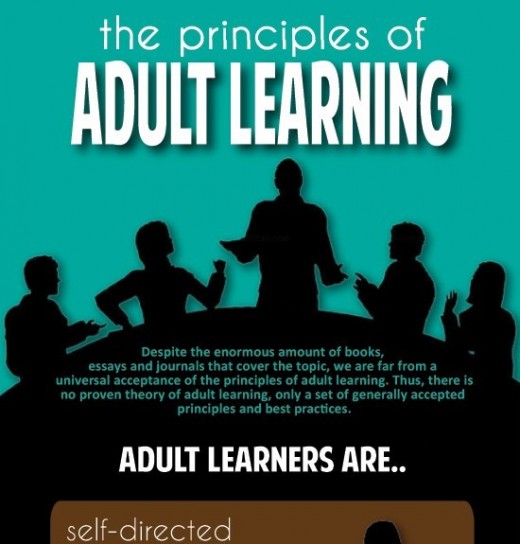
Weigh In
When Training, do you include the value the new information adds to your students careers?
Industry standards change rapidly in the information age calling for a solid foundation of experts who can provide the necessary training to facilitate seamless transitions from one system to the next. Adult educators add value to the adult learner industry in every aspect of teaching to ensure that current and potential employers recognize the direction of business trends positive to employee career paths—promoting learning as a vital part of corporate existence and retention. A staff of, or access to professional trainers assures companies their employees will receive instructions from all appropriate learning platforms.

Reference Material
- Boyd, D. and Bee, H. (2006).Lifespan development (4th ed .). Boston: Pearson/Allyn & Bacon.
-
I'Anson, J., Rodriguez, S., & Wilson, G. (2003). Mirrors, reflections and refractions: The contribution of microteaching to reflective practice. European Journal of Teacher Education , 26(2), 189. Retrieved from Education Research Complete database.
-
Marquardt, M., and Waddill, D. (2004). The power of learning in action learning: a conceptual analysis of how the five schools of adult learning theories are incorporated within the practice of action learning. Action Learning: Research & Practice ,1 (2), 185-202. doi:10.1080/14767333042000264146
-
Merriam, S. B., Caffarella, R. S., & Baumgartner, L. M. (2007).Learning in adulthood: A comprehensive guide (3rd ed.). San Francisco: Jossey-Bass.
This content is accurate and true to the best of the author’s knowledge and is not meant to substitute for formal and individualized advice from a qualified professional.
© 2018 Rodric Anthony Johnson