The Future of Early Childhood Education and the Effects of Technology on the Developing Brain

The Effects of Blue Light on our Brains
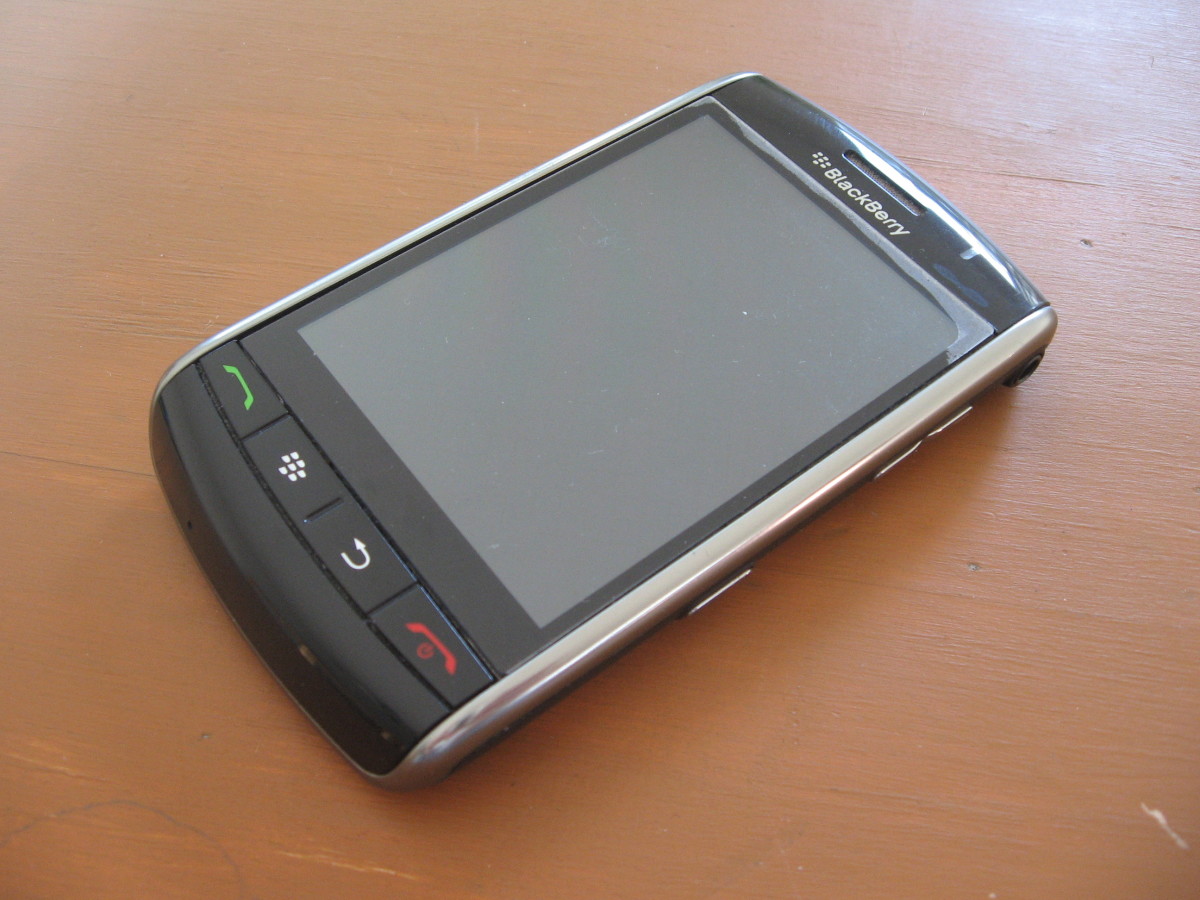
We've all done it, you're up late and you can't sleep.. so you check your phone. As you unlock your screen the blue light hits your eye and instantly sends a signal to your brain telling you "it's time to wake up!". Studies have found that exposure to this blue light can change our brain waves in such a way that our brain can get tricked into a waking state by this light. Harvard Medical School released an article in 2012 titled 'Blue light has a dark side' which details how blue light is different from other types of light on the spectrum and its effects on the human brain.
"Blue wavelengths—which are beneficial during daylight hours because they boost attention, reaction times, and mood—seem to be the most disruptive at night."
- Harvard Health Letter

Saying Goodbye to Hands-on Learning and Hello to "Finger-Tips-on Learning"
There is something beautiful about being able to explain new concepts to a toddler by picking things up around them and letting them physically interact with them. Children with a kinesthetic learning style especially benefit from this type of interaction. It is a learning experience spanning across different mental and physical stimuli rather than just counting items on a screen. This presents a challenge for students and teachers alike as the world moves towards a heavy usage of technology to pacify children, as well as to educate them. Where do we draw the line between educating children the "old school way" and when it is appropriate or advantageous to use technology to enhance their learning experience?
There are many advancements in IoT (the Internet of Things) which will inevitably change the way that educational technologies are designed, and how students and teachers interact with one another. Not only are technologies being created to meld hands-on learning with virtual learning, there is also the added element of the technology sitting in most students' pockets. The use of cell phones inevitably plays into a child's ability to focus and retain information. Students may sit in their classroom communicating through text messages or snapchats to students in the same classroom or just down the hall. The ability to socialize and distract yourself from the subject matter is easier than ever and a "no cell policy" is the best way to conduct classrooms for elementary school students.
Catherine Steiner-Adair: How Technology Affects Child Development
Social Implications
When I was 3 years old I have vivid memories of my Pre-K classroom and how much I learned about making friends, standing up for myself, girls (yes I remember my 3 year old crush). This time in my life laid the groundwork for my personality to develop. If I had been using a screen to learn and communicate, would that have detracted from my experience of socialization? The answer is obviously a big YES, but to what level? Are the 3 year-old kids of tomorrow going to learn how to type before they learn grammar or basic arithmetic? Will they even talk to each other in person or will the social void that many adults feel from digital interactions become the standard for communication?
In my personal experience, the inability to interact with someone face-to-face greatly increases the likelihood that I will misinterpret what the other person is trying to convey to me. For example, texting a girlfriend and wording something the wrong way can lead to a full explanation later in-person. Millennials, like myself, were born just early enough to remember the days before cell phone communication. Which I believe is the major reason why there is so much miscommunication between us when texting. The next generation of children are "native speakers" to the language of tech which means that they have never experienced the days where someone could go days without returning a phone call and we wouldn't mind. Now we can't go an hour without getting an answer before we start to wonder why that person is "ignoring" us or what we may have said to make them not respond. This fast paced communication is only going to get faster, which in the end may reduce attention spans even more than they already have been shortened, making it harder for teachers to get young children to retain information when they are being spoken to rather than sent something via text etc.
We very well may be breeding the first generation that will move toward the concept of technological dehumanization where the lines blur between people and technology. Think the bionic man, except in the context of child rearing.

The Economic Implications
The use of technology to assist in anything, generally allows us to cut costs on labor because the technology makes our operations more efficient, therefore decreasing the amount of human employees needed to complete a task. This is hard to replicate and implement in the early childhood education industry because human interaction is so crucial to comprehension at that age (2-5). So we can gather that in this industry, reducing the number of teachers on staff and trying to replace them with remote teachers, whom they interact with over the internet, is nearly impossible. However, integrating in-classroom technologies to assist in the learning process will be inevitable.
Professionals in the early childhood education industry will be forced to adapt to the use of these technologies in their classrooms and this will put added pressure on teachers to not only know the curriculum but know the tools well enough to use them to facilitate learning. This begs the question how do we compensate these teachers for their time learning the tools? Should teachers be paid more if they are more tech-savvy than their counterparts? These are all things to consider moving forward.
How Much Screen Time is Too Much?
The American Psychological Association has a great article which outlines the findings of a 2010 study done by the Kaiser Family Foundation in regards to children's exposure to different forms of technology and media (link to article at bottom) which outlines the absurd amount of time children are being exposed to technology.
"According to a review of 173 studies (Media + Child and Adolescent Health, 2008) arranged by Common Sense Media and the Department of Clinical Bioethics at the NIH, researchers from the Yale University School of Medicine, NIH and California Pacific Medical Center identified “statistically significant associations” between greater media exposure with negative health outcomes such as obesity, tobacco use, sexual behavior, drug and alcohol use, and low academic achievement."
How much "screen time" is too much for children 10 and under?
Links to Articles Cited:
Related

Emile, The Perfect Child - Rousseau Theory on Parenting and Childhood Education

Why Finland's Educational System Is Dominating the World Stage?
The Positive and Negative Sides of Using Cell Phones for Teaching and Instruction in the Classroom

School Teacher: One Teacher's Perspective on Education in America
Special Education-Technology In The Classroom