What a Pain in the Neck: Head Transplants
We can transplant hearts, lungs and even faces, so why not entire heads? That, at least, is one surgeon's question and another man's dream solution to a degenerative muscle disease.
The Surgeon
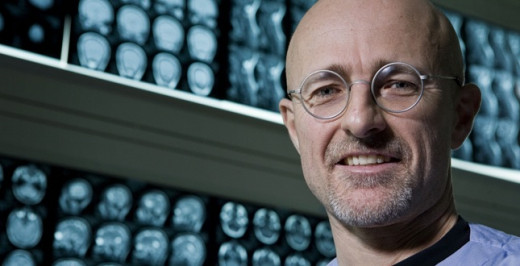
Sergio Canavero is the Director of the Turin Advanced Neuromodulation Group in Turin, Italy. He has authored over 100 scientific publications and has written several books, including "Head Transplantation" and "Immortal". He discovered the genesis of central pain sydromes and developed surgical cortical brain stimulation for stroke rehabilitation, Parkinson's disease and vegetative states.
Canavero's lifelong dream has been to perform the first human head transplant. He has spent the past 30 years researching and devising a procedure to successfully transplant a human head onto another human's body. It is his hope that this procedure will allow those with debilitating illnesses such as muscle degeneration to live longer, fuller lives. Influenced by head transplant predecessors, Dr. Robert White and Dr. Vladimir Demikhov, Canavero believes he can perfect the earlier experiments and successfully perform this operation. He has not actually attempted a head transplantation on any animals.
The Hopeful Patient
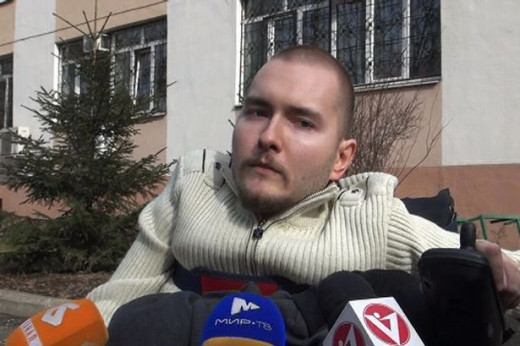
Valery Spiridonov, a 30 year old computer programmer from Russia, has a muscle wasting disease called Werdnig-Hoffman. He has one leg and is confined to a wheelchair. With no treatment options available to him, he has volunteered to be the first human to undergo a head transplant. ""If I don't try this out my fate will be very sad. With every year my situation is getting worse." (Mirror.co.uk)
Authored by Sergio Canavero
![By sergio canavero MD Immortal: Why CONSCIOUSNESS is NOT in the BRAIN [Paperback]](https://m.media-amazon.com/images/I/51Nu-a3RraL._SL500_.jpg)

The pair has been the talk of the medical community in recent months as Canavero prepares to present his head transplantation procedure at the upcoming American Academy of Neurological and Orthopaedic Surgeons conference in June, 2015. Spiridonov has done his part to promote this groundbreaking procedure by appealing to President Vladimir Putin for funding. The estimated cost for the surgery is $13 million. If all goes according to Canavero's plan, the operation will take place in 2017, preferably supported by the United States (but China is a back-up plan for Canavero).
Understandably, Canavero's procedure faces a number of challenges - buy-in from the medical community being the biggest. His proposal has been met with disbelief, skepticism, and labeled downright unethical. Arthur Caplan, Ph.D., director of medical ethics at NYU Langone Medical Center, calls it a "publicity stunt". Dr. Hunter Batjer, chairman of neurological surgery at UT Southwestern and president-elect of the American Association for Neurological Surgeons, believes this could result in a fate worse than death for Spiridonov. Dr. Jerry Silver, a leading neurosurgeon who has successfully reattached severed spinal cords in rats, does not believe science is advanced enough for such a procedure. His disapproval is compelling, especially coming from someone who was present for Dr. White's monkey head transplant in 1970.
There are many things that can go wrong with this type of procedure, such as the head rejecting the new body, complete paralysis, and the chemistries of the two bodies reacting in such a way to literally drive the recipient insane.
To sever a head and even contemplate the possibility of gluing axons back properly across the lesion to their neighbors is pure and utter fantasy in my opinion ... Just to do the experiments is unethical.
— Dr. Jerry SilverDr. Sergio Canavero describes his procedure
Canavero's Full Proposal
- HEAVEN: The head anastomosis venture Project outline for the first human head transplantation with s
Surg Neurol Int, Official publication of Surgical Neurology International
What Do You Think?
If Canavero is able to perform the procedure, do you think it will be a success?
The Procedure
Canavero's proposed procedure, HEAVEN (head anastomosis venture), will take 36 hours and require two surgical teams- one to remove Spiridonov's head and the other to remove the donor's head from the body. The donor is a brain-dead individual with a similar height, build and immunotype to recipient. Both decapitations would occur in hypothermic conditions, which will lower the body's temperature and preserve disconnected tissue. The spinal cords of both the recipient and the donor will be simultaneously severed, then fused together using polyethylene glycol (PEG). The nerves cooled by hypothermic temperatures will then be revived through electric stimulation. Spiridonov will be placed in a medically-induced coma for 3-4 weeks following the operation in order to prevent movement. According to Canavero, the key to a successful transplant is the clean cut of the spinal cords, which will allow for a perfect fusion of the two cords.
Canavero does acknowledge some potential problems resulting from the procedure. One may be an identity issue as Spiridonov becomes acquainted with his new body. He may not feel at home in his new space for quite some time, and meeting regularly with a psychiatrist is recommended. Immune system rejection is also a very real possibility, and Spiridonov's progress will need to be closely monitored. He will require immunosuppressant medications, regular blood work to ensure there are no antidonor antibodies in his system, and the occasional biopsy to test for infection or rejection.


Looking Back: Head Transplant History
Vladimir Demikhov
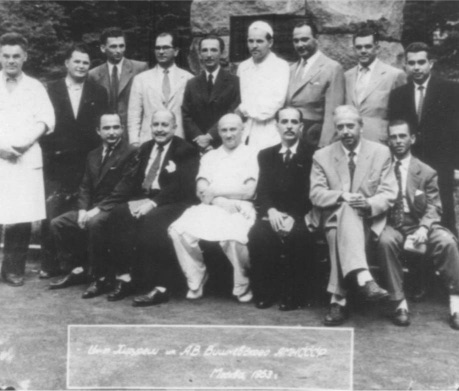
Vladimir Demikhov, a Soviet surgeon, was the first to successfully transplant lungs and hearts in animals, thus paving the way for advances in the field of human organ transplants. In 1989, the International Society for Heart and Lung Transplantation presented him the Pioneer Award to honor his role in the development of intrathoracic transplantation and the use of artificial hearts. Despite his contributions to that field, Demikhov is more widely known for something else: his "two-headed" dog experiments.
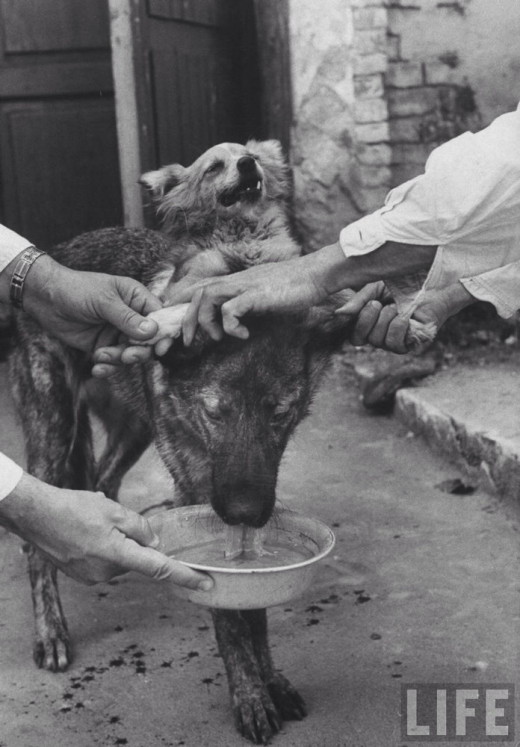
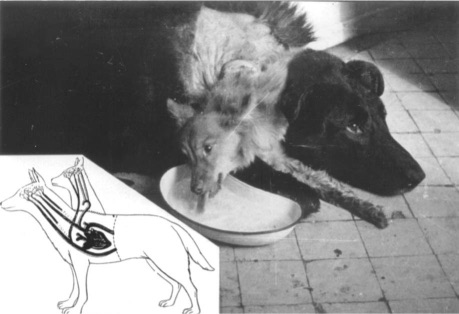
Demikhov performed his first canine head transplant in 1954 by attaching the head and front legs of a small dog to the neck of a larger dog. The smaller dog's head rested behind the larger dog's head, with its front legs dangling over the larger dog's face. Both heads ate, drank and interacted. In one reference, the smaller dog is noted as biting the larger dog's ear, much to the annoyance of the larger dog who growled angrily. The dogs lived for four days after the procedure. Demikhov went on to perform this procedure 24 times, with the longest survival period being 29 days. The canine head transplant was met with disgust from many in the medical community and was one of the most controversial experiments of the century.
Robert White
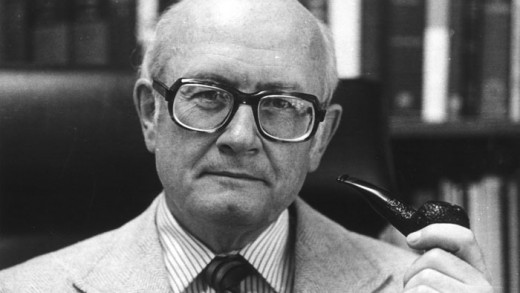
Robert White was an American neurosurgeon who performed over 10,000 brain surgeries throughout his career and developed techniques to treat brain and spinal cord injuries. He developed spinal cord and brain cooling techniques that allowed surgeons to operate successfully on these parts of the body. Despite these accomplishments, White is remembered by most as the surgeon who transplanted a monkey's head.
On March 14, 1970, White and a team of colleagues at Case Western University in Cleveland, Ohio, transplanted the head of one monkey onto the body of another. Some in the medical community revered him a groundbreaking surgeon, whereas others deemed him a perpetrator of animal cruelty. After the operation, the monkey was paralyzed, unable to eat and appeared to be in immense pain.
Dr. Jerry Silver, White's colleague at the time, stated that the monkey "...angrily tracked White with its eyes and snapped at him with its teeth" (Mad Science Museum). The experiment was initially deemed successful, though the head and body ultimately rejected each other. The monkey lived a few days.
Dr. Robert White's Monkey Head Transplant
References
- BBC News | HEALTH | Frankenstein fears after head transplant
A controversial operation to transplant the whole head of a monkey onto a different body has proved a partial success. - Human head transplant is "bad science," says neuroscientist - CBS News
An Italian neuroscientist thinks he can successfully perform a head transplant, but doubts surface about the research - Soviet Scientists Made This Two-Headed Dog | Motherboard
You’re looking at the horror film-esque result of an early transplant procedure by Soviet scientist Vladimir Demikhov, and it’s really more like a one-and-a-half dog—Demikhov successfully grafte… - At the Cutting Edge of the Impossible
- Human head transplant just two years away, surgeon claims - CNET
Surgeon Sergio Canavero will be embarking on a project to implement the world's first human head transplant. - How to Perform a Head Transplant - The Atlantic
- The Frankenstein Factor | News Features | Cleveland Scene
The reporter from Toronto wants to know about the two-headed dog. Actually, there was no two-headed dog, explains Robert J. White, distinguished brain surgeon, papal... - The history of the two-headed dog experiment · TheJournal.ie
The stuffed dog toured Germany for the past two years but is now back in Riga’s Museum of History of Medicine. Here’s its full story.