History of the British Music Hall

Origin of the Music Hall
The music hall as it existed in Britain bore a striking resemblance to the American form of theatrical entertainment known as vaudeville. Though it did not bear a distinctive name, the entertainment of the music hall was centered on, well, music. Initially, the British music hall grew out of the traditional pub.
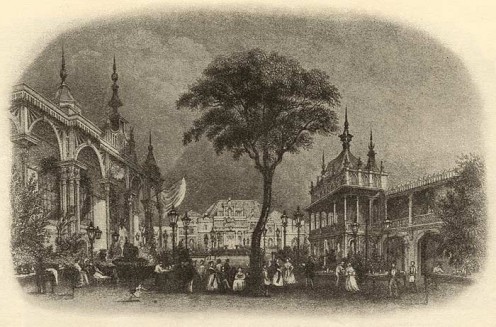
From the mid-17th century until the mid-18th century, pleasure gardens were among the most popular of amusements. They were semi-rural, allowing the city dwellers a chance to relax themselves for a time. As urbanization increased during the early 18th century, the pleasure gardens began to be swallowed up, losing their popularity and draw. In their place, public houses (pubs) began to spring up.
The Most Famous British Saloon
A perfect example of the displacement that brought pubs into prominence can be seen with the Grecian Saloon. The saloon was built on the site of a former tea garden, The Eagle. The Grecian Saloon was among one of the first saloon's of the era to combine the consumption of food and drink with indoor entertainment of all varieties. Understandably, this combination proved quite popular, and public houses began to sprout up everywhere.
The Grecian Saloon was first built in 1825, and by 1850 the public houses were already being displaced by music halls, so great had the popularity of the pubs been.
What is a Music Hall?
The main distinction between a music hall, a theater, and a pub is as follows. A pub was an establishment devoted mainly to food and drink, but some of which began to charge extra for access to an area where entertainment could be enjoyed as well. A theater was devoted simply to entertainment: guest were seated in an auditorium and enjoyed the show, no food or drink allowed.
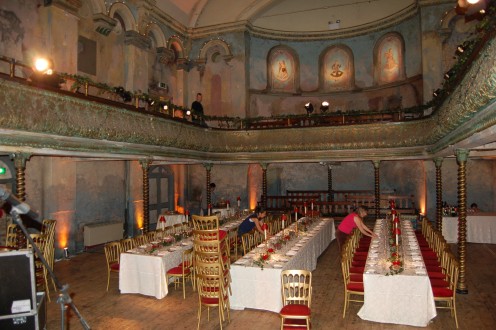
The music hall, then, was a mix of the two. In the 1850s, as pubs began to be replaced by music halls, a common music hall would have functioned this way. The music hall often did have a main auditorium with a performance stage, but the floor of the auditorium was laid out with tables and chairs. The audience was allowed to eat and drink while enjoying the performance taking place on stage. The music hall quickly filled the gap between pub and theater, and became a most popular destination of Britons.
The First British Music Hall
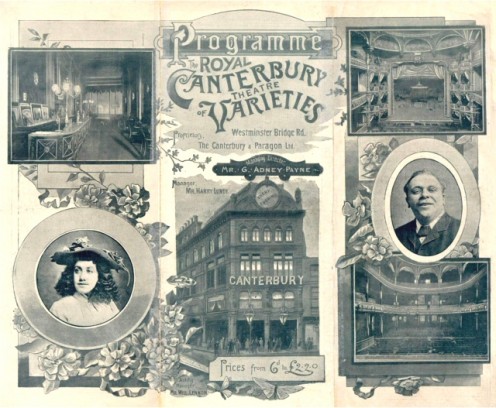
Though music halls evolved inside the saloons that had previously stood, proprietors began to build structures solely dedicated to the music hall by the 1850s. The first purpose-built music hall is held to be the Canterbury Music Hall that was built in 1852. When it first opened, the Canterbury Music Hall seated 700 people and dedicated the bulk of its entertainment to light music performances.
The popularity of the music hall can be seen in the fact that only four years after the first Canterbury Music Hall was built, the New Canterbury Hall was built to enclose the old structure and more than double the capacity to about 1,500 people. The hall was again expanded in 1876, and the variety of acts that performed on stage served to make it a hugely popular destination during the second half of the 19th century.
British Music Hall's Through World War I
The latter half of the 19th century saw the music halls of Britain expand at an astounding rate. It is estimated that by 1878 the metro London area contained 78 large music halls and over 300 smaller venues. The proliferation of the music hall brought with it the lure of venture capitalists, and many men lost and won fortunes in the music hall business. Those who managed the business well were able to establish their own music hall "empires" and the early 20th century saw several conflicts between the employees, employers and the various controlling entities.
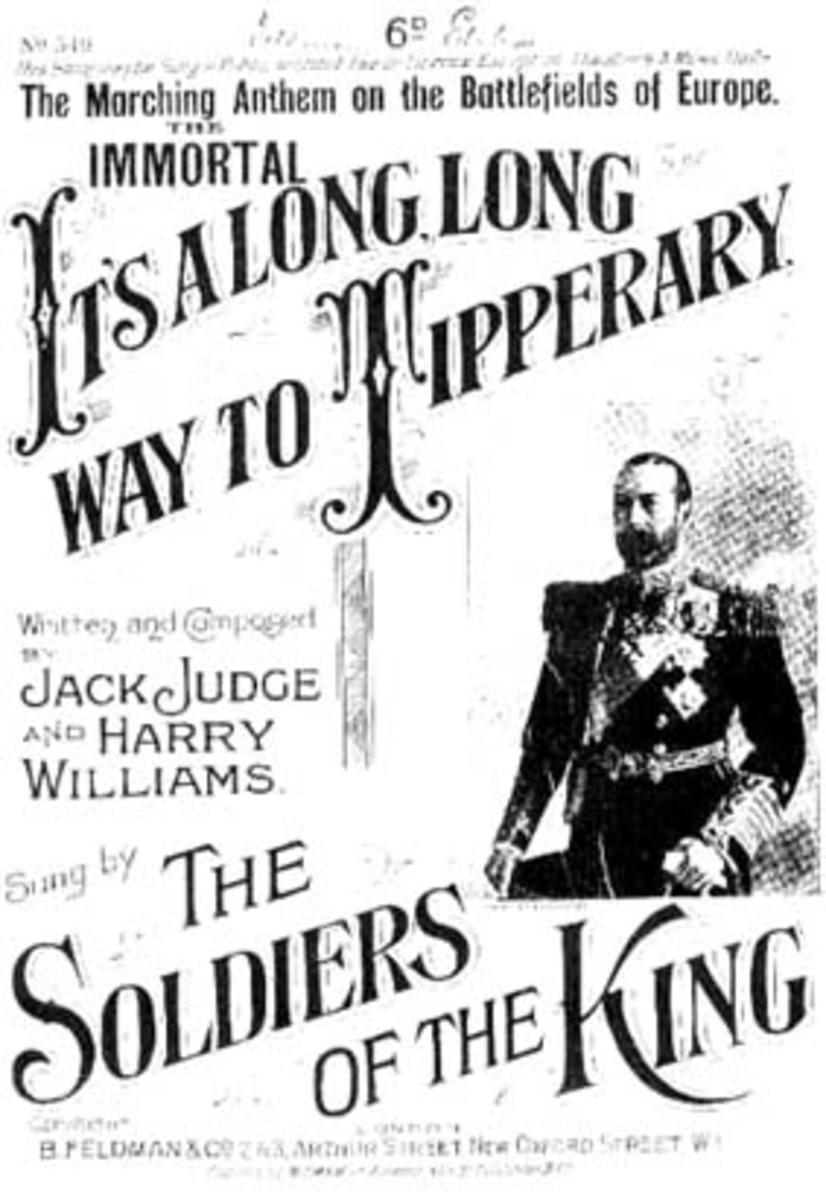
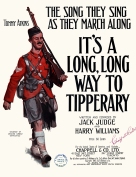
When war descended on Europe as a whole, the music halls took on a nationalistic tint. Many of the acts that performed in the British music halls during the World War I years took it upon themselves to rally the British people around the war effort and to garner public support for the troops. Some performances went so far as to help recruit young men into the armed forces. Unfortunately for the music hall, many historians point to World War I as being the high mark of its popularity.
A Music Hall Song from 1911 that was Adapted and Made Popular by Herman's Hermits
The Decline of the Music Hall
The British music hall continued as a popular destination directly following World War I, but it was under increasing pressure from new forms of entertainment, namely the cinema. The development of the radio and the rise of Big Band style music also contributed to the decline of the British music hall following WWI. An increasingly diverse variety of entertainments emerged in an attempt to stave off the decline in popularity. Many acts that were performed in the music hall were akin to circus acts, trapeze swinging and juggling fire and swords among them.
As you may have guessed, the death stroke of the music hall came at the hand of television. The mass production and improvement of the home television kept many of the people who had once ventured to the music halls home. By the 1950s, music halls had begun to close at a quickening rate, and by the 60's most had folded completely.
The British music hall had a substantial impact on the development of entertainment. Many of the musicals that are classics to the 21st century viewer were products of the music hall mindset. In the end, the music hall went the way of the entertainment that had come before it, but the unique forces that developed the music hall atmosphere left their mark on the entertainment that followed, and we can see the effects of the British music hall tradition still today.