The Music of Christmas: Why Is Christmas so Musical?





Why Christmas Is so Musical but Other Holidays Are Not
With the holiday season just behind us, it is a good time to contemplate what makes Christmas so special in our lives. There are family gatherings, of course, and the general feeling of camaraderie that always pervades the end of the year. But there is something more. While this author is no expert in musicology, there seems to be an almost intuitive awareness of Christmas as by far the most musical of all holidays in the American calendar. From the familiar carols known to all to the more exotic and buried offerings in the inventory, Christmas has produced much more music than all other holidays combined, both in America and in other cultures. Some twenty-five years ago, this author set out to keep track of Christmas songs through each holiday season. As of this year (2019), he had catalogued well over three hundred musical renditions, ranging from the holy and sacred to the holly-jolly to the outright silly, such as Alvin and the Chipmunks. What is as striking about this vast corpus is not only its absolute bulk, but the fact that all other holidays or holy days combined cannot muster more than a few tunes in all other seasons of the calendar. But before embarking on possible answers as to why this is, it is appropriate to trace the annual calendar holiday by holiday and to take a census of their output.
The Yearly Holiday Calendar
In January, there are some holidays to note, but not for their musical content. Aside from "Auld Lang Syne" by Robert Burns and some bluesy songs around the start of the new year, nothing is really there. MLK Day on the 15th does not generate much either. February has Valentine's Day, but apart from the obvious love tie-in, the holiday itself has not produced much music. The same may be said for President's Day, designed to honor George Washington and Abraham Lincoln. March is devoid of musical holidays as well, except for some St. Patrick's Day Irish tunes and a slight output centering around Easter, if it comes early enough. Easter, if it comes in April, has inspired some requiems and masses by Mozart, Bach and the like, and a little secular corpus, but surprisingly no great output, although it is the most important day in Christendom. May heralds spring and Mother's Day, but with all due respect to mothers, it does not inspire much music. Memorial Day, the first American summer holiday, is best known for "Taps" at Arlington National Cemetery. June is fairly dry, except for possibly Flag Day on the 14th, and Father's Day on the third Sunday of that month. July welcomes the national birthday on the Fourth, but aside from the "1812 Overture"--actually a Russian composition-- and John Philip Sousa's rousing "Stars and Stripes Forever", it is fairly dry too. August is literally bone dry for music. Labor Day is the traditional close of summer but similarly generates no music. Jewish holidays such as Rosh Hashanah and Yom Kippur also do not lead to musical celebration. Halloween at the end of October, although a delight for children, also contains little if any musical expression. In November, there are Election Day, Veteran's Day and Thanksgiving, but likewise there is little music to mark these otherwise noteworthy holidays and traditions. This brings us back to the start of the Christmas season, where again the music explodes on all sides--but why?
The Carol
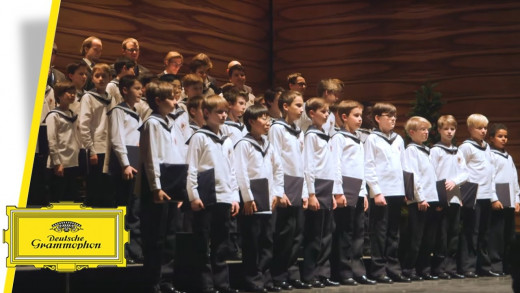
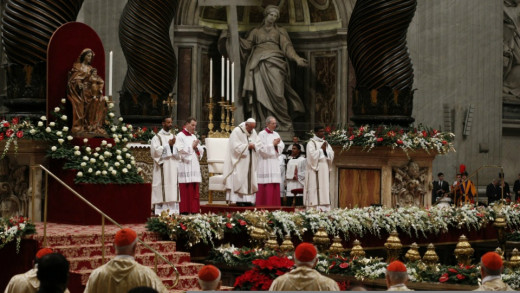
The earliest evidence of Christmas music dates from the early church, and was expressed in most reverent tones. "Of the Father's Love Begotten" must be counted as one of the first, followed by "O Come, O Come Emmanuel" by the Ninth Century. This set the stage for the higher Middle Ages, and the classic "Adeste Fidelis." The move away from the Latin was indicated by other countries contributing their own rich bodies of songs. France, what would become Germany, Scandinavia and the Low Countries all added to the repertoire. Naturally, the British Isles have made their own carol tradition, especially England and Ireland. By the Eighteenth Century, the carol was well developed as a recognized European musical form.
The American Contribution
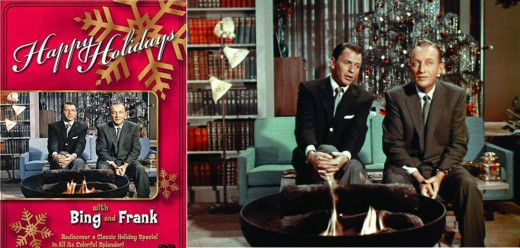
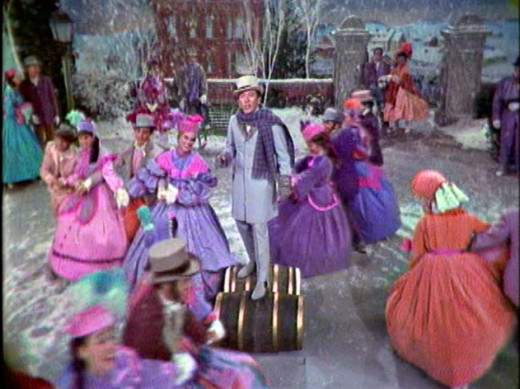
Americans have made substantial contributions to the Christmas oeuvre since the Nineteenth Century. Originally, the pattern followed that of the Old World, with heavy emphasis on religious hymns. Such gems as Edmund Sears' "It Came Upon a Midnight Clear" carried on the great European tradition. However, as time went by, there emerged a new emphasis on a more humanist and almost secular sound, grounded in sentimentality. As technology advanced, both radio and film served to spread the Christmas cheer. With the arrival of television, the Christmas cartoon and variety show became prevalent. Such stars as Bing Crosby, Frank Sinatra, Dean Martin, Andy Williams ,Tennessee Ernie Ford and even Elvis Presley helped to popularize the broadcast Christmas show. America has indeed contributed much to the world Christmas output.
Conclusion
The tremendous output of Christmas music across space and time really has no rival, except for the theme of love itself. While not much new music has been written in the West recently, the existing corpus stretching over two thousand years is impressive enough. Some cultures are still creating new Christmas songs, as for example Africa, the West Indies and Polynesia (Hawaii). Wherever Christianity has spread, music follows. It apparently had spiritual roots, but has lent itself to human relations and sentiment, and is still searching for new outlets today. When it comes to music, Christmas is in a class by itself. No other holiday even comes close.