The Inner-City Girls of Wal-Mart

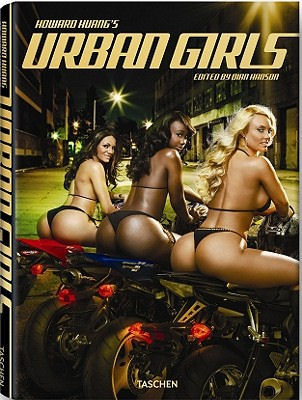
Huang's book - on sale Oct. 15, 2010
Wal-Mart & Inner City Multiracial Models??
Connections are often surprising and usually interesting -- once you know the whole story.
OK, here's the deal. Black Men was launched in 1998 and billed as the first urban men's lifestyle magazine. It included a suave, upscale fantasy of life in the inner city, hip-hop music reviews, mens fashion spreads and layouts of bikini-clad women. Black Men introduced a new sort of "girl-next-door" -- an exotic multiracial model with all the glamor of the Hollywood of the past.
Now hold that thought and let's consider the hip-hop music and fashion market.
"Urban Girls" from Taschen Publishing
- My Book Review of "Urban Girls" by Howard Huang
Check out my review of Howard Huang's new book from Taschen. Edited by Dian Hanson.
Wal-Mart and the Hip-Hop Culture
The timing for Black Men could not have been better -- and the decision to avoid nudity could not have been wiser.
The previously urban-only market for hip-hop clothes and music was rapidly moving out into small town America to white males. What better location to find that market than America's largest retailer, Wal-Mart. Everybody goes to Wal-Mart, especially in small towns. With no nudity, this magazine and the others it inspired (King, Smooth, XXL, F.E.D.S.,and Show) all could be found on the shelves of Wal-Mart.
But would this new target market accept the bigger booties that appealed to African-American men?
"Buffie the Body"

Buffie answered the question.
And the answer was a resounding "YES!"
The 5'7" coffee-brown beauty (34-27-45) from Athens, GA was an instant success and set the bar for urban glamor girls. Yes, "Buffie the Body" is included in the more than sixty models in Huang's book.
Launch Party - Taschen Store, NYC

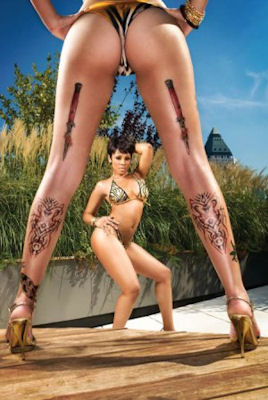
Another "Urban Girl"

1981 Movie Poster

Fantasy Images