Homemade Vinaigrette: How to Make Easy, Healthy, Thrifty Salad Dressing

Me? Make My Own?
If you think making your own salad dressing is just too much trouble, please stick with me, because you are exactly why I wrote this hub. I promise it will be easy. And delicious.
Ditch the Bottles
I have not been a fan of those two little bottles, one for vinegar one for oil. Yet I find store-bought dressing vaguely unsatisfying, even distasteful. The bottles tend to gunk up around the top. And I can never remember when I bought them or how old they are.
Finally, the bottles are dated “Best by” or Use before”. So now I just feel guilty when I end up throwing away most of the contents because the date has passed.
Besides that, I have trouble finding a store bought salad dressing I actually like. Paul Newman’s stuff seems like a good bet. I like his work and contributions to charity. But his Italian dressing is too bitter for my tastes. And anyway, his dressings are expensive.
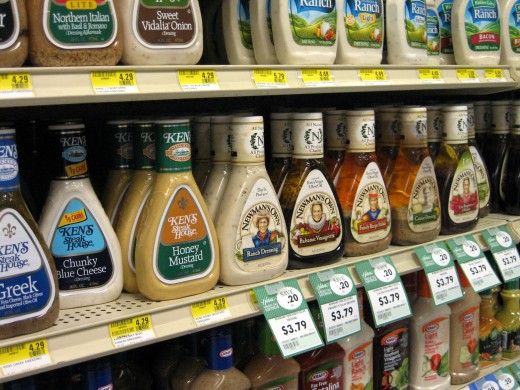
Do you use store-bought or homemade salad dressing?
My recent forays into cooking healthy and delicious and homemade (in other words, “unprocessed”) eventually brought me face to face with the unsatisfactory sight of partially used and out of date store-bought salad dressing bottles hiding in the door of my refrigerator. Yuck!
Under the duress and mournful sight of a naked salad sitting on the dinner table, already composed and with no decent dressing to put on it, I caved.
Yikes, I’m going to have to make a salad dressing!
I don’t know why I reached for a cookbook I’d used just once before, The Paris Cookbook by Patricia Wells, instead of one of my classic cook-everything standbys. (See more on that below.) Perhaps I was hoping for something tastier from a European point of view.
The Paris Cookbook did not have a single listing for “Salad Dressing” in the index. Pardon me. In"Paree", they only know salad dressings as “vinaigrette”. This is not a big cookbook, having barely 300 pages; nonetheless it had 9 different recipes for vinaigrette.
(Later I checked my current basic go-to reference cookbooks, Mark Bittman’s How to Cook Everything, the Rombauer's Joy of Cooking and Jacques Pepin’s Essential Pepin. Only the old faithful Joy of Cooking lists recipes under “Salad Dressing” in the index. The others call them “Vinaigrette”.
How To Make Vinaigrette
Think a new way
Even considering making your own vinaigrette is a sign of a new mindset: It could be you’ve realized how much money you’ve been wasting on store-bought. Or how much fresher homemade is. Or really just how easy it is. Which is puzzling, because it seemed like the reason you wouldn’t even consider it making it yourself in the first place is that it takes too much time!
No. Thinking about it takes too much time. Doing it is a snap.
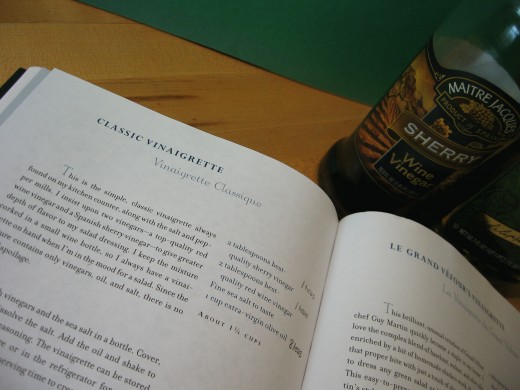
Why did I ever think making my own salad dressing was too much trouble? Now I make quick, small batches of vinaigrette all the time for the best tasting, healthiest, and cheapest way to dress a salad.
- It’s easy!
- It’s better than store-bought.
- It saves money! I have no leftovers or just enough for tomorrow’s salad, at most.
Now that I do this as a regular routine, I’ve learned that Europeans don’t “get” the American concept of buying salad dressing or vinaigrette in a bottle from a store. They think we’re quite silly about this. Europeans make up small batches as they go and never have to resort to long-term storage. A practice I have now adopted.
Let’s take a look at those big three.
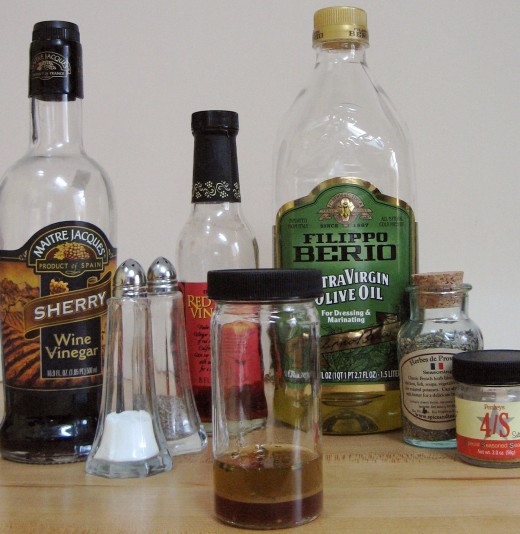
First, it’s easy
Basic Recipe for two people:
- 1 teaspoon quality sherry vinegar
- 1 teaspoon quality red wine vinegar
- 6-8 teaspoons extra-virgin olive oil
- Salt, pepper and other spices
All ingredients should be available at any good size grocery store.
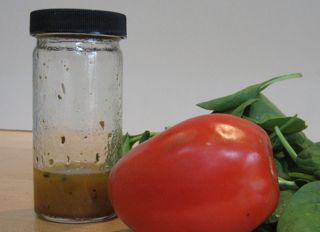
- Measure all the ingredients into a small jar with lid (I use an empty spice jar from Penzey’s).
- Shake vigorously before using so mixture is thoroughly emulsified. Use desired amount. I store any remainder for a day or two on my countertop to keep the dressing at room temperature for the next salad.)
How easy is that? This takes about as long to fix as walking to the refrigerator to get an old bottle of processed salad dressing.
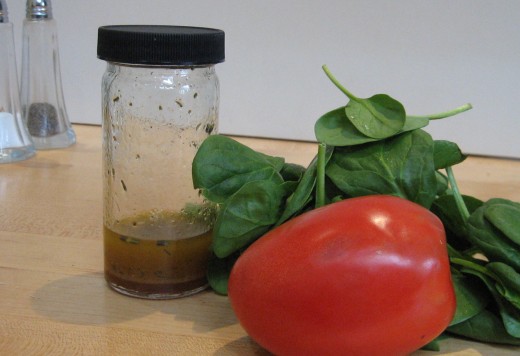
Second: Better than store-bought.
It’s better because it’s healthier. Use this rule of thumb from Weight Watchers, which puts a big emphasis on nutritional value: If your great grandmother wouldn’t recognize the word or if it didn’t grow out of the ground, don’t eat it. So, next time you’re in the store, take a look at the ingredients on the salad dressing bottles. Yes, there are a few that are pretty good, including Paul Newman’s. But most include preservatives, extra salt, flavorings, and even food coloring.
Homemade vinaigrette is also better because it tastes better. And it’s made fresh when you want it.

Third: It saves money.
The last time I checked a bottle of store bought dressing costs a minimum of $3.49, and some are more than $5.00! The small batch recipe given above costs less than $.40 and most of that is for high quality extra virgin olive oil. And there’s never any wasted.
Whatever your motivation, make-your-own is the way to go.
Joy of Cooking Cookbook
The growing sophistication of the American palate is apparent in my two copies of Joy of Cooking. Do you have a copy of Joy of Cooking?
Now you try it.
Healthier. Fresher. Tastier. Cheaper. Faster. Smarter. For all these reasons, make your own salad dressing vinaigrette. Once you try it, you’ll be hooked.
Variations
- Vinaigrette can be made with others oils: hazelnut, walnut, grape seed, canola, peanut, safflower. Or a mixture such as olive oil and peanut oil.
- Some vinaigrettes include chicken stock, honey, sugar, capers, black olives, anchovy fillets, Dijon mustard, egg yolks, truffles, Roquefort cheese, shallots, onions, garlic, tomatoes. Caution: many of these ingredients require refrigeration.
- Other vinegar: raspberry vinegar, balsamic vinegar. Mustard can be substituted for sherry vinegar in the basic recipe.
Extra Virgin Olive Oil

A Note on How Much Olive Oil To Use.
Always taste your vinaigrette before using. Depending on the acidity of the vinegar, you may want to increase the proportionate amount of olive oil. Experiment with different vinegars, including balsamic, as well as lemon and lime juice. Add different dried or fresh herbs (parsley, chives, dill, oregano, basil, Herbes de Provence), spices (paprika, peppers, ginger, etc.), and other seasonings.