Rites of Passage for a Model Railway - 10: What Makes Railways Work? It's People, That's What.
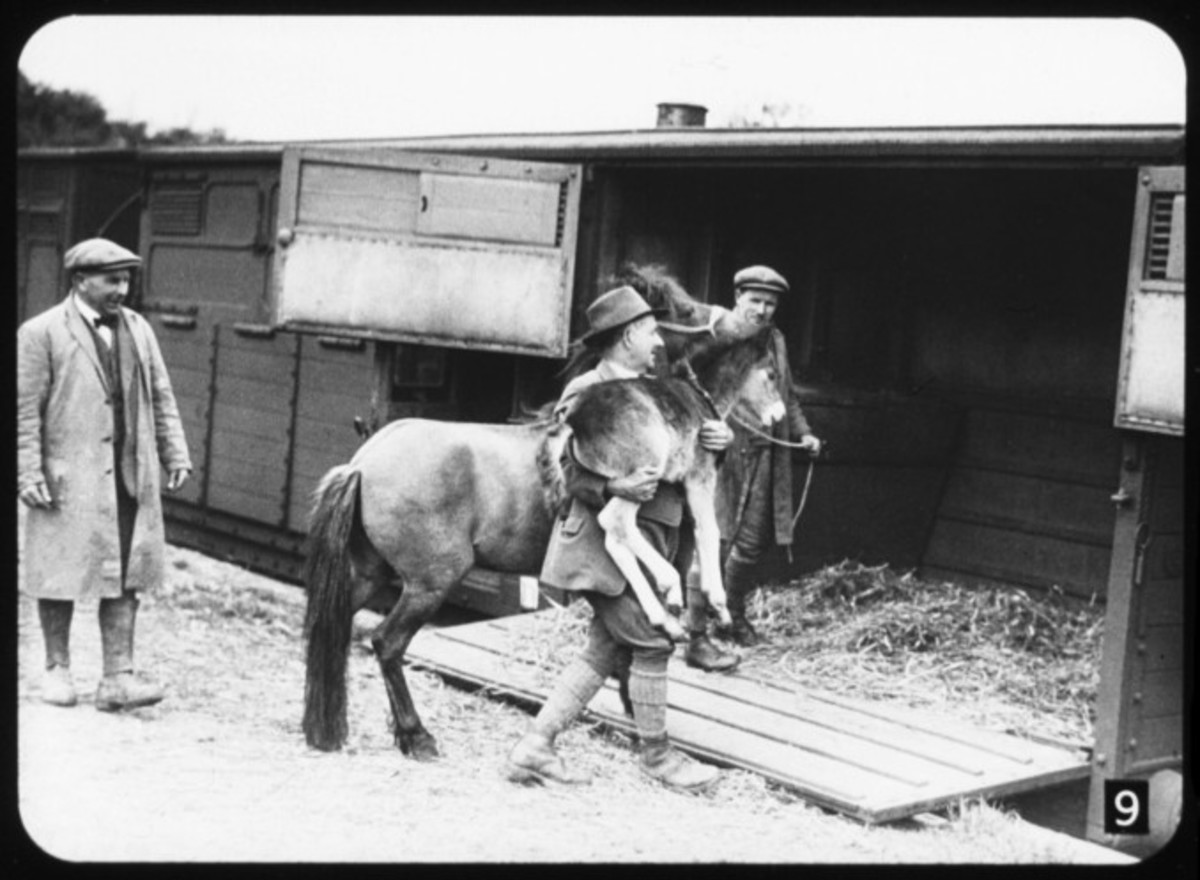
On or near the railway, there's always someone who hasn't got a job to do, waits for something to turn up, or is on the way to work
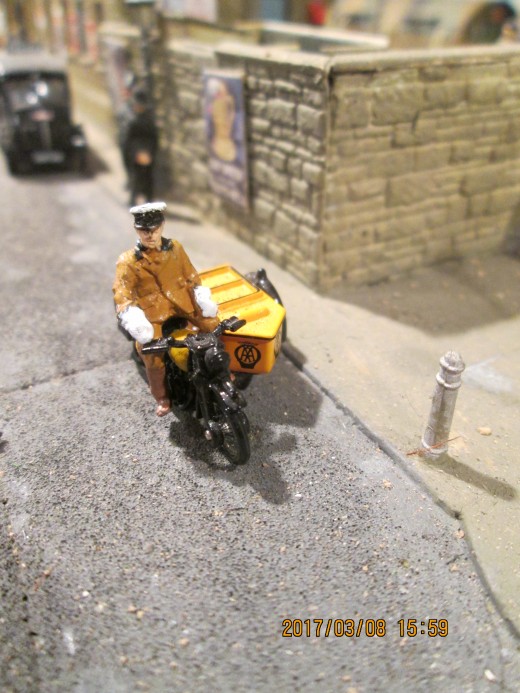
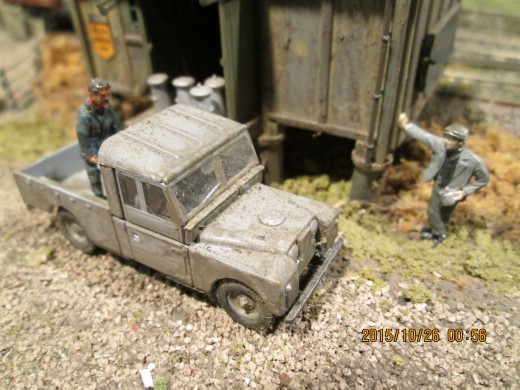
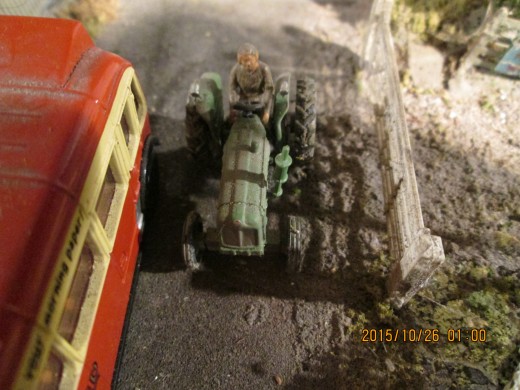
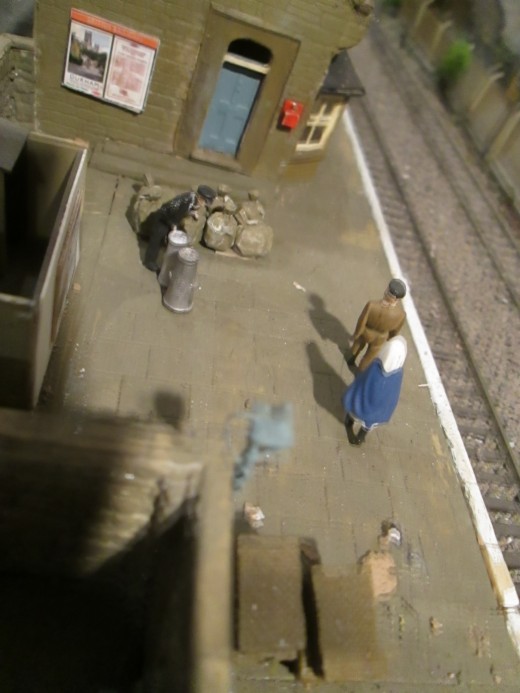
It's the folks what moves the spokes!
When railways first came about the only people connected with them pushed laden wagons or rode on wagons hauled by horses along wooden or ferrous iron trackwork. Some led horses that pulled wagons up the drift entrances of ironstone mines to incline heads, lowered by winding wheels to the loading jetties for movement by sea...
A step along the way brings us to locomotives. The first were not George Stephenson's designs but Richard Trevithick's. The Cornishman had begun working on a locomotive to run on the road, and then when the roads proved burdensome he put his locomotive on rails. George Stephenson had been working on locomotive designs at Killingworth, but Trevithick got there first and everybody's been giving old Geordie George the accolades. Where does this bring us? Locomotives need men to crew them - nowadays only one man to a train - and a guard to take care of pinning down brakes at the top of inclines that did not exceed 1 in 50 or thereabouts on public railways. Pinning down the brakes on every alternate wagon meant the train with a total laden weight of, say 600+ tons (30-40 wagons) didn't push the engine past a junction onto the main running lines So there's three men on a goods or mineral train by the 1840s! On an early passenger train of non-corridor stock were the same number of 'operatives'.
Later, when corridor coaches were put on main line passenger trains a ticket inspector was added to the list of operatives, on express trains usually two. So when the early Anglo-Scottish expresses began to run you had a team of five, possibly six when two guards were needed - one at either end - for the safe conduct of passenger trains by the turn of the 20th Century... In the mid-1930s corridor tenders were added to East Coast expresses behind Class A3 and A4, so there was a relief Scottish loco crew 'riding the cushions' to a point near Tollerton, north of York, where they would take over on the footplate. And then there were the Buffet Car attendants, the Restaurant Car Staff (waiters, chefs, someone to take care of the cash). On the pre-War Flying Scotsman - train name, not necessarily loco name - service there might be a Ladies' Hairdresser's Salon, so add at least three more. Before WWII a Pathe Cinema Car was added to the formation, with at least three more staff (projector operator, assistant and cashier - again). A train had a full complement the size of a couple of army platoons, then!
Stations came in many sizes, from King's Cross to Kildale. In the case of King's Cross back in the 1950s to 1960s there was a small army of porters, luggage trolley drivers, ticket collectors. At the station 'throat' was a signal box with several signalmen, and a train register boy - per shift ... Let's not forget passengers in all shapes and sizes. Near the bottom of the list were branch line stations with a station master, a lad porter, perhaps a porter signalman and a full-time signalman. When you got to Kildale you had perhaps a porter-signalman and a signalman. The stationmaster at Battersby would be in charge of Kildale as well as Great Ayton. Later many stations lost all staff. You wouldn't see that many passengers on the platform either. Think also of driver and fireman per station shunter for empty stock at main stations, to add or take off additional - relief - carriages or buffet, restaurant car. Empty stock was held in carriage sidings or depots, so add more for manning telephones, coupling up, paperwork etc. A mail train (still running until the 1990s when Royal Mail discontinued the service), whilst not employing railway staff, was manned by sorters, bag or pouch handlers, a line manager and supervisor per carriage to ensure all ran well. Often mail trains comprised sorting and parcels vans, perhaps ten in number. You've got a company of men there, under a train manager, plus guard and loco crew (one man on the loco usually dispensed with after the 80s).
Now let's take an average, small town station. Station master, porter. lad porter, signalman. Five trains a day each way and the last one back to the main station at the 'up' end of the branch at about 9pm. There'd be a couple of dozen passengers all day on four or five car trains, others seeing them off or welcoming them. Think of the scenario where an afternoon train has just come in:Some 'spotty' youths, school girls, unaccompanied ladies and military personnel from a nearby camp. You might have a local 'Bobby' watching the procedure from the footbridge, with his push-bike propped against the footbridge base. Add also 'platform enders', (later known as 'anoraks' after their weatherproof coats), boys in school uniform or raincoats with their Ian Allan books to note down or 'bag' engines of various classes from coal train engines, trip-working engines, shunters and express locomotives
In fields or roads nearby you'd have a few figures in fields, postmen on cycles, coalmen delivering household supplies, housewives off to do the shopping or hanging out the washing. Dustbin men on their round might add to the scene, people at bus stops and maybe a signalman on the token exchange platform waiting for the engine to pass along the branch, off the passing loop. You'd have a ticket collector at the station exit, busy ripping off return portions of tickets, handing them back to passengers or taking singles.
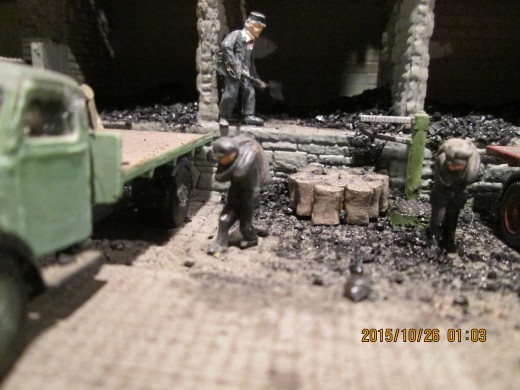
Next to a station you'd see a goods shed, with one or two men active - or inactive - on a short platform. Laden barrows, barrels and crates standing nearby would be ready for loading. A coal depot would set the scene, with men weighing bags, loading up or driving off with two men in the cab.
It's people what makes the railways!
Follow that!
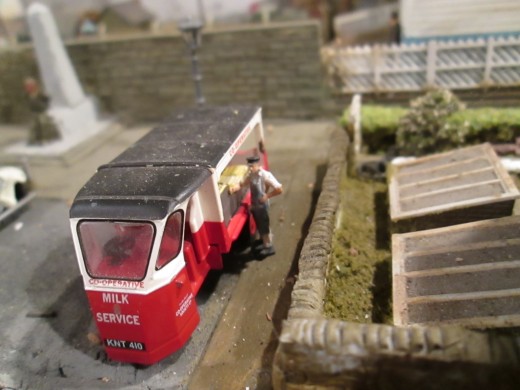
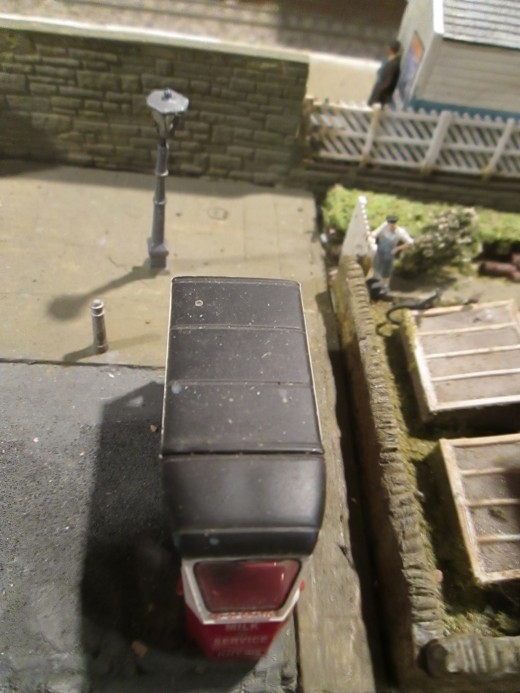
Doorstep delivery
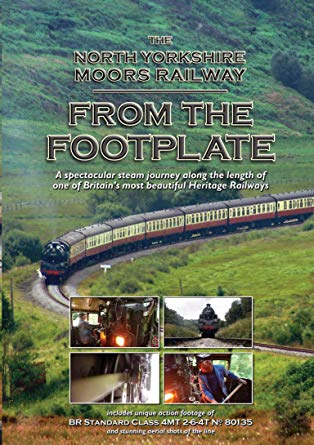
Join the crew of British Railways Standard Class 4 2-6-4T 80135 on their journey uphill from Pickering to Goathland and down into Grosmont. Lots of chat between southern driver John Middleditch and his fireman, Yorkshireman Ian Pearson (a working member of NELPG*), pointing out various sites and sights, talk about the engine and the work involved taking a passenger train on this scenic route.
A pleasant trip, enjoy the company!
(*North Eastern Locomotive Preservation Group)
"I'm working on the railway, all the live-long day!"
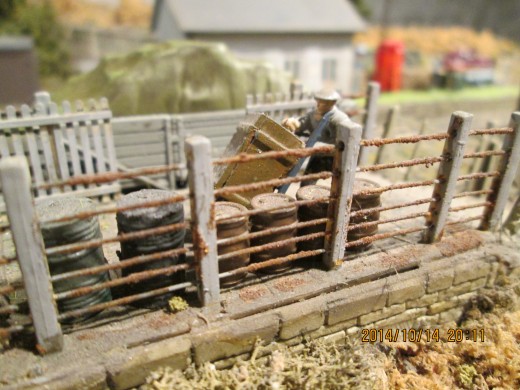
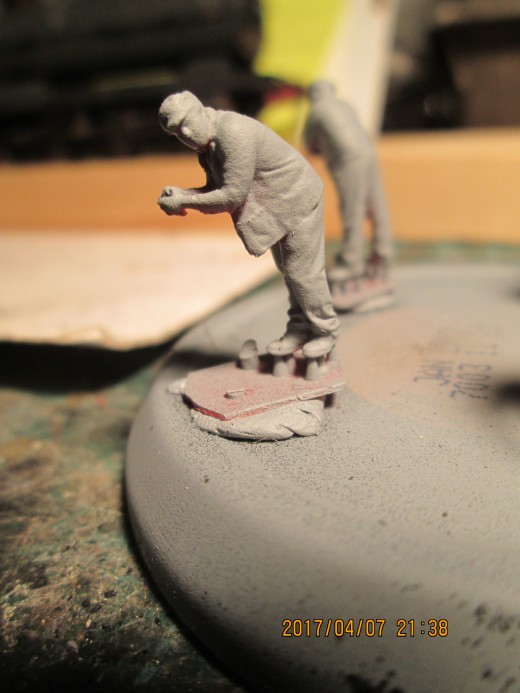
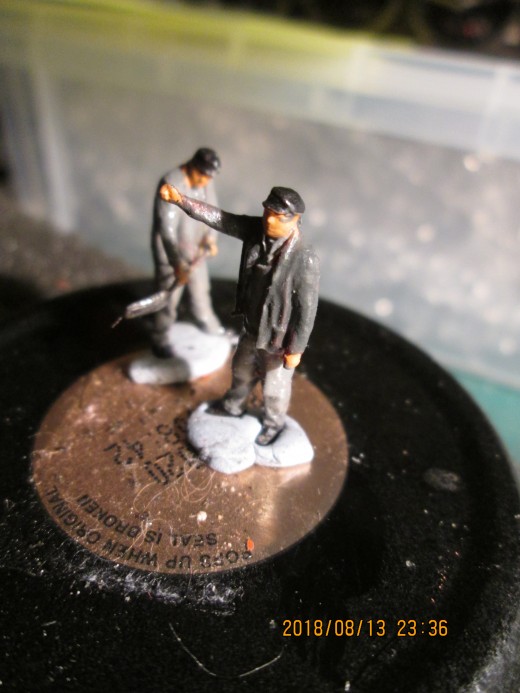
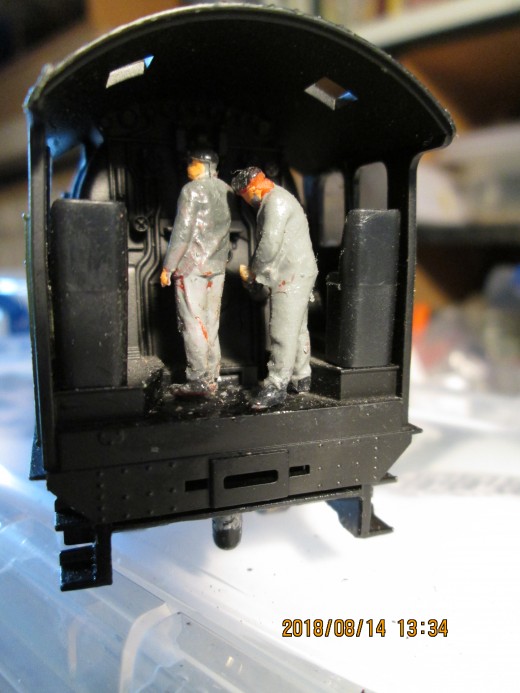
Model figures
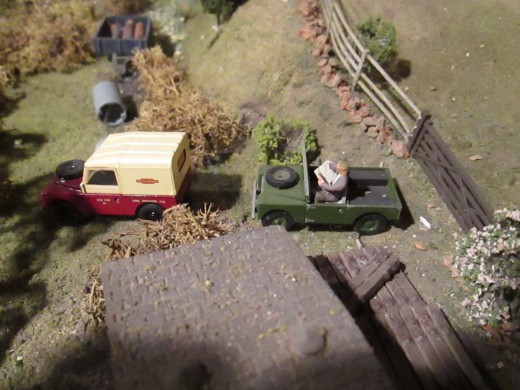
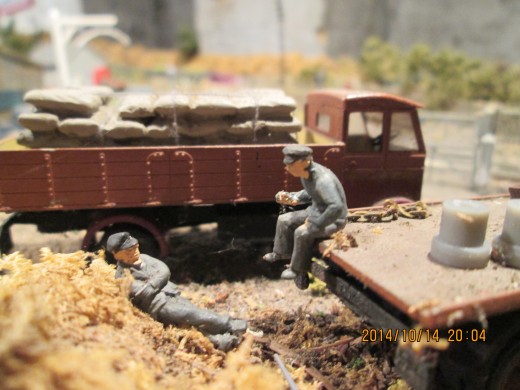
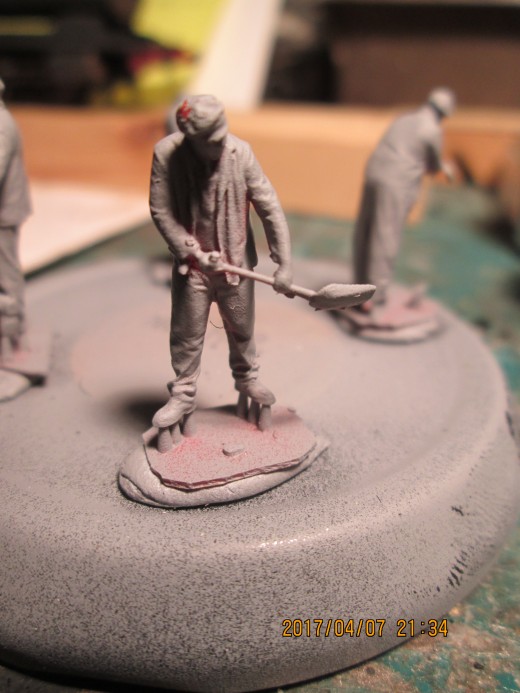
Model figures come in all sizes, between 'Z' Gauge (table-top) and 'G' scale (garden railway), painted, unpainted. white metal or plastic. You choose. You can just buy them ready-painted and plonk them down 'in situ', or you can take your time to think about what sort of colours to paint your figures.
Generally, for much of the year loco crew have grey work jackets on the footplate, or black coats with leather shoulder patches when coming off (duty). In British Railways days the caps were shiny black with small enamel badges at the front. The colour of the badge was determined by the region worked on. Pre-Nationalisation crew had slightly different apparel, but in general all agreed on light/dark grey. Station staff were marginally different from company to company. Great Western station masters wore a peaked cap redolent of the old days, whereas LNER and LMS station masters wore a cap very similar to the Royal Navy's officer cap. Porters, goods depot and signal staff wore caps similar in style to the station master but usually the wiring was not as rigid. In early days drivers of railway company (horse drawn) drays wore bowler hats - across the 'Pond' I understand that to be a 'Derby' - with blankets over their laps. When the railway companies began to use 'mechanical horses' - three-wheeled tractor units with trailers for restricted spaces - the drivers wore peaked caps and uniforms similar to the porters'.
At main line stations such as Edinburgh Waverley, Newcastle-upon-Tyne, York and Kings Cross the station masters wore top hats to welcome prestige trains ('the Topper was proper'), the shiny-peaked cap was fitting for others.
For everybody else the choice is yours, but keep in period. No use having a motorcyclist painted with fluorescent green top for the 1950s or 1960s. Similarly, for the early 20th Century long skirts and big hats was 'de rigeur' for women, bowlers for bosses and flat caps for workmen, dark trousers and black boots for both with the option of moustaches. Then came the 1920s-1950s with haircuts and clean-shaven faces - or narrow moustaches, like second-hand car salesmen - for men, shorter skirts and fancy hairstyles for women - although nearer home the housewives usually wore either hairnets and curlers or headcloths (and curlers) with carpet slippers on their feet and dingy-coloured skirts out in the back yard hanging out the washing or at the front of the house scrubbing the doorstep.
On stations women adopted a classier cut of clothing during this era, aside from the war years when you had service-women at large, with pin-stripe skirts, tailored overcoats and small hats. Men tended to be suited and booted, with brilliantined hair. Older men still wore moustaches, but dressed smartly 'for their class'. On Saturdays you'd have men with brown flat caps, dark three-piece suits and white mufflers going to the races or the football. In Britain you had football specials on the railways each Saturday going one way and race-goers going the other way for the National Hunt meetings (over the 'sticks'). In summer men wore their summer whites, open collars (middle class or toffs wore cravats) over their dark sports blazers going to cricket matches or to the races for the 'Flat Season' meetings. In both cases women wore flowery prints and bright hats (they didn't normally go to football matches in winter-time).
As the sixties wore on, women's clothing varied a lot more, with girls wearing jeans or mini-skirts, the men wearing more colourful shirts and trousers. In the later 70's things sobered up a bit, and the 'scruffy' image came in for both men and women. You still had the toffs, but flat caps, dark suiits and mufflers died out with the fifties, even in the largely working class north. For a general painting guide find photographs of the period, colour if possible, and work from them.
A few modelling options to try out...
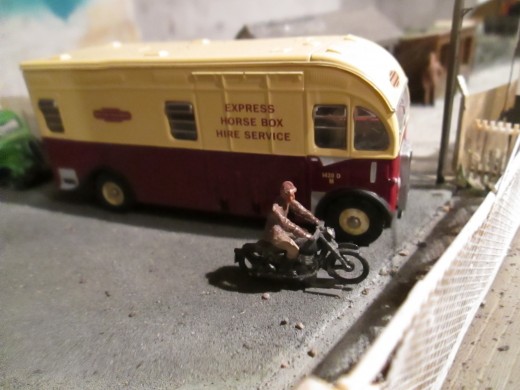
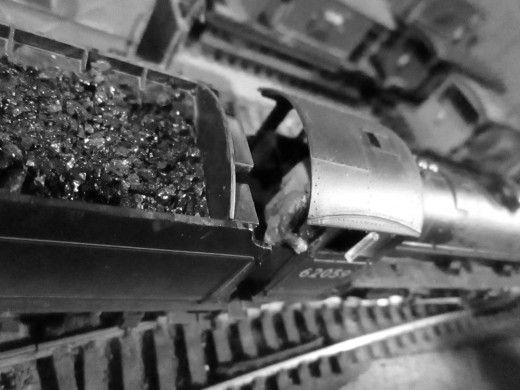
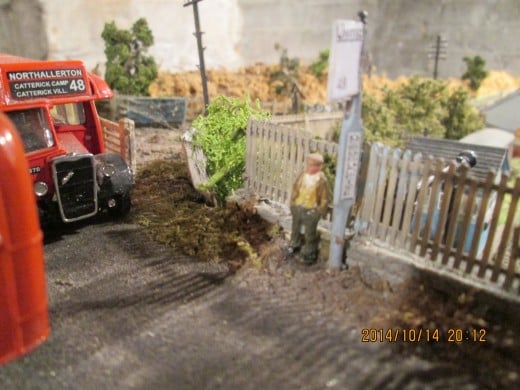
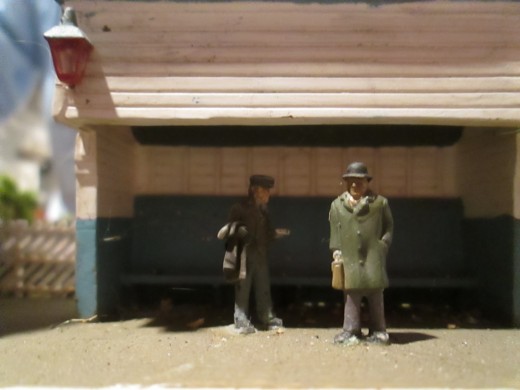
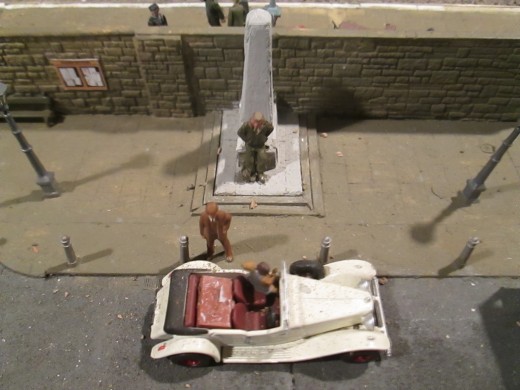
At Ayton Lane mpd
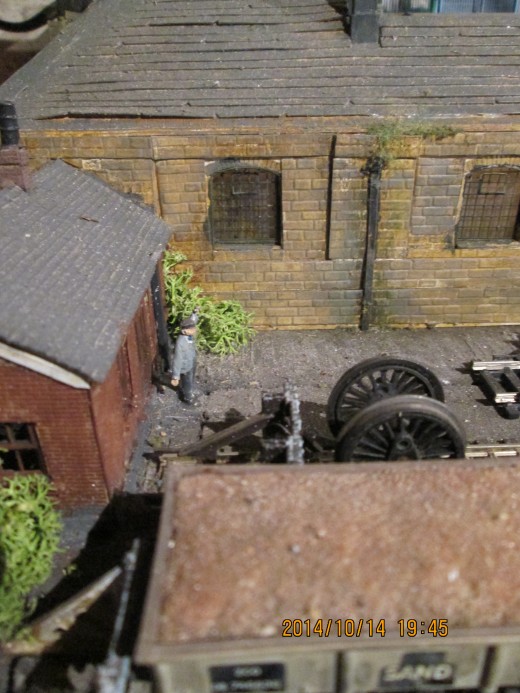
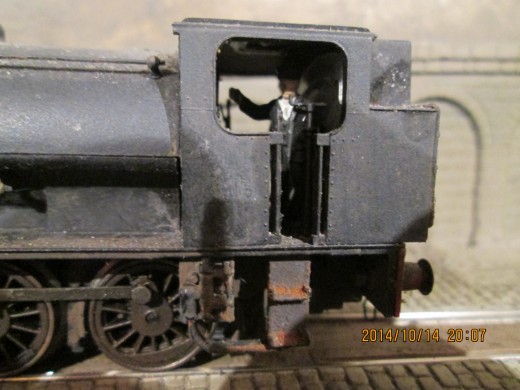
Figures on a platform etc...
I've bought figures of varying quality from various sources. Sometimes white metal figures are not as good in quality as plastic or resin ones. Look at what's available online, see what suits your needs. Often it's the paint job that makes the difference. I don't need to tell you that, do I? You get better with practice, try it and see how you get on. Who knows, you might turn out to be a Michelangelo in figure painting circles
Here are several manufacturers and distributors of model figures:
Dart Castings at www.dartcastings.co.uk has a range of products not only of figures but they do white metal and brass detailing for coaches and platform 'furniture' (etched brass trolleys and barrows etc). The range of products includes Dart Castings, Monty's Model Railways, MJT, Shire Scenes and Frogmore Confederacy;
Alan Gibson at P O Box 597, Oldham OL1 9FQ, 0161 678 1607, e-mail sales@alangibsonworkshop.com also have a range of unpainted white metal figures amongst all their other wagon/carriage/loco/scenic products, as do
Springside Models, 2 springside Cottages, Dornafield, Ipplepen, Newton Abbot, TQ12 5SJ, www.springsidemodels.com, e-mail springsidemodels@btinternet.com who produce figures and lamps with gleaming red and clear 'jewel' inserts in red, black and white painted housings for different regions/companies and purposes such as loco front, brakevan rear and hand lamps.
.P & D Marsh, The Stables, Wakes End Farm, Eversholt, MK17 9FB, www.pdmarshmodels.com, e-mail pdmarsh@fsbdial.co.uk, 01525 280068 have an equally good range of products including road vehicles, barrows, handcarts, dogs, pigs and people. (Seeing is believing as far as the range is concerned!
A fairly recent introduction on the railway modelling scene, ModelU at 3 Tyn y Sam, Llanwnog, Powys, Wales SY17 5JF, phone 07887 803737 or e-mail info@modelU3d.co.uk. Figures are not cheap at £3 for a figure in 4mm scale, but poses are original, as is the artwork based on real people. You could have yourself and your family modelled waiting on the platform, ready for a day out by the seaside. Paint your figures and watch them 'come to life'. Every pleat, every crease, even down to the trainers... Or have yourself modelled in period uniform. I've had loco and goods guard figures as well as tail lamps and other periphery. Contact them, or look them up and order online (just enter 'modelu' in your search box).
© 2011 Alan R Lancaster
Related
Rites of Passage for a Model Railway - 8: Minerals, Processable Solids... Wagons for Industry
Rites of Passage for a Model Railway - 17: Benchmark - Tank Loco Models, Are They up to Spec?
How-To Guide: Design and Build Model Railway Village
Rites of Passage for a Model Railway - 5: Motive Power - Model True to Prototype?

Building a Streetscape - Model Railways in OO Gauge