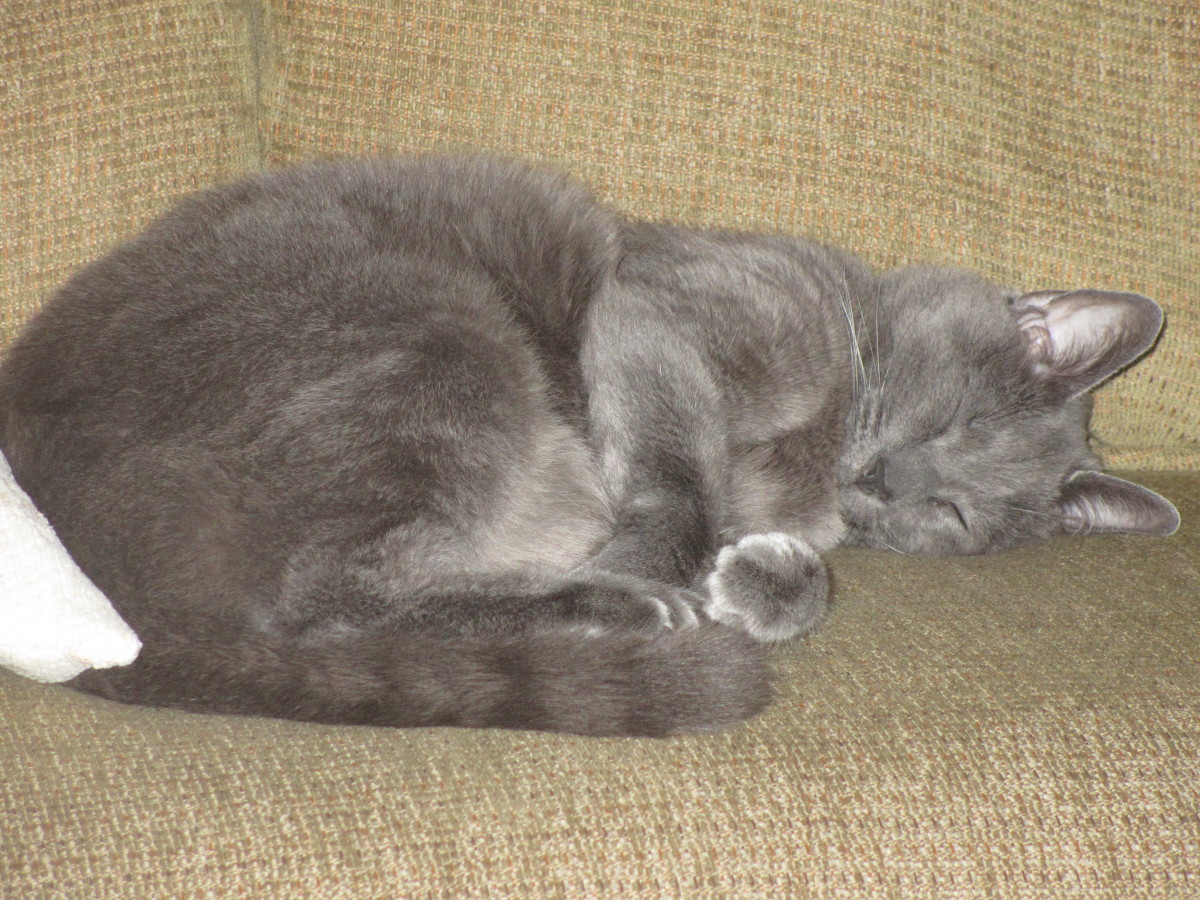
A Healthy Approach to Polyphasic Sleep


What is Polyphasic Sleep?
The majority of people think of their sleeping time as one continuous bloc of time at night where they are dormant for ideally a period of seven to nine hours. Some mistakenly believe they can routinely get by on less, with associative health problems sometimes not showing up until the practice has been going on for years. However, a growing number of people are attempting various schedules of polyphasic sleep. Also known as segmented sleep, this is the practice of breaking up sleeping hours into two or more significant time blocks per day.
People are trying this for various reasons. Some are attracted to it due to problems of nighttime insomnia, whether they wake up more than once in a period of eight hours, or have difficulty falling asleep. Others do it for preferences of daily schedule. For example, someone who runs regularly for exercise may like to do so early in the morning before work.
Segmented sleep is indeed a feasible alternative to one large sleeping bloc. However, it must be a schedule that allows for enough quality and quantity of sleep. You should not make the mistake of thinking that you can get by on less hours of sleep because you do it twice instead of once.
The Uberman Sleep Cycle and Why it is a Terrible Practice
There are many that wish there were more hours in a day to do things. However, since it is impossible to increase the number of hours in a day, they try and get by on as little sleep as possible, cutting their time to less than six hours.
In the year 2000, a method of polyphasic sleep was advocated by the author of a book called Ubersleep. Dubbed the Uberman Sleep Cycle, it consists of no extended sleeping time. It is made up of entirely of a series of either six or eight naps of 20 minutes spread evenly throughout the day. The result is that a practitioner of this method will receive a total of two hours, or two hours and forty minutes of total sleep per day. Due to the frequency of sleeping and waking, this cycle is highly demanding of rigidity in the schedule. It is imperative, the practitioners claim, to go to sleep for exactly twenty minutes after the designated waking time.
Apart from the fact that it is not even possible for most people to do this, due to most people working eight hour days or more and having commutes, with unforeseen meetings and events periodically happening at work and at home, it is absolutely not possible to get enough quantity or quality of sleep.
Because the sleeping periods are so short, your brain and body will never reach most of the stages of sleep, including a single REM stage, due to the first one taking place only after you have been sleeping 90 minutes. Therefore, adults who engage in this practice will automatically lose more than half of the functions and repairs the body makes during sleep, with REM consisting about 20-25 percent of the process. This will result in chronic lack of stimulation of the parts of the brain that enable learning and memory of learned information. It will also greatly boost your risk of developing migraines, among other health problems.

The Everyman Sleep Cycle is not Much Better
Termed by the same author, the Everyman Sleep Cycle has been marketed as an alternative to the Uberman Sleep Cycle. It differs from the Uberman in one aspect: it does have a core sleeping session. However, it is still significantly shorter than the typical core session. Originally, the main bloc was three hours, and later lengthened to three and a half. This is accompanied by three naps of 20 minutes, however, they are not evenly spaced through the day. There is an extended time gap between the last nap of the day and the core sleeping bloc.
The only thing that can be conceded about the Everyman Sleep Cycle is that it is in fact an improvement over the Uberman. In a typical monophasic sleeping cycle, the body usually undergoes five to six phases of REM sleep per night. As stated above, the first one begins around the 90 minute mark, and this usually lasts for approximately ten minutes. The second REM stage will often take place around the three hour mark, and will last longer than the first. So, unlike the Uberman Sleep Cycle, your body will undergo two stages of REM sleep. However, that is only 40 percent of the daily requirement. Combined with the fact that there is also not enough total NREM sleep, this practice is also ill advised.
Requirements of a Successful Polyphasic Routine
No matter how much you may want to get around it, the vast majority of the total population will require seven to nine hours of total sleep per day. Only five percent of the population have bodies that enable them to maintain optimal function and health at six hours of sleep. A significantly greater percentage can manage between six and a half and seven. Any sleeping schedule, whether monophasic or polyphasic, must contain sufficient total quantity.
Naps, if used correctly, can in fact be a tremendous asset to a healthy sleeping routine, or to recoup part of a sleep deficit after a night with insomnia. They can improve and recharge your mental and physical performance for the rest of the day. However, despite what some may wish, they cannot constitute the base of a sleeping schedule. They cannot be an exclusive substitute for an extended core sleeping session.
In order to get healthy sleep on a daily basis, you will need at least one extended sleeping period that allows your body enough time to cycle through every stage of non-rapid eye movement (NREM) as well as rapid eye movement (REM) repeatedly. Naps of 20 minutes, a half hour, or an hour, will not allow for that to take place.
It is also important to remember not to nap too closely to your main bedtime. A nap, even a stage two (20 minutes) will provide a considerable boost of energy, and can compromise your main sleeping time bloc if it is less than a few hours beforehand. For those who wish to have even more information on naps, the book Take a Nap! Change Your Life provides more detail about the aspects of napping.
Your Sleep Schedule and Daily Routine
Fortunately, for most people, the Uberman and Everyman is not feasible to attempt in the first place, due to the obstruction of daily tasks and full-time jobs. In order to get the correct amount of sleep, many who opt for a polyphasic schedule find that they will not be able to break their sleep up into more than two segments. Biphasic sleep is the most common, with a smaller percentage being able to manage three segments. If you are the type that is able to fall asleep three times in a 24-hour period, make sure it is not because your sleeping time is insufficient.

Examples of Healthy Segmented Sleep Routines
Example 1
Core Sleep Session, Midnight – 5:30 AM.
Secondary Sleep Session, 3:30 PM – 5:00 PM.
This schedule has a decent core time of five and a half hours, and a 90 minute nap. It consists of a total of seven hours of sleep, and would fit a person with a work schedule that begins and ends earlier than the typical 8:00 AM – 5:00 PM. The sleep blocs are set far apart from each other, with the nap preceding the core session by seven hours.
Example 2
Core Sleep Session, 10:30 PM – 6:00 AM.
Secondary Sleep Session, 12:30 PM – 1:00 PM.
This eight hour sleep schedule has a longer core bloc of seven and a half hours, supplemented by a half hour nap in the early afternoon. This works for someone with a normal working schedule that has an hour break for lunch, spending 30 minutes of it napping and returning energized for the afternoon half of the day.
Example 3
Core Sleep Session 1, 2 AM – 6 AM
Core Sleep Session 2, 2 PM – 5:30 PM
This biphasic schedule does not have a nap, but two extended sleeping periods. As people age, they may find it more difficult to sleep seven to nine hours at a time. It would fit a retired person with no work obligations. Or, someone who had a flexible work schedule such as some self-employed people. The sleeping blocs bisect the waking period in half, and enable the practitioner to wake up with the sun and go through the morning. If you take on this schedule, do not make lunch your main meal of the day. Eat a larger breakfast, and a lighter lunch at noon time. If your stomach has too much food to digest, it is not conducive to ideal quality rest for an extended sleeping session.
References
http://www.menshealth.com/health/sleep-deprivation
http://renaissancehumans.com/what-two-weeks-of-biphasic-sleep-did-to-me-polyphasic-sleep/
https://www.ncbi.nlm.nih.gov/pmc/articles/PMC4972941/