Facts About Kiwifruit

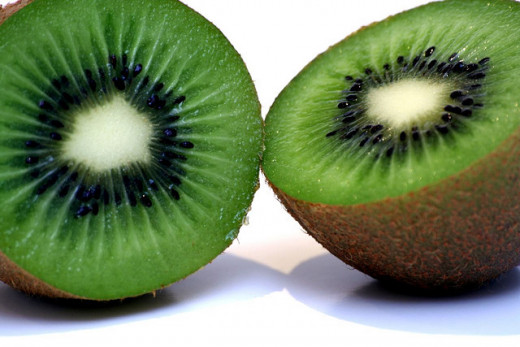

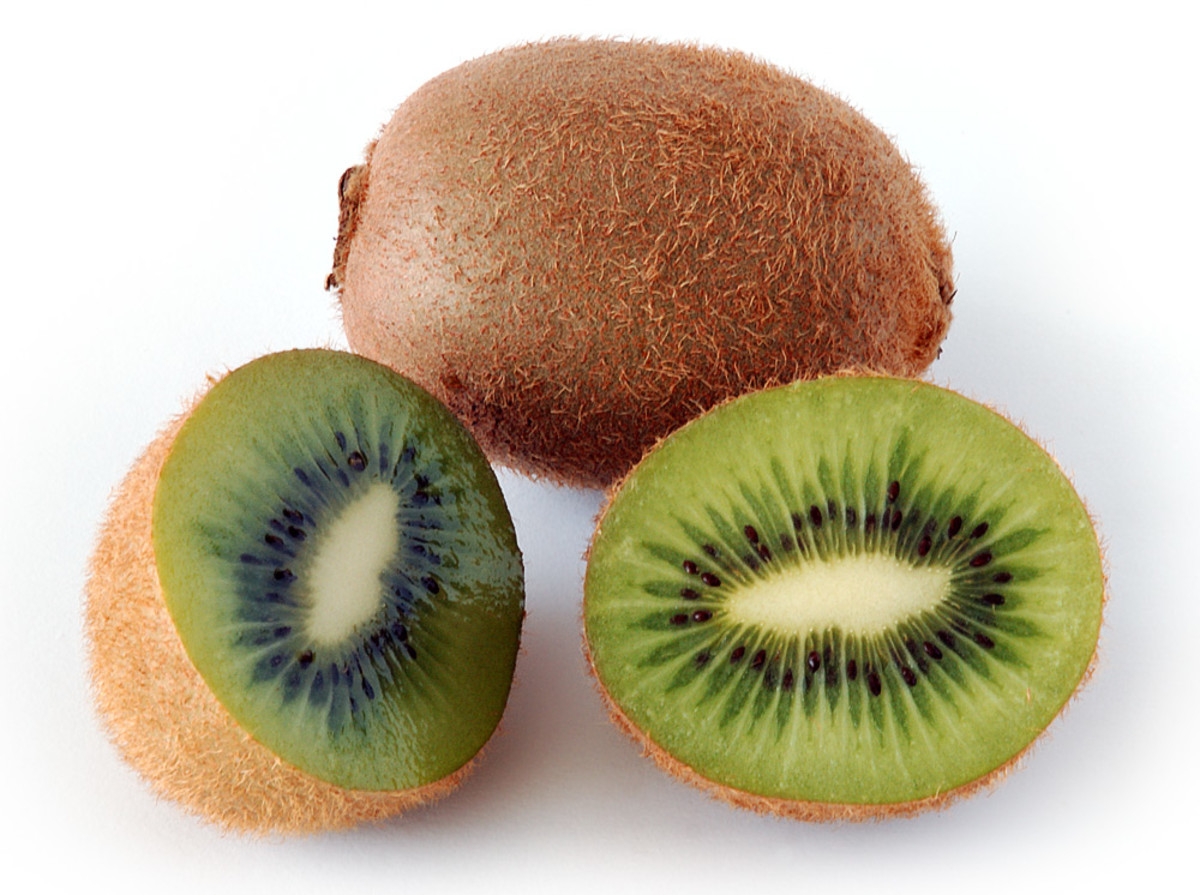
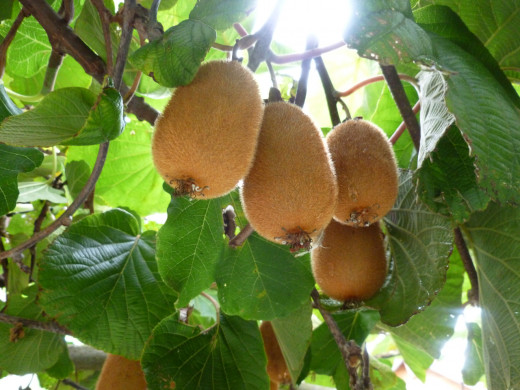
Most people associate kiwi fruits with New Zealand. For one thing there is the name, it is natural to associate the fruit with the land of the kiwis.
However, the woody vines on which they grow, Actinidia chinensis, are actually native to Southern China.
The seeds were first taken to New Zealand by a school principal who was visiting China, and planted in the grounds of her school. At that time the fruit were called Chinese gooseberries.
The kiwi fruit is actually a berry.
The name was changed to kiwifruit, or just kiwis, in the 1960s, for PR purposes, as the fruit was being grown commercially and exported to the US and other countries. They were named after the kiwi bird, New Zealand's national symbol, since they were thought to resemble it, being brown and hairy.
Kiwifruit Health Benefits
The kiwifruit is popular because of its looks and taste. It also happens to be a nutritional powerhouse, even among other fruits.
- 100g of kiwi fruit flesh contains more than the recommended daily dose of vitamin C. It is actually a better source of it than oranges. If you just consume just two kiwis, that will be vit. C needs taken care off for the day.
- It also contains a fair amount of dietary fibre and 10% of the recommended daily amount of vitamin E, and important anti-oxidant. This at first seems surprising because the vitamin is fat soluble, however, it is present in the black seeds which are consumed with the flesh.
- Kiwis also contain phytochemicals such as beta carotene, lutein and zeaxanthin. The first of those is converted to vitamin A, lutein and zeaxanthin are carotenoids, that are found in high concentrations in the retina. It is thought that they might have a role protecting the eye from oxidative damage and excessive light. The clinical study data at this time is not sufficient to be conclusive, but there is a suggestion that they might lower the risk of age-related macular degeneration and cataracts.
- The anti-oxidant properties of vitamin E, and the carotenoids in kiwi fruits might also protect against heart disease. What is more, a study found that eating 2-3 kiwis a day, also decrease platelet activity, resulting in a "blood thinning" effect usually associated with using asprin to prevent artery hardening, cardiovascular disease and clot formation.
- Another study published in the journal Carcinogenesis found that kiwifruit as part of a normal diet, not only decreased DNA damage, presumably because of their high level of anti-oxidants, but also stimulated DNA repair. The subjects in this study were not asked to alter their normal diets in any way, other than including kiwis.



Have you ever used kiwi in a dairy or gelatin based dessert and had a problem?
Kiwi Fruit as a Natural Tenderdiser
The flesh of the kiwifruit contains high level of the proteinase, actinidain, an enzyme which digests proteins into simpler peptide chains. It can therefore be used as a natural meat tenderiser.
However, the enzyme presents difficulties when using kiwis in desserts containing cream or milk, unless the fruit is added at the last minute, just before eating.
If left for a few hours, the enzyme will start to digest the proteins in the dairy products.
A similar problem presents itself when using kiwifruit for jellies and other dishes based on gelatine, which is also a protein and which gets digested by actinidain.
Cooking the fruit for a few minutes before adding it to the gelatin, destroys the enzyme, and protects the jelly from being dissolved by the fruit.
Pollination of Kiwifruit Flowers
To obtain fruit flowers must be pollinated. This is a basic fact of biology. The fruits are basically the plants means of ensuring that their seeds (which are really plant embryos) will be spread out in the area where they are growing. The flesh is sweet and aromatic to encourage animals to eat them, so they carry the seeds away.
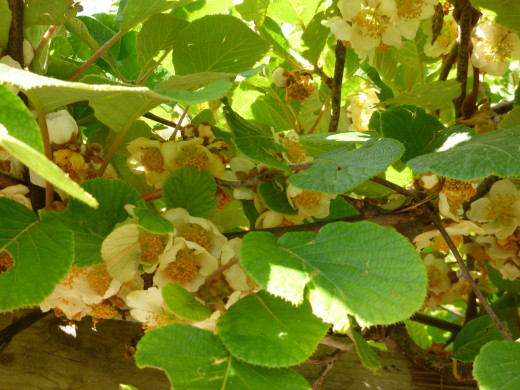
Some plants produce flowers that are both male and female, and can self pollinate. But Kiwifruit vines either have all female flowers, or all male flowers, and fruit is available only after cross-pollination.
Only the female vines produce fruit. But there must be a male vine growing nearby for them to do that. What's more kiwi vines don't get pollinated easily, since for some reason the flowers are not very attractive to bees.
This presents some challenges to growing these delicious fruit. Most farmers solve the problem by having bee hives directly in the orchards, and making sure that the number of bees is high enough so they can't just feed from other flowers. The bees have no choice but to use the kiwi flowers, and carry pollen from the male vines to the females.
Kiwis are of course grown and exported from New Zealand, but other countries, such as Chille and Italy are also major exporters of the delicious and supernutritious food.