The Blood Type Diet: How Blood May Determine What Diet Is Best For You

Diets: why do they work for some but not others?
Research begun in the 50s may have found the reason, and it's in the blood.
'Blood is life itself', says Peter D'Adamo, author of the book Eat Right For Your Type, 'It is the primal force which fuels the power & mystery of birth, the horror of disease, war and violent death. Entire civilisations have been built on blood ties. Tribes, clans and monarchies depend on them, we cannot exist without blood — literally or figuratively.'
So why shouldn't it also be a governor of what we eat?
Blood type is the key to how food effects our bodies, the link to explaining many of the inconsistencies observed in dietary studies over the years.
After 40 years of research, Naturopathic physicians James & Peter D'Adamo developed comprehensive lists of how particular foods affect the body and, more importantly, which foods can be toxic to your blood type.
Blood Type Prevalence to Disease
For years it has been known that each blood type is more prone toward diseases than others, for example;
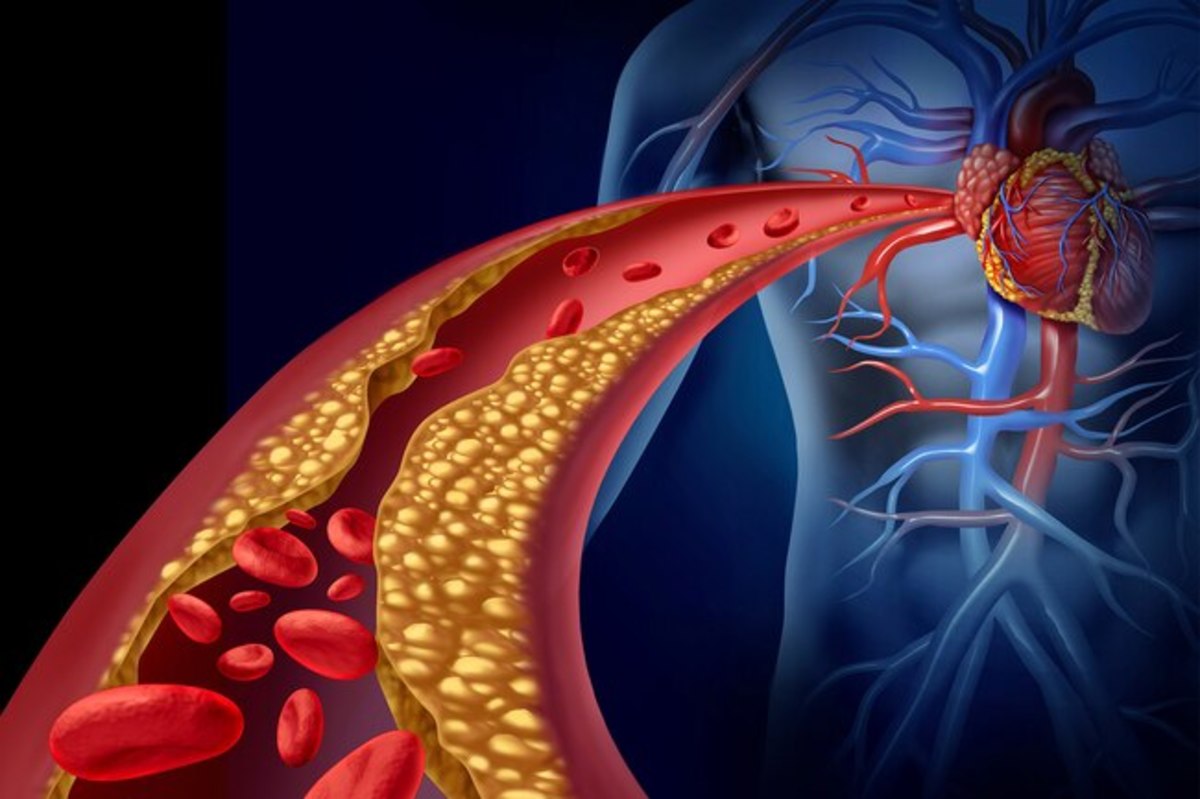
- Type A's to cancer and cardiovascular disease
- Type O's to ulceration
- Type B's to Chronic Fatigue Syndrome & multiple sclerosis.
But the why remained a mystery.
The secret now seems to have been unlocked. A substance in foods called lectins provides the clue to how each of the main blood groups deals with what we eat.
Initial research began while James D'Adamo was working at health spas in Europe. He observed that while the 'healthy' vegetarian diet at the spas suited many, some patients only deteriorated further. Following a hunch, Mr D'Adamo set about blood-typing his patients, and observed that the various blood types reacted differently to the same foods. He published these findings in the book One Mans Food, in 1980.
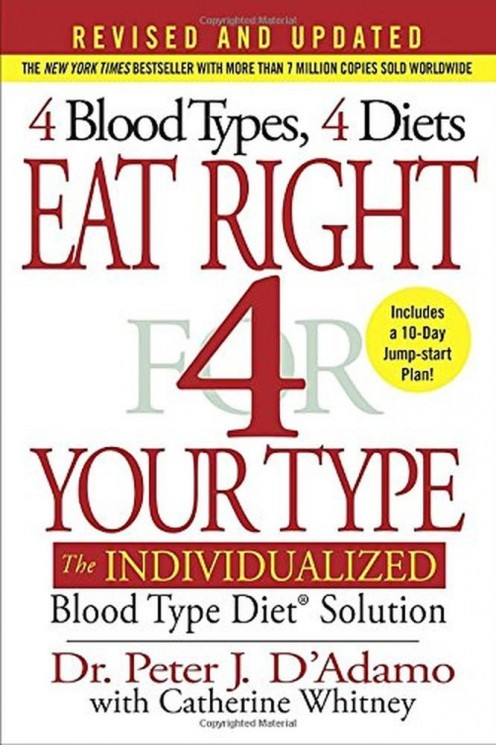
Several years later James's son, Peter, was to add scientific validity to his fathers theory, discovering that ones blood type is a powerful 'genetic fingerprint' that not only identifies an individual but can be used as a guide for eating and living. He later published his findings in the book 
Antigens and Lectins
Peter D'Adamo says, 'When you use the individual characteristics of your blood type as a guide for eating and living you will be healthier, you will reach your ideal weight and you will slow the process of aging.'
Like our cells which each have markers on their surface called antigens, so too food has its equivalent, lectins.
Antigens are used by our immune systems to determine whether a substance or cell within us is foreign or not. One such antigen is found on red blood cells, and our blood type is named after it. The body rejects any other blood that does not carry the antigen of the individual's type. Type AB being the only exception.
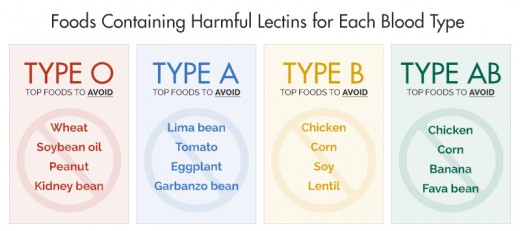
Foods contain a substance called lectins, these have the ability to imitate antigens; different foods having lectins that imitate different blood types.
Blood Types
So, what's your blood type?
Antigens vs. Lectins
When we eat a food containing a lectin incompatible with our blood type antigens, the lectins cause the clumping together of cells -agglutination- within the body's organs and become a major factor in the development of disease.
So fundamental to our health is this antigen/lectin relationship that eating foods incompatible to our blood type is like taking poison, your body reacting with lectin incompatible foods as it would a toxin.
Thomas Bige, a specialist in emergency medicine, digestive disorders and detoxification programs, is a zealous promoter of the blood type diet. Receiving his training in the armed forces of Hungary and having served ten years with the UN establishing health care services in eleven countries, he has a wealth of experience to draw on and a fascinating grasp of the workings of the human body.
Friend of James D'Adamo, he is well versed on the topic and says it is a diet founded in much research. Mr Bige believes that Australians in particular need to take greater care of their bodies, especially what they eat and drink.
He claims that this country has a 50% higher incidence of constipation than any other in the world, with poor diet and inadequate fluid intake the main reason; He adds that frequent constipation is often a precursor to worse problems later in life.
Your blood type is a more reliable measure of your identity than race, culture or geography. It is a genetic blueprint for who you are, a guide to how you can live most fully.
— Dr Peter D'AdamoYet the discovered relationship between blood type and food assimilation has highlighted many other incompatibilities in the average Australians diet. Incompatibilities that not only promote ill health but may be at the core of why so many weight loss diets fail to work for everyone.
Blood type A's for example should not eat meat, especially red meat, and may lose weight rapidly if excluding it from their diet. This however is the opposite of type O's, who thrive on red meat. Yet all blood types should avoid large amounts of wheat —a grain staple of the Australian diet— as it only promotes weight gain, hampering the digestive and metabolic processes.
Dairy Products Benefit Blood Type B's
Another Australian staple, milk, has been discovered to only benefit type B's and AB's. In fact, according to the A'Damos research, type O's should severely restrict their use of dairy products and A's should avoid anything made with whole milk altogether, as most dairy products are indigestible for this blood type.
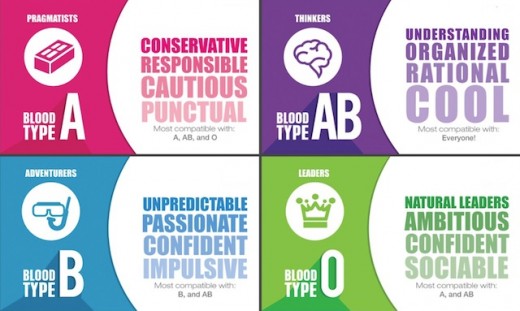
Off further interest is the connection the D'Adamo's found between blood type and Personality. Type A's, they found, were generally tolerant, cooperative, sensitive, passionate, restrained. B's flexible, creative, empathic, balanced. O's daring, optimistic, self-reliant, dominant, and AB's diplomatic, charismatic and friendly.
As Peter D'Adamo says, 'Your blood type is a more reliable measure of your identity than race, culture or geography. It is a genetic blueprint for who you are, a guide to how you can live most fully.'
© 2010 Richard Parr
Related
Facts About Your Blood Type

The Ultimate Guide to Blood Types: Everything You Need to Know

How to Lose Belly Fat, Hip Fat, Thigh Fat With Dr. Abravanel's Diet
Dr. Abravanel's Diet Plan: Gonadal Body Type
Rh-Negative Blood Type Traits and Characteristics: Large Head, Low Blood Pressure--and Possible Alien Ancestors?