What Are the Stages of Dementia?

What Are the Stages of Dementia?
Depending on the scale used, dementia is measured in either 4 or 7 stages. The 4 stage model of dementia is defined as Pre-Dementia, Mild Dementia, Moderate Dementia, and Advanced Dementia. The Global Deterioration Scale (GDS) is a more precise measure of the symptoms of dementia, and identifies 7 different stages.
Each stage of dementia has a unique array of symptoms that are indicative of the progression of the disease. An understanding of the various stages is useful for physicians in diagnosing dementia accurately. Caregivers and family members can also use this information to prepare themselves for what to expect as the illness progresses.
A stage simply marks the symptoms displayed by someone with dementia at a certain point in time. Stages can be used like a road map. If Mild dementia is Point A and Advanced Dementia is Point B, the symptoms of the current stage will identify approximately how far the dementia has progressed from the time of onset (Point A) to the current time. This also allows us to approximate where a person is in relation to Advanced Dementia (Point B).
Are You a Caregiver?
I am caring for someone with dementia at this time.
What is Stage 1 Dementia?
Stage 1 Dementia is a pre-dementia stage. A person functions normally and has no problems with memory loss, confusion or forgetfulness. A physician's examination is able to verify that there are no symptoms of dementia.
What is Stage 2 Dementia?
Also identified as a pre-dementia stage, Stage 2 Dementia is marked by the person feeling as though they are forgetting simple things like where they ordinarily place certain things and familiar words and names. These are normal symptoms brought on by aging and go unnoticed by family, friends and the physician.

What is Stage 3 Dementia?
Stage 3 Dementia is also a pre-dementia stage and is marked by mild cognitive decline. Early Onset Dementia can be diagnosed in some but not all in this stage. Symptoms include:
- increased forgetfulness;
- noticeable difficulty in work and social tasks;
- getting lost;
- noticeable difficulty finding the right word or name;
- trouble with planning and organizing;
- losing valuable items.
Difficulties with these symptoms are noticed by family, friends and co-workers. Stage 3 Dementia lasts an average of 7 years.
What is Stage 4 Dementia?
Stage 4 Dementia is the equivalent of Mild or Early Stage Dementia on the 4 Stages Scale. A physician's examination would reveal these symptoms:
- decreased memory of recent events;
- difficulty paying bills, managing finances, planning for dinner guests;
- difficulty travelling alone to new places;
- forgetfulness of personal history;
- withdrawal from family and friends because social situations are difficult; and,
- mood changes.
Stage 4 Dementia is the point at which dementia is usually first diagnosed. This stage lasts an average of 2 years.
What is Stage 5 Dementia?
Stage 5 Dementia corresponds to Moderate or Mid-Stage Dementia. The clearest indicator of this stage of dementia is that the person now needs help with daily activities due to major difficulties with both thinking and memory. Symptoms of Stage 5 Dementia are that the person:
- forgets home address and/or phone number;
- may not know familiar surroundings;
- may be unaware of the date and time; and,
- needs help choosing appropriate clothing for the season.
In Stage 5 the person does not need help with eating or going to the toilet. This stage lasts about 1.5 years.
What is Stage 6 Dementia?
Stage 6 Dementia, also known as Moderate or Mid-Stage Dementia, is marked by severe cognitive decline. The symptoms of this stage are severe and include:
- extensive assistance required to complete activities of daily living;
- needs help with the sequence of toileting (wiping, proper disposal of tissue, dressing);
- may lose control of bladder and bowels;
- may forget names of close family members;
- loses memory of recent events;
- sleep patterns may change (may sleep in daytime and be awake at night);
- may wander and get lost;
- may have personality changes; and,
- may experience paranoia and delusions.
During Stage 6 of Dementia, caregiving needs for the person increase dramatically. This stage lasts an average of 2.5 years, and the demand on the caregiver is enormous. If additional caregiving assistance has not yet begun, now is the time to consider care at home or at a dementia care facility.
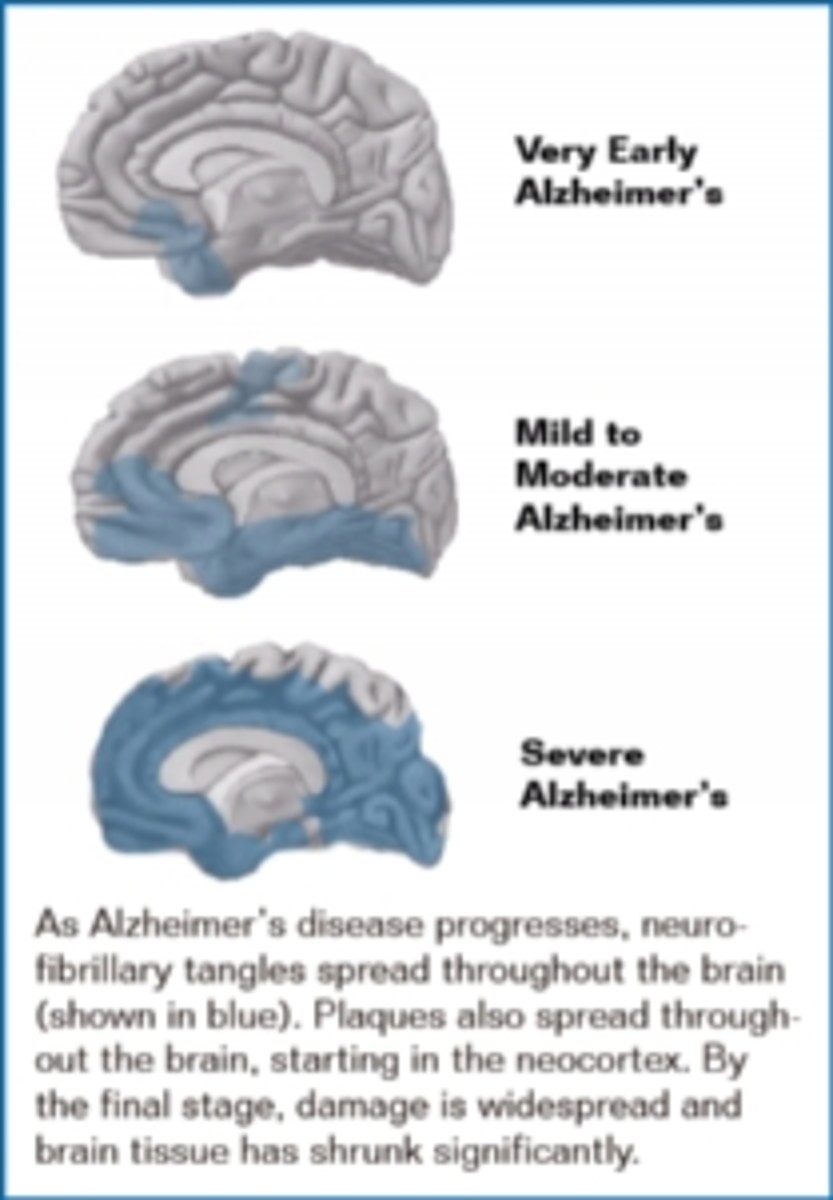
Stages of Alzheimer's Disease
What is Stage 7 Dementia?
Stage 7 Dementia is Advanced or Late Stage Dementia. The person now has become totally dependent on others for daily care. Symptoms of this stage include:
- inability for speak more than a few intelligible words;
- inability to smile;
- inability to walk;
- difficulty swallowing;
- requires total assistance with all activities of daily living (eating, toileting, bathing, dressing).
Late Stage Dementia lasts approximately 2.5 years and requires 24 hour caregiving support. Hospice care is appropriate at this time and can be provided at home, dementia care facility, or nursing home.
Stages of Alzheimer's Disease
Global Deterioration Scale (GBS)
| 4 Stages Model
| Symptoms
| Diagnosis of Alzheimer's Disease or Dementia
|
|---|---|---|---|
1
| Pre-Dementia
| Normal Function
| No
|
2
| Pre-Dementia
| Occasional forgetfulness
| No
|
3
| Pre-Dementia
| Family and friends aware of problems with working, memory,
| Not always
|
4
| Mild/Early Stage
| Forgets recent events, unable to manage finances and organize life events, socially withdrawn
| Yes
|
5
| Moderate/Mid-Stage
| Cannot recall home address or telephone number, become confused about where they are or what day it is, may dress inappropriately for season (shorts in winter)
| Yes
|
6
| Moderately Severe/Mid-Stage
| Remembers name but forgets personal history, forgets the name of spouse, needs help with toileting, may be incontinent, may experience personality changes, may begin to wander
| Yes
|
7
| Late/Advanced Stage
| Unable to carry on conversation or control movement; needs help with eating, bathing, dressing, toileting; loses the ability to smile and hold head up; difficulty swallowing
| Yes
|
The first 3 stages of Alzheimer's Disease usually occur before a diagnosis has been made.
Learn More About Dementia
- What Is the Cause of Dementia?
Dementia has many different causes. Some can be reversed and others cannot. Knowing the causes of dementia can help you reduce your risk of developing the disease.