An Alphabetical Christmas

Hey, Santa!
Let's Get This Party Started!
Alright, kids (of all ages)! It's time to get in the proper holiday spirit! Join me as I run through an amazingly alphabetical Christmas in just 26 (count 'em) steps:
A is for Angels. Yes, they belong atop our Christmas trees, capping off all those glorious decorations. And we can't forget the angels that heralded (Hark!) the coming of the Christ child. But perhaps you were not aware that the Bible listed nine separate choirs of angels, in a hierarchy that included both the hallowed Cherubim and Seraphim.
B is for Bells. Considered since the Middle Ages to symbolize both the heavenly paradise of the afterlife, and the voice of God on Earth, bells have traditionally been rung to rejoice; to mark significant events of life, death, war and peace; and to ward off evil and the wiles of Satan. (Which may be why you want to go to your grave 'with bells on'.)
C is for Carolers. In their heyday in 14th Century England, strolling carolers popularized more than 500 religious and secular songs about Christ, Mary, the various saints and the winter holiday season. All together now! Let's see how many you know the words to!
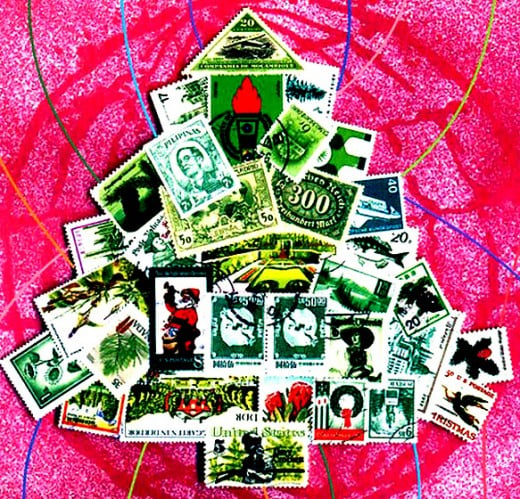
Tree Consisting Solely of U.S. Postage Stamps
We're On a Roll!
D is for Dickens. When writer Charles Dickens penned his classic tale, A Christmas Carol, about poor Bob Cratchit pleading for a Christmas break from Mr. Ebeneezer Scrooge, it was common for laborers in England to have but a half-day off for the holiday. Dickens' story was a massive hit that helped to change all that.
E is for Evergreens. Considered symbols of eternal life and renewal by societies reaching back to prehistoric times, evergreen plants include the holly and the ivy, as well as the pine, fir and cypress that we commonly have as Christmas trees.
F is for Frosty the Snowman. Popularized in the Western imagination by the acting and singing talents of Burl Icle Ivanhoe Ives and Orvon Gene Autry, this poor doomed snowman was created in 1950 by songwriters Steve Nelson and Jack Rollins, and returns each year in animated form.
A Spacey Elf

Getting Deeper into the Spirit!
G is for Gingerbread Cookies. Having originated in the family kitchens of Germany, these classic Christmas confections are flavored with a spice that is also used as a medicine for a broad range of ailments, including those related to digestion. (Toast with Ginger Ale!) Yum!
H is for Hanukkah. This traditional Jewish festival of lights, which usually falls quite close to Christmas on the yearly calendar, commemorates the 164 B.C. relighting of the temple of Jerusalem.
I is for It's a Wonderful Life. Though this staple film of the giving season, starring Jimmy Stewart in a memorable performance, was nominated for 3 Oscars, the 1946 RKO release won none.
Nearly Half Way!
J is for Jesus. Though we are not actually certain of his birth date, Jesus' day of nativity was officially declared as December 25th by the Pope in 350 A.D. He has already aged past 21 centuries!
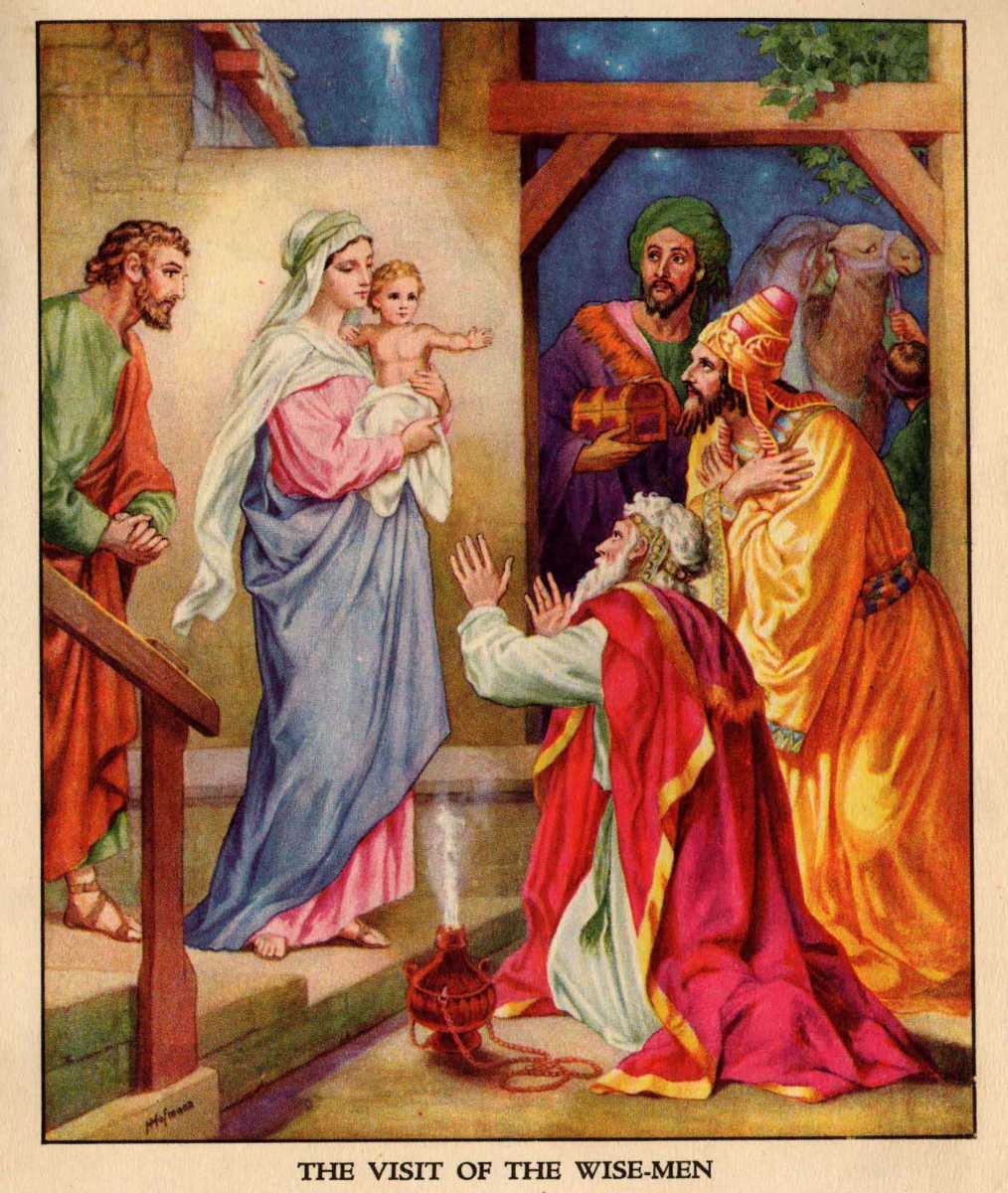
K is for Kings. Also known as The Wise Men, the three kings who appeared in Bethlehem are usually called Balthasar, Melchior and Gaspar, though Eastern religious beliefs actually placed their number at not three, but twelve (and, no, I don't have all of their names).
L is for Let it Snow! Let it Snow! Let it Snow! This song, which never mentions Christmas, and was written by fellow Jews Sammy Cahn and Jules Styne on one of the hottest days of 1945 in California, is considered a holiday standard, and has been covered by stars from Frank Sinatra to Brian Setzer.
Kris Kringle
Rounding the Bend!
M is for Miracle on 34th Street. Actress Natalie Wood was first introduced to the public in this popular Twentieth Century Fox film of 1947, starring as the little girl who believed in Santa.
N is for The Nutcracker. First choreographed by Lev Ivanov in 1892 for the Imperial Russian Ballet, this holiday fantasy is now staged annually the world over, including in more than 200 U.S. cities.
O is for Ornaments. Like gingerbread cookies, these festive baubles originated in Germany, replacing what had long been the traditional tree decorations of cookies and candles (which unfortunately kindled many a house fire).
Let's Head for Home!
P is for Poinsettia. In 1825, the 1st U.S. Minister to Mexico, Joel Roberts Poinsett, came across this brilliant plant used in traditional Mexican Nativity processions, brought it back to the U.S. and popularized it. In tribute, it bears his name.
Q is for Quail. Sometimes mistakenly called a partridge (in a pear tree?), its larger cousin, this plumed and prolific game bird travels in coveys. While hunting, former Vice President Dick Cheney reportedly mistook a close friend for a quail — though he was much taller, and wearing Blaze Orange.
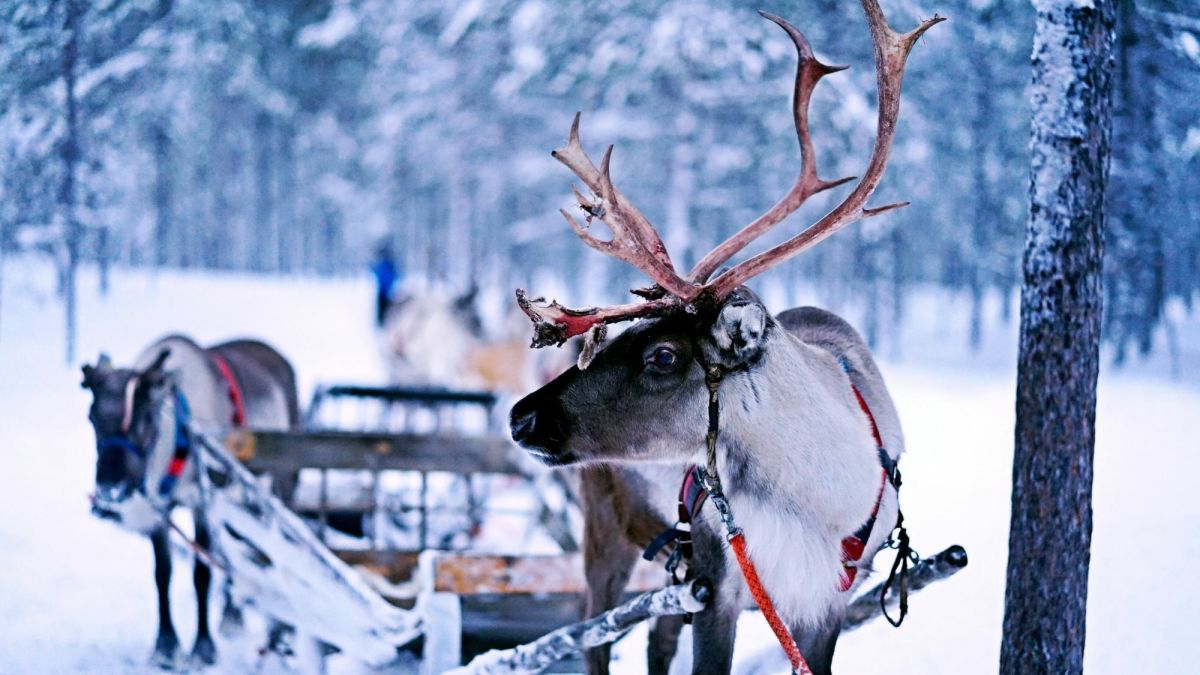
R is for Reindeer. Traditional Scandinavian folk tales had Sinterklaas riding (rather than being towed by) this semi-domesticated antlered ruminant. And just one, not eight or nine.
The Christmas Song
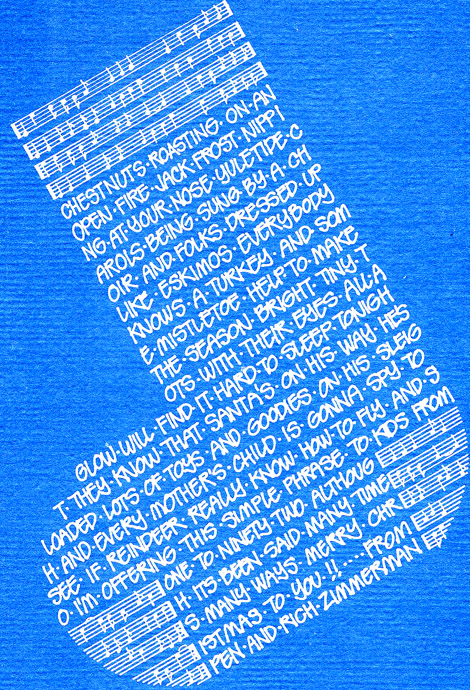
Still More Presents to Open!
S is for Santa. Though an amalgam of many historical and fabulous figures, he is most likely based on Saint Nicholas, 4th Century Bishop of Myra, a small provincial town of Turkey, who was known for his generosity and kindness.
T is for Teddy Bear. Created in 1906 by the founder of the Ideal Toy Company, this cute plush critter was modeled on a real live one supposedly saved by Teddy Roosevelt in his pre-Presidential days while hunting.
U is for Up on the Housetop. Composed by Benjamin Hanby before the outbreak of the Civil War, this tune has been covered by one artist or another, breaking into the charts roughly once each decade since the 1950s.
Almost There!
V is for Virgin with Child. An exceedingly popular and iconic Christmas image painted by numerous artists over the centuries, Mary and the infant Jesus are depicted once each year on special holiday stamps issued by the U.S. Postal Service.
W is for Wreaths. Symbols of joy, remembrance, honor and celebration since ancient times, these are typically formed of evergreens and often adorn welcoming doors.
X is for Chi. This Greek letter, depicted as an X in alphabets, is considered a proper symbol and abbreviation for Christ, as chi is the first letter of the Greek name 'Christos'.
Grinning Papa Noél
Whew! Made It!
Y is for Yew. Grown long ago in Celtic groves, and for centuries since as a fragrant and decorative plant in many landscape schemes, this evergreen symbolizes both — surprisingly — death and immortality.
Z is for Zola. Emile Zola, the great French naturalist novelist died of carbon monoxide poisoning due to a stopped chimney. There is no truth to the rumor that Santa was anywhere near the scene! Hope you have an absolutely alphabetical and endearingly educational Christmas!
The Spirit(s) of Christmas!
- All About Santa!
If you think you know just about all you need to about Ol' Kris Kringle, read on, my friend! - Little-Known Santa No. 21
Little-Known Santa No. 21 You need not fear. The apocalypse, the end time, the universe’s second — and final —big bang (or whimper) will not arrive in the year 2012 as purportedly predicted by prescient Mayan astrologers. Nor will our fateful... - The Polar Bear
Here's all you'll ever need to know about the large sea-faring mammal with the crystalline hairs all over its body. - Enjoy Reindeer
You might not realize it, but reindeer are worth thinking about for more than just a week or two in December.