Why Ashes are A Part of Christianity Folklore


Gaining Insight
To gain some insight on why this change was so significant back in 1551 AD, one needs to realize the importance of ashes to ancient Jewish people and to the early Christian movement. Dusting oneself in ashes was a way of purifying the human soul and repent. It was an unselfish, physical act one could do that showed great meaning and respect to God. To fully understand the context and meaning of ashes for these ancient Israelites, one must first know a little about the ancient oral traditions and Hebrew writings that many ancient Israelites held so dear.
Pseudepigrapha
- Pseudepigrapha, which is pronounced Sue-duh-pig-ruh-fuh.
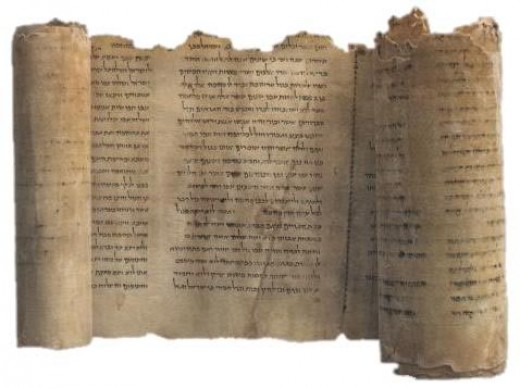
The Pseudepigrapha are early, Jewish, written/oral stories that date from the Second Temple Period. These particular body of texts and oral traditions are not included in the Jewish canon. Most of these stories were written in the languages of ancient Hebrew, Aramaic, and Coptic. What we know of the Pseudepigrapha, is that they were possibly translated into Greek sometime in the 1st century A.D. Scholars are not for sure who translated this ancient body of works but, many scholars believe it was a small band of Jewish peoples known as the Essences, who wrote the stories.
The Essences lived just outside the gates of Jerusalem. The universal thinking is that this same group of scribes, are the same group of men responsible for authoring the Dead Sea Scrolls. Most Jewish scholars believe that the Pseudepigrapha, gives us a better understanding of Judaism, and what it was like to live and practice Judaism in the Second Temple period. Not only are these particular texts necessary for understanding the sources of rabbinic Judaism, they are also a very valuable tool to understanding the humble beginnings of Christianity.
Religious scholar and author, Dr. Kenneth Hanson wrote a book titled, Secrets from the Lost Bible in 2004. Having lived and studied in the Holy land for quite sometime, Dr. Hanson became very familiar with the different stories making up the Pseudepigrapha, the Dead Sea Scrolls, and the Apocrypha texts. In his book he describes many of these traditions, the meaning behind the story, while giving the reader an enlighten look to the history and politics of the time frame, with a sensational narrative wit. The book is truly a must read!
Chapter 1 of his remarkable book tells the reader of an ancient text called the; Life of Adam and Eve. This document was first written down in Hebrew, somewhere in the ancient land of Judea. Apparently though, what is not known about this document is that it was suppressed by the Jewish sages at the Council of Yavne in 90 C.E., because of it's Zoroastrianism undertones. Which was the belief that there are two Supreme beings, God and Satan. It is known that the sages did not want to confuse their "flock of followers," so the Life of Adam and Eve was paraphrased into the Book of Genesis that exists today.
The Life of Adam and Eve starts off with Adam on his deathbed, recanting his fall from grace to his many children that had surrounded his bedside. However, it was Seth who asked Adam if the reasoning why he was dying was because he could not eat the same fruit in which Adam and Eve used to eat, in the Garden of Eden. Seth further goes on to suggest that he and (his mother) Eve should go to the gates of Eden and pray. He says in the text,
"Just say the word father, and I will go back to where the entrance of paradise is located. I will throw ashes on my head and fall down on the ground in front of the gate. I will moan and wail and beg the Eternal."
I found this part of the story extremely interesting, because of how they used ashes as part of their prayer practices. Furthermore, I had never really heard of ashes being used like this, and there is no real instances of ashes being used in this manner of seeking forgiveness in our current Jewish or Christian Canons. However, in this Genesis version the story goes on to tells us how Adam accepts Seth and Eve's offer, and tells them to do exactly as they promised.
I quote, "You and Seth, go back to the entrance of Paradise. Go ahead. Throw ashes on your heads. Fall on the ground, and mourn before the Eternal."

Asneth Story
Another Pseudepigrapha text that I have recently read, is the story of Jacob's mighty and gorgeous son Joseph, and the kingly-gift of a young Eyptian woman, whose the daughter of Pentephres- a powerful Egyptian High-Priest. She's a thank you gift from the Egyptian monarchy, for Jacob and Joseph's many years of dedicated service to the monarchy. The first century BCE text was eventually translated into Greek, sometime in the second century AD titled, The Book of Joseph and Aseneth.
- Part one of Chapter 10; sets up the scene of the first meeting between Joseph and Aseneth.
Aseneth falls in love with Joseph upon first sight but, Joseph refrained her advances and denied her as a gift, because she was a Pagan, and the daughter of a High-Priest at that. Because of these two facts, Joseph is not smitten with Aseneth upon first sight, and rather he becomes annoyed with her. When he does decide to speak to her, he does so rather coldly. Aseneth goes on to stand her ground, and gazes into Joseph's eyes without weeping, and holds her grace and pose in his stern presence. This quality attracts Joseph to Aseneth, and so he puts his hands on her head, and precedes to give her ablessing. To his surprise this act elates her, and it eventually inspires her to transform herself into a more modest and humble person.
Part two of Chapter 10, verses 1-13 tells the reader how Aseneth locks herself up in her bedroom and begins to fast. From out her Northern window, she begins to throw out her fine clothing and golden jewels, to the beggars living on the streets. We are told of how she takes the idols of her Gods and crushes them into pieces, and throws the remains of these idols out of the window and into the streets too. Food, brought up to her by one of her six virgin maids is also thrown out the window, and fed to the dogs. Aseneth also refuses to dress herself in any other clothing than a black mourning dress she has made, and it is written that;
14) And after that Aseneth took the skin (full) of ashes and poured it on the floor, and she took a piece of sackcloth and girded it around her waist. And she loosened the clasp on 15) the hair of her head and sprinkled ashes upon her head. And she scattered the ashes on the floor, and struck her breast often with both hands, and wept bitterly, and fell upon the ashes and wept with great and bitter weeping all night with sighing and screaming until daybreak. 16) And Aseneth rose at daybreak and looked, and behold, there was much mud from her tears made from the ashes. And Aseneth fell again upon her face on the ashes till evening and until the setting (of) the sun. 17) And, this Aseneth did for seven days, and she ate no bread and drank no water in those seven days of her humiliation.—http://www.aethericenergy.org/joseph.htm
On the seventh day, Aseneth exhausted by her self-impose trial, and weaken by the lack of water and nutrients turns towards the Eastern sky, spreads out her hands towards the heavens, slightly shakes the ashes out of her hair so that they would cover her entire tear-soaked body, and prays to God for forgiveness; confessing all she had ever believed in. Gods sends the archangel Raphael to her, and gives Aseneth some strict instructions to follow. That night, honey bees entered Aseneth's room, and they build a golden honeycomb around her lips and over her mouth. God then sends a message to Joseph, letting him know that Aseneth's lips had been cleansed of her sins, and that she was now righteous in the eyes of the Lord. Joseph, amazed by Aseneth's dedication to him and to God, falls head-over-heels in love with her, and they wed upon his return on the eighth day.
Ash Wednesday
For Roman Catholics the world over, Ash Wednesday signifies the beginning of Lent. Ash Wednesday is the Wednesday after Quinquagesima Sunday, the first day of the Lenten fast. It is the time of year in which all good Catholics give up something dear to them, and try not to eat meat on Fridays. For many non-Christians, Ash Wednesday is the starting point of the Easter season. Ancient religious sects such as the Ebionites and Essences, covered themselves in charred ember ashes, as a religious act of mourning and penance.
- Angel Mysticism, Magic, and Prayer
Learn the exact order of the Celestial hierarchy, and how to invoke the powers of Angels. The names and prayer to invoke strength or love; and the body healing angels, who guarded Christ in his tomb. - Lost History Surrounding the Bible
Lost historical facts surrounding the history of Christianity and the bible. Learn the true date of the birth of Christ and when some of the books of the bible were written. Informative article.
Council of Trent in 1551 AD
Because of an edict passed by the Council of Trent, the meaning of ashes gathered from specially blessed embers, as those used for Ash Wednesday services, have taken on an entirely different meaning:
As a means of regaining grace and justice, penance was at all times necessary for those who had defiled their souls with any mortal sin. . . . Before the coming of Christ, penance was not a sacrament, nor is it since His coming a sacrament for those who are not baptized. But the Lord then principally instituted the Sacrament of Penance, when being raised from the dead, he breathed upon His disciples saying: 'Receive ye the Holy Ghost. Whose sins you shall forgive, they are forgiven them; and whose sins you shall retain, they are retained' (John 20:22-23). By which action so signal and words so clear the consent of all the Fathers has ever understood that the power of forgiving and retaining sins was communicated to the Apostles and to their lawful successors, for the reconciling of the faithful who have fallen after Baptism. —http://www.newadvent.org/