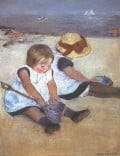
"Lydia Cassatt Reading the Morning Paper" by Harriett Scott Chessman (Audiobook Version)
Introduction
The story proper goes into the final years of Lydia Cassatt, the reserved sister of the more extroverted Mary Cassatt, the American Impressionist painter.
Or as they call each other, Lyddie and May.
Oh, and Edgar Degas shows up as a supporting character.
Lyddie and May
Not the most traditionally structured of tales, for this story consists mostly of vignettes seen through the eyes of older sister Lydia acting as a model for her younger sister Mary. While conservative, Lydia does hint at living a passionate, well-traveled, and very educated life. In two examples, she showed a knowledge of art terminology and is an avid reader, what with her mentions of Madame Bovary, Alfred Lord Tennyson, and the Lady of Shallot. As a character, Chessman portrays Lydia as a bookish sort who spends most of her time in her head.
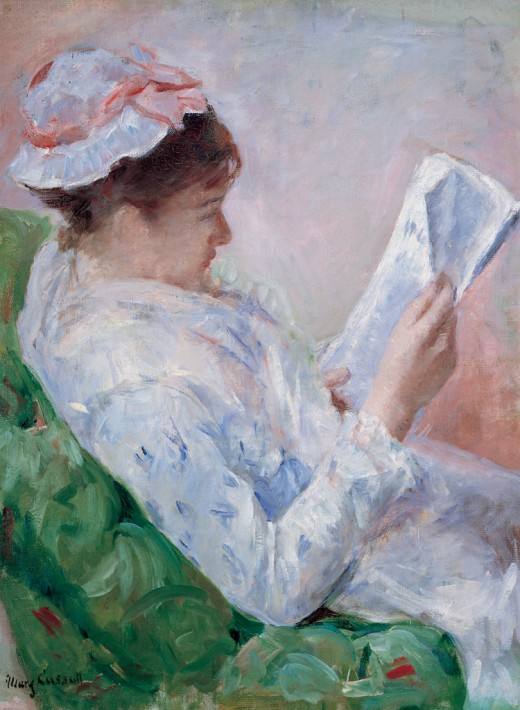
Mary on the other hand, carries herself in an outspoken manner, oftentimes talking about women's roles in the art world. One example of this has Mary painting Lydia holding a newspaper because she found the depiction of women reading books too trite. Through Lydia's eyes, Chessman also has Mary in the role of the artist with a concentrated gaze, something I have seen only male artists characterized with. For Lydia, it makes her uncomfortable, insecure about her looks, and baffled at the notion that artists would want to render her on their canvas. This is the third story I have read that involved a model with low self esteem and doesn't understand what the artist with keen eyes sees in her. The other two? Sunday in the Park with George and The Art Forger. Only this time, the dynamic involves sisters. Also similar to The Art Forger, Chessman describes Degas as having a penetrative artist's gaze. The difference is that in this story, Degas is described as having terrible eyesight.
Furthermore, Mary is somewhat immature, given how she would demand her sickly sister Lydia to not die.
Despite the story depicting Lydia as reserved and Mary as outgoing, there's no rivalry between the two. I like that.
Mortality in a frilly atmosphere
This book contemplates mortality and the fear of living an insignificant life. Despite the descriptions of a frilly French atmosphere, mortality hangs heavily in this domestic drama. Lydia experiences this first hand, with her Bright's Disease that she knows could take her at any moment. Or her contemplating the surge of mortality from losing loved ones to illness or to the American Civil War.
Lastly, Mary contemplates death in such a way that reminded of Frida Kahlo's paintings.
On Degas (and past art eras)
Regarding Degas, Chessman depicts him as a prominent, intimidating figure in the sisters' lives. Boastful and opinionated, the painter criticizes fellow artists Claude Monet and Pierre Auguste Renoir for their ability to enter the Salon. The trio converse on all sorts of subjects and other painters such as Camille Pissarro and Berthe Morisot.
Of course, Chessman casts these French artists as rebels going against the Classically dominant Salon. Despite that, Degas and the two sisters enjoy the occasional Classical art, such as visiting the Etruscan gallery in the Louvre and Tiepolo. Mary is characterized as loving Dutch art in the Louvre. You can rebel while enjoying traditional art at the same time.
Interestingly, the author also implies that Degas helped paint some of Mary's work. This is nothing new. I learned from my art history classes that printer William Hogarth hired French printers to render everything but his subject's faces. That belonged strictly to Hogarth. Furthermore, I have read about unfinished artworks initially begun by Andrea del Verrocchio and were later completed by his students and other artists long after his death. In art history (and possibly literature's history), authorship and collaboration blurs together.
Impressionist Scenes, Impressionist Lives
The author understands the point of Impressionism. That with its delicate use of paint, can capture a brief moment in time. It was what I learned when I took classes in art history. Cassatt's mentions of light and clouds could give this story an Impressionistic atmosphere, what with the movement's history of capturing light and clouds.
Lydia narrates at how the paintings she poses for do not feel as though they are her. She notes the same when looking Degas' portraits of Mary. In one scene, Lydia interprets what that painted version of her does whenever Lydia finishes a painting.
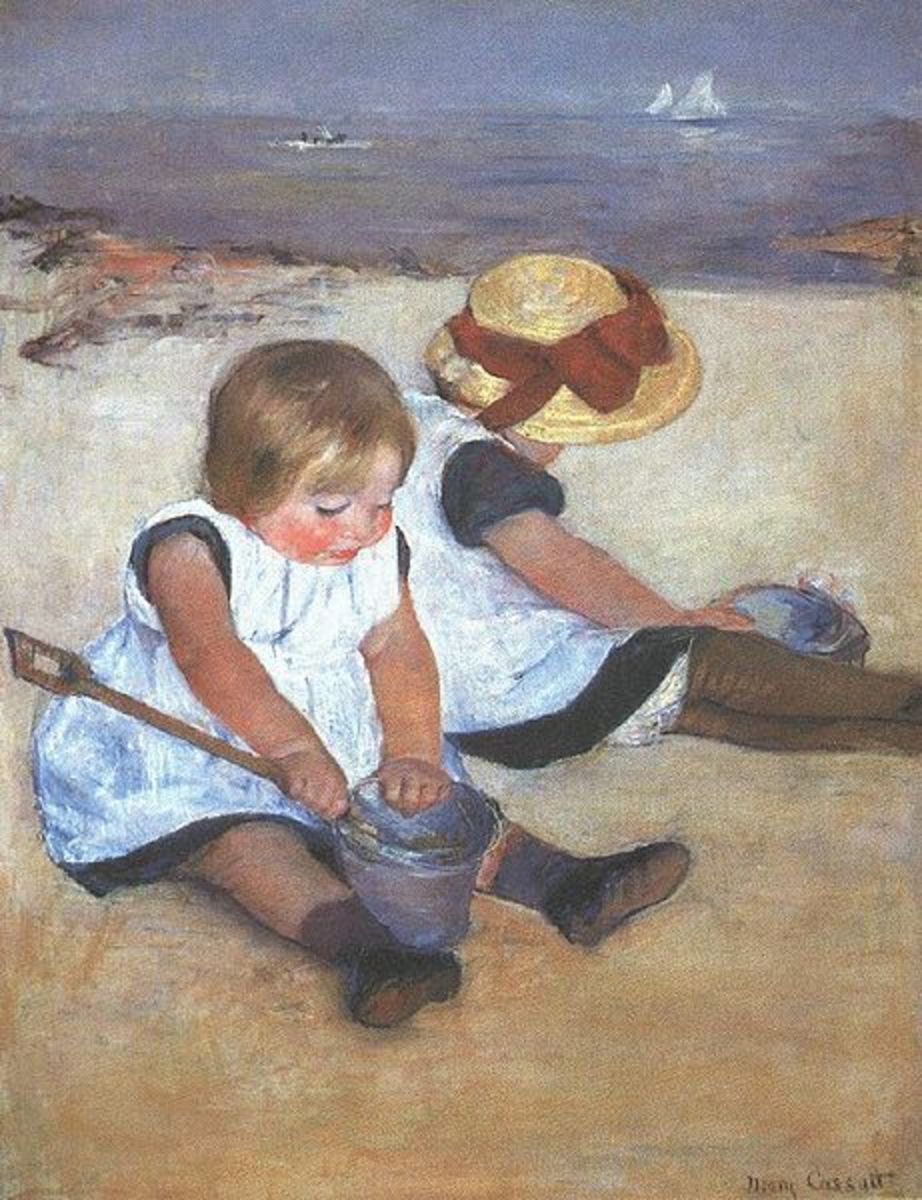
Questions of morality, ideals, and reality in art hover over these women (and Degas). Such as Mary's painting of a little girl relaxed. Lydia considered the depiction too exploitive of the subject. The story also mentions of Degas receiving criticism for his depictions of female dancers. I remember reading about people who criticised Degas and how he depicted women in an undignified light. This is just my opinion, but whenever I looked at his work, I never saw it that way.
The section about women's roles
Since this revolves around one of the few women remembered in the Impressionist movement, contemplation of women's roles come up. In one scene, Mary's mother argues with Mary over her single life and no children. Mary believes that she can't juggle an artist's life and motherhood, plus the trauma of losing people she cared about due to childbirth left her horrified. While listening, I didn't understand why the mother wants her to get married and have kids, for it's mentioned her other offspring already gave her grandkids, so why not be proud of Mary for achieving financial stability?
Writing and Execution
Some of the writing felt clunky and choppy. For example, Chessman will have Degas pop out of nowhere, such as watching May sketching a person at the family summer home. Lydia lives so much in her head, sometimes I can't tell the difference between reality merges with her imagination. I don't know if Chessman intended this.
Another example of a clunky execution shows up at the beginning, where the sisters talk about being out and about with Louisa May Alcott, then we later hear that Alcott is sick, then dead due to childbirth. This part left me unsure at how long the story's inner timeline went.
As the story ended, I found myself reminded of early 90's action movies.
As the story wraps up, Lydia has come to terms with her death as her condition worsens. Mary, on the other hand, refuses to accept it. She harangues her older sister to such a degree that it reminded me of the ending of Terminator 2. Lydia has to calm her sister and tells her encouraging platitudes over she will continue having success as a painter. After listening to the audiobook, I imagined Degas (in the Sarah Connor role) lowering Lydia down into the vat, and just before she's gone, gives Mary the thumbs up.
Seriously, if you ever get a chance to read it, or listening to an audiobook version, play the Brad Fiedel score when you reach the finale.
Yes, reviewer, but did you like it?
I did, and if you're interested in reading historical fiction involving Mary Cassatt, France, and Degas, I recommend checking it out.
This Audiobook is available through Amazon

© 2017 Catherine
Related
Mary Cassatt For Kids
Femininity versus Feminism in 19th century Impressionism
Mother's Day Paintings and Pictures by Mary Cassatt and Other Artists

American Impressionism in Art and American Impressionists Mary Cassatt and William Merritt Chase
Degas' Sculpture "The Little Dancer" and Impressionist Paintings of Ballet