The Endless Circle, Part 2: More Reasons That Books Are Banned

Introduction
For centuries many reasons have kept amazing titles out of the hands of desirous readers. While it often took time and human development, there is much to learn formerly banned books now in our high school, middle school and college classrooms. Many of these stories tell the most honest and intriguing biographical and historical tales and many more.
In so many places the exclusion of these novels include many different themes. That is a clear perspective, especially given the most conservative nature of political and societal view the farther back we look at the world.
Politics and Government
If we all think back, one historical event that was the most influential and tragic worldwide: WWII. There are also Communism and the Soviet Union, the Vietnam War and more. Both support and challenge against these issues caused an uproar. Back to the Civil War in the United States there were books that were banned immediately upon publication for using the same language and ideals passed among the people of our nation at the time, from “nigger” to racism and demoralization of any white man willing to help a back rather than enslave him.
In 1925 Adolf Hitler’s political manifesto, Mein Kampf, faced worldwide bans for its extremist nature. In some places it is still banned today. The book's initial copyright of the book was held by the Free State of Bavaria, though Bavarian authorities prevented any reprinting after 1945. Existing copies remained available for sale as vintage books. In 2016, following the expiration of the copyright, Mein Kampf was re-published in Germany for the first time since 1945 as a commented edition by the German Institut für Zeitgeschichte. In Austria as of 1947 printing of the book is prohibited along with it being illegal to own or distribute existing copies, following the general prohibition of advocating the Nazi Party or its aims. The Verbotsgesetz (law) of Austria states basically that any printed works for the purpose of glorifying or promoting the Nazi party will be punishable by at least five to ten years in prison, or 20 years for dangerous actions. It was also banned in Poland it was banned until 1992.
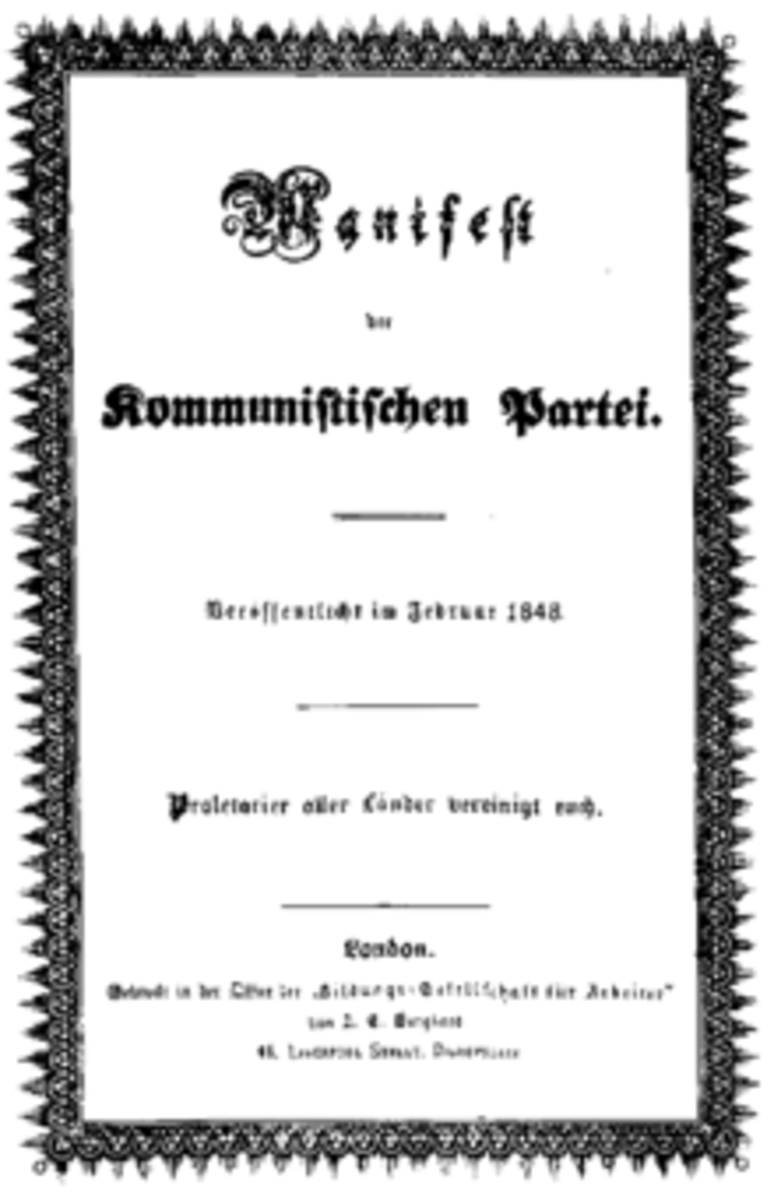
There was also the controversy of Communism, there were books throughout history banned for both anti-Communist and Communist views, depending on the time in which they were published. One of these was Animal Farm, by George Orwell, in 1943, which was a political commentary against Communism. He found no publisher to print the book, due to its criticism of the USSR, a key British ally in WWII. Upon publication it was banned in the USSR and other communist countries. The novel was also banned in the schools of the United Arab Emirates in 2002, because it contained content that read against Islamic values, most notably the talking pig. The book is still banned in North Korea and censored in Vietnam. There is also Orwell’s 1984 (Nineteen Eighty-Four), banned in 1949 due to pro- and anti-Communist views alike, as well as sexual content and violence.
Ernest Hemingway's For Whom the Bell Tolls (1940) was banned for a decent amount of time for its Pro-Communist views. Upton Sinclair's The Jungle (1906) was banned at intervals for supposed support of both Socialism and Communism. However, in 1956, it was banned in East Germany for its incompatibility with Communism.
Interestingly enough, here in the United States, Uncle Tom's Cabin by Harriet Beecher Stowe was banned in the Confederate States during the Civil War because of its anti-slavery content. In 1852, upon publication, Uncle Tom's Cabin was also banned in Russia under the reign of Nicholas I because of the idea of equality it presented, and for its "undermining religious ideals." While this was an honest representation of what was happening at the time, apparently our publishers were not ready to deal with it.
Religion or Supernatural Themes
Another topic that continually banned books throughout history is the inclusion of religious or supernatural themes. While religion is a matter of personal choice, especially here in the U.S., it is something that often sparks a great deal of controversy.
There was Thalia by Arius (about AD 250), a theological tract banned in the Roman Empire in the 330s for contradicting Trinitarianism. Upon this decision, all Arius' writings were ordered burned and he was exiled, possibly assassinated for his writings. He was also banned by the Catholic Church for the next thousand plus years.
Sinclair Lewis was banned in several cities across the U.S. throughout the 1920s for representation of fanatical religiosity and hypocrisy in his character of Reverend Dr. Elmer Gantry, a sleazy preacher who prefers easy money, booze, and "enticing young girls" over saving souls. While this is a fictional novel, it apparently hit a sensitive spot in certain local leaders. This title and protagonist, Elmer Gantry, was also widely denounced from pulpits across the U.S. upon initial publication.
Feast for the Seaweeds by Haidar Haidar (1983) was banned in Egypt and several other Arab states, and even resulted in an angry reaction from the clerics of Al-Azhar University upon reprinting it in Egypt in 2000. The clerics issued a fatwa banning the novel, and accused Haidar of heresy and offending Islam. Al-Azhar University students also staged massive protests against the novel, eventually leading to its complete confiscation and removal from campus.
Some other books that were banned for religious reasons include Sexual Customs by Xing Fengsu in 1989, which was banned in China in immediately upon publication for insulting Islam. Bridge to Terabithia by Katherine Paterson (1977) was banned based on accusations that it promotes secular humanism, New Age religion, occultism and Satanism... basically beliefs outside any standard religious tradition. Finally, A Wrinkle in Time by Madeleine L’Engle, published in 1963, was banned for its simple inclusion of supernatural and religious themes. While not much more than that was detailed in the ban, Wrinkle in Time is now commonly read by younger children.
Violence, Drugs and Other Illegal Behavior
There is much more to see regarding topics of violence, drugs and illegal behavior that have banned books throughout history. While not all books were banned based on only one of these themes, these are often included in the ban of certain books that eventually became famous or even award-winning works.
First, there is Beloved by Toni Morrison, published in 1987 and also mentioned among other topics. While it was a novel based on Morrison's own life, it was banned for the inclusion of themes of slavery and violence. Another Morrison novel, The Bluest Eye, was published in 1970 and banned at times for inclusion of themes consisting racism, incest and child sexual abuse. Then, there is The Witches by Roald Dahl, commonly known to be a children's book author. However, this 1983 book was initially banned for themes including misogyny, encouraging disobedience, violence, animal cruelty and obscene language.
It's hard to imagine one of the most popular contemporary authors being banned, at lest briefly after the publication of one of his most popular books. However, A Time to Kill by John Grisham (1989) was banned for a short period due to references to slavery, rape and inclusion of racial slurs. There is also The Things They Carried, by Tim O’Brien in 1990, which was banned for violence, animal abuse, obscene language and criticism of the Vietnam War. However, it is used today on college campuses as a resource in literature courses.
Additionally, the young adult novel, That Was Then, This Is Now, by S.E. Hinton, was initially banned because of its inclusion of violence, drug use and obscene language. Even at the time of its 1971 publication, when drugs and violent behavior were socially common, this still caused a bit of upheaval and took some time to recover from bans.