The (racial) truth in popular fiction's lie

by Mikhail Lyubansky
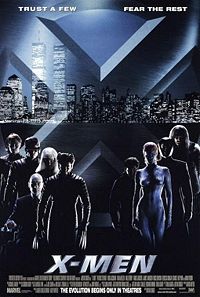
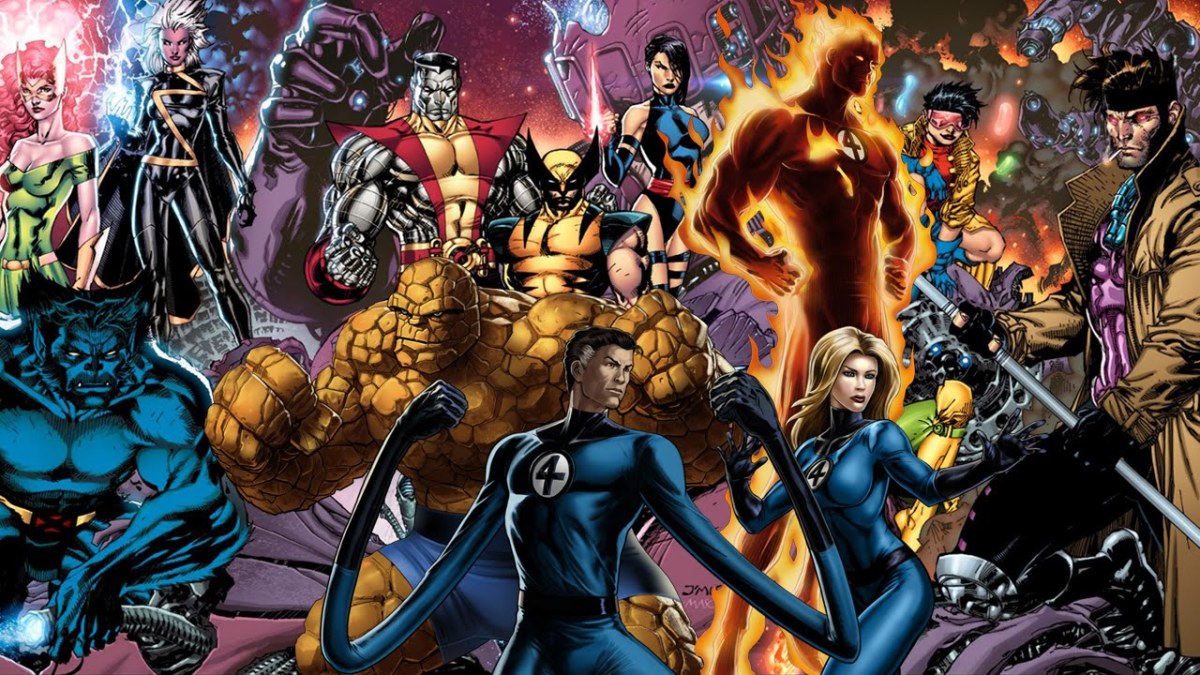
“Fiction,” said Stephen King, “is the truth inside the lie.” The problem is (apart from the necessary mental calisthenics involved in deciphering this comment) is that, for many filmgoers, it may well be the only truth they get, at least about some issues. It is therefore noteworthy that recent films (and of course the books and comics that spawned them) such as X-Men and Harry Potter have explicitly taken on racial issues and race relations. As a result, important issues such as blood purity, group prejudice, and even eugenics have become part of the dialogue – both online and at the kitchen table. With several more Harry Potter and X-Men films currently in production, these themes are likely to remain in our cultural dialogue for the foreseeable future.
Good stuff, dialogue. But what exactly does a popular franchise like the X-Men teach about race and racism? As just one example, what precisely does it mean when Magneto, the principle villain in the X-Men comics/films, tells Xavier, the leader of the X-Men, that he will fight for the liberation of his people (mutants) “by any means necessary”? Despite what are probably noble intentions on the part of the creative teams, for this generation of filmgoers it likely means a distorted view of Malcolm X and the Civil Rights Movement, an unrealistic understanding of contemporary race relations, and an unintended promotion of the racial status quo. That dialogue at the kitchen table? Unless it brings a critical focus to the films, it’s likely little more than a recapitulation of common racial mythology, which bear little semblance to the real world. In this space, I briefly examine two specific racial myths perpetrated by the X-Men franchise. For those interested, a much more detailed discussion of this topic, including an in-depth examination of the Magneto-Malcolm X parallel, is available here.
Myth #1: All oppression is the same
One of the most popular themes in popular fiction’s depiction of group prejudice is the drawing of explicit parallels between the plight of the fictional group and real-world historical oppression, most commonly the Holocaust and the legalized segregation in the South under Jim Crow. Although the comics pursued both analogies at length, The X-Men films have so far focused primarily on the latter, drawing a variety of explicit and unmistakable parallels between Xavier’s and Magneto’s fight for mutant rights and the U.S. Civil Rights Movement of the 1960s. On the surface, the parallels seem well-informed. The mob violence and the hateful slogans (e.g., “The only good mutant is a dead mutant”) are remarkably familiar, and the anti-mutant hate groups, such as Friends of Humanity and the Church of Humanity, are clearly intended to represent real oppressive forces like the Ku Klux Klan and a variety of other Christian Identity and White Supremacy groups.
This is fine as far as it goes, but the parallel is built upon the flawed premise that the mutants’ experience of prejudice is analogous to the oppression experienced by Blacks and other racial minority groups. It’s true, of course, that both mutants and Blacks experienced prejudice, but the specific prejudicial attitudes that people hold and express toward these groups is often very different. Consider a 2002 study by Susan Fiske and her colleagues in which racially diverse samples of undergraduate students and adults rated 23 different out-groups on the basis of how society views them on two dimensions: expressed warmth (i.e., how positively people feel toward out-group members) and perceived competence (i.e., how competent they perceive out-group members to be).
Results consistently revealed three different types of prejudice: paternalistic prejudice (high warmth towards the group with low perception of the group’s competence); contemptuous prejudice (low warmth towards the group with low perception of the group’s competence); and envious prejudice (low warmth towards the group with high perception of the group’s competence). While this study did not include mutants in their list of out-groups (clearly a glaring oversight!), X-Men fans know that though mutants tend to be regarded with little warmth by humans, they are nevertheless perceived to be high in competence. This combination would place them squarely into the envious prejudice category, quite far from how “Negroes” were perceived by the White majority prior to and during the Civil Rights Movement. Which brings us to Myth #2.
Myth #2: An oppressed group is in some way responsible for its own oppression
The distinctions above are highly relevant. Although oppressed groups that are viewed by the dominant majority with contempt are not necessarily powerless (even nonviolent protest is a show of power), unlike mutants, they typically lack the physical force or political power to stop their own oppression. Under these circumstances, placing the burden of peace and tolerance on the oppressed group (this is essentially Xavier’s agenda) can itself be seen as a subtle form of oppression, for this expectation blames the victimized for their own victimization. Thus, while it’s reasonable to expect super-powered mutants to make certain accommodations in order to fit into mainstream society, this expectation is hardly reasonable in the real world, where ordinary human beings comprise both the oppressed and the socially privileged. Even if we believe (as I do) that those with less power vis-à-vis mainstream society deserve greater protection, no oppressed group should ever be expected to bear the burden of accommodating to their own oppression.
Applied to real history, Xavier’s mindset would have blamed Jews in Nazi Germany and Blacks in the antebellum South for their victimization--and would have expected them to make accommodations for the sake of peace, rather than demanding that the society itself become more accepting and less oppressive. In fact, this is what actually occurred as Nazis blamed the Jews for their condition and slave owners rationalized the institution of slavery by arguing that the “uncivilized” Africans needed the firm hand of the slave masters to lead happy and productive lives. These arguments are ridiculous, of course, but less extreme versions are still consistently used to justify current racial inequities in education and income (e.g., “they [African Americans] should spend more time doing homework and less playing basketball”), as well as incarceration rates and other important outcomes. By comparing mutants to Black Americans, the X-Men franchise unwittingly endorses this conservative agenda.
Conclusion
This propagation of racial mythology is not a minor flaw, and the resulting probable harm to readers’ and viewers’ thinking about race relations should not be dismissed or minimized. And yet, unlike Marc Antony, I come mostly to praise Caesar, not to bury him. There are frequent moments when the X-Men creative teams manage to turn a superhero soap-opera into an opportunity to meaningfully engage readers and viewers of all ages with social issues that are too often ignored by both the mainstream media and mainstream educational institutions. Even if the X-Men comics and films at times fail to adequately or accurately convey what scholars have learned about prejudice and group relations, they nevertheless open the door for historians and social scientists to weigh in and provide their own perspectives. What I'm saying is this: Have fun at the movies. Just don't expect them to deal with serious and controversial issues with much subtlty, finesse, or even accuracy -- even if they seem like they really want to.
This essay is adapted from a longer chapter in The Psychology of Superheroes published by BenBella Books.
Related
Top 10 Most Popular K-Pop Girl Groups
The Top 10 Most Popular K-Pop Boy Groups Worldwide
K-Pop Top 10: Most Popular, Talented, and Beautiful Korean Girl Groups 2015
Superhero Academy 101: Mutations (Mutants, Mutates, and Other Transformations)

Top 20 Most Successful and Best-Selling Kpop Groups Ever