- HubPages»
- Home and Garden»
- Home Improvement»
- Lamps & Interior Lighting Improvements
LED Lighting - Is This the Answer for Lighting?

LED lighting has become much more prevalent in the last decade. Yet there are few states that offer rebates or incentives to the installation of LED lighting for residential or commercial lighting. Why is there such a lack of government support for LED products?
The main reason is a lack of scientific studies performed by US governmental agencies. I have done a multitude of research of LED light bulbs, and have found out that there are so many different types and manufacturers, that it is hard to find exactly what you are looking for.
To understand what to compare in terms of conventional light bulbs vs. LED light bulbs, I contracted to have LED T8 replacement light bulbs installed in a 14,000 square foot commercial building, replacing the standard T8 fluorescent light bulbs. This project cost roughly $43,000 for the bulbs and the electrician's labor. This project was performed as an energy saving measure for the owner of the building as he pays all the utility costs including utilities for his rental areas.
Fluorescent T8 Light Bulbs
The standard fluorescent T8 light bulbs use about 40 watts of energy per bulb. The most efficient T8 fluorescent bulb on the market uses 32 watts of energy per bulb.
The lumen (used to measure the amount of light projected) of a T8 fluorescent light bulb is 2700 lumen per bulb when new, and slowly diminish over time.
The average life span of a T8 fluorescent light bulb is 10,000 - 15,000 hours or about a year and a half. The best T-8 fluorescent bulbs last 20,000 hours.
Fluorescent light bulbs have been touted in recent years as the light bulb to buy for energy efficiency because they use less wattage than a standard light bulb and for residential use, yield energy savings across the board. Because they are inexpensive to begin with and offer a government rebate program, they are more popular than ever.
When originally looking at this light bulb replacement job, I looked at the 32 watt efficient T8 fluorescent bulbs. Their price tage was $22,000 for bulbs and materials and my Wisconsin Focus on Energy rebate was $1,800.
LED T8 Replacement Bulbs
The LED T8 replacement bulbs that we chose (out of a huge variety of options) use 18.8 watts per bulb. Most of the LED bulbs that we looked at were between 20 and 24 watts per bulb.
The lumen per bulb are 3300 lumen. This does not diminish over time as the LED light is produced through small light bulbs that cover about 180 degrees of the tube style bulb. The bulbs we chose have 402 individual bulbs. The theory is that if one or two little lights burn out, it should not affect the performance of the over all bulbs much making it less likely for an entire bulb fixture to burn out. Most of the LED bulbs we looked at were 2000 lumen and had between 350 and 400 individual light bulbs.
The average life span of the LED T8 light bulbs are 50,000 hours or roughly 5 years. There is a 3 year full replacement warranty on the bulbs. Most of the bulbs we found were 30,000 hours with a 1 year full replacement warranty.
Searching for the right kind of bulbs was the hardest part of this project. There are literally hundreds of different choices of manufacturers all claiming to be the best. In the end, I have my electrician go through his supplier to get what we were looking for for the price we were willing to pay.
Unfortunately, there were no rebate offers for LED bulbs of this nature. This was a disappointment, but we were optimistic that the energy savings would be large enough to off set the cost of the project.
Installing the LED T8 Bulbs
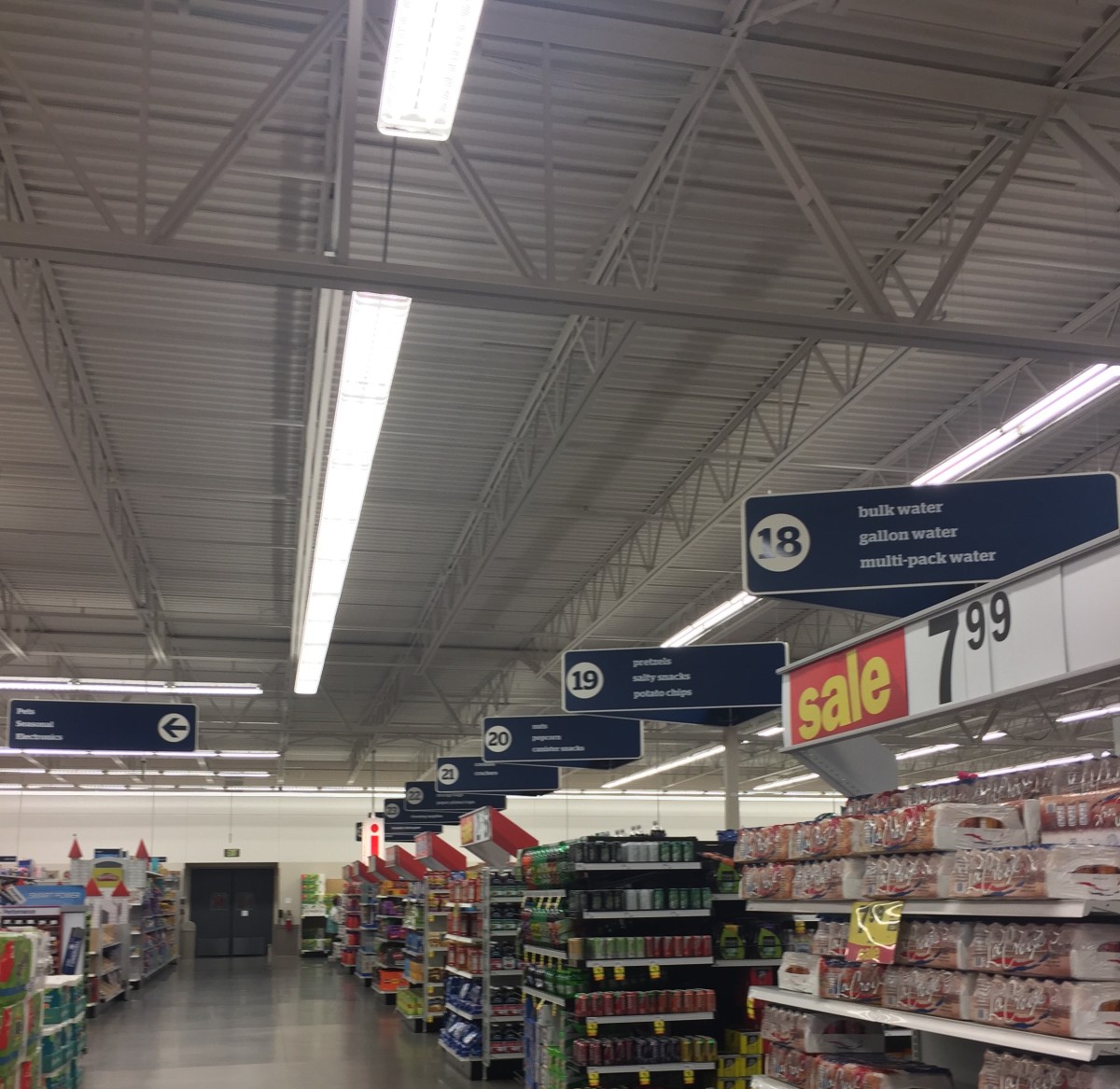
The installation went very smoothly and took only 4 days to complete. In the end, 480 T8 fluorescent light bulbs came out, and 355 LED T8 light bulbs went in. The reason we could use less is because the lights seemed so much brighter than before. The light is a very white light unlike the fluorescents which is a very yellow light.
To install the new bulbs, all that was required was the electricians directly wiring the fixture, bypassing the original transformer. One downfall of this is that the fixtures can not be used with fluorescent bulbs again and would have to be rewired.
The bulbs themselves put out hardly any heat. The bulbs remain normal to the touch even after 4 hours of being on.
The Results
We expected to see at least a 40% drop in lighting usage power across the board and at least 15% less usage overall. This would mean the project would pay for itself in about 5-7 years.
After 6 months of energy bills, the largest impact was in the summer months were it actually decreased the amount the Roof Top Units ran by 20% during the day because of the substantial decrease in heat from the lights.
The lighting electrical usage went down by an average of 48%. The lower level renters also complimented the building owner saying it had "brightened the place up a bit."
The end result was an average 28% savings per month on total electrical usage for the entire building. This project pays for itself in 3.5 years.
Conclusion
LED light bulbs are efficient on many frontiers. However, they would not be nearly as effective on a small scale project because of the cost. If you have a building with a lot of light bulbs like this one, it is a good idea take a look at how much energy you could save with this simple efficiencyupgrade. If you have a small building with T8 fixtures, the 32 watt fluorescents may be a better option.
If you are unsure about what energy upgrades to perform, you can hire an energy consultant. They will walk through your building with you and show you the different projects that you can do to make your building more efficient. Depending on the state you live in, rebates may be available.