The Debate is the Bush Tax Cuts

The subject is certainly the economy but the debate is the Bush Tax Cuts. It doesn’t matter what story the news is spouting on any given day, the real story is the Bush Tax Cuts and the effect that not extending them will have on the economy.
We are currently hearing three separate ideas on what to do about the Bush Tax Cuts.
First, extend them even if only on a temporary basis.
Second, extend them, but only on those making under $200,000 a year. Those making over that amount will lose those credits.
Last, but not least, do not extend them at all and let them expire, which would mean a tax increase for the majority of America’s working families.
These three options will affect everyone in the country. Even though the national debate seems focused on everything but the economy, those running in November elections face a difficult challenge answering the barrage of questions coming their way from the taxpayers. This debate will not go unnoticed and every official running for office will have to deal with this.
Although not many in Congress are saying that they are in favor of the third option, to let the Bush Tax Cuts expire at the end of this year, there are those that do promote this, citing that the amount of revenue received will help defer and reduce the deficit. It is this argument that gets me angry.
If Congress is so concerned with deficits, why on earth would they spend millions to save a swamp rodent in the middle of California? Can anyone tell me how many permanent full-time jobs that created? Seriously? My great grand children will still be paying for those mice when they are old and gray. I could probably rant all day about the wasteful spending in the last stimulus bill only to turn around and start all over again as they prepare to stimulate us again.
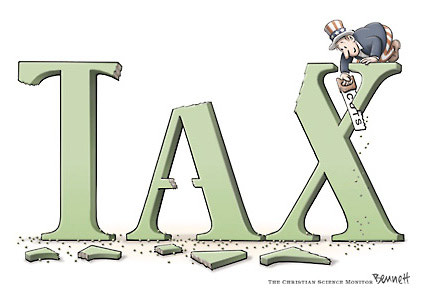
So for the Democrats to use fiscal responsibility as a reason to raise taxes while so many people are out of work and hurting, just doesn’t hold water for me. This third option will hurt every family at every income level.
Even with the tax cuts they propose for the Middle Class, this won’t go over big with many Americans. In a solid debate, this position is not defendable. So we will not see many Congressmen, who are fighting to hold onto their seat, backing this scenario.
It has been said that the debate over the Bush Tax Cuts is quietly being placed on the back burner. Those running for office certainly do not want to debate this. Remember, if Congress does nothing, they expire. The Republicans have their plan. The Democrats have their plan. The president has his own plan in the 2011 budget. However, the Congress has not approved his budget for 2011 so all these options are still on the table.

We have all heard that only the wealthy will be affected if the Bush Tax Credits expire. That is not entirely true. See for yourself…….
Click here to test your tax liability for 2011.
Go ahead and try all kinds of different amounts on this tax calculator. None of the info is kept – it is a general form only and nothing is submitted anywhere. But it will give you an idea of what the truth about the tax proposals really are and how they will affect you.
For example, if you’re filing as single and your household income was $50,000 in 2011, your tax burden could increase at least $600 if the Bush Tax Credits expire. 20k = over $400 increase, 100k = over 2,000 increase. The figures change if other tax plans are decided upon or the president’s budget is approved. Married earning 30k you tax burden can increase $1,000.
Timothy Geithner, the Treasury Secretary wants the Bush Tax cuts to expire stating it was, “the responsible thing to do.” He dismisses all concerns of how those cuts will affect the rest of America. He states that “we need to show the rest of the world” that America is “willing to make some progress bringing down out long-term debt,” adding “I do not believe it will affect growth.”
Obviously, most Republicans and even some Democrats strongly disagree. There is a push by the GOP to get the Bush Tax Cuts extended for people of all income brackets. It’s easy to sit back and say ‘Tax the Rich’. But what many of us do not realize is that 90% of all tax revenue already comes from those earning over 250k a year. These are the job creators and if we increase the tax burden on them, will it affect the number of jobs they will want to create?

If we look at the history of raising and lowering the tax burdens on the economy, there is no doubt that raising taxes on any income level slows the growth of jobs. Lowering the taxes causes more jobs to be created. History has proved this over and over again. Yet Congress would tell us otherwise.
Raising taxes does not help the economy. It helps Washington. It puts money into their hands. They get to decide how it should be spent. They may use it to help the economy but if experience shows us anything, they aren’t that good at it. We all know that stopping the outrageous spending will definitely help the economy. Remember the hundred million dollars given to grow jobs in California? It created 55 jobs and the money is gone. Aren’t you impressed?
So no matter you stand on this issue, bring it up in your debates. Ask at your local town hall meetings. Make sure you know where the candidate you vote stands on this issue. Businessmen, all over the country, are stating that they are not hiring because the future has become too uncertain. This is not good for our country. We need stability and a welcome climate for our businesses to prosper and grow. Cutting or raising taxes alone is only half the problem. Without cutting spending, taxes will have to rise.
Growing government jobs may get some people to work but overall, these jobs are an added strain on the economy as taxpayers end up paying those salaries through taxes. So it is to the private sector that we must look to for job creation and economic growth. We must make the environment here in America friendly once again to those who have the resources to create jobs.