Um, What is Wrong With You?

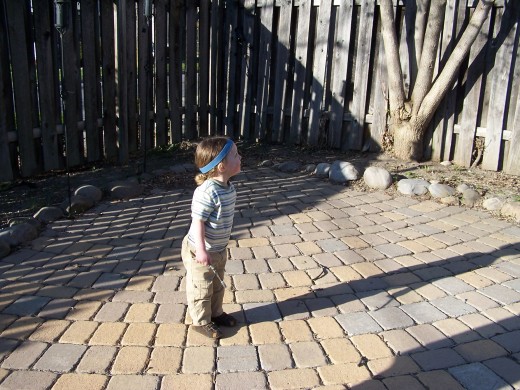
What? Didn’t I hear you ask that just this morning when you dropped a bowl and it didn’t even break? You said, “What is wrong with me?” You were dramatic about it. You hit your forehead with the heel of your hand and said, “What is wrong with me!”
So, before we can talk about marriage or relationships or the skills we have or would like to have, we have to find out what is wrong with us.
Let’s try this thought out: There is nothing wrong with any of us except our worry about what is wrong with us.
I’ve been investigating this question for a lot of years and so far I haven’t found any bad behavior that cannot be explained as a result of worrying about what is wrong with us. If we had confidence, if we always knew without a doubt that we were good stuff, would we argue with our parents and, later, our spouses? Nah. We’d grin at their antics. We’d have patience. We’d use our mental powers to find agreeable solutions.
This worry about what is wrong with us goes beyond individuals. Nations fight wars out of fear we lack the ability to survive in peaceful problem-solving mode. Yet there is no international dispute that could not better be solved with reason.
When I was a kid I used to ponder whether the good in me or the bad was deepest. Was I fundamentally good way down at the core of me? Or was I a raving monster barely covered by a thin social veneer? I’m sure glad I worked that one out. It’s clear to me now that the social veneer covers a middle place where our worries get us in trouble. Way down deep we are good—if only we can trust ourselves.
We worry for two reasons. We’ve seen ourselves do harm. Well, let me make my own confession. I’ve hit my sister over the head with a block, told my mother she didn’t have a clue how to raise me, and married so I could have a family, not for love. This last harmed my former husband and caused our child a lot of grief. I hasten to say I wouldn’t do anything like that now.
The other reason we worry is that we’ve been told we’re no good. Say you were slapped on the bottom for wiggling on the changing table. You howled. You did lie still long enough to get your diaper changed. Apparently the slap worked. But with that slap, a little self-confidence slipped away. And there were other slaps, and scolding and criticism, too, right? Each sign of disapproval from a parent made us worry more. I remember a state of panic that left me unable to take a deep breath. Was I such a disappointment? Would they keep me?
Then there was the talk of personality. In the culture of that time and place—1950s Maine—people thought a personality could be fatally flawed from birth. They didn’t understand how worry about what is wrong with us distorts the personality. You spend your childhood in a mild or intense state of panic, you’re bound to grow up too neurotic to attract a good mate. And there’s the rejection more feared, the final proof that we are basically flawed. My worst fear was becoming an old maid school teacher. I’m not kidding. I had some of those unhappy old ladies for teachers and they were mean, bitter people. They should not have been teaching little kids. They made kids feel like two cents.
I watch people and I see the flaws, the awkwardness, the wrong moves, and even the harm they do others—and, under it all, causing the trouble, the lack of trust in themselves that is the birthright of every child. Each generation robs the next of self-trust. Each new child loses himself or herself before reaching the teen years and must create instead a facade, a social veneer, to present to the world. That veneer giggles and grumps, is too shy or too bold, and harbors all manner of bad impulses. That veneer says the wrong thing and offends people. All the while, the person underneath longs to be seen and loved. That was always my idea of romance. A boy would come along and see me for the fine person I was and his love would heal me from the insults that had made me awkward. But the boys were too worried to see or heal anybody.
I have, gratefully, been able to rehabilitate my ability to observe life with confidence and to participate fully, with my re-discovered abilities and powers intact, never damaged after all. I’m an ordinary (amazing) person like you. What I have done, anyone can do. There is nothing wrong with any of us except out worry about what is wrong with us.