Bible: What Does Acts 26 Teach Us About Paul's Conversion Experience?

The Apostle Paul
Christian Conversion: Is it for Real?
Do you believe Christian spiritual conversion is real?
Conversion
view quiz statisticsActs 26--Paul's Personal Testimony Before King Agrippa
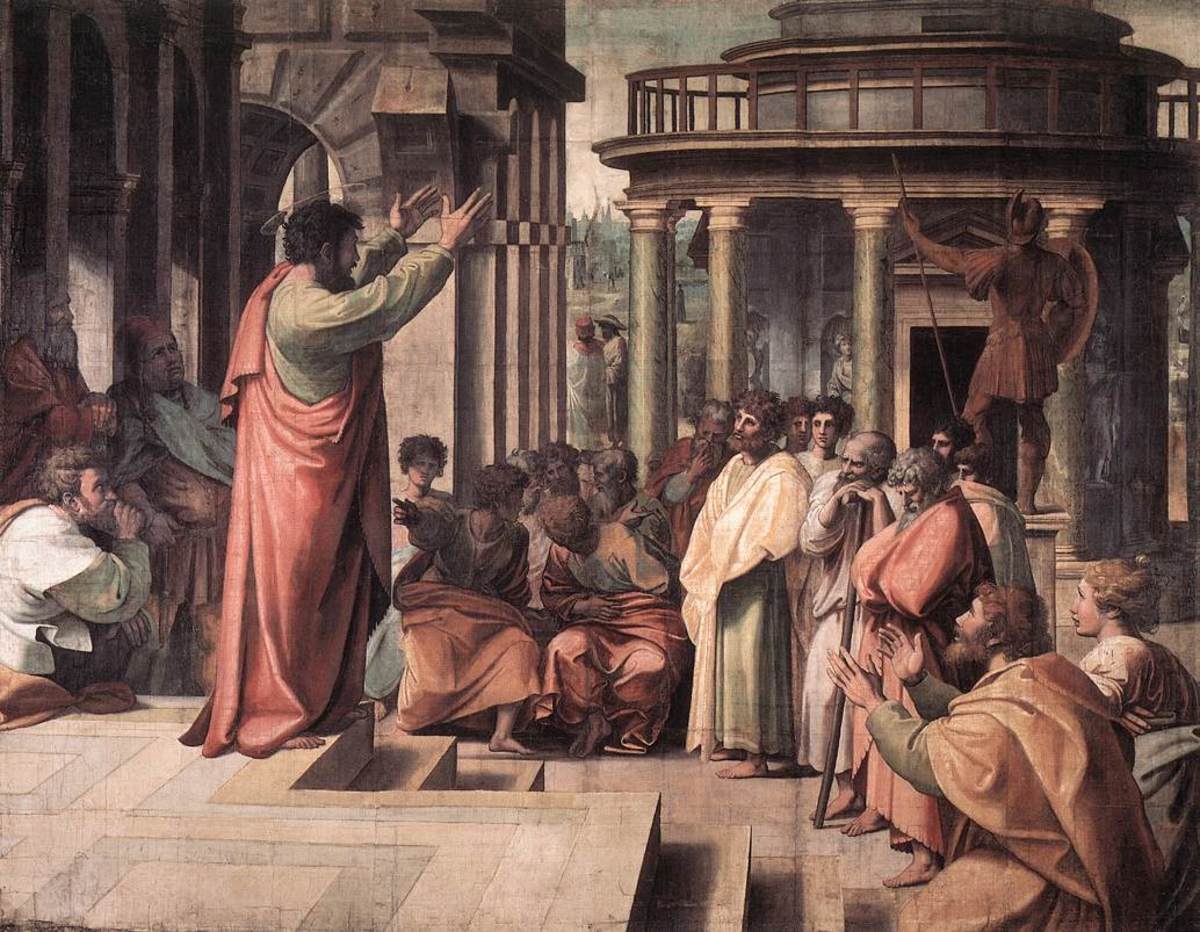
Given permission to speak, Paul addresses Agrippa, whom he regards as “expert in all customs and questions” pertaining to Jews, and considers himself “happy” (“fortunate,”NASB) to give his defense (“answer for myself”) before him (vv. 1-3).
Part One: Pre-Conversion
The apostle proceeds to provide Agrippa with “Part One” of his testimony—a testimony that included personal knowledge of which all his accusers were well aware.
They knew Paul’s Jewish lifestyle since boyhood, his strict Phariseeism as an adult, and at present his prosecution by the Jews because he believed in “the hope of the promise” of the Messiah—a hope to which all Israel (“our twelve tribes”) aspired to attain (vv. 4-7).
Finding inexplicable the Jewish opposition to what he is preaching about Jesus, given their supposed belief in resurrection, the apostle challenges Agrippa not to think likewise (v. 8).
He then reviews with this king his history of persecuting the Lord’s people in Jerusalem and in “foreign cities,” confessing that he not only physically punished them in synagogues and made them blaspheme against Christ, but that he also imprisoned them and voted against them when they were on trial for their life (vv. 9-11; cf. Acts 8:3).
Part Two: Conversion
Paul now moves on to “Part Two” of his testimony: the account of his conversion (vv. 12-18). Reiterating that he had received a commission from the authorities to arrest believers in Damascus, he recounts his journey on the road to that city (v. 12; cf. v. 10).
One senses a palpable retarding of the narrative as Paul sets the stage, noting both time and place (“at midday,” “along the road”), and again he solemnly and dramatically addresses the king (v. 13a).
One can almost see the apostle’s eyes open wide, and imagine him gesticulating as he describes Christ’s appearing to him as (or in) an extramundane light that encompassed both him and his companions in crime (v. 13b).
He notes that every rider fell off his horse, which probably ran away in fright, but that only he understood a Voice addressing him personally, asking him in Hebrew, “Why are you persecuting Me? It is hard for you to kick against the goads” (v. 14a).
[Ranchers used goads to drive cattle onward; God pricked Paul’s conscience, aiming to convince him to repent.
Cattle fight against their owners by kicking at them; Paul was fighting against God by persecuting Jesus through His people.
Jesus seems to be saying, “Give it up, Saul. Repent. You cannot keep fighting against Me.”]
Luke includes here the most complete response that Jesus gave to the apostle’s query about His identity (vv. 15-18).
Interestingly, the earlier accounts of Paul’s testimony mention God’s prodding of Paul’s conscience after Jesus identifies Himself, not before as in this latter section (cf. v. 15 with 9:4-5; 22:6-11).
Paul relates that the Lord told him the purpose of His appearance to him: to make him a servant and a witness to both past and future revelation (v. 16).
Jesus also promised to protect the apostle from both the Jews and the Gentiles (v. 17).
Finally, Paul reveals Christ’s single purpose in sending him to the nations: to open their eyes (v. 18a).
[He did not mean, of course, that Paul would literally open their physical eyes, but that the apostle, as an instrument of the Holy Spirit, would make them understand spiritual truth by preaching the gospel to them.]
Their new perception would cause them to turn away from “darkness” and the power of Satan and to turn toward “light” and God, Who would then grant them forgiveness of sins and an eternal inheritance among other “saints” (v. 18b).
Paul on Trial
King Agrippa

John MacArthur

Part Three: Post-Conversion
The apostle then concludes his testimony by relating his life after conversion (vv. 19-23).
Again addressing Agrippa directly, Paul informs the king that he obeyed Jesus’ heavenly directive, and proclaimed the gospel message to Jews, both in Syria and Israel, as well as to Gentiles, calling upon them to repent, convert, and perform appropriate good works that showed the reality of their new faith (v. 20).
The apostle tells Agrippa that, as the result of his evangelistic work, he received physical abuse and death threats from the Jews (v. 21).
Paul credits God with preserving him up to that present time when he is still testifying to all people about the fulfillment of OT prophecies that foretold the passion and resurrection of the Messiah (vv. 22-23).
Festus Loses His Temper
While listening to Paul’s story, Festus is stewing; at its end, the Roman finally explodes with consternation, claiming that the apostle’s scholarly activities have driven him insane (v. 24; cf. 2 Cor. 5:13).
Paul respectfully objects to this characterization, and asserts that his testimony is true and rational (v. 25).
He argues that Agrippa, as a regional ruler, is fully aware of Messianic prophecies, knows what the Church is preaching about Jesus, and realizes the impact it is having (v. 26).
[Paul does not specify what he means by “these things” and “this thing,” but they must refer to the progress of the gospel in some way.]
Paul Challenges Agrippa
Addressing the king, Paul challenges him to examine his own beliefs (v. 27); one may construe from Agrippa’s response that he is either close to conversion (“You almost persuade me . . . “) or he is still skeptical (“In a short time, are you trying to make me a Christian?) [v. 28].
The apostle replies that he desired that everyone who heard the gospel from him that day might become a Christian such as he is, except that they would be free from bonds (v. 29).
After they remove Paul from the auditorium, the elites and rulers presumably discuss the apostle’s case in private, and conclude that his activities do not amount to a capital charge or even to a misdemeanor (vv. 30-31).
Agrippa’s final words to Festus reveal that Paul’s earlier appeal to Nero prevented him from being freed on the spot (v. 32).
© 2013 glynch1