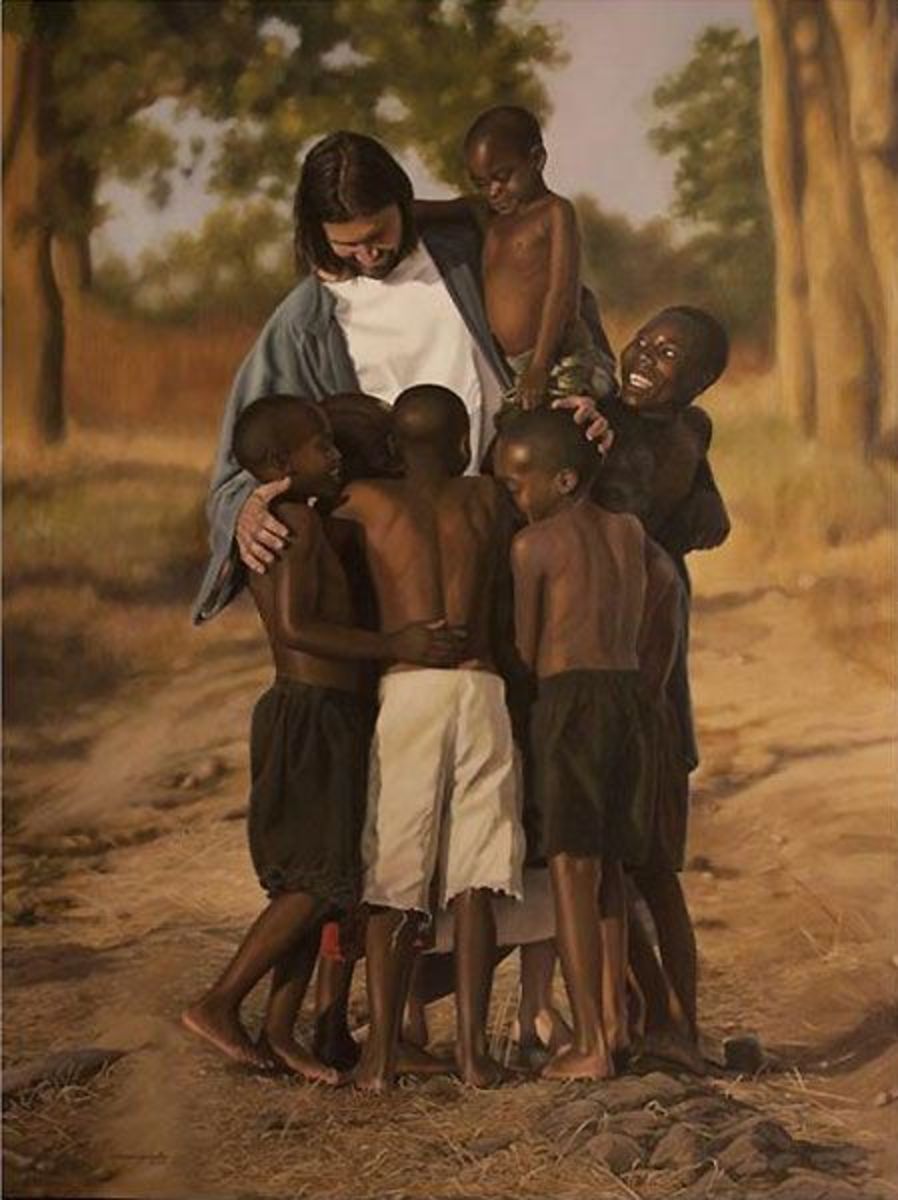
Being a Latter-day Saint and Black in America: From Slaves to Saints

Slavery is not owned by Black Americans. Across ages and continents, countless souls have suffered at the wicked hands of oppression and servitude. Yet the enduring consequence lies not only in history’s chains but in the lingering spiritual wounds borne by the descendants of the enslaved.
Though civilization has advanced, divisions persist, clothed now in cultural misunderstanding and social tribalism. Most Americans will meet Black people only through the media or distant association. Even so, proximity does not cure prejudice.
This article seeks to examine that paradox through the lens of the Restored Gospel of Jesus Christ, showing how divine truth can transform bondage into belonging and suffering into sanctification. God did not build this world for His children to remain prisoners of circumstance but to rise as Saints through the covenant of Christ.
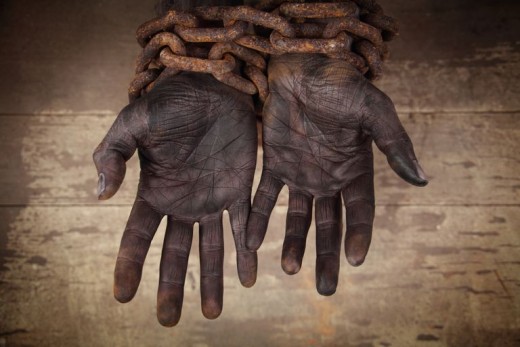
The Birth of American Slavery
In this nation—the United States of America—where only about 12 percent of the population identifies as Black, society still wrestles with the inherited shadow of slavery. Civilization paints a bleak picture of unity and stability. Divisiveness deepens into tribalism, often in the form of racial or cultural identity. Some of this division stems from ignorance, some from opportunity, and some from sheer unwillingness to change.
Most Americans will only ever experience Black people through a mediated lens—television, film, or social media—because there are too few in number for most White Americans to know one personally. Yet this country is a nation of immigrants and refugees, and also a nation of slaves. Slavery remains the contradiction in America’s story: a system fundamentally opposed to the freedoms this land claims as divine birthright.
Faith and Freedom in Early America
How could a free society ever condone human trafficking in any form?
The answer lies partly in the evolution of law and religion—two forces that shaped the conscience of early America.
Court cases in colonial Virginia laid the foundation. The first recorded perpetual enslavement in English North America occurred on July 9, 1640, when John Punch, a Black indentured servant, was condemned to serve for life for attempting to flee. His European counterparts received just one additional year of service. From that ruling forward, Blackness became tied to lifetime servitude. The man who owned Punch, Hugh Gwyn, thus became the first legally recognized slaveholder in English America [1].
This racial distinction in punishment foreshadowed later law. In the next century, Anthony Johnson, a free Black man who had completed his own indenture, sued for the lifelong service of another man. Courts granted his claim [2]. Although Johnson’s race complicates the narrative, his case ultimately hardened the racial logic that slavery required.
The Inversion of Woman and the Violation of Rights
Another overlooked factor in the rise of slavery was the status of women.
In an era when women possessed almost no legal identity outside marriage, laws about inheritance and property quietly determined the racial hierarchy of future generations.
If the mother was a slave, the child was a slave.
If the mother was free, the child was free.
In that single legal equation, womanhood was reduced to a vessel for bondage. Religious misinterpretations compounded the injury—turning what was meant to be a story of Eve’s wisdom and motherhood into justification for generational servitude.
The Restored Gospel and the Healing of Nations
The Restored Gospel of Jesus Christ reverses that curse. In His covenant, all are invited to receive birthright in the House of Israel through baptism, confirmation, and faith in Christ. “For all have sinned, and come short of the glory of God” (Romans 3:23), and yet “there is neither Jew nor Greek, bond nor free, male nor female: for ye are all one in Christ Jesus” (Galatians 3:28).
The “other sheep” Christ spoke of are found among all nations—including those descended from enslaved ancestors. For Black Americans, this promise carries profound prophetic weight. Enslaved people sought the very God used to justify their bondage, and God has sought them in return.
Each time the Lord blesses His people, Satan crafts new chains—sometimes oppression, sometimes bitterness. Yet the Atonement of Jesus Christ breaks both. His suffering in Gethsemane encompassed every cry, every whip, every violation. His blood sanctified both the captive and the captor who repents.
Through Him, slavery becomes testimony; pain becomes prophecy; and a people once bound become Saints.
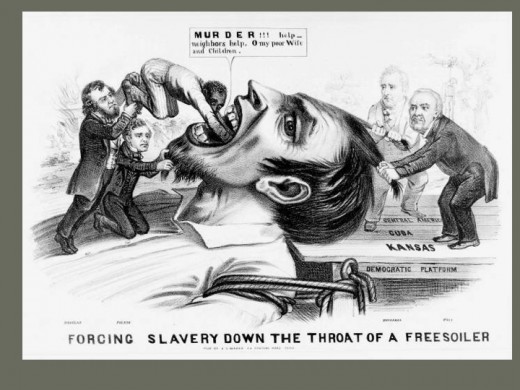
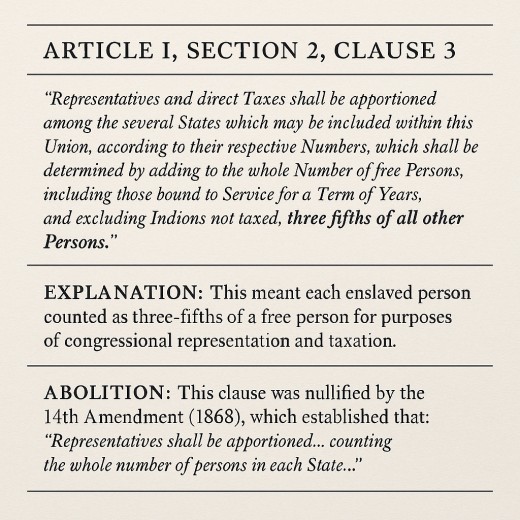
US Constitution Excerpt
The Restored Gospel Is One of Inclusion
A witness that the Restored Gospel of Jesus Christ reaches every nation and every color—showing how divine inclusion lifts Black America from the chains of history into the covenant family of God.
All people are invited into the covenant family of God. Through baptism, confirmation, and sacred ordinances, every soul receives birthright in the House of Israel—becoming children of Abraham and heirs of the promises.
When Jesus spoke of His “other sheep,” He was not limiting salvation but expanding it. Those sheep are found in every nation and every heart willing to follow Him—including among Black Americans, whose faith has often been forged in affliction. By naming them here, I do not exclude others; I simply witness that their moment of gathering has come.
The Lord first delivered His word to the Jews before sending it to the Gentiles. His pattern is purposeful—He ministers to one people as a signal to all. In this generation, the witness of the Restored Gospel extends powerfully to Blacks in America, a people descended from both bondage and belief. Their story is not an afterthought in salvation history; it is a chapter in the covenant itself.
Most Black Americans descend from those once enslaved—a people the world rejected but Heaven remembered. They sought the very God whose name was misused to justify their chains. Yet God never abandoned them. Their faith, born in captivity, became the spark of their deliverance.
God first softened the hearts of those who fought for their liberty, then moved upon others to see their shared humanity. Over generations, He prepared the way for dignity to return and agency to be restored. At last, He empowered their descendants to stand upright—to claim not only freedom, but divine inheritance as Saints of the Most High.

Each time the Lord blesses Black people, Satan crafts a counterplan to drag them down—using racism as either a tool of oppression or a crutch of resentment. Some fall into the trap. Others rise above it.
Black people were never meant to be slaves in America.
This land was raised for freedom, not bondage. Yet, as always, the adversary found opportunists willing to profit from another’s captivity.
Unlike indentured servants from Europe or enslaved Natives with tribal kin nearby, Africans were isolated—stripped of language, lineage, and land. Deprived of connections, they became targets of generational exploitation. But God never abandoned them.
The prophet Moroni pleaded:
“I would exhort you that ye would come unto Christ, and lay hold upon every good gift, and touch not the evil gift, nor the unclean thing” (Moroni 10:30).
Every soul that suffers persecution or discrimination holds a sacred window into the suffering of Christ—an empathy earned through pain. He understands it all.
Before the Savior’s birth, Alma testified:
“He will take upon him death, that he may loose the bands of death which bind his people; and he will take upon him their infirmities… that he may know according to the flesh how to succor his people according to their infirmities” (Alma 7:12).
Christ knows what it feels like to live on the margins—to be misunderstood, rejected, and oppressed. In Gethsemane and on Calvary, He carried every agony ever inflicted on humankind.
He felt the anguish of the enslaved African torn from family, the violated daughter’s cry, the despair of the forgotten son. He bore it all—not abstractly, but intimately.
Jesus Christ knows what it feels like to be despised, displaced, and dismissed.
That is why He alone can succor, heal, and raise up Black America and every wounded nation on earth.
Depiction of Good Samaritan
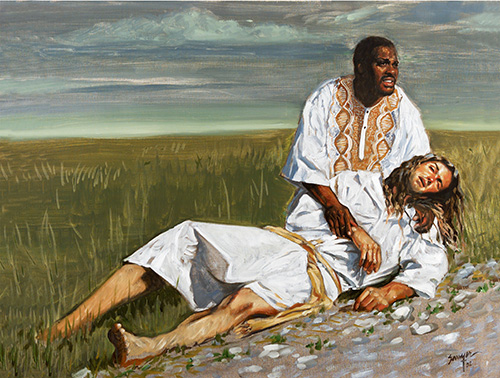
Samaritans and Jews Go Equally Before God
For centuries, religion was misused to justify slavery and racial division. Even within the Restored Gospel, false ideas of “racial decadence” crept in—lingering far longer than they should have. But God, in His wisdom, corrected that error through revelation.
In 1978, the Lord revealed to His prophet that race must never again determine worthiness for the blessings of Abraham. The priesthood and temple blessings were opened to all worthy men and women, regardless of lineage or color.
Later, in 2020, President Russell M. Nelson reaffirmed Heaven’s position in words that should echo through every congregation:
“Brothers and sisters, please listen carefully to what I am about to say. God does not love one race more than another. His doctrine on this matter is clear. He invites all to come unto Him, ‘black and white, bond and free, male and female.’
I assure you that your standing before God is not determined by the color of your skin. Favor or disfavor with God is dependent upon your devotion to God and His commandments and not the color of your skin.
I grieve that our Black brothers and sisters the world over are enduring the pains of racism and prejudice. Today I call upon our members everywhere to lead out in abandoning attitudes and actions of prejudice. I plead with you to promote respect for all of God’s children.” [11]
Those same White members whose forebears once denied blessings to their Black brothers and sisters are now called by God to extend full fellowship and equality in Christ. Through repentance and revelation, the Church learned—and continues to learn—that divine worth is color-blind and eternal.
It took more than a century for the Saints to overcome inherited misunderstanding, but the Lord was patient. His Church has repented, and it continues to refine itself. The question of why it took so long belongs to another article; the truth that it finally happened belongs to the testimony of Jesus Christ.
Referenced Sources
[1] Encyclopedia Virginia. Virginia General Court Responds to Runaway Servants and Slaves (1640)
[2] Encyclopedia Virginia. Court Ruling on Anthony Johnson and His Servant (1655)
[3] World History Encyclopedia. Virginia Slave Laws and Development of Colonial American Slavery
[4] National Park Service. African Americans at Jamestown
[5] Tyler Parry. The Curious History of Anthony Johnson: From Captive African to Right-Wing Talking Point
[6] Encyclopedia Virginia. General Court Responds to Runaway Servants and Slaves – 1640 Case Archive
[7] World History Encyclopedia. Colonial America and the Formation of Slave Codes
[8] National Park Service. African Americans at Jamestown – Context and Legacy
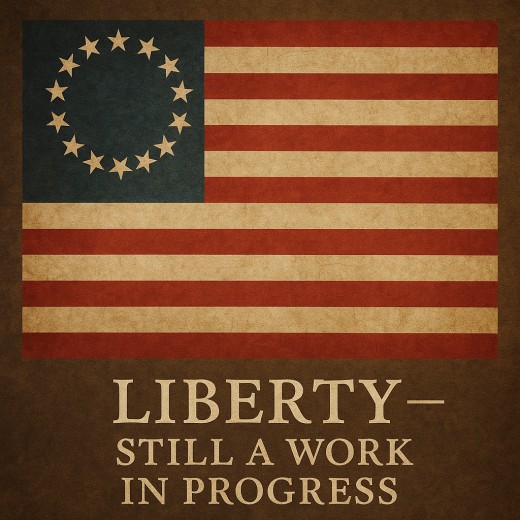
[9] The United States Constitution — Preamble and Foundational Clauses (1787)
[10] James E. Talmage. Jesus the Christ
[11] Russell M. Nelson. Let God Prevail
This content is accurate and true to the best of the author’s knowledge and is not meant to substitute for formal and individualized advice from a qualified professional.
© 2018 Rodric Anthony Johnson
Related
Being a Latter-day Saint (often called "Mormon") and Black in America: Foundations of Faith and Identity Series
The Economics of Slavery in the United States.

Black People Destroying Their Melanin and the Effects of Skin Bleaching
Being a Latter-day Saint (and Black in America: Black Is Skin Deep — Episode Nine

When Jesus Calls: Sandile Makasi