How To Write A Sunday School Class

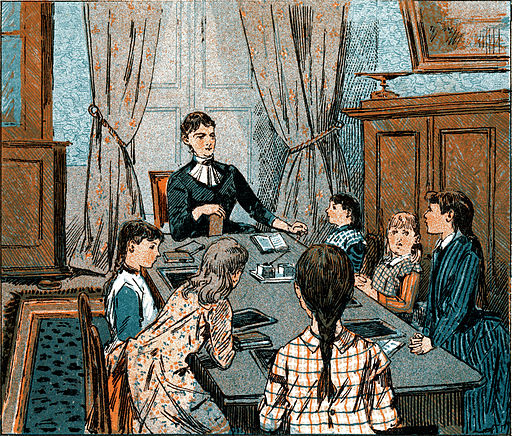
Sunday School is a familiar staple of church life. While some may think it is just "fun" time, this hour can actually be a dynamic learning experience for kids or adults.
Good material, such as David C. Cook products, are readily available. But they can be expensive, especially if you're buying for more than one age level. Creating your own material saves you money and allows you more freedom to pursue specific themes or scriptures you have in mind.
The task may sound daunting. It did to me, too, when I started. But after writing both an adult and young teen unit, I've found a system that helps me pull together a class within a couple of days.
To give you an example, I'll walk you through what I did for those teen classes. These principles work for either a single class or a unit.
Step One: Define The Class
First I ask some basic questions. They may sound obvious, but getting the answers will give you a framework for writing.
1. What is the age group of the class?
If you've taught at all, you know that different abilities develop at different levels. For instance, young children best relate to stories and simple questions, while teens and adults can handle more challenging thoughtful questions.
My class was for grades 6-8. I had taught them for one semester, so I had a feel for what they responded to and their attention span. As I wrote, I imagined myself in that room with them, and how I would teach the concept.
Note: Teaching or even sitting in on the class you're writing for is very valuable, and will make the writing easier.
2. How long will the class be?
Most Sunday School classes run about 45-50 minutes. But some churches have longer classes during the regular service. You need to be aware of exactly how much time to fill.
My class was the standard set-up: 50 minutes held before the service. As I planned study and activities, that boundary kept me in check.
3. Does the theme or scripture need to correspond with other classes or a sermon series?
Coordinating all the classes creates more unity through the church, and can give you an instant guide to follow. But you won't have as much freedom to pursue independent ideas.
The class I wrote was meant to be a part of a larger learning plan that ran through the children and youth Sunday School. A committee oversaw what topics would be taught to what age groups. Working with them helped me to know their goals, and how I could support them best.
4. What will your subject and scripture be?
As mentioned above, you may be assigned a theme, or have one in mind already. Before going any further, run it through the first two questions in this section.
For instance, say you're writing a class for Elementary school-age kids, the class is 45 minutes long, and your potential theme is "God Created The Earth". Ask, "is this subject appropriate for the age group?". You would probably answer yes.
Then ask, "can this theme be taught effectively in 45 minutes?" Again, you could say yes to that. Then you know you have a workable theme.
Sometimes you'll have a scripture first, then the theme. Other times you may need to find a Bible verse or story that relates to a planned theme. Do a Bible verse search using your concordance or software like Bible Gateway. If you're not sure which scripture is best, get feedback from a teacher, or even your Pastor.
Step 2: Organize The Class
Once you know your theme, you may be tempted to jump into writing the class. But I would advise you to take just a little more time and segment your class. By segments, I mean the shorter pieces that make up the whole class.
These are the usual elements I included in the class for youth:
- Opening Activity (optional) - an "ice-breaker" or just fun game/activity for the group
- Introduction - an activity that connects with the main point of class, or simply giving background to a bible story/person
- Main Lesson - Reading the scripture for class, having students look up related scriptures or answer questions about main idea, relating the main theme to their lives
- Related Activities - skits, fun quizzes/contests, art projects
- Wrap-up - restating main points
- Prayer Time - chance for students to share requests and to pray for each other
Step 3: Write The Class
Here are some tips I've found really helpful in laying out a class:
- Read the bible verse and do your own personal bible study on it. That may bring some new insights to share or ideas to incorporate.
- Think through each segment as if you were teaching the class (perhaps you will be!). Write out a "script" , or at the least an outline of the main points to be made, with some things to ask or share for each.
- Remember that students will have different learning styles, including visual, aural (hearing), experiential (hands-on). Find activities within each class that will interest a variety of learners.
- Make the class as interactive as possible. The more the students are involved the more attention they'll have and the more benefit they'll get out of the time. Don't ask yes-or-no questions, but leading questions to draw out their thoughts and opinions. And encourage students to pray for each other.
- Always prepare more than you think you'll need. Have extra printed activity pages ready for students who arrive early. Advanced students can do more challenging ones while others finish class projects.
Age-appropriate elements
Young Children -
- Easy to understand Bible stories, children's books that relate to theme
- Simple questions: What happened in the story? Who was involved?
- Keep class together in a large group
- Simple emotions or thoughts to respond about
- Music & Theater: Singing simple songs, Puppet theater, short videos
Youth & Teens -
- Bible stories that have more details
- Having students work in small groups or independently for part of class
- Relating Bible stories/people to their lives
- Music & Theater: Christian music videos, students take part inor even write skits, short movie clips
Adults -
- Theme-based directly from Bible or other authoritative source
- Complicated/challenging questions about material
- In-depth exploration of theme
- Music & Theater: videos, clips, live or recorded songs
- Assignments
A Sample Class
Age Group:
Middle School (approx. 6-8th grade)
Theme: Evangelism
Scripture Verses:
Mark 1:39; Luke 4:18-19
Introduction - Write "evangelize" on the board. Ask students to define it.
Explain that it means "to preach", and relate it to how your Pastor gives a sermon.
Ask students if they ever get so excited about something they want to tell theirfriends about it. Say that is how Jesus felt about the gospel.
Main Lesson - Read the class scripture verses.
Ask what things Jesus taught about, with examples from the gospels for each.
(ex. In John 13:34, Jesus taught about how we need to love others)
Show styles of Jesus' teaching (parables and similes), with examples of each.
Related Activity - Bring in pictures cut out of newspaper or magazines of different objects.
Guide students to chose a picture and then make their own simile about Jesus orGod.
(ex. a picture of a birthday cake, with the idea that accepting Christ is like havinganother birthday because I am born again.)
Wrap Up - Restating what evangelism means, and what Jesus taught about.
Give an assignment for the next week (optional)
Prayer Time - Lead the students to share any praises or requests.