House Churches: A Church That Meets In A Home

Recently while replying to a question on Hubpages, I briefly described the church I attend. Another Hubber responded with: “No offense please, but that sounds more like a cult than a church.” Putting aside the fact that name-calling of another’s community of believers is uncivil, and something I would simply never do as a matter of both ethics and good manners, especially if the person had just mentioned that these were her dearest friends, I want to take a look at this interesting organization I am a part of. Many people perhaps have not heard of it.
I belong to a housechurch. After over 25 years in the traditional church, I joined the housechurch movement, and I have found it to be a much better model for both individual Christian life and corporate experience. Although every one is unique, here are some basic facts about housechurches:

Housechurch? What’s that?
We meet in a home
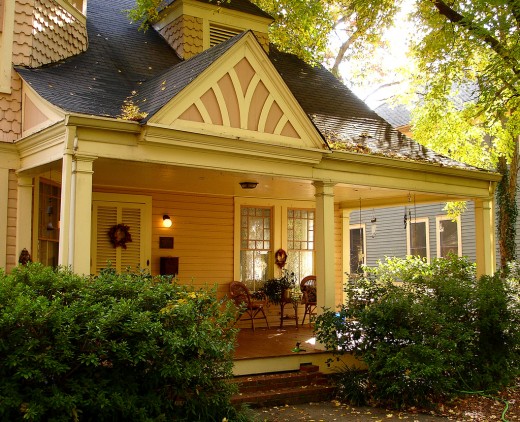
A housechurch gathers in someone’s house or apartment, rather than in a building set aside for the purpose. I think I could use this as a metaphor for what makes housechurch different from traditional churches: a housechurch happens in the midst of the rest of your life, not in a separate space. I find this facilitates Christianity becoming more integrated into your everyday life, rather than something that feels far away once you’ve hung up your church clothes.
The group is small
Since you are meeting in a house, the housechurch by definition won’t long contain more people than will fit in a living room. My housechurch is three families with their teen and tween children, and usually between two and four friends of our kids. We encourage bringing friends to church, and the friends like it enough to show up on a fairly regular basis. This means six adults and between nine and eleven teenagers, so things are lively. With some folding chairs, we all make it into one room.
You’ll either end up close, or decide this is not the group for you
Unlike a traditional church, where you can attend service with someone for years and know nothing about them, housechurchers get acquainted. Can’t help it really. House churches seldom have a traditional sermon where one person talks for forty minutes and everyone else listens quietly, or takes the opportunity to daydream. Everyone interacts, talks issues and opinions, and a rapport grows. If a person just doesn’t feel comfortable, or the tenor of the group isn’t their cup of tea, they rarely continue to attend. Those who do integrate into the group often become very close friends. This isn’t forced, it’s a natural dynamic.
No pastor
There is no professional pastor who knows more than everyone else and is charged with teaching them, while they are charged to learn. Everyone is on a much more equal footing, so teaching time is shared, and also interactive. Interestingly, research shows people learn better in an interactive environment than a straight lecture. Housechurchers often take turns bringing the lesson or facilitating the discussion. The smallness of the group and the tendency to form real bonds of friendship facilitate participation, even moments of leadership, from the most tentative of members.
Housechurches are flexible
Our kids are at an active age, so we do a lot of action oriented stuff: getting all the kids onto instruments or microphones to make some worship music, packing care packages for the orphanage we help support in Mexico, making hot food for the homeless and handing it out, planning activities our group can lead in the local family shelter. We also do things like camping trips and game night. We don’t skip the Bible study and prayer, but our group is focused on our kids right now, and long evenings of discussion don’t speak to teens. They like to get out and do something.
This is a great strength of housechurches: they don’t need to be all things to all people, and so can address quite specific needs and desires. Another housechurch in our area is made up of young adults not started on families yet. There’s another made up of empty nesters. Nobody made people separate into groups this way; a natural, one might say organic, self-sorting happened.
Back to the “Cult” comment
To get back to the Hubber who labeled our lovely group of devoted Christians a “cult,” her expanded remarks do a very good job of highlighting how housechurchs differ from many traditional churches. Here she is reacting to my comment that my housechurch friends gave substantial help at home when my chronic pain condition was at its peak:
"Graceomalley, no offense please, but that sounds more like a cult than a church. I wouldn't want people coming in to do my laundry and cook or clean my house.. why so they can nose through my belongings? Instill their views on my kids? I can deal with a few dirty dishes and hubby & kids to take care of me when I'm sick, that's what families are about. We take care of the pastor so he can visit, like he did mom in the hospital and my dad and others who need him."
I find this very interesting. By admission, this person belongs to a church full of people she neither likes, respects nor trusts. She wouldn’t want their help when she is sick because they might take advantage of her vulnerable state to indoctrinate her kids or pry into her private affairs. Is she unduly suspicious, or have church members given her cause? Either way, these dynamics sound sadly far from the ideal presented in the New Testament, where the Christians lived life together, committed themselves to caring for one another, and formed strong bonds they intended to honor not only in this world but in the next. Interesting that she says, “Hubby & kids…take care of me when I’m sick, that’s what families are about,” drawing a line between how close a family is (close enough to trust when sick), and how close she feels to members of her church (they will go through her stuff if given the chance.) A far cry from Paul’s statement that fellow Christians Priscilla and Aquila had put themselves in danger of death to help him.

Why join this club?
So why does she belong to this organization? She clearly isn’t attached to her church for the people in it. I think the answer is in the next sentence: “We take care of the pastor so he can visit, like he did my mom in the hospital and my dad…” I think this is a fairly common reason to belong to a traditional church: pastoral services. After all, a pastor of this type has a bachelor’s degree, then seminary, then perhaps an internship, which all adds up to six to eight years of full time training. He (or more recently she) preaches sermons, counsels people through confusing times, supports them with attention and visits, and performs ceremonies like funerals and weddings. This person is unlikely to be too “nosy,” they are too well trained and know how to be personable while maintaining a proper professional distance. Rather than deal with a regular Christian, bound to have some rough spots, one can receive “ministry” from a polished Christian. In my own experience in the traditional church, people are most likely to choose a church based on the quality of the pastoral services. They may even (like the hubber quoted) harbor distain at the character of the average person in the pew, while speaking in glowing terms of the pastor.
Traditional church is at the end of the day an institution. I’m not against institutions per say: society needs them. But to my mind there is a great weakness to the role of the pastor as we have come to practice it, a role unknown in the first three centuries of the church.
Many wonderful individuals become pastors, but the system itself often creates hard worked pastors presiding over immature, lethargic flocks. My observation is that for many people, being in a traditional church is a lot like living at home with Mom and Dad all your life. It’s comfy, and especially if you get to chose your own wise, benevolent, and caring Dad (and are free to leave him and find a new Dad if he disappoints you), what could be better? Dad takes care of all the hard stuff, and as long as you can tolerate your annoying siblings, life is great.

Inside and Outside Traditional Church
Some Christians function fine within the traditional church. I've known people in Catholic, Presbyterian, and other denominations who have a deep walk with God and participate in Christian community. But I've seen many others who behave the way the hubber quoted above does: the shelter of the organization covers for fear of getting close to people, for difficulties trusting others. For these people, the organization unfortunately enables this weakness. By keeping other Christians at bay, and accepting help, advice and comfort only from the pastor, they miss an opportunity to interact with other Christians as equals. This may protect them from some unscrupulous people, but it will be at the cost of personal growth. Taking part in community pushes a person to try their hand at new things, and can give them the stability to risk rejection. It helps them develop their own internal compass. Participating in community makes people more accepting of others, because they discover just how hard reaching out is.
I left that safety net some years ago, because I felt God called me out of the traditional church. I still live in My Father’s House, and always will. But I've found the natural equality of housechurch a good fit with how I operate as a Christian. It just feels more real to me.
The housechurch movement is big, and seems to be only gaining momentum. My experience is that it is the opposite of a cult. A cult robs your personhood and your adult status in service to its own objectives. Cults focus on control of people, their material possessions and opinions. Housechurches are grass roots, undogmatic, loosely organized. Without buildings or paid staff they have little overhead, so they won't be asking for your money. They carry the dangers of any unsupervised organization: I wouldn't just walk in and give myself over heart and soul to any group of strangers that call themselves a housechurch. But if a person has a decent level of disernment, or if you join a housechurch full of people you've known for years anyway (that's what I did), there are tremendous opportunities to live out the Christian life.
More Links About Housechurches
- Francis Chan’s Talk From Passion 2011, And The $64 Million Question! | Jamal Jivanjee
A blog post about troubles in the institutional church - In-Home "Organic" Churches
This hubber says over one million leave the institutional church for housechurches every year. - House Church Central
A website with information on housechurches. - House church - Wikipedia, the free encyclopedia
Wikipedia's take on housechurches - Is God Calling You out of Church to come away with H...
One hubbers story of being called away from church attendence.