Who Is The Wandering Wolf?

There is an obscure passage of Hyndluljóð known as the "Short Völuspá" which has always fascinated me. It is old, very old, and connects to some deeper wisdom that goes all the way back to the ancestral waters of Old Europe. The four lines are simple, seem innocuous:
Eru völur allar, frá Viðolfi,
vitkar allir, frá Vilmeiði,
en seiðberendr, frá Svarthöfða,
jötnar allir, frá Ymi komnir.
An English translation of the first line offers the following: All the Volur (Norse Witches) are descended from Vitholfi (or Vidulfr). Seems innocent enough, doesn't it? Certainly, especially when there are scholars who dismiss the whole passage as something that has no value in the corpus of Norse lore. To me, however, this line is just the tip of the iceberg. It's an indicator, and the tiny, razor edge of a huge glacier of Old European wolf-centered shamanism.
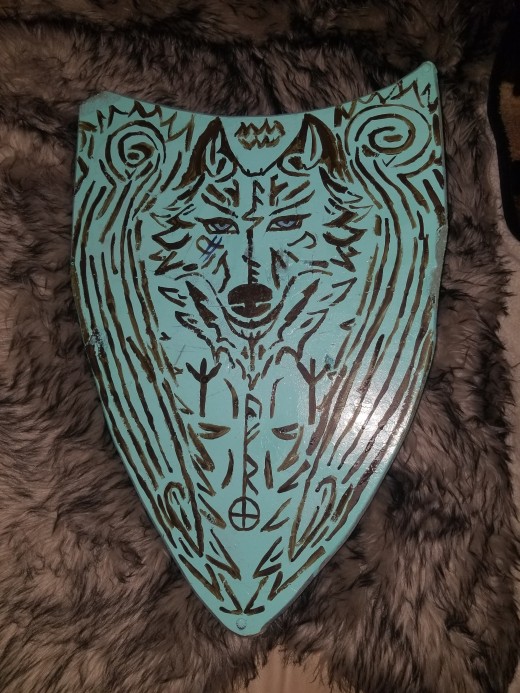
All Volvas Come From Vidulfr, All Wolves Come From Vanagandr
The basic, most common assumption (thank you, Simek) is that Vidulfr is the creation of one of Snorri's scribes and that Vana(r)gand(r) is Fenris. The idea that Vanagandr = Fenris originally seems to have started with Snorri, and has been repeated enough that Vanagandr has become a brand name of products that associate the name with the story of Fenris, making them one and the same in many minds. If one digs deeper, however, one will find that Vanagandr was only assigned a tentative link to Fenris by Snorri as part of Skáldskaparmál, a narrative that he, himself constructed to try to sort out all the kennings that may have been laying about, disconnected at the time. Ignoring Simek (as you should, sometimes) and Reuter (he was a Nazi anyway) and their ideas about "The River Van/Wan", we can break down the name Vanargandr into a compound of two concepts: Vanar/Vanir and Gand/Gandr. Vanar/Vanir is pretty clear. That's the tribe of the gods that includes Freyja, Freyr and Njord. Gandr is less clear, but suffice it to say, it means both "magical tool" (wand, distaff, broom) and "beast" (wolves especially.) It has connotations with "steed" (witches riding brooms, then further back, distaffs, then even further back, great cats and wolves) specifically a magical beast steed that is a wolf. So to summarize: Vanagandr could easily be glossed as: Wolf Steed of the Vanir.
Snorri probably encountered this and didn't know what to do with it. He was a Christian of his time. To him, wolves were evil and satanic and the Vanir were a defeated tribe of love gods. To him, it probably made no sense that the two might be related somehow. Vanagandr was obviously an important wolf, so he probably figured it must be Fenris, the only really important wolf that he thought mattered. What he lacked back then was the huge corpus of correlated data we have today, and also the excited drive to "get it all right again" that is common to Norse Pagans of today who strive to truly understand the spiritual practices of their ancestors.
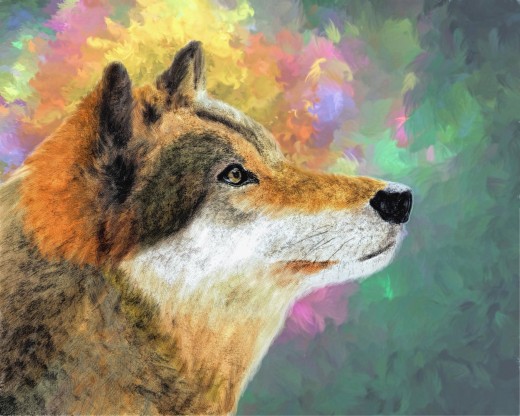
On the subject of wolves being seen as evil and satanic, let us just leave it at this: If you want to destroy a spirituality, you take its most sacred elements and make them evil. You make people dishonor or disrespect the most sacred symbols, the most sacred practices, or the most important god/desses in a powerful, physical way, and wear that mark openly. This is why you see symbolism of bound bears and *bound wolves* among kings (on caskets, even) when the conversion of people in power was happening in earnest, indicating a pagan of influence who converted to Christianity, thereby binding the wolf or bear within. I think there's a strong case for a number of controversial things (like crossdressing) having been spiritual practices that were demonized by the church. You certainly see this in recently colonized and mission-ized cultures in other places in the world (consider the Babaylan of the Philippines), and there is strong evidence for sacred cross-dressing amongst the Old Norse, from warrior women shield-maidens to the "Odin in a dress" effigy known as the Lejre Odin. The church's demonization of wolves has had a crippling effect on maintaining and recovering Old European spirituality, but wolves were once such a powerful, positive force in the European and Germanic cosmology that even still we see the echoes of it in Heathen pagans today. Every day, I see countless heathens desperately reaching for a powerful Old World wolf to run beside, projecting it outward with "viking wolf" and "Wolf of Odin" memes and clothing and quotes, all the while finding only hazy mentions of Ulfhednar and angry bound Fenris in their search for the howl that is calling them home.
While I think the imagery of a bound Fenrir is very fitting for the state of Germanic Paganism (or European Paganism in general,) and while we need to calm the understandably frothing and vicious Fenris within our spiritual gestalt through healing and right-action, Fenris is not the great wolf that we need to be looking to. Every pack has an alpha male and an alpha female, and if the dioscuric pairs of Freyja/Freyr, Njord/Nerthuz, Tiwaz/Zisa, Ullr/Ullin already present within Germanic/Norse/Scandinavian paganism are an indication, we're dealing not with just one "big wolf" but a single two-sided male-female pair that has been maligned and hidden behind the terrifying, evil wolves known as Skoll (Treachery) and Hati (Hater) and probably also behind the mask of Odin's wolves, Geri and Freki (some have suggested that Freki and Fenris were the same wolf too - something to consider.)
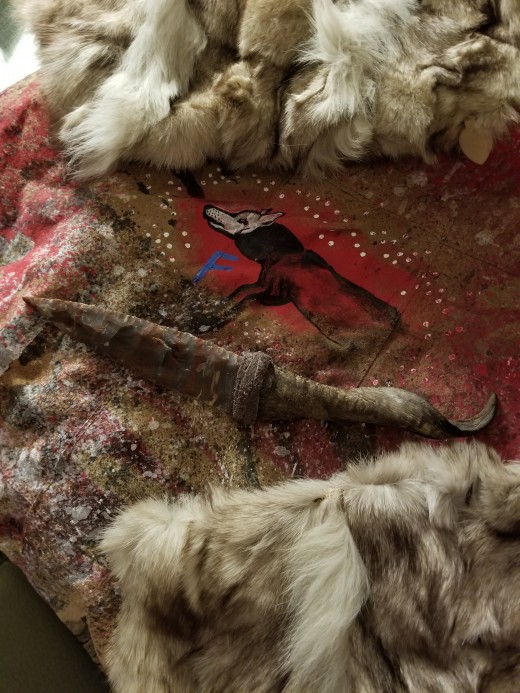
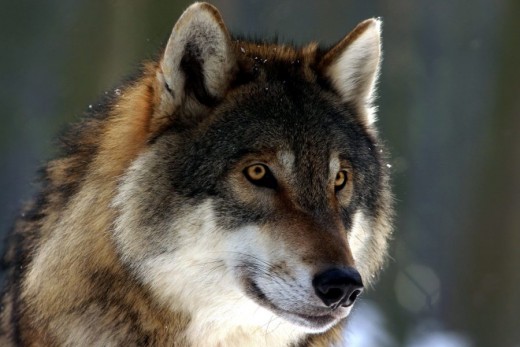
I've already written a powerful post about the Old European relationship with wolves, so I won't go into the same level of detail here. What I will point you toward though is the idea of Vanagandr as a wolf associated with (or ridden by) the Vanir. Consider that Seid magic (Norse Shamanism, essentially) is the magical art associated with the Vanir. Those who practice Seid are primarily called Volvas (Norse Witches / Female Shamans) and all Volvas come from Vidulfr, (the Wolf of the Grove, or the Wide-Wandering Wolf.) I think here we have a clear link to establish that Vanagandr and Vidulfr are probably the same wolf, or two sides of the same dioscuric wolf pair, or the binary (or non-binary) totemic "Wolf" gestalt "ridden" by shamans, or more likely, something that is all three at once. We have a strong tradition of giants or troll women or women of power riding wolves in a magical sense (among other animals) in the corpus of Germanic mythology, but I think people have really taken the idea a little too literally in the last century, creating terrifying visuals like the warg-riding goblins of Lord of the Rings that probably would have mystified our deep ancestors because of how far the concept deviates from the original idea.
Riding on the back of that (pun intended) we can see a corollary in Slavic mythology (another Baltic-rooted sibling/cousin of Germanic mythology) in the Wolf Shepherd and the Wolf Maiden. Depending on who you ask, or what locality you visit, the Wolf Shepherd is seen as either a hairy wolf man of the woods who herds the wolves, a wolf-mother from the sky (like the Turkic Asena) or an old wanderer with a missing eye and a big floppy blue hat with wolves prowling at his feet (like Odin, though sometimes understandably associated with the slavic Dazbog.) In these varying accounts, I think we can begin to see the two sides of Vanagandr/Vidulfr, that of the Odin/Dazbog like figure who wanders the earth and the Asena-like mother of witches who comes from the sky. Adding to that as additional support, consider the idea of the Wolf Maiden, a beautiful young warrior woman (like a valkyrie) who descends from the sky using the power of flight granted by a wolf-hide that allows her to literally turn into a flying wolf. Valkyries have a similar association, as they are depicted as riding through the sky on the backs of wolves in some of the oldest literature about them. (This is also preserved in literature that names wolves as the Valkyrie's steed [Gunnr's Horse, among others] through kennings [poetic allusions.])
In a story that might seem familiar (it is very old and repeated in various forms all over Europe) this Wolf Maiden descends from the sky and is captured by a strong young boy-warrior who keeps her captive by hiding her skin. Together, they have many hybrid children (reminiscent of Asena) until she finds her skin and escapes back to the pack, where she is watched over by the Wolf Shepherd. In at least one variation of the story, the Wolf Shepherd is a goddess (reminiscent of the distaff-mother with wolf associations archetype we see in Frigg / Fricco / Ahrenfrau / Holda / Perchta / Tabiti / Reitia / Hekate / etc.) or a mighty, totemic goddess who is actually a large wolf. She tasks the hero with identifying his Wolf Maiden wife amongst all the wolves of the pack in a seemingly impossible task, but he does manage to do so and they live happily ever after, etc. In other variations of the story, the Wolf Shepherd is male (or Dazbog, or some variation thereof) and he is seen in Slavic Mythology as a wanderer who is very wise, amongst other things. He's also a sun god, which seems to make him unlike Odin (unless you buy into Freya Aswynn's idea of the sun as one eye of Odin and the moon as the eye in Mimir's well) but this actually strengthens his link to wolves (wolves being quite often associated with sun gods and goddesses on the Eurasian continent) if him being literally equated to the male version of "The Wolf Shepherd" was not enough.
There's more, a whole lot more that I should save for future posts (and maybe a book down the line) but I won't bore you with it here. So, back to our original question: Who is the Wandering Wolf?
Two Sides of a Very Old Coin
The simplest answer to the question: "Who is Wandering Wolf?" might seem too easy, and might not make sense at first. In a Norse context, I would say that if you want to pay homage to "The Wandering Wolf," then you should reach out to Odin and Frigga in equal portions, and I'm sure that just raised a whole bunch of questions.
Ask yourself this first: How are Frigga and Freyja related to each other and who is Odr? Ask a hundred people and you'll get fifty different answers. My answer is: Frigga and Freyja come from the same root (Fricco) but they were separate before and after that point. Diffusion can change gods and goddesses a lot over the course of thousands of years, but in the case of Frigga and Freyja, I think we have a clear evolution of a distant "Mistress of Animals" (like Cybele) associated with the moon, sun, spinning, wolves and cats (among other things) who split into wolf goddesses and cat goddesses, became dioscuric in places and merged back together into a single entity in others. History is a mess. My point? Don't exclude Freyja in your worship of Frigga (and Odin) as Shepherd of Wolves, especially when scholars tend to say that Odr (Freyja's husband) and Odin are the same god.
The way I like to see it is like a marriage of Aesir and Vanir, the ancient Kurgan Indo-European Wolf of the westward-pushing nomad hunters (Odin) and the Old European Wolf of the early agrarian native shamans (Frigga/Freyja.) Even this viewpoint is too clean cut, as my research has shown that cultural diffusion has made it very difficult to pinpoint the first source of one certain idea or another, especially when two cultures might have a similar idea and it meshes easily, while other ideas do not and remain more visible as cultural hybrids.
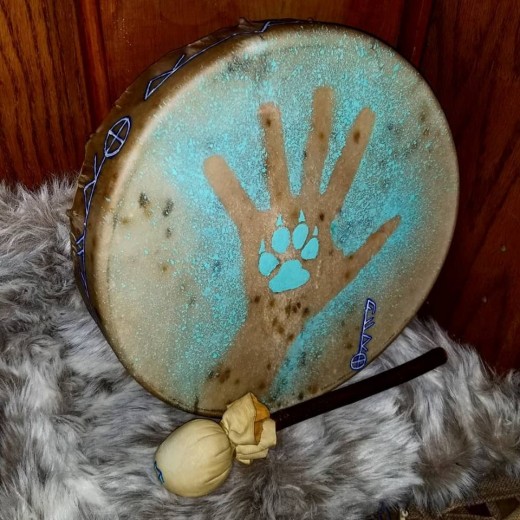
Of course, even with that mountain of evidence (and more that I didn't include) it sounds totally crazy if you tell someone that Odin and Freyja are married and are actually Skoll and Hati, right? It sounds like the kind of thing you'd read in a new age book that's vaguely heathen-flavored, but in a way, it's also true. So, how do we make it easier to digest? How do we make it practical?
Skoll and Hati (and most likely Fenris / Fenrir) are placeholder names for Vidulfr and Vanagandr, the two wolves who shepherd the sun across the sky (these are actually ancient constellations. More about that when I release the book I'm writing on that subject!) These two great alphas are one unit and also two sides of the same spirit. They are the mother and father of ecstasy, of inspiration, and of shamanism. They are ancestral in nature and as watchful and protective of us as their kin as they are dangerous to those who threaten their pack. They are the wolves of the heathen heart, hidden for thousands of years in a fog of mystery, though their howls have been heard by heathens the world over. They are the Wandering Wolf. They are the sky-wolf-ancestor. They are the totemic Wolf who howls loud from a past so distant that it links people with ancestry all over the Eurasian continent with people whose ancestry has been in the Americas since the first migrations. They are the mother and father of shamans, and they are the steed by which one can run with our kin among the great wolf-pack in the sky.
To me, that is the Wandering Wolf, and I honor the two as a totemic, dioscuric whole, a pair of alpha wolves watching from among the trees of the woods and the stars of the skies. The shepherd, the wise guardian and the ancestor of shamans. That is Vanargandr to me. That is Vidulfr to me. That is the spirit of the Wolf in the Old European heart.
I have a few more thoughts on the subject that go beyond the scope of this article. As always, I post my "further thoughts" for patrons only on my Patreon: patreon.com/eswynn
© 2019 Earl S. Wynn