Tips for Developing Your Home Yoga Practice

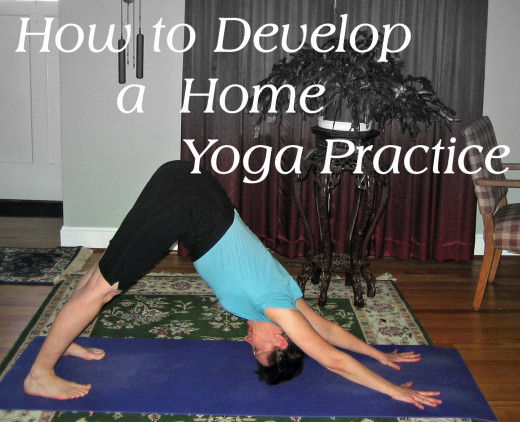
Practicing Yoga at Home In Between Classes
As a yoga teacher, I urge my students to practice yoga at home in-between classes. Most of them have already experienced the benefits of yoga from attending their weekly class. I tell them that the benefits are greater still when they can commit to a regular home practice as well.
It's very difficult for many people to get into the habit of practicing yoga. I understand the difficulty! It took me some time to develop my own regular practice of yoga.
Why is it so difficult for us to begin a home yoga practice? How can we overcome this difficulty? Here are a few tips and guidelines for getting started.
Getting Started With Your Yoga Home Practice
You don't need much in the way of equipment to get started with your yoga home practice, although it's useful to have a non-skid mat, and perhaps a blanket or towel for extra padding.
You also need a cleared space for practicing yoga. It could be a special room or just a corner in your house or apartment that you can set aside for your use. I practice in my living room because that's where I have the most space.
To plan for your yoga practice I suggest that you:
- Set aside 5 - 15 minutes each day at the same time.
- Clear your chosen practice area of unnecessary items.
- Keep your mat and any other "props" stored within easy reach nearby.
- Turn off your phone and computer and avoid other distractions such as laundry or the fridge.
- If necessary, tell your spouse and kids that this is your time and to not disturb you for these few minutes (good luck!).
Then practice!
For a simple, short yoga practice you might start by:
- Sitting quietly for a minute or so as a way to center your mind and to set your intentions.
- Then do 2 - 4 more poses that you remember from class
- And lie down for a short rest (savasana).
Sounds simple, doesn't it? Keep it simple for awhile, until you feel comfortable with doing more.
Why Practice Yoga at Home if You're Already Taking Classes?
Your practice of yoga in between classes will deepen your understanding of what you already do in class. In your own practice you start to internalize the poses and other yoga practices -- you're not outwardly listening to or watching your teacher, but instead you begin to listen to your own inner voice and explore more fully how your own body and mind work.
Your practice of yoga becomes a satisfying, inward quest.
Obstacles to practicing yoga at home
Why is it so hard to get on your mat?
The most common reasons that I hear for not practicing:
- I don't have enough time
- I don't know what to practice
- I'm lazy, I procrastinate
- I'm too tired
- I'm sick or injured
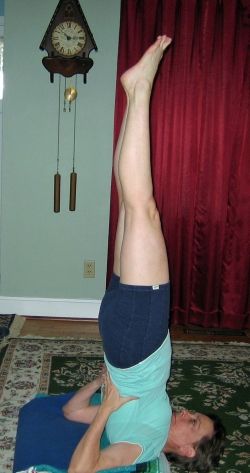
Work Through These Obstacles to Your Yoga Home Practice
Let's briefly address all of these reasons for not practicing:
1. I don't have enough time
This is the most common reason of course. Many of us are already very busy in our lives, and the thought of adding one more activity doesn't seem feasible. BUT....if you can find 10 - 15 minutes in your day to devote to your own practice, you'll see a big improvement in your poses. Maybe you're the type who can easily get up a little earlier in the morning and do a short practice to start your day. You'll feel more energetic during the rest of the day!
Or maybe you have a few minutes during your lunch, or in the evening for a practice. If you're a stay-at-home parent, consider taking time for your practice after the kids are off to school.
It doesn't have to be a long practice -- the trick is being consistent. If you use a planner to schedule your day, schedule yourself in for your practice, and don't cancel! Turn off your cell phone and tell your family that you need these few minutes to yourself with no interruptions, and get to work!
2. I don't know what to practice
This is a valid reason! How do you get started, especially if you're a beginner? I tell my students to practice what they remember from class each week. It's easiest to remember right after class -- you might take a few minutes to jot down some notes or diagrams and refer to them during the week. Beginners might just remember a couple poses, and not quite get them right, but it's a good start. If you do them differently in your practice, you'll figure it out next time you do them in class, and you'll learn more quickly that way.
After you've learned and can remember a few more poses, you may want to start out with a couple of your favorite poses as a way to get yourself motivated and moving, then work on a couple more difficult poses.
Also, check this resource page for yoga sequences for more ideas of what to practice.
3. I'm lazy, I procrastinate
I understand that one completely too :-). Scheduling your practice, as I mentioned above, may help. Promise yourself a treat afterward if you practice (just nothing too decadent, at least not too often!) Set up practice sessions with a buddy. It's harder to put off your practice if you've promised a friend that you'll get together to practice. Don't disappoint your friend!
4. I'm too tired
If you're exhausted after a long day, consider doing a little when you get up in the morning or at lunch (as mentioned above). But you also might give yourself 15 minutes at the end of the day to do a restorative yoga practice -- quiet, calming poses that will soothe the body and the mind. A couple pleasant options are to lie on your back with legs up the wall, or lie with support under your trunk and head, bending the knees to the side with the soles of the feet touching (Supta baddha konasana).
5. I'm sick or injured
It's often a good idea to just rest if you're sick or injured. But if you already have some background in yoga, you might be able to find poses that you can do to help recover more quickly. Again, a restorative yoga practice, or the two poses mentioned in the paragraph above are very good to do if you're sick with a cold or flu or some other relatively mild illness. If you're injured, your yoga teacher may be able to show you a few ways to safely modify poses that will also allow the injured area to heal more quickly. Don't push though! If you feel that your practice is hurting, rather than helping, do stop until you heal or can get help!
Restorative Yoga Video
If you're feeling tired or stressed, you can do a restorative yoga practice. This video is of a nice, soothing restorative sequence.
Even if you don't do the full sequence, just a couple poses to your own ability will be very useful as a way to gently stretch the body and soothe your mind.
Yoga Practice Sequences
Having a set of printed sequences of poses can help you decide what to practice.
Iyengar Yoga Home Practice Sequences: A Resource Page lists a number of sources for finding sequences of poses for you to practice. The first two links are to general practice sequences for Level 1 (beginning) students and Level 2 (intermediate) students. Print these out and keep them near your props for easy access.
If you don't have time to do a whole sequence all the way through, pick a few of the poses and do them in the order that they're listed. Try to include an "inverted" pose (legs higher than heart) even if it's something very simple like lying on your back with the legs up the wall. Also give yourself a little time at the end to rest.
Learn These Poses to Practice at Home
Senior Iyengar Yoga Teacher, John Schumacher, gives clear and concise instructions for individual poses. Listening and watching him teach are great ways to learn more about each of these poses, and will help your own home practice evolve.
The last video is of John teaching a class one of the more difficult standing poses, Parivrtta parsvakonasana, Revolved lateral angle pose.

Yoga for the Rest of Us - Peggy Cappy
Peggy Cappy's well-done Yoga for the Rest of Us programs on PBS stations are very popular, because they're designed for the "average" person who might be stiff, out-of-shape, aging, or feeling aches and pains.
"You don't need to be thin, young, and a contortionist to do this program," says instructor Peggy Cappy.
From the product description:
Yoga for the Rest of Us will ease you into the world of yoga-whatever your age and ability-and can become your personal at-home yoga trainer. Use it in the morning or at night and discover how easily yoga can be incorporated into your daily routine and how quickly you'll see the benefits for your body and spirit.
Books I recommend to help you with your yoga practice
These two books are the ones I recommend most to students who are looking for good references for their own practice.


Don't Give Up!
As I mentioned earlier, it took me awhile to establish a strong personal practice.
You might go through times of strong, easy practices, followed by times that you just can't make yourself do it. Don't be hard on yourself, but don't give up either! Maybe you were attempting too much to begin with. Change your goals to something more reasonable -- make it easier for yourself for awhile. Maybe practice your two favorite poses and let that be your practice for the day. If the spirit moves you, you can always do more.
(Photo purchased through iStockPhoto.com)
Do you take yoga classes? Do you practice in between, or do you have difficulty with a home practice? Any tips that have made practicing easier for you?
Thanks for your comments!