Cufflinks ... attractive and useful additions to clothing for both men and women. Check these out!

Cufflink history
Cufflinks are used to secure the French cuffs of a shirt or blouse. They can be made from a variety of materials, such as glass, stone, leather, metal, precious metal or combinations of these. They also come in a variety of disc shapes and sizes.
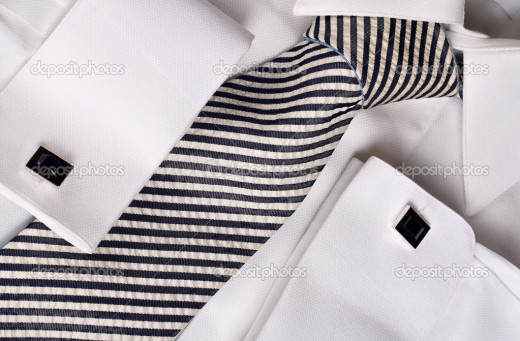
The cufflinks at the top right (on the blue shirt) look elegant. We can't see his tie but it is obvious from the second picture that men choose link colors/designs that correspond with the tie.
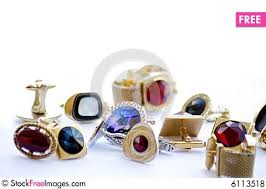
- I love this style of cufflink ... they can be inserted before or after putting on a shirt and they are made in terrific designs and colors. See picture on the right for ideas.
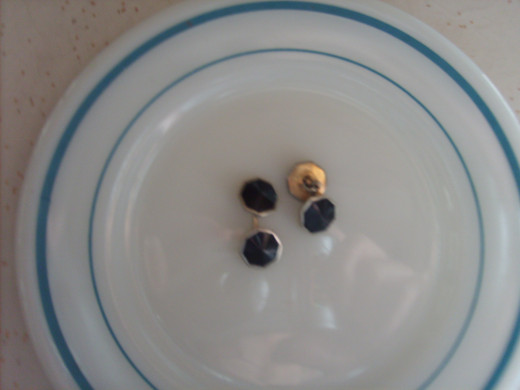
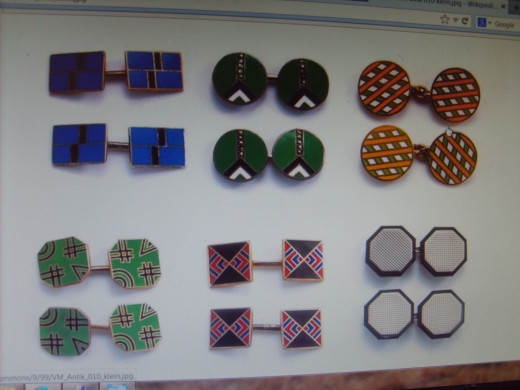
Designs vary widely, one style being the "double-panel", consisting of a short post or chain connecting two disc-shaped parts, both decorated.
While these are very attractive on the cuff, the wearer must insert the links before donning the shirt and the shirt cuffs must be large enough to accommodate the hands. This also applies when removing the shirt.
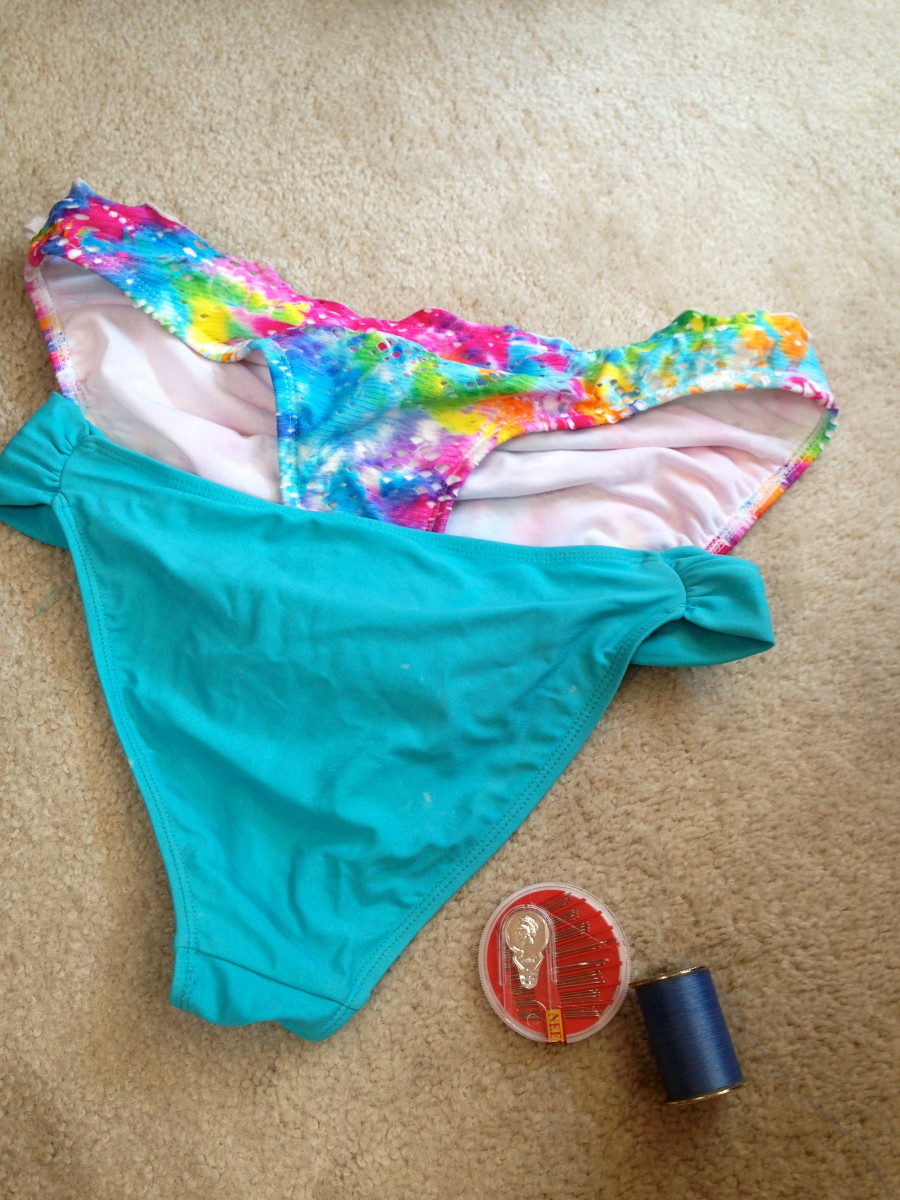
- Sometimes, you will find that the button hole is too small to accommodate the cufflinks (or even buttons), you can snip a couple of threads at each end. Do not panic if too many are clipped, just sew some back with a needle and appropriately colored thread.
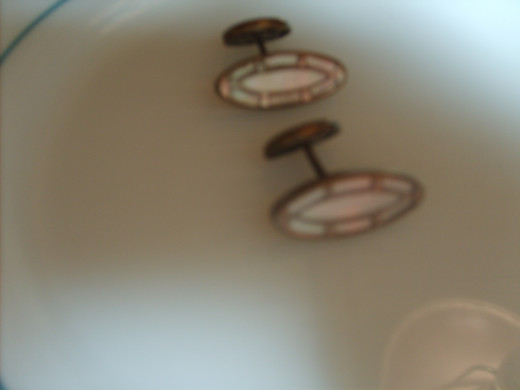
This style of cufflinks has a stationary shank but the back piece is also stationary. It does not pivot as do the ones first pictured. They are very attractive, however, and also come in different colors and designs. I've had this pair for a number of years and they were not purchased new. This particular pair is mother-of-pearl framed in a gold metal.
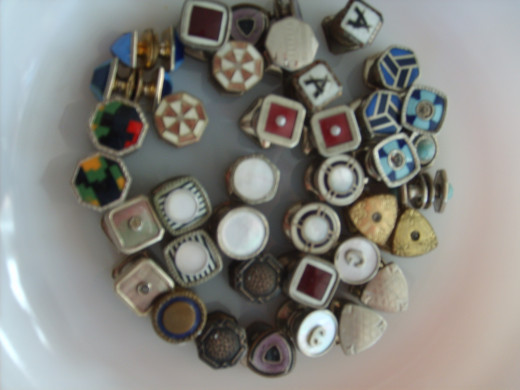
Some of my many snap links, sometimes called bachelor buttons
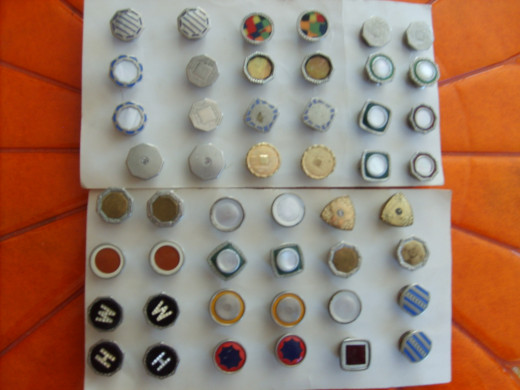
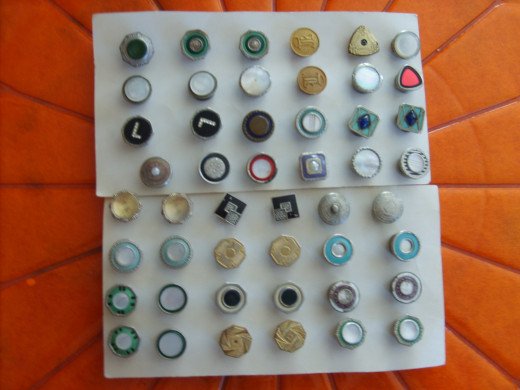
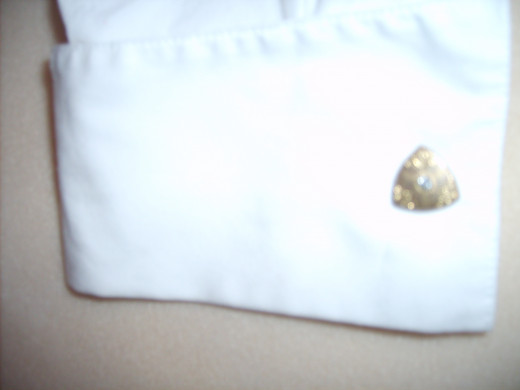
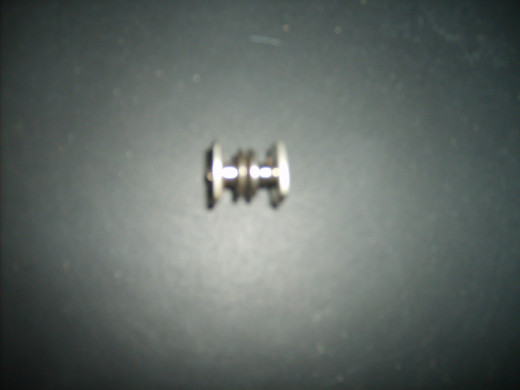
Vintage snap links
In my opinion, these are the most versatile of all of the cufflinks. I've worn shirts with French cuffs since my high school years so consider myself an experienced wearer. A number of years ago a friend gave me a pair of the snap variety because I've always worn shirts with French cuffs and that is how my collection began.
Snap links were sold in pairs, with the front and back identical. They were made in many different colors and designs. Some are square, others are round, and many are rectangular or triangular. The stones also vary in color and some may cover the entire flat surface and, sometimes, a small piece is set in a metal surface.
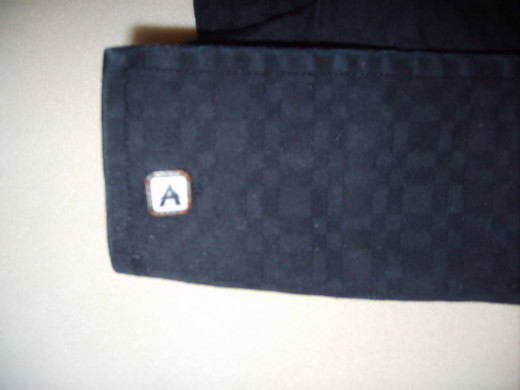
Some links have an initial as can be seen in the pictures. I wanted a pair with the G monogram but was able to only find one set. I had some plain milky white ones so put a couple on the back of the G ones. While this worked very well, other combinations may not.
When inserting these into the cuff slot, one part fits into the cloth fold and the other half fits into the other fold. The cloth is held firmly by the cufflinks. This system is secure enough that the wearer can unsnap the cufflinks and then roll up his/her sleeves in order to wash hands or just keep the cuffs from becoming soiled. Then, when finished, just snap them together again. There is no risk of them falling out as can happen with other styles. See the picture at the right of the profile.
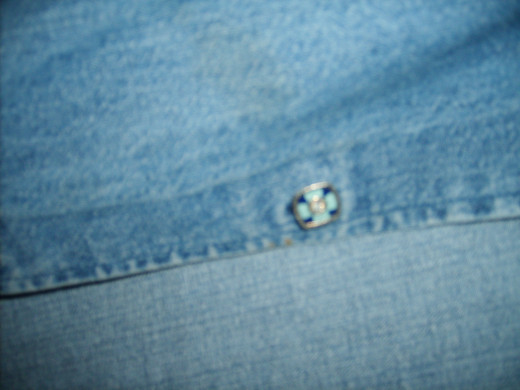
These can also be used to insert into button holes or other openings in vests, jackets, or other clothing for decoration purposes. Think of the decorations put into Croc shoe holes. The second picture on the right shows an example.

French cuff shirts and blouses for girls and women
It is very hard to find this type of clothing for us. Some years, clothing manufacturers decide to have a line but, often, the styles are very limited with a black one from Ralph Lauren or a white one from Faded Glory. Since my black one wore out and my white ones are now too small, I have none.
The pictures show how the appearance of one's clothing can be changed with a cufflink, shoes, purse, scarf, and other accessories.
If you enjoy wearing cufflinks as much as I do, be sure to ask sales associates to have buyers look for shirts and blouses with French cuffs.
Of course, you can always look for them on on-line sites such as eBay and Etsy. Also, check out the sleeve area when looking through shirts/blouses at thrift stores, second hand shops, and garage sales.
Happy hunting and wearing!