Detailed Analysis of Multivariate Testing, Its Benefits, and Drawbacks

Multivariate Testing is One of the Best Ways to Improve Conversion Optimization
A good conversion is the ultimate outcome of any successful website. That is the reason why conversion optimization is prioritized. Conversion rate has turned out to be the leading metric to determine the success ratio of a website. In the quest for obtaining the maximum conversion, marketers and conversion optimizers keep employing multiple techniques and tests. Multivariate Testing is one of the tests which help website owners determine the quality of their websites and improve the conversion rate.

What is Multivariate Testing?
The process of testing multiple variations of more than one website element is called Multivariate testing. Basically, this test is conducted to determine the best combination of different components of a particular web page. The sole aim of this test is increasing conversion by finding the best combination of several important elements.
For example, Multivariate test can be performed on Headlines, CTA Buttons, Images, and much more elements. You can make use of different variations of each element and create all the possible combinations to determine which one performs better amongst the users. The following image can give you a brief about Multivariate Testing.
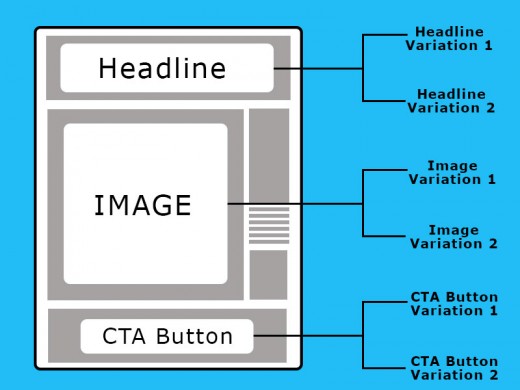
In the above image, I am testing different variations of Headline, Image, and CTA Button of a web page. Following are the facts and figures of the example.
- The original headline has two other variations. So, the total number of headlines is 3.
- The original image has two other variations. So, the total number of images is 3.
- The original CTA Button has two other variations. So, the total number of CTA Buttons is 3.
How to Calculate the Number of Possible Combinations from the Variation in Multivariate Testing
The total number of possible combinations that can be generated from the variations is 27. Below is the procedure to calculate the number of possible combination on a given data.
- (Total Number of Element 1 Variations) X (Total Number of Element 2 Variations) X (Total Number of Element 3 Variations) X … X (Total Number of Element ‘N’ Variations)
In this case, (Total Number of Headline Variations) X (Total Number of Image Variations) X (Total Number of CTA Button Variations) = 3 X 3 X 3 = 27.
When you employ a Multivariate Testing software, it automatically picks up one of the three headlines, images, and CTA buttons to create a combination for the visitors. You or your team members don’t necessarily need to create all the 27 combinations. The software will get the job done by swapping the elements of the web page and creating all of the 27 combinations. Let me show you a few examples of the 27 possible combinations.
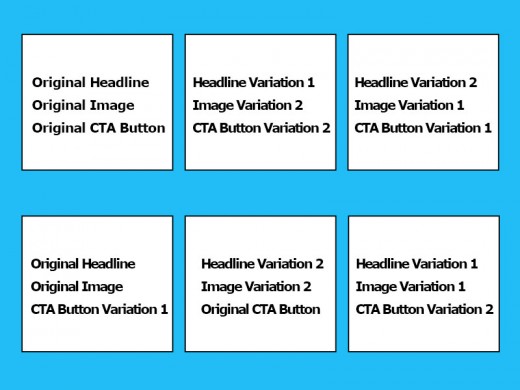
As you can see, I have crafted 6 of the 27 possible combinations using the variations of Headline, Image, and CTA Button. In this way, the Multivariate Testing software can create 27 combinations which are displayed on the website in order to detect which combination is working better.
Top Elements to Compare in Multivariate Testing
A plethora of different components make a whole web page. Each of the components is vital for the conversion. So, you need to be careful and compare every possible element which can increase the conversion rate of your web page. Below are some common and mostly tested elements of a web page.
- Headline
- Image
- Navigation
- CTA Button Style
- CTA Text
- CTA Color
- Sidebar
Tips to Make Multivariate Testing Successful
Multivariate Test is one of the crucial aspects of a web page’s conversion. The whole scenario sounds seemingly easy and nice but a lot of business owners and marketers fail to create a successful test. A poorly designed test can lead to two unfortunate outcomes –
- A pretty long time for the conclusion.
- An inaccurate result (which is truly devastating for any business since you are depending on this test for better conversion).
Designing a successful test scenario, result assessment, and meaningful follow-up test creation are the essential prequels of Multivariate Tests. Suppose, you have not successfully completed any of these mentioned segments before Multivariate Testing. As a result, you may have 20 possible variations of your CTA Button and you have no idea which one to test against the original CTA Button! So, you will end up testing all the variations which can range up to millions!

Without any second thought, Testing is a crucial aspect of any conversion optimization process but not the only one! Once you accumulate the conclusion of other similarly important stages of conversion optimization, only then, you can initiate the testing process. The stages include the likes of Usability Testing, Persona Development, Heuristic Evaluation and much more procedures. You need to surpass these building blocks to finally conduct tests to create a successful website that makes conversion. Now, let’s check out the steps to execute a successful Multivariate Test.
- Scrutinize the web page and highlight the problems you find in it.
- List the issues according to the priority
- Make a hypothesis how to solve those issues and what how your site will be impacted as a result.
- Validate the precision of your hypothesis by conducting Multivariate Test.
- Evaluate the result of the test and create a new test based on the results.
Different Approaches of Multivariate Testing
You can avail 3 different approaches for Multivariate Testing. Following are the briefs about all the three approaches.
1. Element Level Testing
In Element Level Testing, you can test different elements of a web page. Supposedly, you can test 3 headlines, 3 images or 3 CTA texts through this sort of testing. You can evaluate the impact of elements on your web page’s conversion rate through Element Level Testing. Experts label consider this testing approach to be the easiest one and the least effective in enhancing the conversion rate of the web pages.
2. Page Level Testing
In this test, you are equipped to compare and test different elements or combinations of elements of multiple web pages at the same time. Page Level Testing is a more complex process and requires more effort from the development team. As a result, it caters better impact on the conversion rates of the web pages.
3. Visitor Flow Testing
Visitor Flow Testing comprises testing different navigation paths to determine which one is the easiest and most usable for your site. For instance, you can compare different ways how the users navigate to your product pages through the category pages or multi-step checkout vs single-step checkout is also a viable comparison to make for the eCommerce website owners.
Difference of Multivariate Testing from Other Testing Processes
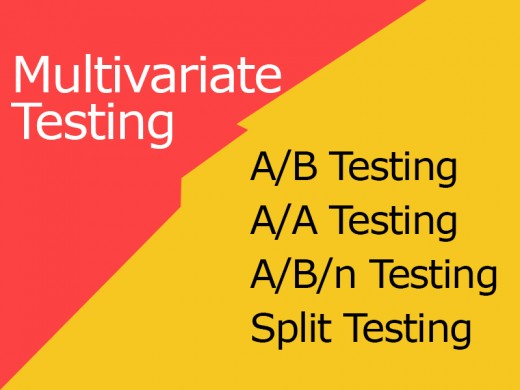
Other than Multivariate Testing, you can find similar testing techniques such as A/B Testing, A/A Testing, and A/B/n Testing. All of these tests share the same goal of increasing the conversion rate of a website. But the difference between Multivariate Testing and the rest of the tests is the components of comparison. While the other tests normally compare two or more variations of a whole web page, Multivariate Testing compares the combination of multiple elements of a single web page.
Benefits of Multivariate Test
Multivariate Test comes with its own set of benefits which can be utilized to enhance your website traffic and conversion.
- Multivariate Test becomes tremendously fruitful when you need to test the different combination of separate elements of the same web page such as Forms, CTAs, Headlines, etc.
- You don’t need to run multiple A/B Test on the same web page with the same goal if the Multivariate Test is conducted appropriately.
- Multivariate Test generates a greater number of variations in a shorter period of time.
Drawbacks of Multivariate Test
Since I am assessing every little detail of Multivariate Testing to inform and guide the individuals, mentioning the drawbacks of the test will certainly help them to be cautious before availing it.
- A great number of visitor traffic is required for reaching a fruitful result through Multivariate Test.
- As a result of the factorial nature, you may see a rapidly increasing number of variations in a Multivariate Test. The increasing number of variation denotes the falling number of allocated traffic.
- In an A/B Test, the entire traffic will be divided in halves whereas Multivariate Testing will split the same number of traffic into quarters, 5ths, 10ths, 100ths, and so on.
- Often a Multivariate Test takes way more than enough time to generate results.
Conclusion – Test Cautiously
When running a Multivariate Test, you need to be attentive, tricky, and ready with a premade hypothesis to make the test successful. A successfully conducted Multivariate Test can offer an unbelievable hike in conversion rate but the test may go upside down and provide poor results or no results if not done properly. So, I would recommend you to run Multivariate Testing under the expert supervision.
© 2018 Abhirup Ghosh