- HubPages»
- Travel and Places»
- Visiting Asia»
- Southern Asia
A Comprehensive Guide to Travelling in Ladakh, India

Why visit Ladakh?
Ladakh has something for everyone, and you could certainly spend a month just in this region exploring rugged trails, taking on white water rapids, enjoying life on a working farm, or visiting Buddhist monasteries or Hindu temples seeking spirituality enlightenment.
In this article, you'll learn how to prepare for a trip, what to expect, the main sights, and the practical tips in finding transportation throughout the area.
Cross-country riding on scenic mountain passes
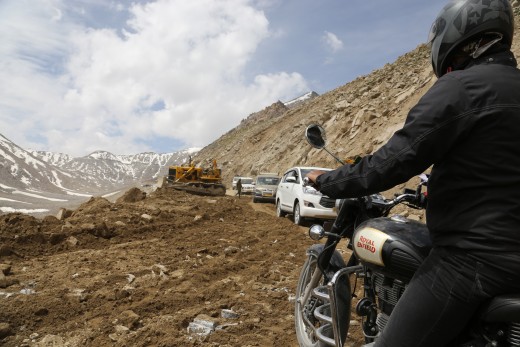
Leh, once the capital of the Ladakh kingdom
Most travellers start their travels in Ladakh from Leh, a large town 3,500m above sea level. Home to an impressive Buddhist monastery perched above the town, Leh offers visitors a comfortable place to base themselves for various overnight trips to scenic lakes and lush valleys, with luxuries like western restaurants, german bakeries and a well-equipped hospital.
Places to visit around Ladakh
Most travellers visit a few scenic points that are well-catered by many tour agencies located in downtown Leh.
- Pangong Tso (or Lake Pangong) - a long picturesque alpine lake that stretches for kilometers from end to end.
- Tso Moriri - another picturesque alpine lake. Some say it's even prettier than Pangong Tso.
- Nubra Valley - a lush green valley filled with farms, a roaring river, and a section of sand dunes towered around by mountains.
- Lamayuru - known for its moon-like landscape, marred by dramatic craters.
Buses - the lifeline of the locals on Ladakh
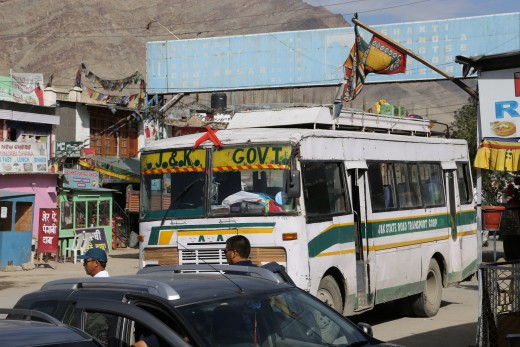
Transportation: Getting around Ladakh
If you don't own your own vehicle, your best bet to moving around Ladakh is finding a shared taxi with other travellers. Tour agencies can easily arrange for them, and the more people you go with, the cheaper it is.
Motorbike riders may rent motorcycles from Leh only, but the condition of the bikes may be questionable. Be sure to check them well, and know how to perform field maintenance.
For the budget conscious, head to the bus station and buy a ticket. Buses do not travel everyday though.
Comparison of transportation costs
Mode of transportation
| Cost
| Time
|
|---|---|---|
Bus
| 500 Rupees (return trip)
| 7 hours
|
Shared Taxi
| 5819 Rupees (shared by passengers)
| 5-6 hours
|
Motorbike
| 3000 Rupees (2 day rental)
| 5-6 hours
|
The roads that lead up to the breathtaking mountain passes
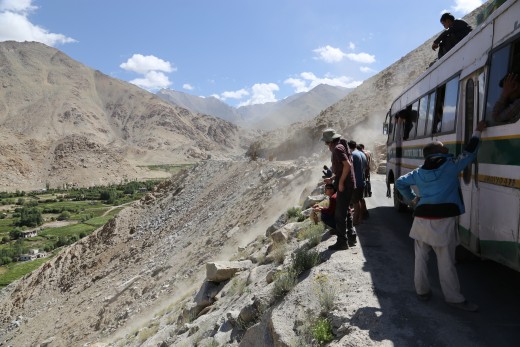
Always buffer extra time!
The mountain passes are always under repair, as landslides and seasonal changes take their toll on the tarmac. If a stretch of road is under repair, you might encounter a traffic jam that might take up to an hour to clear. It is not advisable to plan a trip to a place a few hours away, if you need to catch a connecting trip later on during the day.
Taking care of your personal health and safety
Travelling in the heights of the Himalayas offers many challenges, even for the seasoned traveller. Do look out for the following conditions.
Altitude Sickness / Acute Mountain Sickness (AMS)
Being short of breath is normal, if you're not used to the altitude. But if you're constantly feeling dizzy, start becoming delirious, lack appetite for a few days, or find it hard to breathe, seek medical help. For a minor case, pharmacies in Leh may prescribe Diamox to help alleviate the symptoms.
Weather
While tropical India is typically hot, the mountains of Ladakh ranges from chilly to frigid, depending on the time of year. Bring along a proper jacket that can withstand up to single digits for summer, or a down coat in winter. If you're intending to camp at the lakes, make sure you have a tent and a sleeping bag that can keep your heat in.
Personal safety
The people of Leh are very friendly, even to pesky travellers who peek into their homes and make their presence felt everywhere. But as with anywhere in the world, keep an eye out for pickpockets, do not venture into secluded alleys at night, and always account for your personal belongings.
Pangong Tso
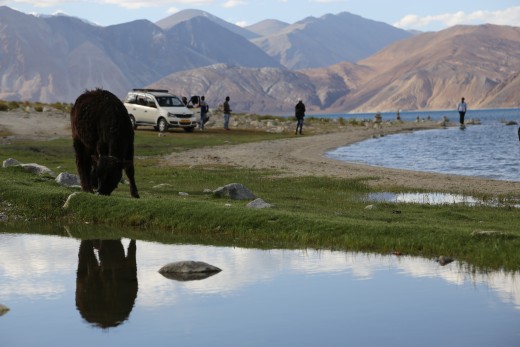
Pangong Tso (or Lake Pangong)
Made famous by the movie "The 3 Idiots", Pangong Tso sees loads of tourists descending to the famous spot where the film was shot.
The main town is Spangmik, a small settlement with plenty of campsites and guesthouses. Travellers do not need to reserve beforehand on hotel booking sites - there's plenty of (cheaper) options to choose from when you get there.
8km down from Spangmik, the town of Man also has campsites and guesthouses for weary travellers to settle in for the night. Both towns face the lake at different points, so it might be interesting to check them out on different nights.
The Nubra Valley
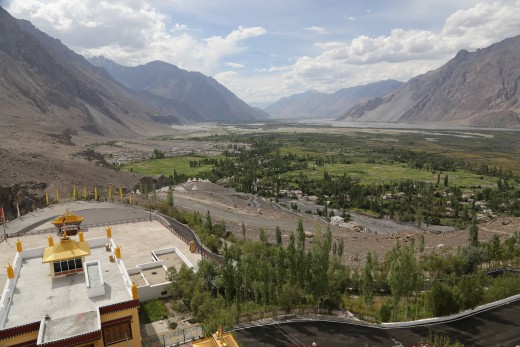
Nubra Valley
The Nubra Valley is 6 hours away by car, and if you're coming over from Leh, you'll head up to the world's highest motorable road at the Khardung-la Pass, an eye-watering 5,359m above sea level.
From there, you'll move down to the fertile valleys of Diskit and Hunder, where farms and sand dunes greet you. If you have some cash to spare, locals offer Bactrian camel rides for a short distance on the dunes.
Also worthy of mention is the monastery of Diskit, which displays what is claimed to be the mummified hand of an ancient Mongolian warrior. The views from the top of monastery is also breathtaking, and is worth the tiring climb up.
Best time to visit
The best time to visit Ladakh is between May to September, although if you're travelling up to Leh from Manali, then note that the highway only opens from June onwards.
Since winter sees heavy snowfall, you might find yourself stuck in Leh for days on end, if you choose to visit after September.
Local snacks
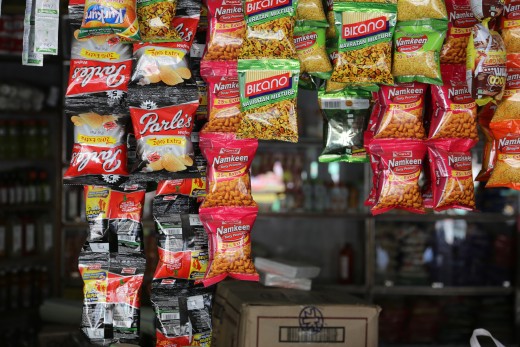
The cuisine of Ladakh
The local cuisine is closely related to the Sherpa of Nepal or the Tibetans, made up of steaming momos (dumplings), noodles and rice. Indian food is also readily available, from the staple biriyani with all kinds of curries and thick gravies.
In downtown Leh, many western restaurants offer Italian cuisine (pastas and pizzas), Korean cuisine (kimchi, bibimbap), Israeli (hummus, pita bread) and Chinese (chowmein, fried rice), so homesick travellers can find some comfort in familiar food.
For long bus journeys, bring along a packet of local spicy crackers from any general store. They come in all sizes, but get one with a resealable opening so the crackers don't lose their fresh crispness once opened.
If you'r still acclimatising to the altitude though, avoid overeating as it might worsen your condition.