Does Anyone Know What I Am?
In the beginning there was me
When I read any nationalistic, or emotionally heart-warming poetry to do with Homeland or Homesickness or Patriotism or any of those other rousing Abstract Nouns, I think, “Yeah right! What about me and all the other Sticky Out People?”
I don’t mean people like Christopher Reilly’s Mr Sticky, or adhesive or even semi-adhesive people. I mean people who just don’t fit into that, “We’re-All-from-the-Same-Country-and-It’s-the-Best-Country-in-the-World” group.
You know the ones I mean. The ones that I’m not: The ones who stand up to attention when their National Anthem is played; standing up ever so straight with tears in their eyes.
I’m not knocking them at all; far from it. I would stand to attention if they were playing my National Anthem… if I could work out which one it is.
Look at it this way: Some people base their National Loyalties on their ethnicity; some base it on the place in which they were born; some base it on the place in which they are living... or where they were brought up.
When I say Living In or Born In, I’m talking about Countries, of course.
I mean: it would be silly if Mrs Valerie Hawkins from 23, Acacia Terrace, Streatham got very emotional when the Acacia Terrace National Anthem was played… I mean; there isn’t a National Anthem specifically for Acacia Terrace, is there? I don’t think there’s even a national Anthem for Streatham, come to think of it. I may be wrong, and please let me know if there is, and I’ll adjust this hub.
It's my hub, so I'm going to choose who it's going to be about
OK. So let’s base this treatise on me.
OK, so it’s not a treatise, because it isn’t long enough, and I don’t have a supervisor.
So let’s call it an essay.
OK, perhaps it isn’t clever enough to be an essay.
I’m calling it a hub. That’s my final word. And as it’s my hub, and I’m writing it, I get to choose who it’s going to be about…
And it’s going to be about me.
OK?
(Sorry Mrs Valerie Hawkins; just wait in line, or write your own hub).
Ethnicity
If we start with ethnicity, it’s not as easy as it looks. I mean; you can’t just wander over to a mirror (or looking glass, if you’re posh) and have a quick look and say, “Right! I’m this or I’m that”. It’s not as easy as that. That’s where Family History comes in.
First of all you ask your Parents, and if they’re not too sure, you ask the Grandparents.
If you have to go further back than that, then it could be a little bit more difficult.
My Father
There's no such thing as English ethnicity.
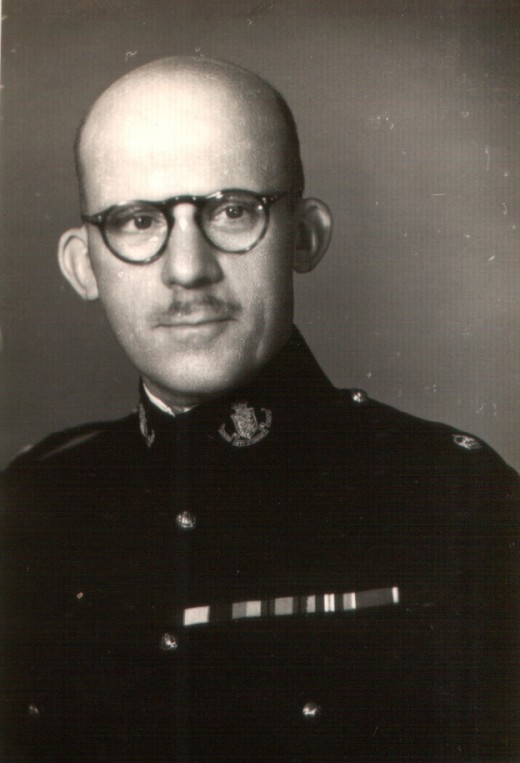
My Father would probably have said he was English. But there is no such thing as English ethnicity.
The English are just a crowd of invaders and immigrants. For a couple of thousand years or more, people have been wandering into England and settling down. Sometimes they came because they were being oppressed or persecuted in their own countries (wherever that was) or they came over on the ferry for a day trip; liked it, and decided to stay. My father was English, so I shall have to go back and look at what was his ethnic makeup.
My Great Uncle Charles knew all about my father’s family, so he was very useful. He did a lot of research for some reason or other. Great Uncle Charles; very useful… barking mad, apparently, but useful.
But we have to go back to my Paternal Grandfather to sort this bit out.
According to Great Uncle Charles, my father’s family were Huguenots.
Huguenots? What are they?
Huguenots or Flemish Weavers came to England in the 17th century. They were refugees fleeing religious persecution. By the end of the 17th century, roughly 200,000 Huguenots (mainly French and Flemish Protestants) had been driven from France during a series of religious persecutions; one of the worst incidents being the
Massacre of Saint Bartholomew’s Day, which was instigated by Catherine de’Medici, mother of Charles IX of France.
These “Flemish Weavers” relocated primarily in England, Switzerland, the Dutch Republic and parts of Germany where they established clothing and linen trades.
Some of them (or even lots of them) were apparently my Grandfather’s, and consequently, my Father’s ancestors.
Nobody liked them very much, for some reason, and were always asking them to go home. But home was where everybody liked them even less and wanted to kill them and do nasty things to them, so they stayed in England.
When I say."them", i don't mean just my ancestors, I mean all the Huguenots.
An easy bit
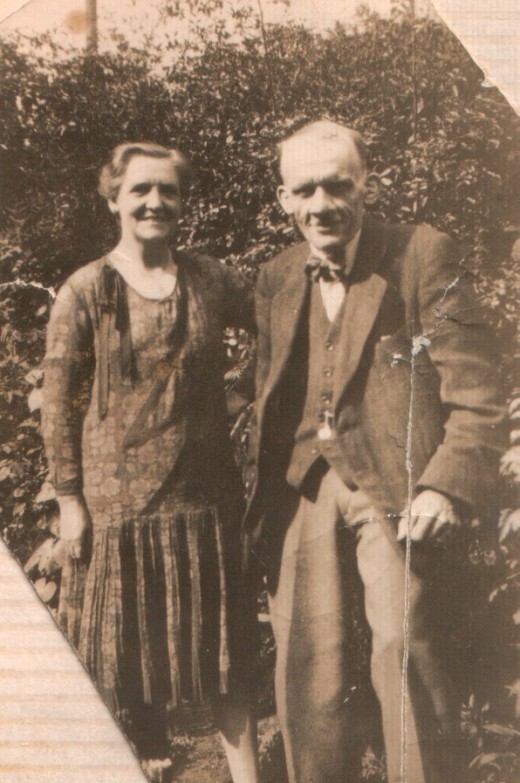
The next bit is easy. My Father’s mother was Jewish and that is all I know of her.
If only I had asked questions… but it’s too late now.
So we’re getting closer. My Father was half that Huguenot business and half Jewish.
And as his mother was Jewish, by Jewish Law, that made him Jewish too.
That's all a bit complicated, and I don't really understand, but let's press on, shall we?
The Cambrain bit
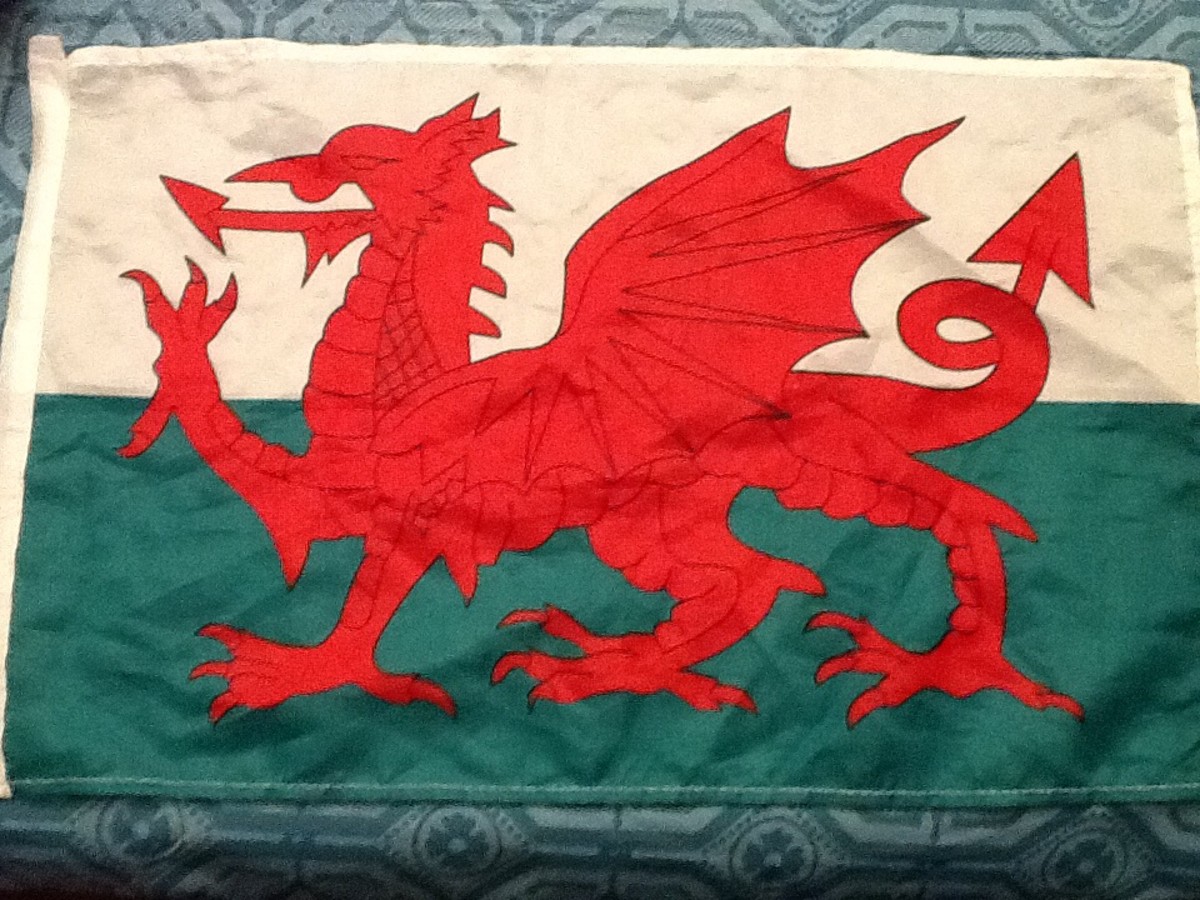
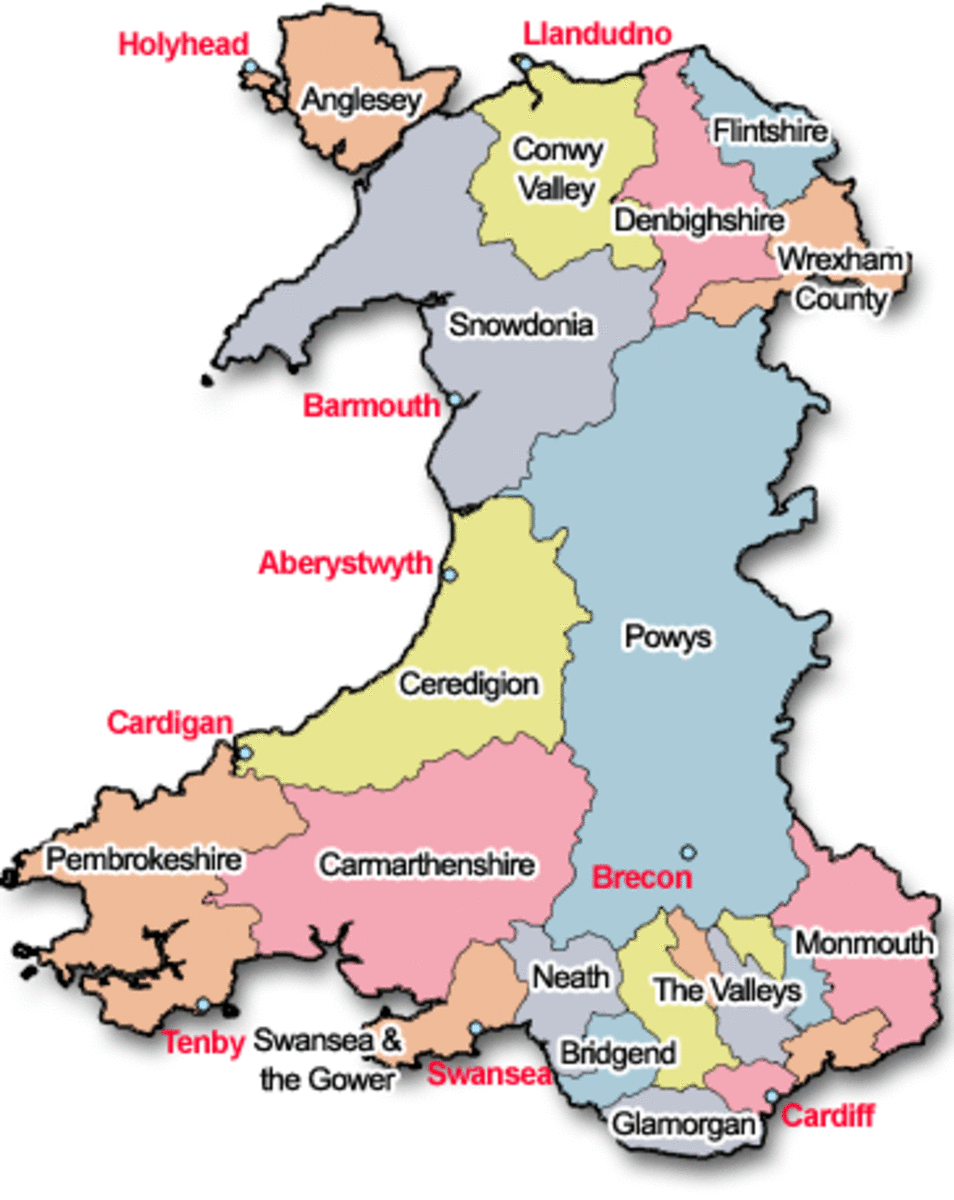
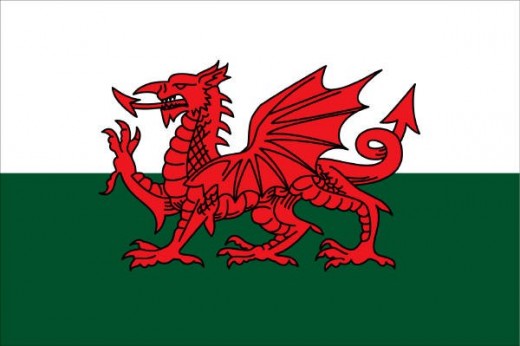
My Mother was Welsh, and naturally her Father and Mother were also Welsh and the whole family had been for as long as anybody cared to remember… and longer.
So, if my Mathematics are correct: If my Father was half Huguenot and half Jewish and my Mother was entirely Welsh, through and through, then I am a quarter Huguenot, a quarter Jewish and half Welsh.
Or if that Jewish grandmother bit holds true, then I'm half Welsh and half Jewish.
But I like the Huguenot business, so I'll think about that later.
My Paternal Grandfather and Grandmother
Language
Does the language we speak help in deciding out National Loyalties
Not really
My Grandfather didn’t speak a word of whatever language my ancestors spoke when they came to England. They had arrived in England after the Persecution of the Protestants, specifically the Saint Bartholomew’s Day Massacre ordered by Catherine de’Medici And you may not know this, but French wasn’t spoken in most of France then; apart from at the Royal Court or in the posher parts of Paris. Or perhaps they spoke a form of Flemish, Dutch, Walloon or some other language or all or any of these. My Father’s father spoke not a word. He came form Essex, and spoke English.
My Grandmother may have been Jewish but her family had been in England for yonks so she would have spoken English. Her family, it appeared, were also victim of persecution somewhere in the world, but when and where, I have no idea.
So my father spoke only English when he was growing up in Essex.
My Maternal Grandparents - Mamgu and Granddad
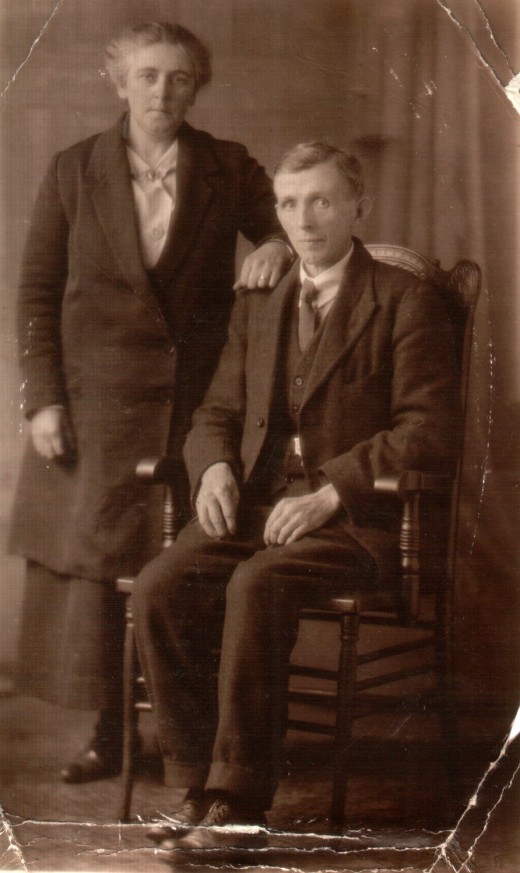
My mother only spoke Welsh till she was about sixteen. My mother, her sister and two brothers spoke Welsh and so did my Mamgu (Pronounced mam-gee) my Maternal Grandmother. Also everybody in the village used Welsh as their First Language, but English (the language of the United Kingdom) as their Second Language… (That means if there were any non Welsh speaking people about).
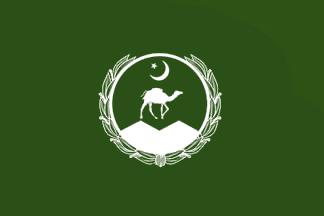
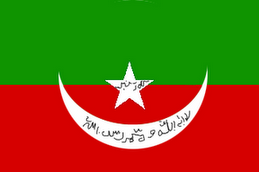
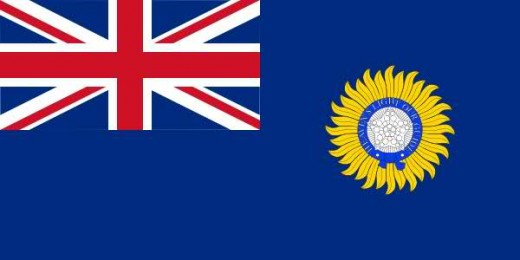
I was born in Baluchistan.
I was born in Baluchistan.
When I was a very little boy, my parents employed an Ayah (Indian nursemaid) who was in charge of me and did everything a good nursemaid does. But what my parents were not expecting; my Ayah and I became very close, and as she was a Baluchi, she spoke to me in Barohi (the classical language of Baluchistan) and Baluch, and I picked up the language so well that soon I was only speaking in Barohi, and some Baluch
So my parents took me away from her because they worried that I wouldn't speak English.
“My God, we don’t want the little blighter ‘Going Native’ on us”.
We lived in Quetta, the capital city, I was surrounded by the Indians who lived and worked in the area: postmen, house servants, soldiers from the barracks, Aunties and Indian friends.
No matter what my parents attempted, they could not prevent me from speaking in the local languages (Barohi and Baluch) and most probably Urdu. I spoke to my father in English and my mother in Welsh and English.
"Come and see the little black boy." (Said in Welsh)
When I was about five, my mother returned to the UK and lived in the village of Crynant, Glamorganshire, South Wales with her mother and family for six months of the year, and then with my paternal Grandfather in Colchester, Essex, England, for the rest of the year.
When in Wales I went to a Welsh speaking school and spoke Welsh, fluently. At home I spoke Welsh as we were living in my Welsh Mamgu's (Grandmother's) house.
In Colchester, I spoke English exclusively at school, with my mother, with my Grandfather and with my friends.
When I returned to Wales with my mother, the people in the village made any excuse to come and see me. Although they had known my Mother since she was a little girl, and knew that she had married an Englishman, they were convinced they were going t see their first black child.
I was born in India! Well I had to be black, didn’t I?
My Mother and I - Dehu Road, near Poona (Pune) India
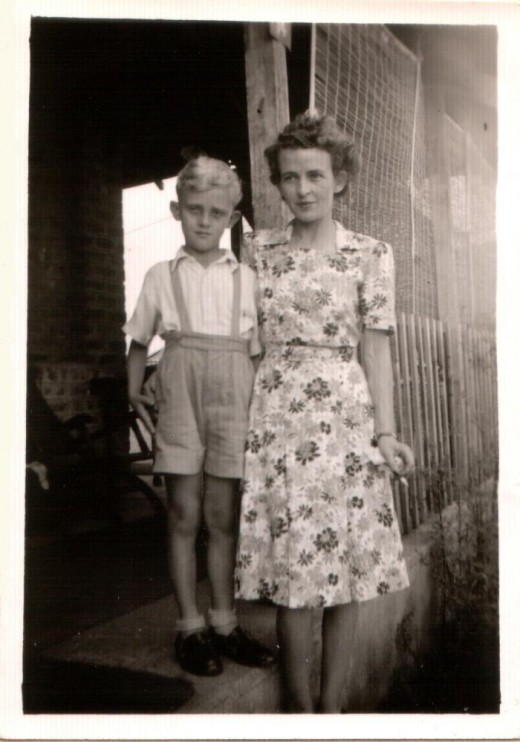
My Mother and I returned to India, to be reunited with my Father, shortly after World War II.
We lived in the Cantonment of Dehu Road which is near Poona (now Pune) in Maharashtra Province.
I spoke Marathi because Krishna, our bearer, was Marathi speaking, and I spent as much of my time with him as possible. I adored Krishna. He was the one most important person in my life.
I think our Khansama (Cook) was also Marathi speaking and I liked him, and of course the other Indians I met were Marathi or Hindustani, Urdu or Hindi speaking.
I spoke Urdu and Hindi (Basically the same really) because I lived in India and most of us spoke this language, or tried to, where possible.
Before the Partition of British India, the terms Hindustani, Urdu and Hindi were synonymous; all covered what would be called Urdu and Hindi today.
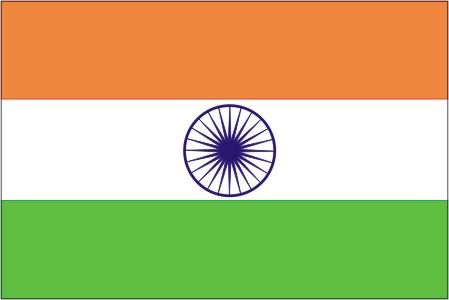
Some base their National Loyalties on the place in which they are living… or have lived
I am an Anglo Indian (My father was English; my mother was Welsh) because I was born in India, of British parentage.
But when, after Partition, we went to the cinema; at the end of the movie, when they played the new Indian National Anthem, “Jai Hind” (Great India) I was one of those Indians who stood up so proudly and sang along, although I most probably didn’t get the words right… but it was my country. i was an Indian. I didn't think of myself as anything else.
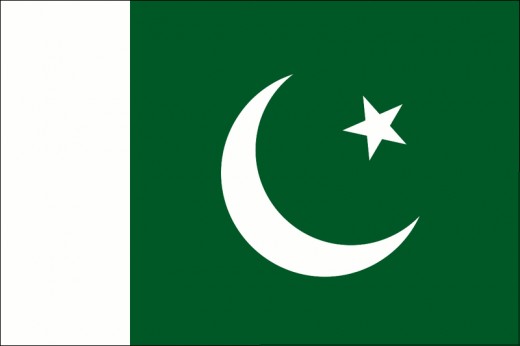
To lend some confusion: the part of India I was born in (Baluchistan) became part of Pakistan on Partition in 1947, so I am officially Anglo Pakistani. But I was born in British India and lived, on and off in the years since my birth, before Partition, in what now is India so I am an Anglo Indian.
But Anglo Indian or Anglo Pakistani, when the Quit India people decided to throw the British out of the Sub Continent, they threw this baby out with the bathwater. I was left with little; no homeland; no Krishna, the bearer who was the person I loved most in the world... No feelings of belonging; just a mouthful of different languages that I had learned in the first eight years of my life.

Am I a foreigner?
So my parents and I landed in Perth, West Australia where I spent the rest of my growing up, until coming back to the UK when I was twenty-five.
When we arrived in West Australia, although the same colour scheme as the rest of the children in my class and school when in Perth, I was subjected of “Racial Discrimination” (or was it just teasing? It hurt all the same) when first in the school in Victoria Park because I was an Indian.
My teacher had introduced me on the first day with, “This is Ian. He’s the new boy in the class. You must be nice to him because he’s come all the way from India”.
Great!
In the playground the other children surrounded me and did the “Woo! Woo! Woo!” sounds obligatory for American “Red Indians" as people referred to Ethnic Americans in those days..
“Red Indian, white man’s enemy” .
So when she tried to diffuse the situation by telling them that I wasn’t a Red Indian, but that my Daddy came from England and my Mummy came from Wales, they decided to charge around the playground shrieking, “Beware the Whale will get you. The Whale ate Jonah, Blah Blah Blah”.
It’s not easy fitting in, I tell you.
Where do we owe our loyalties?
Some people base their National Loyalties on their ethnicity.
Am I Walloon? French? Welsh? English? Jewish? Flemish?
Some even base their National Loyalties on the language they speak, usually based on their ethnicity.
English? Welsh? Marathi? Urdu? Hindi? Barohi? Baluchi?
Some base their National Loyalties on the place in which they were born.
Quetta Baluchistan. Yes, that’s right: but Quetta, Baluchistan in British India, in Pakistan, or as an Independent State, as some Baluchis want?
Some base their National Loyalties on the place in which they are living… or have lived:
Quetta? Crynant? Colchester? Dehu Road? Perth? London?
Extract from the ‘Lay of the Last Minstrel’ by Sir Walter
“Breathes there the man, with soul so dead,
Who never to himself hath said,
This is my own, my native land!
Whose heart hath ne'er within him burn'd,
As home his footsteps he hath turn'd,
From wandering on a foreign strand!
If such there breathe, go, mark him well;
For him no Minstrel raptures swell;”
Just a thought...
As I said earlier: I would stand to attention if they were playing my National Anthem… if I could work out which one it is.
This is a hub relating to me and where I come from; both geographically and emotionally. If you liked it, perhaps you would like the others here included.
- Jeanette MacDonald goes to Broadstairs
My parents met in about 1937, when my mother was a nanny to a rather rich Polish family living in Ivor, Buckinghamshire. As part of her duties, she would travel to a local private school to collect the little girl in her charge, Anne Zinzinanix I'm - Chrome
Chrome When I was just a child in India How many times has that prefaced a tale? Our Mali fashioned for me with two sticks and net, a toy. A net for butterflies. And I went out and gathered Scooped the air and brought within our bungalow Plucked fro - Krishna in the Morning
I had woken when Krishna came into the room and had brought me out of light sleep as his dry feet moved over the dry floor. Krishna always walked so quietly, so as not to wake the Chota Sahib. He walked so quietly, but when he saw that I was awake he - Good Bye - A Poem Concerning departure
"Good Bye" by "Anonymous" This Poem was printed in: The Indian Army Ordnance Corps Gazette Vol. 25 December 1947 No. 12 The Author ("Anonymous") expresses her sorrow at leaving India and the wonderful India People; the country and people whom she had