- HubPages»
- Travel and Places»
- Visiting Asia»
- Southern Asia
Panchthupi, the place where three religions meet


Panchthupi, where the three great religions meet
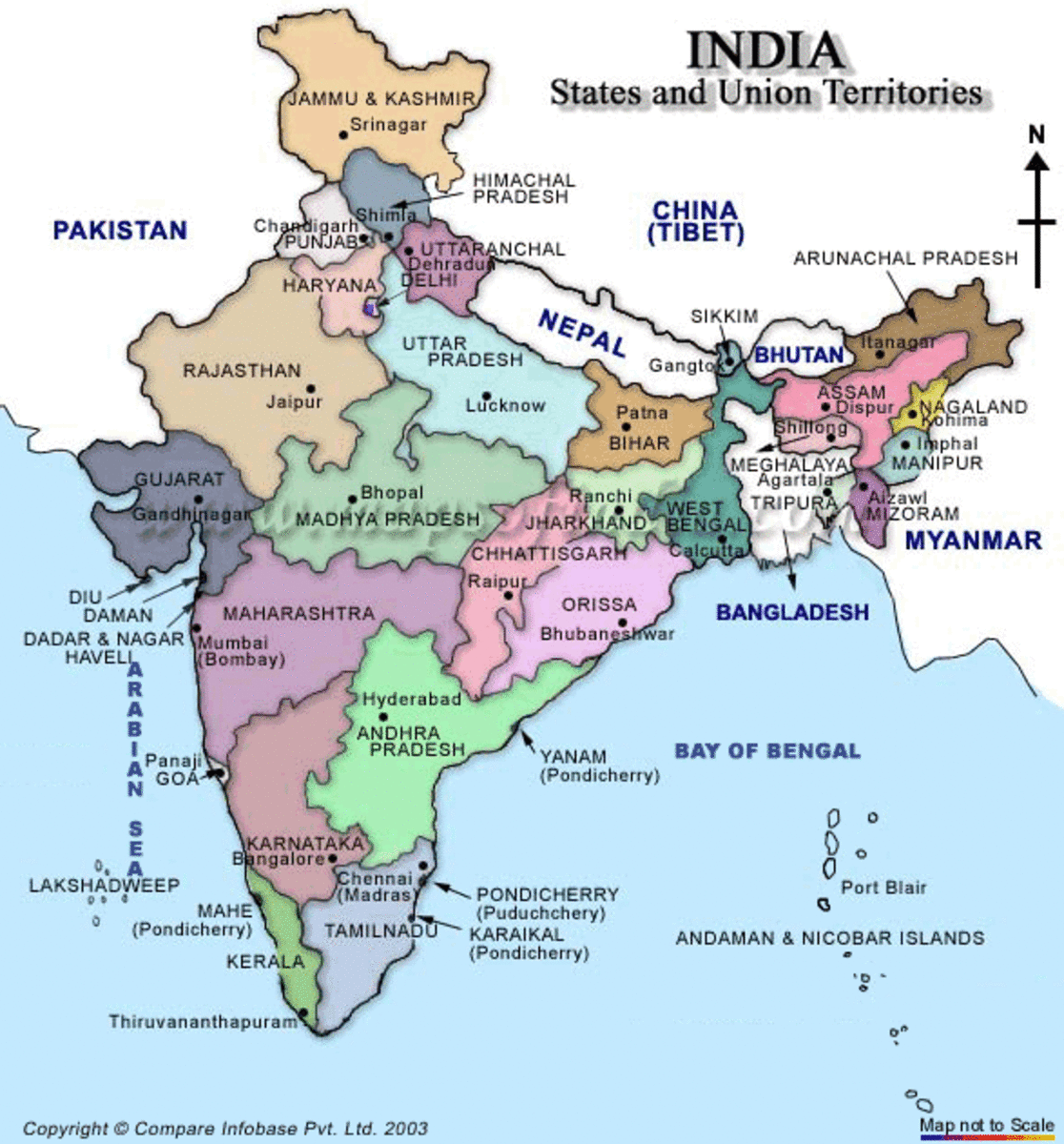
Panchthupi is an ancient village in the district of Murdshidabad in West Bengal, India. Its name is derived from the words “Pancha Stupa” meaning Five Stupa-s, Stupa being the name of a dome-shaped structure constructed in the memory of, & often containing some relic of, Gautama Buddha, the founder of Buddhist religion. It is said that there were five Buddhist Stupas here more than two thousand years ago, but today nothing except a small mound of grass covered soil called “BARO KONAR DEUL” (meaning The temple with twelve angles) stands there. However, it is a sacred place, & holy for the lovers of History.
One can reach Pancthupi by bus or by car from Kandi, a small town about 44 km from Baharampur, the main town of the district. A narrow but good pitch road winds amidst green paddy fields to reach the village, about 15 km from Kandi. On entering the village, the first thing that attracts the eyes is the number of big houses all around, indicating the rich past. People will gather around you, & ask questions, but they are cordial & friendly, & proud too of their heritage. Someone or other invariably help you to find the important sites of the village, & in my case it was Mr. Nirmal Kumar Ghosh alias Rabi, the caretaker of the magnificent NABARATNA temple . He kindly acted as my guide.
The important sites of Pancthupi can be divided into three groups :
a) Hindu temples
b) Islamic heritage, &
c) The Buddhist relic.
Let me describe those one by one.
Hindu temples
Panchthupi has many Hindu temples, the important ones being the NABARATNA temple, Lakshmi Janardan temple, Singhabahini temple, Jorbangla temple of Shyamsundar, the temple of Jatadhari Shiva etc.
NABARATNA Temple
This is the most important temple in Panchthupi, & can easily be the single reason for visiting Panchthupi.
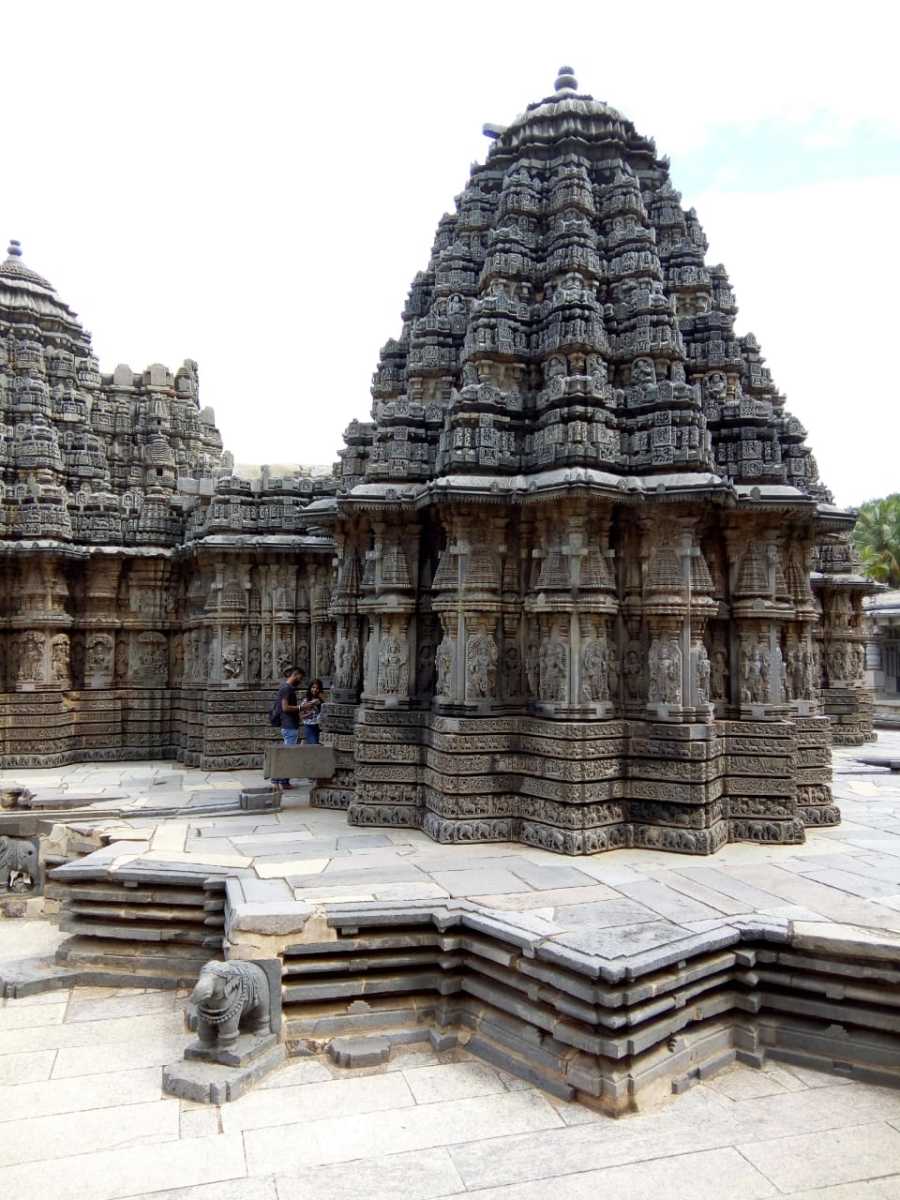
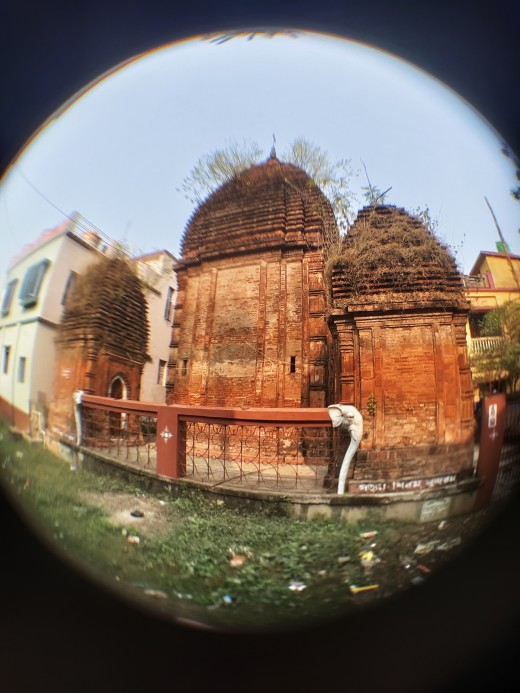
The first thing to be mentioned here is that in Bengal temple vocabulary, the term NABARATNA means a temple with Nine (NABA) turrets(RATNA-s). But astonishingly, this temple, built in mid-18th century by the local landlord Jagannath Prasad Ghosh, is not a temple with nine turrets, rather it a very special type of temple called PANCHAYATANA temple where on a square plinth there are five separate temples, one large central one with four smaller ones at four corners. There are very few, if any at all, Panchayatana temple in present day West Bengal, & here lies its uniqueness.
Then why it is called Nabaratna ?
The answer was provided by Mr. Rabi --- the Naba (=Nine) Ratna-s (=Gems) are the nine Shiva Lingams placed inside the temples!
There is the large Lingam made of black stone in the centre of the central temple, with four smaller ones made of white marble surrounding it (thus 1+4=5) & one Shiva Lingam inside each of the corner temples, thus making the total number 5+4=9 , the Nine Gems.
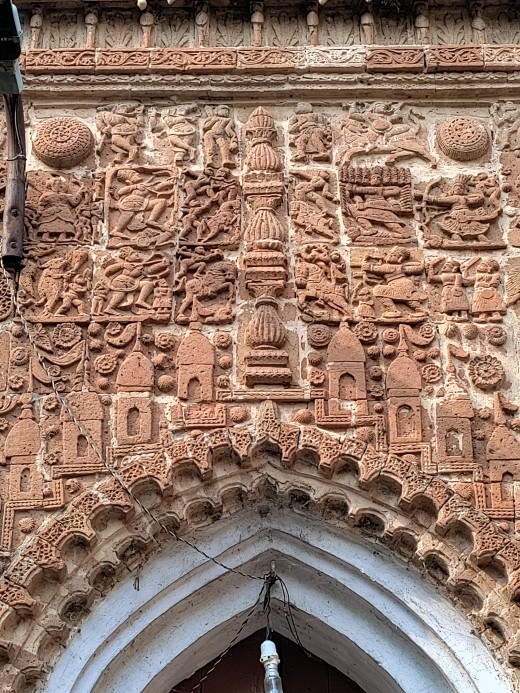
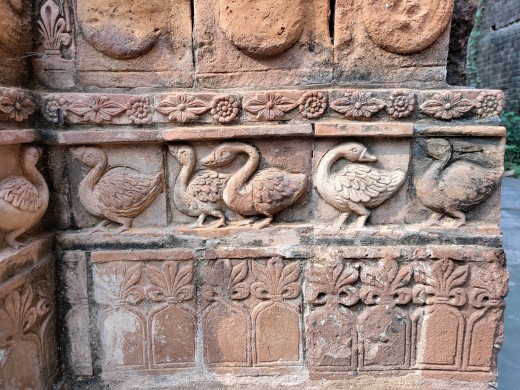
All the five temples are of classical Rekh Deul style, with prominent Ratha-Paga patterns at the sides & ridged turrets above. They are decorated with a variety of terracotta art, though majority are partially destroyed now. The remaining ones , though not at per with those of Vishnupur or Baronagar in excellence, are fine. One important finer point should be mentioned here, some of the floral deigns, specially the Chains, reminds us of Islamic designs.
But the importance of this temple lies not in the terracotta work, but in the fact that it is one of the two examples of Panchayatana temple in West Bengal today, the second one can be seen at Baikanthapur, Purva Bardhaman district.



JORBANGLA temple of Shyamsundar
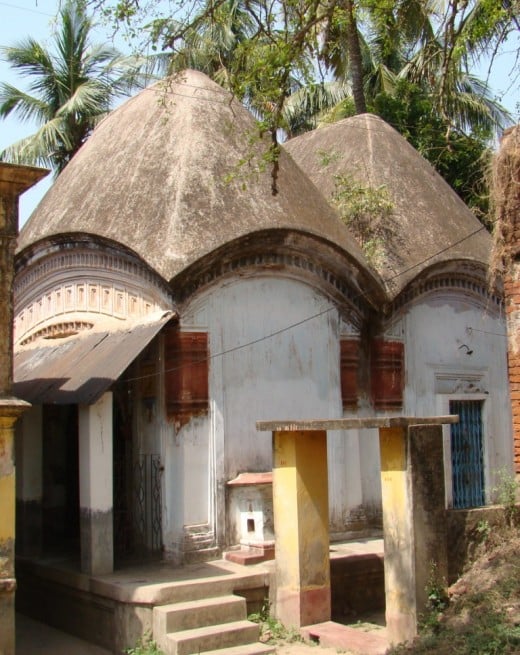
This beautiful temple built in the 18th century by the local Adhikari family, is again has something special to its name. In Bengal temple vocabulary, the term JORBANGLA is usually reserved for a special type of temple where two EKBANGLA or DOCHALA (temple with two roofs) temples are joined together (the most famous example is the Jorbangla temple of Kesto Ray at Vishnupur, Bankura). But here, the joined temples are not DOCHALA, but rather CHARCHALA (temples with four roofs). So, in that sense, it is a unique temple too. The temple has a Dalan type of NAATMANDIR in front. Mr. Bholon Rajak, the caretaker could not provide any clue to this riddle.
Temple of Jatadhari Shiva
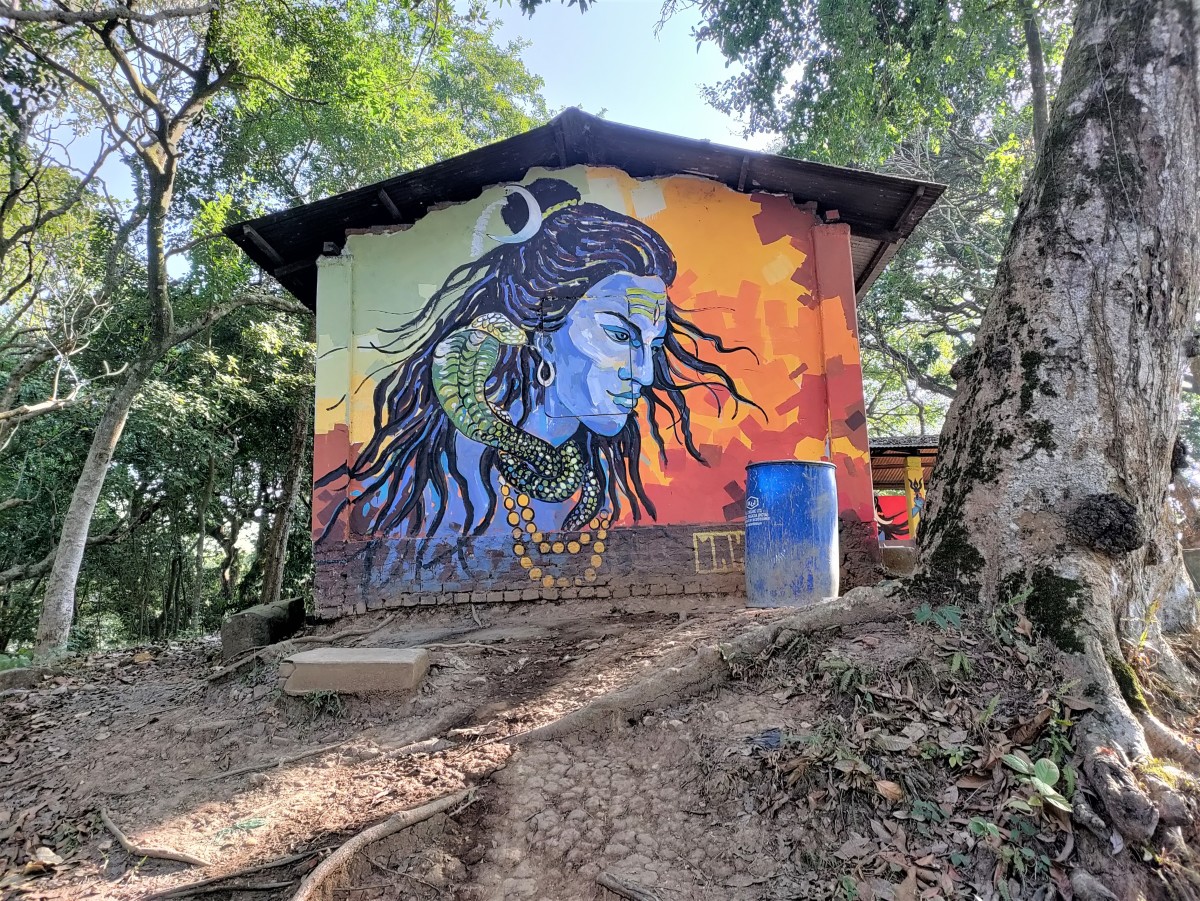
This relatively new temple is situated at the outskirt of the village, in a calm & quiet place surrounded by beautiful trees. There is an idol of Lord Shiva (the anthropomorphic Mahadeva form) and a "Pancha-Mukha" Lingam (5-faced Shiva Lingam - the aniconic form of Lord Shiva) in this temple.


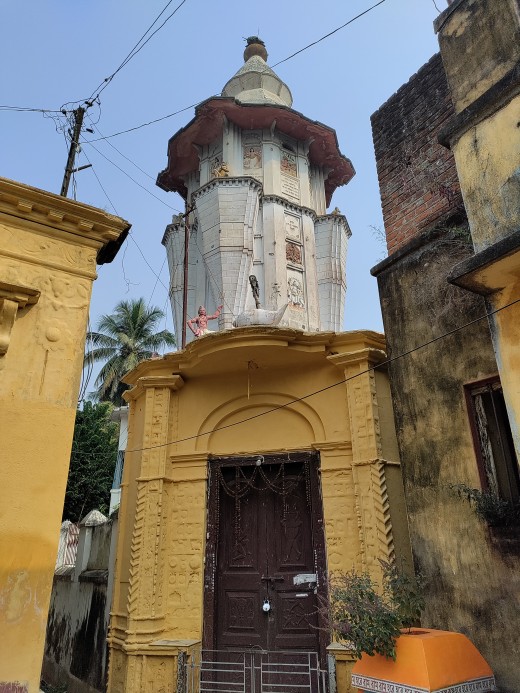
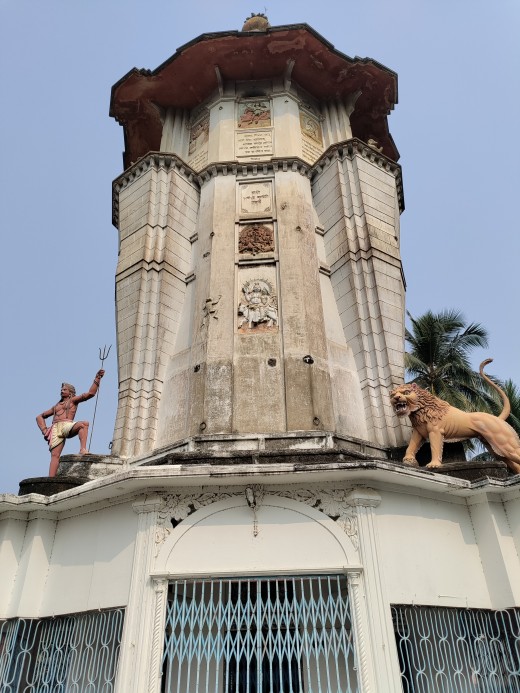
Singha Vahini temple of Panchthupi
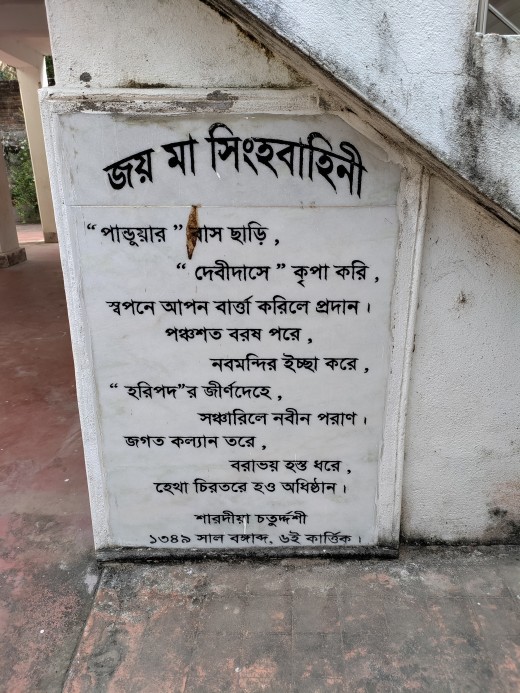
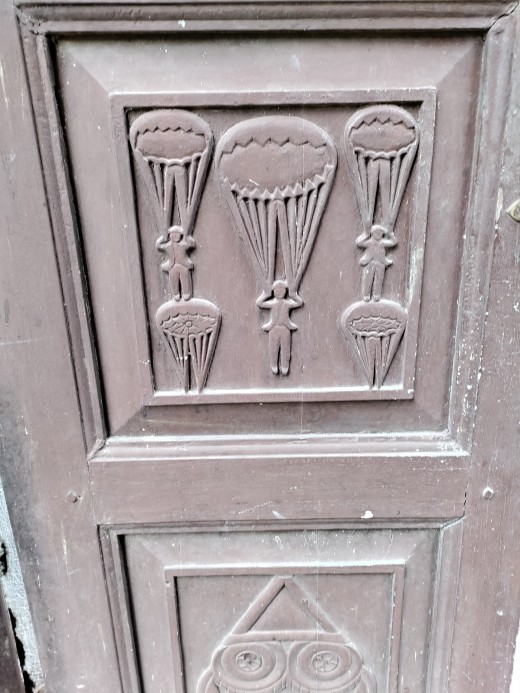
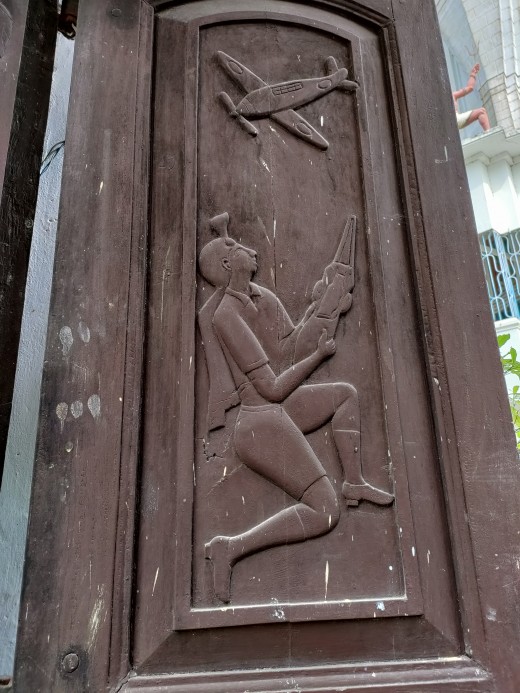
The Singha Vahini temple of the Ghosh Hajra family was established probably in 1349 "Bangabda" (1942 CE), and is renovated in 2010-2018 CE.
This relatively new temple, with a tall "Shikhara" (Tower), is dedicated to Goddess Singha Vahini or Durga.
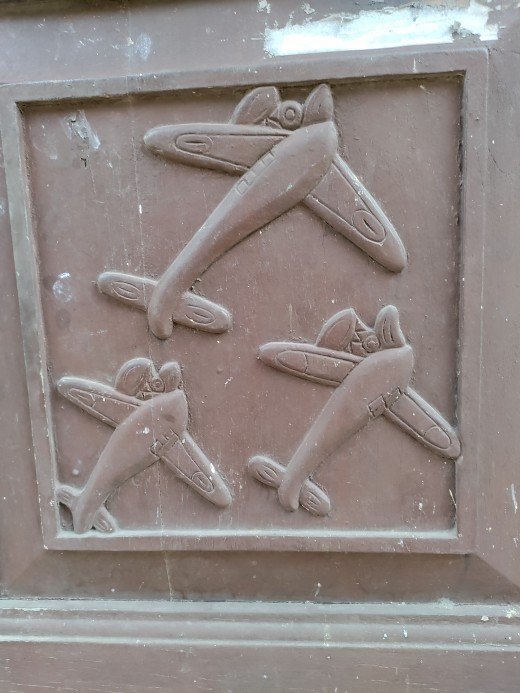
Otherwise a common temple, this temple has unusual wood carvings on its main door depicting airplanes and Paratroopers which is not seen anywhere else.
The Buddhist touch
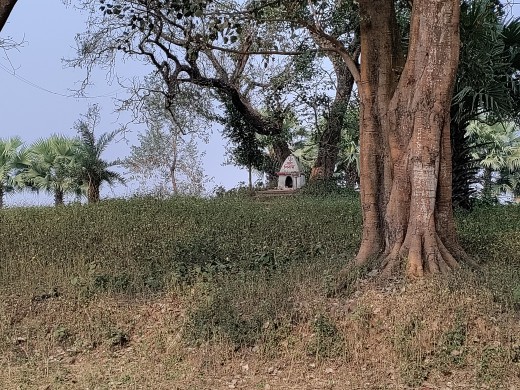
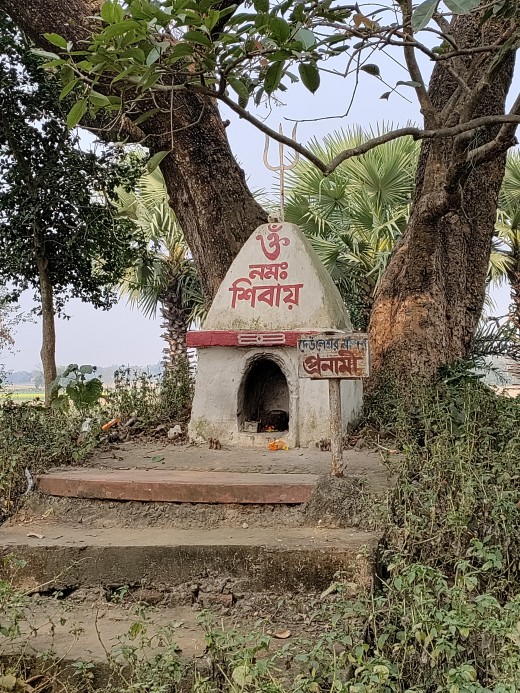
It is said that there were five Buddhist Stupa-s here in the ancient times from which the name of the place originated (5 Stupa -> Pancha Stupa -> Panchthupi), the only relic is now a soil-mound known locally as the BARO KONA DEUL (the temple with twelve corners).
Covered by grass, the mound has two big trees at the top, one a JAAM (Berry) & the other a NEEM (Margosa) tree . At the feet of these two trees there is a very small temple of recent origin, dedicated to Lord Shiva. There is a signboard posted nearby by ASI stating that it is a place of historical importance but sadly nothing more is written there. The Baro Kona Deul stands there alone, neglected & ruined, with untold history inside.
Islamic heritage
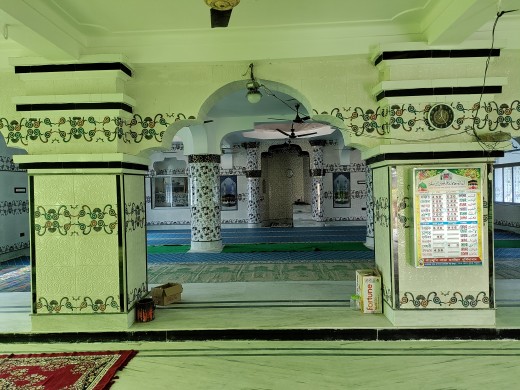
At the eastern end of the village there is an ancient mosque called "Bari Masjid" with three beautiful domes & a tall minar.
It is said that the domes are part of the original old mosque which was built during the reign of Mughal Emperor Shah Jahan .
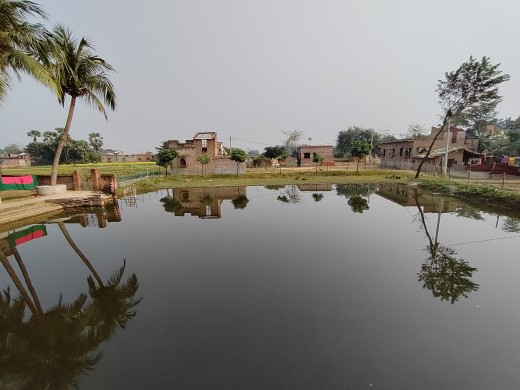
There is a small pond adjacent to the mosque, which is a sacred one & has the reputation of a perpetual source of water, it never runs dry.

Conclusion
A place where history meets rich folklore, & something important to three major religions are found, Pancthupi needs its deserved recognition.
* All photos are by the author.
This content is accurate and true to the best of the author’s knowledge and is not meant to substitute for formal and individualized advice from a qualified professional.
© 2012 Dr A K Chatterjee