What Happened to the Tenth Amendment?

How the federal government has usurped power from the states
When considering the degree to which the federal government has usurped power from the states and the people over the past 100 years we would do well to focus on the tenth amendment. The placement of this forgotten passage at the end of the Bill of Rights might be the reason that rendered it ineffective. What is sure is that the federal government, flaunting the amendment, increasingly began to slip its slender fingers into the affairs of the states and people. This is tragic because its intent was clearly to limit centralized power by focusing directly on the nature of federalism; i.e. the sharing of power between state and federal governments.
What the tenth amendment says
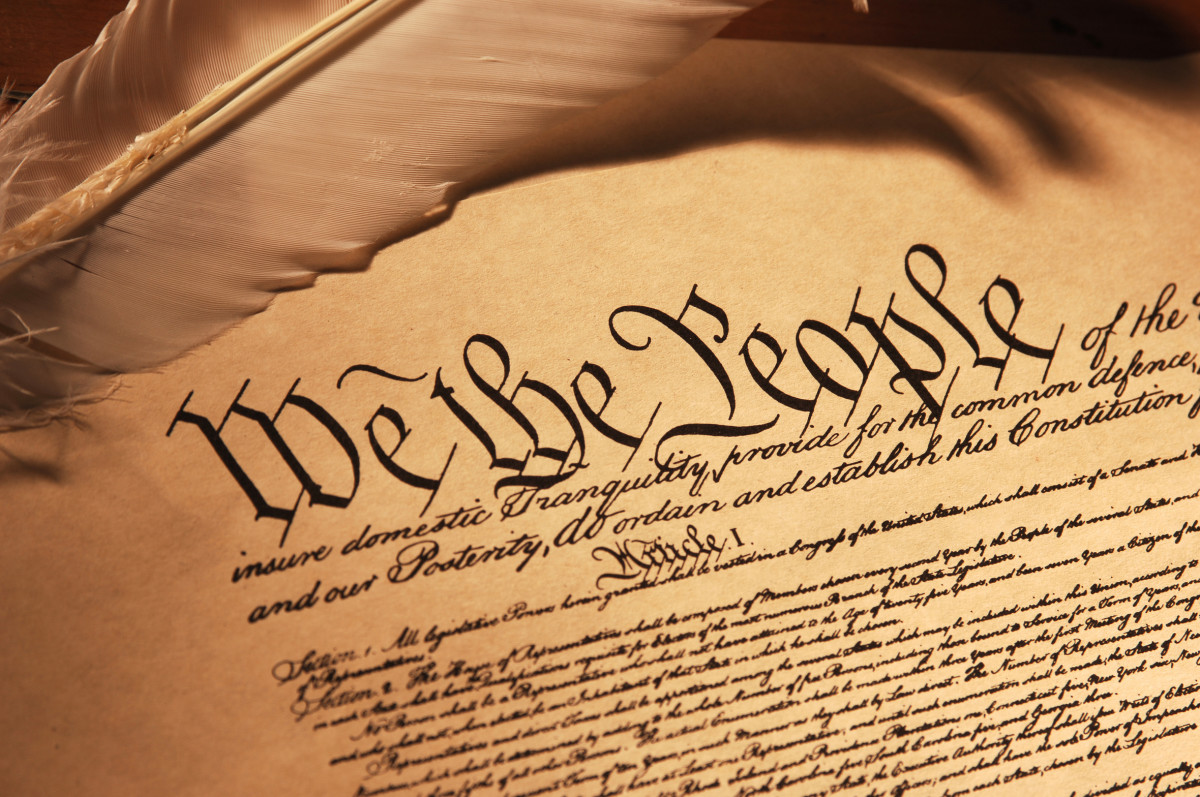
While some are familiar with the meaning or importance of many of the other amendments in the Bill of Rights, very few can claim such knowledge of the tenth. If citizens had been familiar with it, there would probably have been more vociferous objections to its infringement, as always happens when first amendment rights are assaulted. The tenth amendment reads “The powers not delegated to the United States by the Constitution, nor prohibited by it to the States, are reserved to the States respectively, or to the people.” Now, to my mind that sentence is clear and unambiguous. It basically states that the federal government has been given specific and enumerated powers, those powers are named in the Constitution, and all other powers remain the sole purvey of the states or the people.
Great Books and DVD's About The Constitution

How the power shifted
So, why has the federal government been illegally exercising authority that it wasn’t granted? The simplest answer is that the states and people have been too complacent and passive during the past century, allowing the federal government to take this mantle of authority from them. A more accurate answer comes from the first Article of the Constitution, wherein lies the infamous “interstate commerce” clause. This clause gives Congress the power to regulate commerce between the states. It’s a very vague but all encompassing tenet that has provided the proverbial “loophole” or gateway through which the federal government has exacted its tyranny upon the states and the people.
Ivy League Courses in the Comfort of your Home
- Civil Liberties and The Bill of Rights
A great course, taught by an Ivy League professor, on The Bill of Rights and Civil Liberties. This course is available as a video lecture or audio download and can be found under the modern history section.
The states lost the battle
This gateway became a floodgate in the 1930’s when the Supreme Court finally threw up its hands and silenced their objections to the New Deal programs of the President and Congress. These decidedly unconstitutional laws were intended to rescue the country from the Great Depression, but whether they were successful is debatable. It is true that the Great Depression called for forceful action from the federal government. It must also be noted that the world has become a smaller place, resulting in more commerce conducted on a global scale, which in turn has required more regulation by Congress. But, the increased application of this federal regulation has not matched these changes proportionally; it has instead advanced far beyond all fair and reasonable measures.
Being last often means being forgotten or overlooked and it seems that the tenth amendment was destined to this fate. Yet, this is ironic, because its “catch-all” purpose within the Bill of Rights required it to be just that: the last.