Beowulf and Gawain

Definition of Hero
Both Beowulf and Gawain exemplify the definition of 'hero' found in the Oxford English Reference Dictionary where a hero is defined as "a person noted or admired for courage, outstanding achievements, [and] a man of superhuman qualities favoured by the gods". There are, however, decided differences between Beowulf and Gawain 's approach. Over time, influences of different invaders, changing values and attitudes, and religion all contribute to this evolution. Proof in the words of the epic poems trace this modification of the heroic figure.
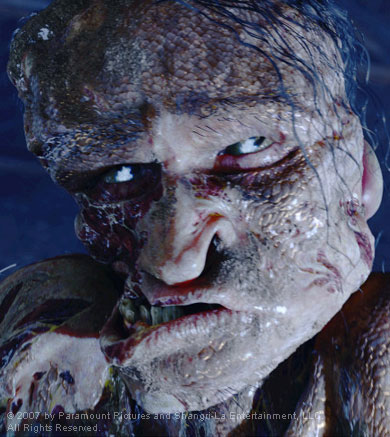
The heroic figure of the Beowulf tradition centres on an individual who, despite his marked solitary accomplishments, is more representative of a group than of a single person. Beowulf’s first words in the poem, “We belong by birth to the Geat people” (260), makes it clear he is a part of an assembly. Between lines 260 and 285 in his opening narrative “we” and “us” are used to mark the hero as one of many. In contrast, Gawain, in Sir Gawain and the Green Knight, embarks on a lone quest where “All alone must he lodge through many a long night” (693), and “He had no mate but his mount….” (695).
Beowulf’s journey and quest are filled with battle details which figure prominently in the tale. His battle with Grendel beginning on line 749, “The captain of evil discovered himself …” continues through to line 818 with a meticulous description of Beowulf’s grip upon Grendel and the damage inflicted upon the hall. However, Gawain’s physical battles are only mentioned in passing from lines 720-725;
Now with serpents he wars, now with savage wolves,
Now with wild men of the woods, that watched from the rocks,
Both with bulls and with bears, and with boars besides,
And giants that came gibbering from the jagged steeps.
And had he not borne himself bravely, and been on God’s side,
He had met with many mishaps and mortal harms.
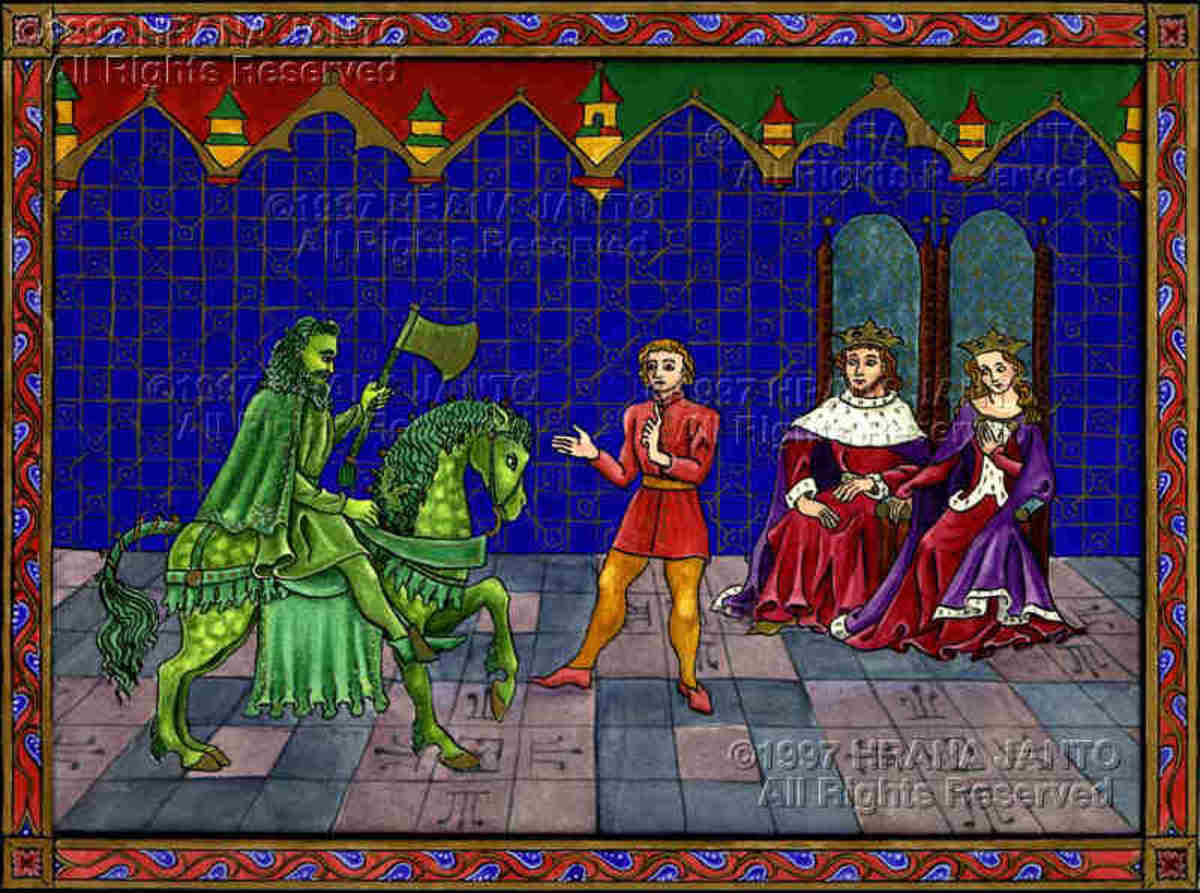
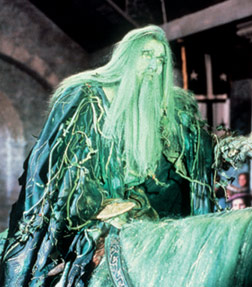
Battle details are conspicuous in their absence and lead the tone away from action adventure to a more thought provoking study of character and chivalric or epic qualities. Gawain’s interactions with other characters mirror the chivalry of the age. Even confrontation with the Green Knight is civilised and polite and ends with the invitation “And we shall finish our feast in my fair hall, with cheer.” (2401-02).
Far from the airs of polite conversation, Beowulf’s boasting colours the world of the epic poem where relating personal feats is expected. “Shoulder to shoulder, we struggled on/ for five nights” (544-45) begins a Beowulf adventure and ends with the killing of nine sea monsters. In quite the opposite manner Gawain , one of Arthur’s best knights, requests to take Arthur’s place with the humble words “I am the weakest, well I know, and of wit feeblest;/ and the loss of my life would be least of any”(354-55). Both heroes stand at opposite ends in their public self-assertions.
- Sir Gawain and the Green Knight - Wikipedia, the free encyclopedia
Wikipedia entry for Sir Gawain and the Green Knight. - Beowulf
Informative Beowulf site which includes old and modern text.
Faith And Works
Despite opposing religious elements between the two heroic expressions there are similarities.
Beowulf is partially pagan in religious tone where human destiny is often decided by fate. In classical mythology the gods are involved with a hero’s action, but not even the divine can overcome fate or destiny. Such is the case in Beowulf where “... death is not easily/ escaped ... [and]... destination [is] already ordained” (1001-05). However, there is religious transition within the epic where Christianity brushes the edges of the poem with references to “God-given goods….” (73), and “God-cursed Brute …” (121). Here the word “God” points to the monotheism of Christian belief. Brief biblical references are made early in the story when Grendel is said to be a descendant of Cain “whom the Creator had outlawed/ […] For the killing of Abel/ the Eternal Lord exacted a price” (106-08).
This theological transition from partly pagan to Christian is complete by the time the Arthurian stories are created. Christian chivalry is an expected part of the everyday life at court where there are “The most noble knights known under Christ,” (51). The most noble of these is Sir Gawain whose love of the Virgin Mary guides his life and leads his way, as evidenced by line 649 which states, “On the inner part of his shield her image portrayed”.
Both Sir Gawain and Beowulf exhibit similar characteristics of heroism in their display of bravery and honesty. They meet challenges and deal with any repercussions. Beowulf makes and keeps his promise to the Dane King that he will confront and destroy Grendel, and goes beyond his vow by tracking down and killing Grendel’s mother after her trespass in the hall. Similarly Gawain deals with his own omission of truth squarely when finally confronting the Green Knight, thus elevating his character to dynamic as opposed to Beowulf’s static.
While approximately four hundred and fifty years separate the characters, their portrayal of the epic hero remains true to Oxford’s definition, and they set the standard for the coming generations.
Works Cited