Butter or Margarine: Which is Healthier?

The question of whether it is healthier to eat butter or margarine is a confusing one. One day research comes out proving that butter is a healthier choice, the next day another set of research proves that margarine is healthier. Professional tennis matches cause less whiplash!
Saturated Fat Vs. Trans Fat
The controversy is caused mainly by disagreement among experts about the health effects of several different types of fats, as well as cholesterol. The number of calories and the amount of total fat in butter and margarine is virtually the same.
Butter is made from cream. It is high in saturated fat, a type of naturally occurring fat found in most animal and some plant foods. Butter also has relatively high levels of cholesterol. High consumption of saturated fats is associated with higher levels of LDL ("bad") cholesterol and certain conditions, including heart disease.
Margarine is made primarily from vegetable oils that have been hydrogenized to make them solid. Margarine contains little or no cholesterol, but high levels of a type of unsaturated fat called trans fat. Small amounts of trans fats occur in some natural products (including butter) but in a different form than the trans fats produced by the process of hydrogenation.
In general, unsaturated fats, which are also found in liquid oils such as olive oil, are believed to be healthier than saturated fats. However, a growing body of evidence suggests that trans fats are actually worse for the body than saturated fats.
In 2007, a large study found that women with high levels of trans fats in their bodies had three times the risk of developing heart disease than women with low levels. Other studies have connected high trans fat consumption with increased risk of a number of different types of cancer, including breast cancer, and a number of other health conditions, including stroke, gallstones, and type 2 diabetes. Trans fats are also associated with reduced immune system functioning and lower breastmilk quality in breastfeeding mothers.
Finally, although margarine, unlike butter, contains no cholesterol, trans fats are known to raise levels of LDL ("bad") cholesterol, just like saturated fats. Unlike saturated fats, trans fats also appear to actually lower levels of HDL ("good") cholesterol.
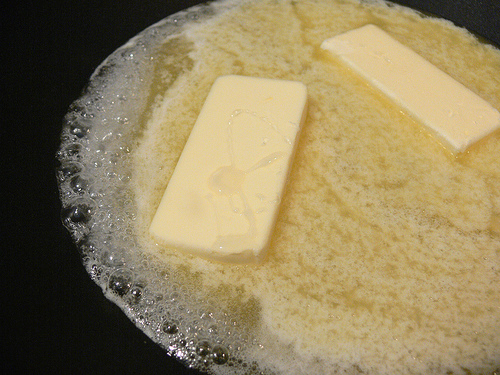
The Benefits of Butter
If you like margarine, you can reduce the amount of trans fats by purchasing soft margarines. Margarine that comes in tub, rather than stick, form is less hydrogenated and contains lower levels of trans fats. Some tub margarines contain no trans fats at all. Unfortunately, soft margarine is not as good for cooking as stick margarine, so I suggest substituting olive oil or for stick margarine when possible and butter when not.
Despite its saturated fat and cholesterol levels, butter actually has a number of significant nutritional advantages over margarine.
- Butter is one of the best natural sources of vitamins A, D, and E. Vitamin A is important for healthy immune system function. Vitamins A and D both aid calcium absorption and help build strong bones and teeth and prevent osteoporosis. Vitamin E is an important anti-oxidant.
- As mentioned above, butter contains a naturally occurring trans fat called Conjugated Lineolic Acid (CLA) that, unlike its synthetic relatives, appears to offer many health benefits, including lower levels of obesity and higher bone density.
- Butter is a good source of iodine, which is necessary for the proper function of the thyroid gland, and selenium, another important anti-oxidant.
- Butter contains a type of fatty acid called glycospingolipids, which are important to proper digestive tract function, especially in young children.
Aside from its high levels of saturated fat and cholesterol, the primary disadvantage of butter is that it concentrates hormones and pesticide residues consumed by the cow at levels 2-5 times the level found in liquid olive and vegetable oils. (Margarine also concentrates pesticide levels, but does not contain growth hormones.)
However, a healthier alternative is organic butter, preferably from cows that have been exclusively grass-fed. Studies have shown that dairy products from grass-fed cows are higher in many of the beneficial nutrients mentioned above than conventionally raised cows, and lower in saturated fat and cholesterol! Because grassfed butter is lower in saturated fat than conventionally raised butter, it is also softer and easier to spread. For more information about the health benefits of grassfed dairy products, and a directory of farms, please visit Eat Wild.
It is especially important to provide toddlers and young children with full fat, organic butter, because children are more susceptible to the harmful effects of trans fats and pesticide residues, yet fat (including saturated fat!) is very important to proper brain and body development in early childhood.
For adults, both margarine and butter have benefits and problems. However, I believe the nutrient-dense qualities of butter, especially grassfed butter, outweigh the disadvantages of higher saturated fat and cholesterol levels.